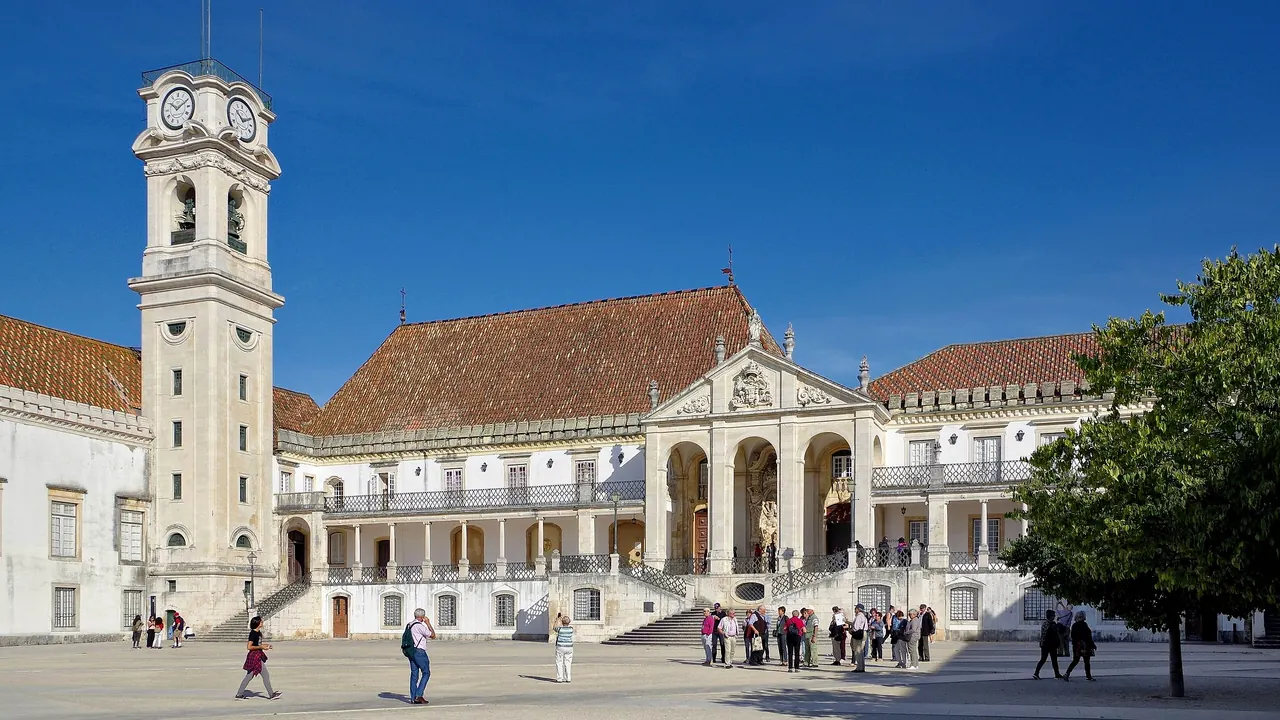
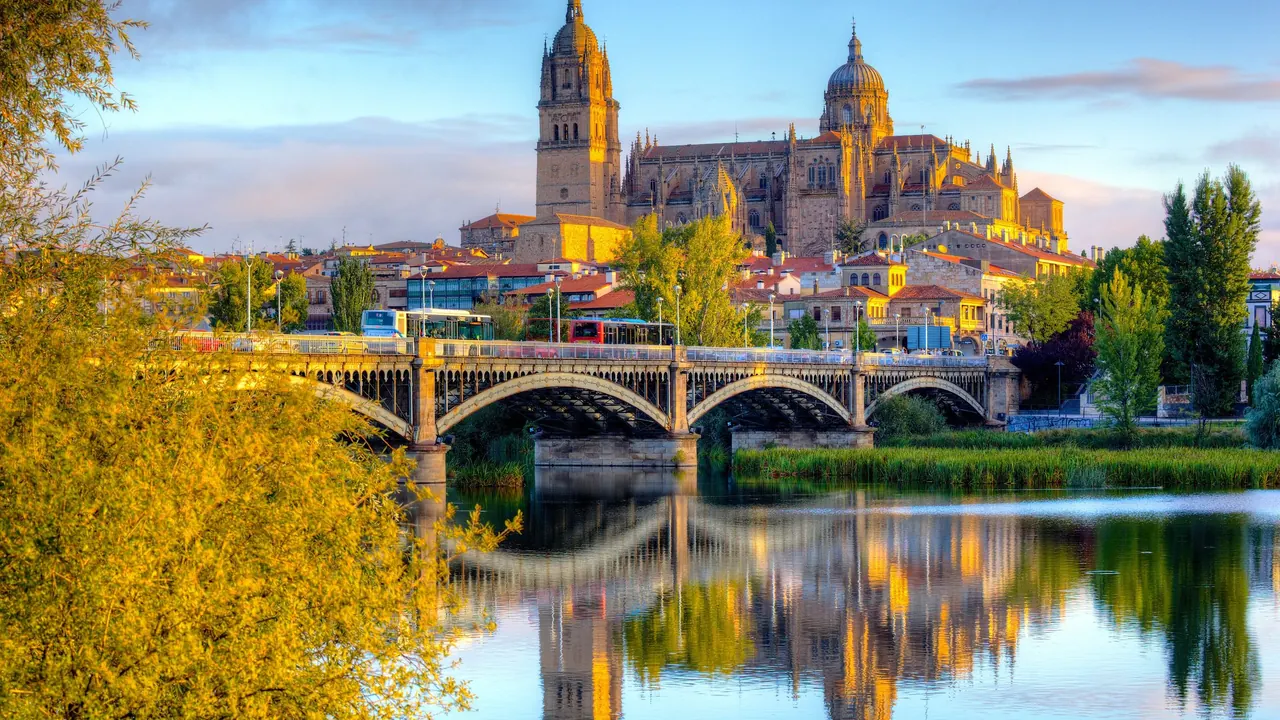
Photos: Coimbra by Berthold Werner, CC BY-SA 3.0, cropped; Salamanca by Jiuguang Wang, CC BY-SA 3.0 ES, cropped.
Coimbra or Salamanca?
Our verdict in twelve categories, each scored against the same fixed benchmark cities, and the climate month by month, so you can choose for your trip.
Choose Coimbra for
- beaches
- nature and the outdoors
- day trips
Coimbra suits the traveller who wants a base as much as a destination. It sits on the main line between Lisbon and Porto, with Roman Conímbriga, the great monasteries and the canal town of Aveiro within easy reach, and green country close by: the Buçaco forest, the Mondego valley and the slate villages of the Serra da Lousã. Add the Atlantic sand at Figueira da Foz, student fado in the old town and gentle winters, and it works best for a week of varied outings rather than a few days in one place.
Choose Salamanca for
- nightlife
- getting around
- culture and sights
Choose Salamanca if the city itself is the point. Its golden sandstone centre is grander and easier to walk, from the Plaza Mayor down to the Roman bridge, and its evenings are livelier, with tapas counters, ibérico ham from Guijuelo and bars that keep going late through the student year. It is the better pick for a concentrated city stay built around architecture, eating and going out, as long as you skip the cold months and leave the coast out of the plan.
Scoreboard
Twelve categories on one fixed scale from 0 to 100. The shaded stretch is the gap between the two.
Your match
Pick a travel style or drag the sliders, and both match scores follow your weighting.
Too close to call, 1 point apart
Wins on beaches and nature and the outdoors with your weighting.
Wins on nightlife and getting around with your weighting.
What matters to you?
Category by category
What the scores mean for a trip.
Beaches & swimming
Neither city is on the coast, but Coimbra can at least give you a proper beach day. Figueira da Foz, with its broad Atlantic sand and the old fishing quarter of Buarcos, is about an hour away by train, and quieter stretches at Quiaios and Tocha lie further up. Expect cool water and strong surf, plus calmer river beaches on the Mondego in the hills.
Salamanca is a long day's drive from any sea. Summer swimming there means municipal pools and river spots on the Tormes and the provincial reservoirs, fine for cooling off but nothing to plan around.
Food & drink
Salamanca is the more rewarding place to eat, mainly because of how you eat there. Grazing from counter to counter around the Plaza Mayor and Rúa Mayor, with Guijuelo ham, farinato and hornazo, makes dinner an evening out in itself, and the Mercado Central is a fine stop for charcuterie and cheese.
Coimbra's cooking is heartier and more sit-down: family tascas in the Baixa serving set lunches and grilled fish, and a short drive to Mealhada for leitão with Bairrada sparkling wine. Both cities share the same weakness, a narrow range with little international food, but Coimbra's convent pastries such as pastéis de Tentúgal are a sweet treat Salamanca does not match.
Culture & sights
Both cities grew up around one of Europe's oldest universities, but Salamanca has more to show. Its whole old centre is a single golden-stone ensemble, from the baroque Plaza Mayor and the carved Plateresque university façade to the twin cathedrals, Casa de las Conchas and San Esteban, and it glows when floodlit at night. Allow two or three days.
Coimbra's heritage is tighter, climbing one hill to the university palace and the gilded Biblioteca Joanina, its single world-famous sight. The Romanesque Sé Velha, the Roman cryptoportico under the Machado de Castro museum and the royal tombs at Santa Cruz round out a set you can see in a day or two.
Nightlife
Salamanca has the bigger night out. Students and language-school crowds pack the bars around the Plaza Mayor, Calle Bordadores and Gran Vía from Thursday to Saturday, and dance bars keep going past 3am.
Coimbra's student nights are smaller and centre on the bars around Praça da República and the upper-town lanes, with the Queima das Fitas in May as the one week the city really lets loose. In both places summer is much quieter, though in Coimbra an evening then usually comes down to dinner by the river.
Nature & outdoors
Coimbra has greener country, and it starts closer to the centre. The botanical garden and the Choupal woods are in town, the monastic Buçaco forest is half an hour away, and the Mondego valley, the Lousã chestnut woods and, further out, the Serra da Estrela give everything from kayaking to proper mountain walks.
Salamanca's surroundings are dramatic but further off. Beyond the riverside paths on the Tormes lies open, wheat-coloured Meseta, and the forested Sierra de Francia, Las Batuecas and the Arribes del Duero canyon all need about an hour by car.
Day trips
Coimbra makes the stronger base. Porto is about an hour away by fast train, and Aveiro, with its canals and Art Nouveau facades, is a little closer. The mosaics of Roman Conímbriga lie just south of the city, and the great monasteries of Batalha, Alcobaça and the Convent of Christ at Tomar make a full day out by car or coach.
Salamanca also has plenty within reach, but more of it depends on a car. Ávila's medieval walls and Zamora's Romanesque churches are each about an hour away. The fortified border town of Ciudad Rodrigo, the wine country around Toro and Valladolid's museums, which are an easy train ride, add more choice. The half-timbered mountain villages of La Alberca and Mogarraz, though, are hard to reach without your own transport.
Good for families
For children the two are much the same, safe and relaxed and good for a couple of days. Coimbra does have the dedicated attractions, Portugal dos Pequenitos and the Exploratório science centre, but its steep cobbled hill is tough with a pushchair.
Salamanca has nothing built for children, though its flatter, pedestrian centre is easier going, and hunting for the frog and the astronaut carved in the stone gives younger ones a game.
Getting around
Salamanca is the easier city on foot. Almost everything lies in a pedestrianised old town about 20 minutes across, with only gentle slopes, and buses are barely needed.
Coimbra is just as compact but built on a steep hill, and the climb from the Baixa to the university by the Quebra-Costas stairs is hard work, eased somewhat by a public lift and funicular. Its trump card is rail, with fast links up and down the coast, while Salamanca's trains go mainly towards Madrid and Valladolid.
Shopping & style
Neither is a shopping destination, and the high streets are alike: chains and older shops on the Baixa's pedestrian streets in Coimbra, and on Toro and Zamora streets in Salamanca. The difference is in what to bring home. In Coimbra that means hand-painted faience and Bairrada wine, and in Salamanca ibérico ham and charro silver filigree.
Affordability
Both are cheap by Western European standards, kept that way by students, so this will not decide your trip. In Salamanca the free tapa with a drink stretches the food budget further, while in Coimbra the tasca set lunch does the same job. Sightseeing costs differ in pattern: Coimbra's one big ticket is the university and Joanina library, whereas Salamanca's cathedral, tower and university admissions add up over the day.
Live music & performing arts
Coimbra has the more distinctive evening of music in its own fado, sung by caped students with the Coimbra guitar. It is more lyrical than the Lisbon kind and heard in small old-town houses most nights. The Teatro Académico de Gil Vicente and the São Francisco arts centre fill out the programme.
Salamanca's characteristic sound is less formal: the tunas strumming under the Plaza Mayor arcades. The Teatro Liceo and university concerts add theatre, flamenco and choral music. Neither city has opera or a major orchestra.
Wellness & relaxation
The two are close on wellness, and each keeps its spas just outside town. From Coimbra you can reach the Belle Époque spa towns of Luso and Curia, below the Buçaco forest, in about half an hour. Salamanca has the old balneario at Ledesma nearby and the Roman springs at Baños de Montemayor about an hour away.
In town, Salamanca adds small Arab-style bath houses and the quiet cloisters of San Esteban and Las Dueñas. Coimbra relaxes in its shady botanical garden and along the Mondego.
When should you go?
Pick your month. The climate figures are measured averages, not a forecast.
Coimbra in July
Salamanca in July
Daytime high, °C
Rainfall in the month, mm
Temperature and rainfall are climate normals, averaged over the years shown. Coimbra: 1991-2020 normals, Coimbra (1.6 km from centre). Salamanca: 1991-2020 normals, Salamanca / Matacan (13.9 km from centre).
Coimbra has the milder winter of the two, with daytime highs around 15°C even in January, but it is also much wetter: rain sets in from October and stays heavy until spring. Salamanca, up on the Castilian plain, is drier all year but cold from November to March, with January highs near 9°C, so walking the streets in winter means wrapping up. Spring is pleasant in both, with Coimbra warming a little sooner and Salamanca bringing the drier weather.
Summer is dry and sunny in each, but Salamanca gets the hotter peak, around 31°C in July, which makes midday sightseeing tiring, while Coimbra stays a touch cooler. Only Coimbra puts the sea within reach, and the Atlantic there stays cool, about 18°C even at its warmest, so beach days from July to September are for bracing swims rather than long soaks. For walking both cities and the hills around them, May, June and September are the safest months.
Which traveller are you?
On a beach and sun trip, Coimbra is the only real option of the two. The wide sands of Figueira da Foz and Buarcos are about an hour away by train, whereas Salamanca offers only pools and river beaches on a landlocked plain.
For a food and nightlife trip, Salamanca wins. Evenings move between tapas bars around the Plaza Mayor and Calle Van Dyck, ibérico ham comes with the drinks, and the student bars and small clubs stay full well into the night from Thursday on.
On an outdoors trip, Coimbra gives more for less driving. Buçaco forest is half an hour away, kayaks run down the Mondego from Penacova and the Lousã trails are close, while Salamanca's sierras and the Arribes canyon need an hour by car.
Before you go
| Measure | Coimbra | Salamanca |
|---|---|---|
| Official language | Portuguese | Spanish |
| Currency | Euro (EUR) | Euro (EUR) |
| Sockets | CF230 V, 50 Hz | CF230 V, 50 Hz |
| Driving side | Right | Right |
| Time zone | UTC, UTC+1 in summer | UTC+1, UTC+2 in summer |
| Emergency number | 112 | 112 |
| Elevation | 43 m | 798 m |
| Main airport | Francisco de Sá Carneiro Airport (OPO)117 km from centre133 non-stop destinations | Adolfo Suárez Madrid–Barajas Airport (MAD)184 km from centre239 non-stop destinations |
| Public holidays this year | 14 days | 12 days |
By the numbers
| Measure | Coimbra | Salamanca |
|---|---|---|
| City population | 140,816 | 146,110 |
| People per km² | 441 | 3,690 |
| Museums within 10 km | 10 | 13 |
| UNESCO World Heritage sites within 50 km | 1 | 1 |
| Swim season, months above 21 °C | None | - |
Where else could you go?
Every comparison below shares a destination with this one, so you can follow Coimbra or Salamanca somewhere new.
- Portovs Coimbra
- Madridvs Salamanca
- Lisbonvs Coimbra
- Sintravs Coimbra
- Toledovs Salamanca
- Portovs Salamanca