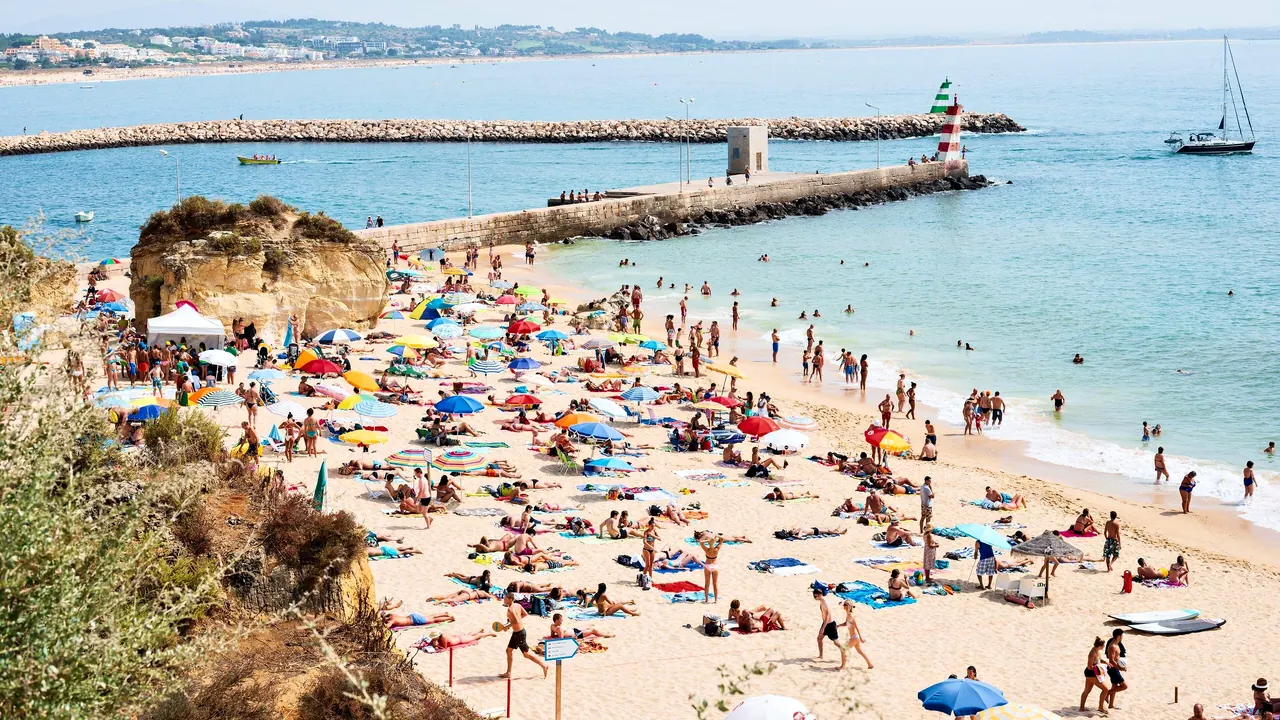
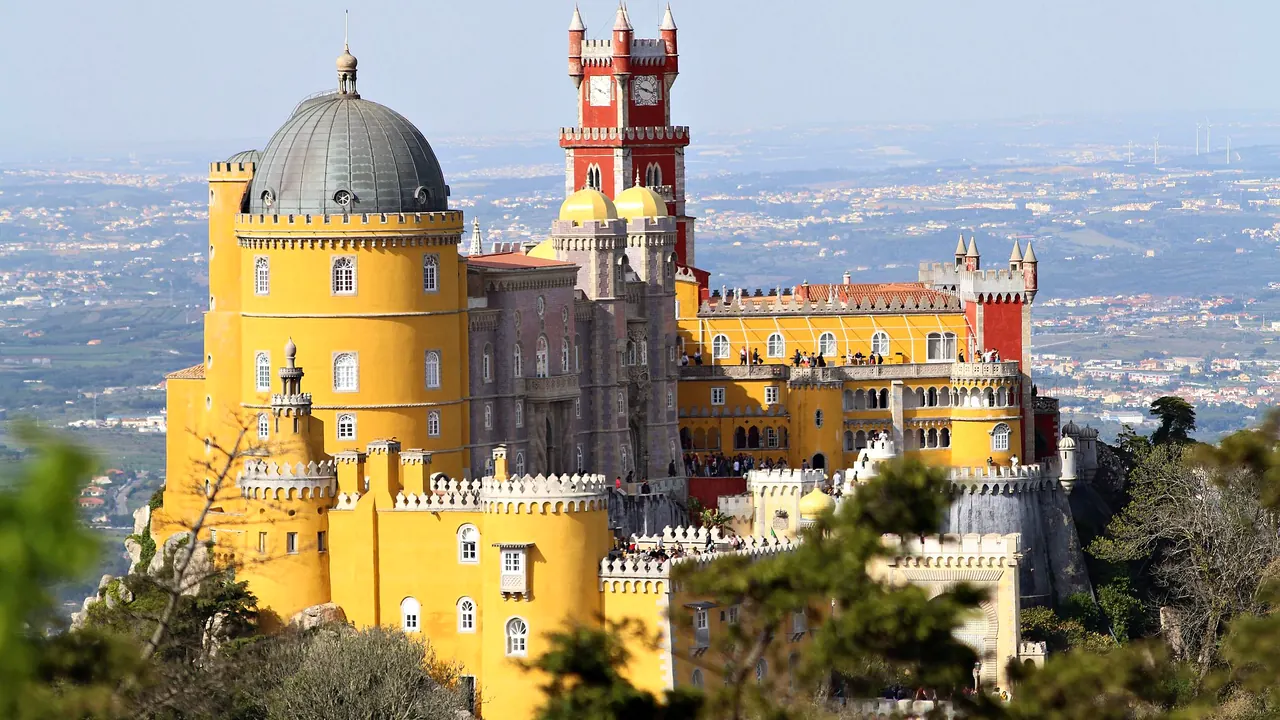
Photos: Lagos, Portugal by Norbert Nagel, CC BY-SA 4.0, cropped; Sintra by Chabe01, CC BY-SA 4.0, cropped.
Lagos, Portugal or Sintra?
Our verdict in twelve categories, each scored against the same fixed benchmark cities, and the climate month by month, so you can choose for your trip.
Choose Lagos, Portugal for
- nightlife
- beaches
- families
Lagos is the choice for a summer by the sea. Its cliff coves and the long open sand of Meia Praia are a walk from the old town, the evenings run late in small bars, and the coast at Ponta da Piedade and the Costa Vicentina gives the days an outdoor edge. Families with young children, and anyone who wants to swim every day, will be happier here.
Choose Sintra for
- culture and sights
- day trips
- live music and the arts
Sintra suits travellers who come to look rather than to lie on the sand. Pena Palace, the Moorish Castle, Quinta da Regaleira and Monserrate sit within a few square kilometres of forested hills, and Lisbon is a train ride away for everything Sintra lacks after dark. It works best for two or three days of palaces and walking, or as part of a wider trip around Lisbon.
Scoreboard
Twelve categories on one fixed scale from 0 to 100. The shaded stretch is the gap between the two.
Your match
Pick a travel style or drag the sliders, and both match scores follow your weighting.
Wins on nightlife and beaches with your weighting.
Wins on culture and sights and day trips with your weighting.
What matters to you?
Category by category
What the scores mean for a trip.
Beaches & swimming
Lagos is built around its beaches, and Sintra is not. The coves of Camilo, Dona Ana and Pinhão lie just below the walls, under honey-coloured cliffs and down long wooden stairways. Across the river, Meia Praia has 4km of open sand with room to spare even in August. The coves are sheltered, so the water is usually calm and clear.\n\nFrom Sintra, the beach is a separate outing over the hills to Praia Grande, Adraga or the tidal pool at Azenhas do Mar, with a historic tram running down to Praia das Maçãs in summer. The sea is colder and the surf heavier, fog can settle in on a sunny day, and most people treat it as an afternoon away from the palaces.
Food & drink
Neither town is a serious food destination, but Lagos has the edge for a proper meal. Its kitchen is built on the catch: charcoal-grilled sardines and octopus, cataplana and a market on the riverfront. The best tables are in the harbour fish restaurants and family places, not in the tourist lanes.
Sintra's strength is narrower and sweeter: warm travesseiros and queijadas from the old pastry houses. For good seafood you head out to Azenhas do Mar or Praia das Maçãs, and evenings in town offer little choice.
Culture & sights
Sintra is in another league here. The Pena Palace on its peak, the ramparts of the Moorish Castle, the National Palace with its conical chimneys and the grottoes of Quinta da Regaleira fill two full days, all within a UNESCO-listed landscape.
Lagos offers a short, thoughtful walk instead. You see the old walls, the Ponta da Bandeira fort, the gilded interior of Santo António and the slave market museum, which deals with the town's part in the slave trade. It makes a good morning, but it is not a reason to travel.
Nightlife
Lagos is a summer bar town. Young travellers, surfers and backpackers fill the old town's lanes, pub crawls are part of the scene and a few small clubs keep going towards dawn, though it all quietens down in winter.
Sintra has almost nothing after dark. A few wine bars and café terraces stay open in the evening, but nothing runs late, and a real night out means the train to Lisbon and a plan for getting back.
Nature & outdoors
Both are excellent for the outdoors, but the settings could hardly differ more. Lagos is about the edge of the sea: kayaking through the arches and grottoes of Ponta da Piedade, clifftop paths to Luz and Burgau, dolphin trips and the wild Costa Vicentina, with the Fishermen's Trail and surf schools open all year.
Sintra is about forest. Trails climb through mossy oak, cork and fern to Cruz Alta and Peninha, and the cool, damp microclimate keeps walking pleasant in summer, when the hills inland from Lagos turn hot and dusty. Cabo da Roca adds dramatic clifftops of its own.
Day trips
Sintra has much the better range of excursions, and the best of them need no car. Lisbon is a short train ride away and Cascais a bus ride over the hills. Drivers can also reach Mafra, Óbidos, the monasteries of Alcobaça and Batalha, and Évora at the outer limit.
From Lagos the standout is Sagres and Cape St Vincent, with the red castle at Silves and the Monchique hills inland. Faro and Tavira make long days out, almost everything needs a car, and plenty of visitors are happy to stay on the beach.
Good for families
Lagos is the easier family base, especially with small children. Meia Praia shelves gently, the town is relaxed, boat trips to the grottoes go down well, and water parks and a marine park are within driving range. The main drawback is the steep stairs down to the coves.
Sintra delights school-age children with its castle walls and the spiral of the Initiation Well, but it is hard work with toddlers. Steep cobbles defeat buggies, the hill buses are crowded and the beaches have heavy surf.
Getting around
Both have a walkable core and a weakness further out, but the problems differ. In Lagos the old town, the marina and the coves are close together on foot, and a footbridge reaches Meia Praia. The trouble is the wider region, where slow trains and infrequent buses push most visitors into a hire car.
Sintra connects better to the outside world, as the suburban train from Lisbon arrives near the centre. Its own palaces, though, sit high above the town, reached by a stiff climb or a crowded circular bus, and driving the narrow hill roads is best avoided.
Shopping & style
Both old towns sell hand-painted ceramics, cork goods and linen, so the difference is in what each adds. Lagos adds surf shops for boards and wetsuits, and its riverfront market sells local honey, figs, almonds and medronho brandy. Sintra looks to the past, with dealers in old azulejos and furniture and the long-standing Sunday fair at São Pedro de Penaferrim, and anyone after fashion goes into Lisbon.
Affordability
Costs come out much the same, but the money goes on different things. In Lagos the season decides the bill. Rooms are expensive in July and August, October to May is good value for long stays, and most beaches cost nothing.
In Sintra the palaces are the main expense, since each has its own ticket. Rooms in the manor houses of the historic centre also run high, so staying in the outlying villages or near the coast saves noticeably.
Live music & performing arts
What sets the two apart is Sintra's summer festival of classical music and dance, held in palace halls and quinta gardens. Lagos has nothing like it. It has a modest programme at the cultural centre, fado and guitar evenings for visitors and cover bands in the bars, and serious concerts are a long way off in Faro or Lisbon.\n\nOutside the festival, Sintra has little more to offer: concerts and theatre at the Olga Cadaval centre and the odd fado night in a restaurant. The real advantage is that Lisbon's opera and theatres are a short train ride away, not a long journey.
Wellness & relaxation
In Lagos you rest by the sea, and in Sintra you rest in the forest, since neither has a bathing tradition of its own. Outside the summer peak, Lagos slows down to long lunches and sunset walks along the cliffs, and yoga and surf retreats gather on the quieter edges towards Luz and the west coast. For thermal water, the springs at Caldas de Monchique, in use since Roman times, are an hour inland.\n\nIn Sintra, the calm comes in the evenings and early mornings. The most restful way to stay is in a quinta among old gardens, with mist in the trees and the town empty once the day-trippers have gone. Quiet estates such as Monserrate are at their best before the crowds arrive.
When should you go?
Pick your month. The climate figures are measured averages, not a forecast.
Lagos, Portugal in July
Sintra in July
Daytime high, °C
Rainfall in the month, mm
Where the figures come from
Lagos, Portugal's temperatures are measured 63 km from the centre, at Faro / Aeroporto.
Lagos, Portugal has no rain gauge within 25 km of the centre, so its rainfall comes from a gridded climate dataset read at the city rather than from a gauge further away.
Temperature and rainfall are climate normals, averaged over the years shown. Lagos, Portugal: 1991-2020 normals, Faro / Aeroporto (63.4 km from centre). Sintra: 1991-2020 (rainfall 1961-1990) normals, Lisboa / Geof (22.7 km from centre).
Lagos has the longer and more reliable beach season. From June to September the days reach about 29°C at their peak, rain almost disappears and the sea warms to around 20°C, which is fresh but comfortable for swimming. October brings the rain back, and November and December are the wettest months at around 82mm, although the days stay mild and fairly sunny even then. Spring is the best time for clifftop walking, before the summer heat sets in.
Sintra follows a similar temperature curve, a degree or so cooler, but it is far wetter in winter. January and February each bring about 120mm, and there are noticeably fewer hours of sunshine. July and August are dry and warm enough for the beaches, though the sea stays a touch colder than at Lagos. For the palaces and forest trails, May, June and September give dry paths without the full summer warmth.
Which traveller are you?
For a beach and sun trip, Lagos is the clear pick. Sheltered coves under golden cliffs and the open sand of Meia Praia are all within walking distance, and the summer is drier and sunnier. Sintra's beaches are cold, rough and often foggy.
On a culture and arts trip, Sintra wins easily. Its UNESCO landscape fits the Pena Palace, the National Palace, Quinta da Regaleira and Monserrate into a few square kilometres, with Lisbon's museums close by. The history of Lagos fills a morning.
For a food and nightlife trip, Lagos comes out ahead. Grilled sardines, cataplana and a riverside fish market go with summer bars that stay open well past midnight. Sintra empties once the day-trippers leave, so a night out there means going into Lisbon.
Before you go
| Measure | Lagos, Portugal | Sintra |
|---|---|---|
| Official language | Portuguese | Portuguese |
| Currency | Euro (EUR) | Euro (EUR) |
| Sockets | CF230 V, 50 Hz | CF230 V, 50 Hz |
| Driving side | Right | Right |
| Time zone | UTC, UTC+1 in summer | UTC, UTC+1 in summer |
| Emergency number | 112 | 112 |
| Elevation | 3 m | 193 m |
| Main airport | Faro - Gago Coutinho International Airport (FAO)63 km from centre91 non-stop destinations | Lisbon Humberto Delgado Airport (LIS)22 km from centre157 non-stop destinations |
| Public holidays this year | 14 days | 14 days |
By the numbers
| Measure | Lagos, Portugal | Sintra |
|---|---|---|
| City population | 31,049 | 385,606 |
| People per km² | 146 | 1,208 |
| Museums within 10 km | 6 | 12 |
| UNESCO World Heritage sites within 50 km | 0 | 3 |
| Swim season, months above 21 °C | None | None |
Where else could you go?
Every comparison below shares a destination with this one, so you can follow Lagos, Portugal or Sintra somewhere new.
- Cascaisvs Sintra
- Lisbonvs Sintra
- Albufeiravs Lagos, Portugal
- Farovs Lagos, Portugal
- Coimbravs Sintra
- Lisbonvs Lagos, Portugal