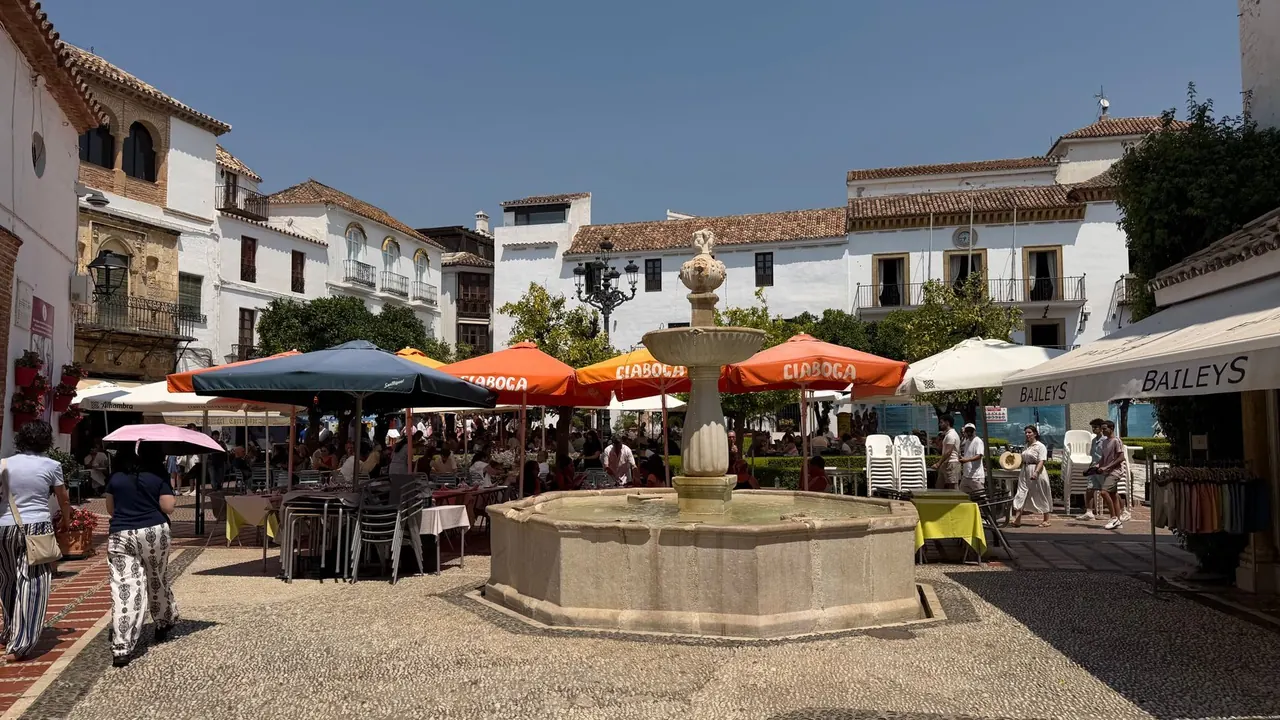
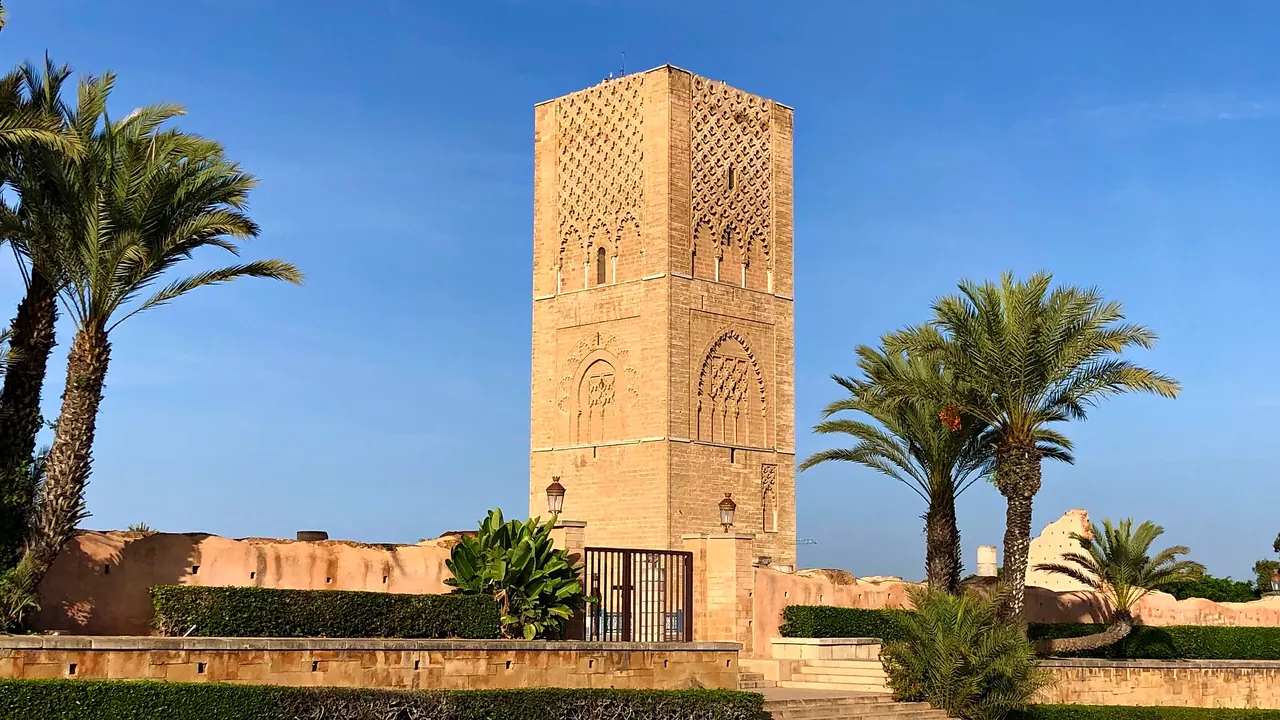
Photos: Marbella by Décio Franchini, Pexels License; Rabat by Aemazy, CC BY-SA 4.0, cropped.
Marbella or Rabat?
Our verdict in twelve categories, each scored against the same fixed benchmark cities, and the climate month by month, so you can choose for your trip.
Choose Marbella for
- nightlife
- beaches
- nature and the outdoors
Marbella is the choice for a sun-and-sea vacation with some glamour attached. Long days on calm, sandy beaches, summer nights out around Puerto Banús, mountain hikes straight behind the town and drives to Ronda, Málaga and the white villages all suit travellers who want to relax by the water and are happy to hire a car and spend freely.
Choose Rabat for
- prices
- culture and sights
- getting around
For history, Rabat gives far more. Its walled kasbah, Almohad monuments, Roman and Marinid ruins and art deco boulevards repay a few unhurried days, and the city is cheap to get through day to day, easy on foot and by tram, and linked by train to Casablanca, Tangier and Meknes. It suits curious, budget-minded travellers who prefer a calm capital to a resort.
Scoreboard
Twelve categories on one fixed scale from 0 to 100. The shaded stretch is the gap between the two.
Your match
Pick a travel style or drag the sliders, and both match scores follow your weighting.
Wins on nightlife and beaches with your weighting.
Wins on prices and culture and sights with your weighting.
What matters to you?
Category by category
What the scores mean for a trip.
Beaches & swimming
Marbella is built around its beaches: fine, greyish sand along roughly 27km of shore, from La Venus and El Fuerte in town out to the dunes at Cabopino, with calm, clear water, sun loungers, beach clubs and chiringuitos. The swimming season is long enough to plan a vacation around it.
Rabat's city beach below the Kasbah of the Udayas belongs to footballers, surfers and local families, and the Atlantic swell keeps swimmers close to the shore. The calmer sand at Temara, Harhoura and Skhirat is a taxi ride south, and beachwear is more modest, so here the sea is a pleasant afternoon rather than the point of the trip.
Food & drink
The two cities eat about as well as each other, in very different styles, and both grill fresh sardines by the sea. Marbella offers Andalusian tapas in the Casco Antiguo, gazpacho and ajoblanco in summer, and a real top tier of tasting-menu kitchens along the Golden Mile, but a weak middle of overpriced seafront menus.
Rabat cooks Moroccan home food without the show put on in the bigger medinas: tagines, Friday couscous, harira, and msemen or snail broth from evening street stalls, along with long hours over mint tea on Ville Nouvelle terraces. Alcohol is discreet and the range narrower, though Agdal adds French and Lebanese restaurants.
Culture & sights
Rabat has much more to see. Its sights are UNESCO-listed as a whole and cover almost two thousand years: the Almohad gate and Andalusian garden of the Kasbah of the Udayas, the unfinished Hassan Tower beside the Mausoleum of Mohammed V, the stork-topped ruins of the Chellah and an art deco Ville Nouvelle, with two or three days of sightseeing.
Marbella's heritage is charming but slight: the whitewashed lanes around the Plaza de los Naranjos, a museum of Spanish prints, the Dalí bronzes on the Avenida del Mar and a Roman villa outside town. It fills an afternoon, and the great Andalusian monuments mean a drive.
Nightlife
For going out, Marbella is far ahead, at least in summer. Dinner runs late, beach clubs on the Golden Mile turn into evening parties, and Puerto Banús fills its champagne bars and clubs with a moneyed international crowd until dawn, though the scene shrinks sharply from November to March.
Rabat's evenings are for cafés, family strolls through the medina and walks along the Bou Regreg. Drinking is confined to hotel bars and a few lounges in Agdal and Hassan, and anyone after a club night takes the train to Casablanca.
Nature & outdoors
Marbella has the mountains on its doorstep. Sierra Blanca rises behind the town, the hike up La Concha looks across to Gibraltar and Morocco, the fir forests and gorges of Sierra de las Nieves are under an hour inland, and El Torcal and the Caminito del Rey make longer outings.
Rabat's outdoors is flatter and gentler: surfing and paddling at the Bou Regreg estuary, easy walks and rides in the cork oaks of the Maamora forest, and birdwatching at Sidi Boughaba. Proper hill walking is hours away in the Middle Atlas or the Rif.
Day trips
Marbella has the richer choice of outings: Ronda's gorge and bridge, Málaga's Alcazaba and Picasso Museum, Gibraltar, the hilltop white villages of Casares and Mijas, and even Granada's Alhambra for a long day. Nearly all of them are far easier with a car.
Rabat's strength is the train. Casablanca, Tangier, Asilah and Meknes are all reachable by rail without driving, and the old medina and Marinid madrasa of Salé are a short tram ride across the river, although Fez and Volubilis need an overnight stay.
Good for families
Marbella is built for a family beach vacation, with sheltered, lifeguarded town beaches, a long flat promenade for scooters and buggies, and resorts arranged around pools. Animal parks, water parks and the Benalmádena cable car lie along the coast, best reached by car.
Rabat is calm and easy with children, with little hassle in the medina, a large modern zoo and space to run in the Jardin d'Essais. Beyond those there is little aimed at children, and the waves on the city beaches need close watching.
Getting around
Rabat is much simpler to get around. The medina, the kasbah, the Hassan Tower and the Ville Nouvelle sit within walking distance on broad, flat streets, the tram and cheap petit taxis cover the rest, and Rabat Ville station puts the rail network in the centre of town.
Marbella stretches thinly along the motorway from San Pedro to Cabopino. Only the old town and the seafront promenade are good on foot, there is no train, and most visitors end up hiring a car or using taxis.
Shopping & style
Marbella is the better place to shop if you want labels. Puerto Banús lines up international fashion and jewellery boutiques facing the yachts, with a department store and malls nearby, and the old town adds linen, leather and ceramics, though independent design is thin.
In Rabat the shopping is mostly craft. Rue des Consuls in the medina is the place for the city's dense, deep-coloured carpets, brass and embroidery, with gentler haggling than in bigger souks, and Salé is known for its pottery. Modern shopping amounts to Agdal's high streets and one riverside mall.
Affordability
A trip to Rabat costs far less. Medina meals, café terraces, the tram and taxis are cheap, and most sights charge little or nothing. Business hotels and Agdal restaurants are the costlier side, and alcohol is the main splurge.
Marbella is expensive by Spanish standards, with rates climbing steeply in July and August and beach clubs and Puerto Banús dining at a premium. Old town tapas bars, off-season stays or a base in a neighbouring town bring it down to earth.
Live music & performing arts
Rabat has a little more to offer. As the capital it has the Mohammed V National Theatre and the Grand Theatre on the Bou Regreg, Andalusian and chaabi music at cultural centres, and the Mawazine festival filling open-air stages with pop, Arab, African and Gnawa acts, though programmes are irregular and mostly in Arabic and French.
Marbella's live scene is largely summer entertainment: big pop and rock concerts in a quarry amphitheatre, DJs at beach clubs and flamenco staged for visitors. For opera or serious flamenco, people go to Málaga.
Wellness & relaxation
The two are about equal for rest, but in very different ways. Marbella offers luxury spa resorts, retreats and detox clinics on the Golden Mile and in the hills, plus a few Arab-style baths, and is most restful from October to May, away from the summer crowds.
Rabat's version is the everyday hammam, with black soap and a vigorous scrub in neighbourhood bathhouses or more comfortable hotel spas, combined with an unhurried pace, the kasbah's Andalusian garden and evening walks along the river.
When should you go?
Pick your month. The climate figures are measured averages, not a forecast.
Marbella in July
Rabat in July
Daytime high, °C
Rainfall in the month, mm
Where the figures come from
Marbella's temperatures are measured 40 km from the centre, at Malaga / Aeropuerto.
Marbella has no rain gauge within 25 km of the centre, so its rainfall comes from a gridded climate dataset read at the city rather than from a gauge further away.
Temperature and rainfall are climate normals, averaged over the years shown. Marbella: 1991-2020 normals, Malaga / Aeropuerto (39.7 km from centre). Rabat: 1991-2020 normals, Rabat-Sale (7.6 km from centre).
Marbella is at its best for the beach from June to early October, when the rain all but stops and the sea warms to about 22°C by August. July and August are hot, with highs around 32°C, which makes midday walking in the old town or the hills hard going, so spring and autumn suit hiking and sightseeing better. Rain sets in from October and peaks in December at about 115mm, though winters stay mild and reasonably sunny.
Rabat has a gentler year. The Atlantic keeps summer highs nearer 28°C, so July and August are comfortable for walking the medina and the kasbah, and the sea there is just as warm in late summer, although the swell limits swimming. Winters are about as mild as Marbella's, and the wet season runs from October to March with its peak in November, around 97mm. Marbella gets more summer sunshine, while Rabat is a little sunnier from late autumn into early spring.
Which traveller are you?
For a beach and sun trip, Marbella is the clear pick. Its long run of calm, lifeguarded sand, beach clubs and grilled-sardine chiringuitos supports whole days at the water from June into October, whereas Rabat's beaches face rough Atlantic swell and make an afternoon outing at most.
On a culture and arts trip, Rabat suits far better. The UNESCO-listed kasbah, the Hassan Tower and royal mausoleum, the Chellah ruins and a modern art museum fill two or three days, while Marbella's old town and Dalí sculptures take an afternoon.
On a trip with a tight budget, Rabat is the easier city. Medina meals, café terraces, the tram and petit taxis cost little and most sights are cheap or free, while Marbella is expensive by Spanish standards and especially costly in high summer.
Before you go
| Measure | Marbella | Rabat |
|---|---|---|
| Official language | Spanish | Arabic, Standard Moroccan Tamazight |
| Currency | Euro (EUR) | Moroccan Dirham (MAD) |
| Sockets | CF230 V, 50 Hz | CE50 Hz |
| Driving side | Right | Right |
| Time zone | UTC+1, UTC+2 in summer | UTC+1 |
| Emergency number | 112 | Police 19/112, ambulance 15, fire 15 |
| Elevation | 22 m | 87 m |
| Main airport | Málaga-Costa del Sol Airport (AGP)39 km from centre165 non-stop destinations | Rabat-Salé Airport (RBA)9 km from centre45 non-stop destinations |
| Public holidays this year | 12 days | 11 days |
By the numbers
| Measure | Marbella | Rabat |
|---|---|---|
| City population | 159,786 | 515,619 |
| People per km² | 1,398 | 4,370 |
| Museums within 10 km | 6 | 7 |
| UNESCO World Heritage sites within 50 km | 0 | 1 |
| Swim season, months above 21 °C | 3 months | 4 months |
Where else could you go?
Every comparison below shares a destination with this one, so you can follow Marbella or Rabat somewhere new.
- Rondavs Marbella
- Malagavs Marbella
- Casablancavs Rabat
- Cadizvs Marbella
- Granadavs Marbella
- Sevillevs Marbella