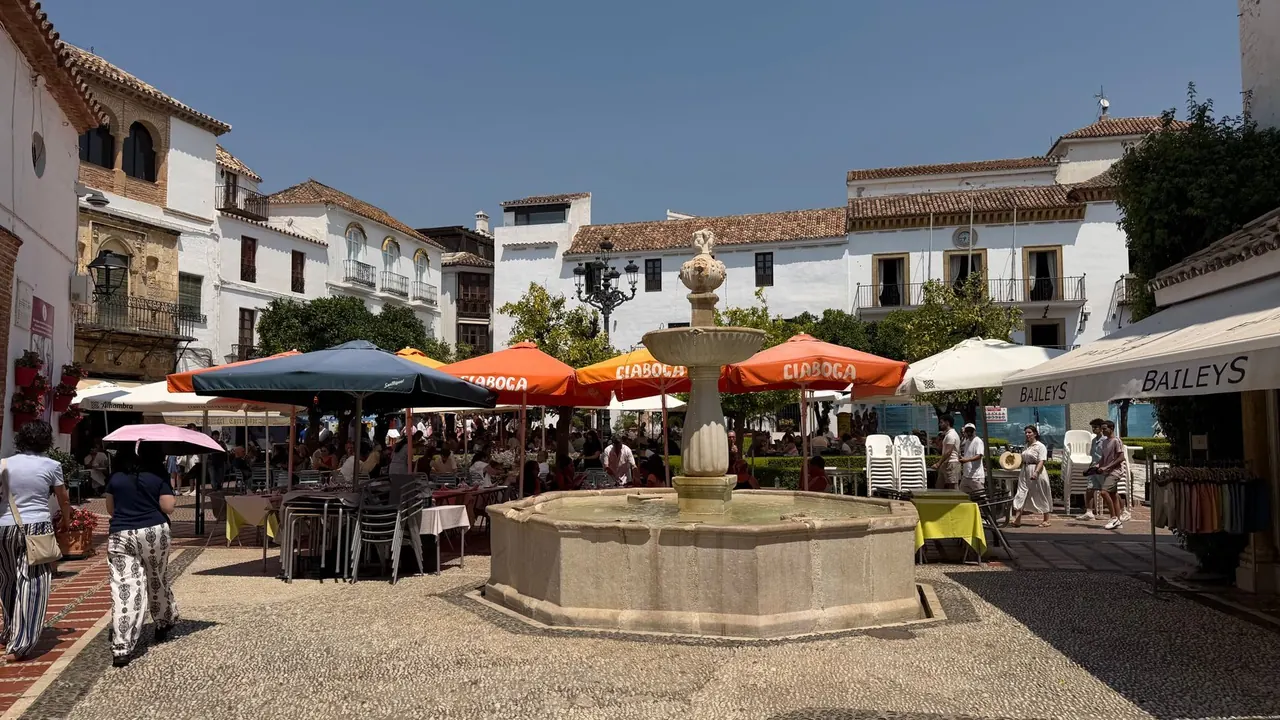
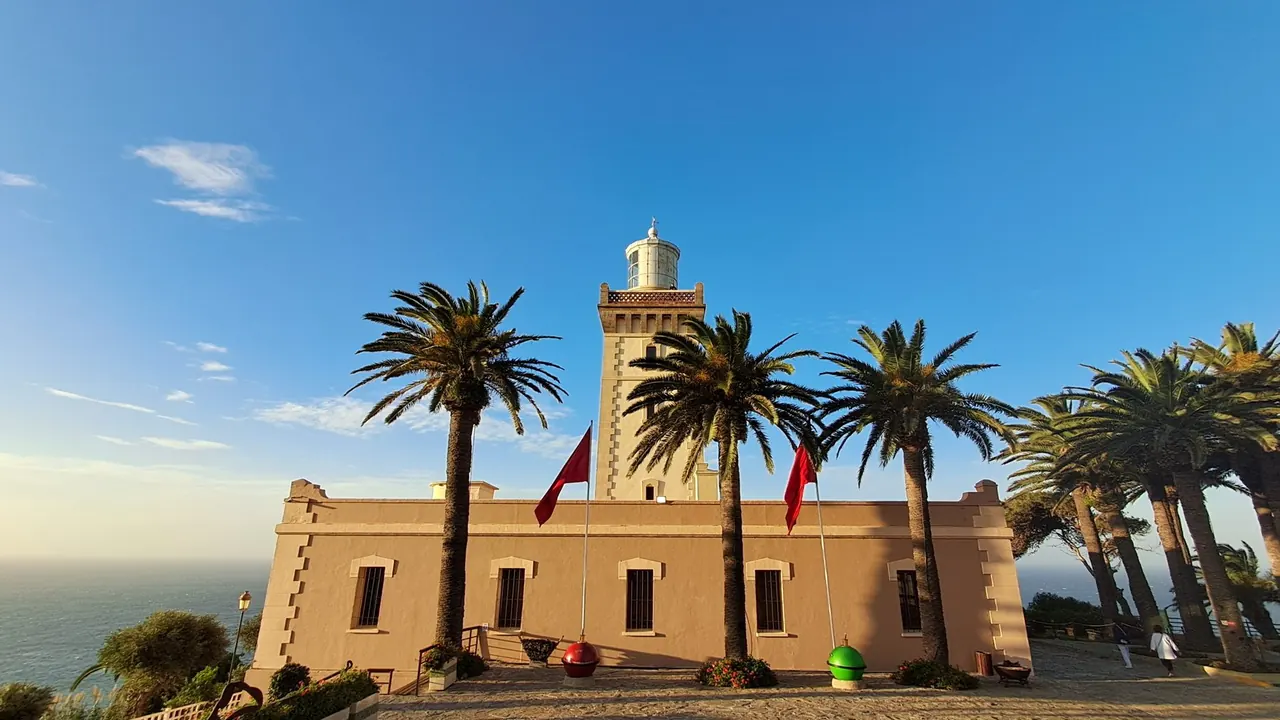
Photos: Marbella by Décio Franchini, Pexels License; Tangier by Ideophagous, CC BY-SA 4.0, cropped.
Marbella or Tangier?
Our verdict in twelve categories, each scored against the same fixed benchmark cities, and the climate month by month, so you can choose for your trip.
Choose Marbella for
- families
- nightlife
- beaches
Marbella suits travellers who want the sea to be the centre of the trip. It has long sandy town beaches with lifeguards, a flat promenade for children, Sierra Blanca rising behind the town for hikers, and summer nights around Puerto Banús that run until dawn. Families and groups after sun and a social scene will find more of what they came for here. They also need to accept that it costs a good deal more, and that a car makes the coast and the white villages far easier to reach.
Choose Tangier for
- prices
- culture and sights
- getting around
Tangier is the better pick for someone who would rather explore a city than lie on a sunbed. The kasbah, the steep medina, the American Legation and the Art Deco Ville Nouvelle give it a history and a sense of place that Marbella's small old town can't match. Eating, staying and getting about in taxis all cost little, so it is the easier choice on a modest budget. Evenings are for mint tea on a terrace above the Strait rather than for clubs.
Scoreboard
Twelve categories on one fixed scale from 0 to 100. The shaded stretch is the gap between the two.
Your match
Pick a travel style or drag the sliders, and both match scores follow your weighting.
Wins on families and nightlife with your weighting.
Wins on prices and culture and sights with your weighting.
What matters to you?
Category by category
What the scores mean for a trip.
Beaches & swimming
Marbella is the clear choice for a beach trip. Its fine grey sand runs for kilometres, from the town beaches of La Venus and El Fuerte out to the dunes at Cabopino. There are sun loungers, beach clubs and chiringuitos all along it, and the water is usually calm and clear.
Tangier's own city beach is better to look at than to swim from. The good swimming is out west on the wide Atlantic beaches at Achakar, where there is surf and a bit more wildness, or further away at Asilah. Beach dress is more modest, and the sea is mostly a local family affair in July and August.
Food & drink
The two cities are broadly level for food but feel very different, and oddly they share one dish: sardines grilled over fire. Marbella has the wider range, from beach chiringuitos and old-town tapas to tasting-menu kitchens on the Golden Mile, with local wine from the Ronda hills. Its weak point is the overpriced, forgettable seafront food in between.
Tangier's cooking is narrower and more homely: bissara at breakfast, harira, tagines and fish chosen at the port. The tea terraces looking over the Strait matter as much as the food. There is little fine dining, and wine is hard to find.
Culture & sights
Tangier has far more to see. The kasbah's old sultan's palace, the whitewashed medina climbing from the port, the Moorish-style American Legation and the Art Deco streets of the Ville Nouvelle tell the story of a city where Europe and Africa meet. That story is fuller still for anyone who knows Paul Bowles and the Beat writers.
Marbella's heritage is pretty but small. The Plaza de los Naranjos and its lanes, the print museum, the Dalí bronzes on the Avenida del Mar and the Roman mosaics at Río Verde fill an afternoon. After that, Andalusia's great monuments are a drive away.
Nightlife
Marbella is the place for a night out, at least in summer. Dinner is late, and then come champagne bars facing the yachts at Puerto Banús, beach-club parties on the Golden Mile and clubs open until dawn. It is polished and expensive, and from November to March the scene shrinks to quiet drinks in the old town.
In Tangier the evening means a stroll along the seafront and a café terrace. Drinking is limited to a few old bars from the international era, hotel lounges and some summer beach clubs. There is no club district, and the medina falls silent after dark.
Nature & outdoors
Marbella has the stronger outdoors, because real mountains rise straight behind the beach. The half-day climb up La Concha in Sierra Blanca looks across to Gibraltar and Morocco. The fir forests and ibex of the Sierra de las Nieves are under an hour inland, and El Torcal and the Caminito del Rey are within reach.
Tangier's outdoors centres on the Cap Spartel headland, with its cliffs, lighthouse and pine paths, and the wooded Perdicaris park. In spring and autumn, storks and raptors crossing the Strait are a real draw. Proper mountain hiking in the Rif needs an overnight stay.
Day trips
Both cities are fine bases, and the real difference is in what lies around them. From Marbella the choice is Andalusian: Ronda's gorge, Málaga's Alcazaba and Picasso Museum, hilltop Casares, Gibraltar, or a long day to the Alhambra. Most of these need a car, since there is no train.
From Tangier you can explore northern Morocco without a car. Asilah and Tetouan's UNESCO-listed medina are about an hour away. Chefchaouen makes a long day, and the high-speed train reaches Rabat in well under two hours. A ferry to Tarifa even puts Spain within a day trip.
Good for families
Marbella is much better set up for children. The town beaches are sheltered and lifeguarded in season, many places to stay are built around pools, and the coast nearby has an animal park, a zoo, water parks, an aquarium and a cable car. Just keep children away from Puerto Banús at night.
Tangier welcomes children warmly but offers them little. The promenade, the Caves of Hercules and the ferry over to Spain make good outings. The steep medina stairs are hard work with a pushchair, though, and the touts tire parents quickly.
Getting around
Getting around is about equally awkward in both, but in different ways. Marbella stretches along a motorway, with only the old town and seafront within walking distance. Buses are slow, there is no train, and most visitors end up hiring a car or taking taxis.
Tangier's centre is compact but steep and confusing at first. Cheap petit taxis are everywhere, and they make up for the lack of useful buses. Tangier also has a train station with good links south and a ferry port in the city centre.
Shopping & style
Marbella has the better shopping, though mostly for big-name labels. Puerto Banús lines up fashion and jewellery boutiques facing the yachts, with a department store and malls nearby, and the old town adds linen, leather and ceramics. Beyond the brands there is little to browse.
Tangier's medina sells more characterful souvenirs: leather slippers, rugs, lanterns and the striped cloth worn by Rif women. The range is small, you have to bargain, and the hard sell can be tiring.
Affordability
Tangier is far cheaper. Grilled fish, tagines, terrace tea, taxis and medina riads all cost little, and only sea-view hotels and alcohol push the bill up.
Marbella is expensive by Spanish standards, especially in July and August, when villa rates, prime sunbeds and dinners around the Golden Mile get very costly. Old-town tapas bars and off-season stays help. Many visitors keep costs down by staying in a neighbouring town and coming in for the day.
Live music & performing arts
Neither city has much live performance, and both send serious music lovers elsewhere. Marbella's highlight is summer pop and rock in an old quarry amphitheatre, plus flamenco staged for visitors. For opera or real flamenco you have to go to Málaga.
Tangier's offer is more local but irregular. There are festival nights of Andalusian classical music, gnawa and Jilala, a long-running jazz festival, and the historic art-house cinema on the Grand Socco. On an ordinary evening, though, there is little on.
Wellness & relaxation
Marbella offers rest in resort spas, Tangier in the public hammam. On the Golden Mile and in the hills behind it, big spas, yoga, detox clinics and golf make for a polished retreat. It works best from October to May, because the summer heat and parties take the peace away.
Tangier's neighbourhood bathhouses give you the full ritual of steam, black soap and a scrub with the kessa glove. They are plain, local places, and riads and larger hotels run more comfortable versions. Quiet riad rooftops above the medina add to the calm, even with the noisy port below.
When should you go?
Pick your month. The climate figures are measured averages, not a forecast.
Marbella in July
Tangier in July
Daytime high, °C
Rainfall in the month, mm
Where the figures come from
Marbella's temperatures are measured 40 km from the centre, at Malaga / Aeropuerto.
Marbella has no rain gauge within 25 km of the centre, so its rainfall comes from a gridded climate dataset read at the city rather than from a gauge further away.
Temperature and rainfall are climate normals, averaged over the years shown. Marbella: 1991-2020 normals, Malaga / Aeropuerto (39.7 km from centre). Tangier: 1991-2020 normals, Tanger Aerodrome (9.5 km from centre).
Marbella and Tangier face each other across the Strait and share much the same pattern: a dry, sunny summer and a mild, wet winter. In Marbella, June to September is almost rainless, and August reaches about 32°C, which is fine for the beach but hot for long walks at midday. The sea stays cool. You can swim from June if you don't mind cold water, but it is only really comfortable from July to September, at around 22°C, and beach days carry on into early October. April and May are the best months for walking, warm and fairly dry.
Tangier runs a couple of degrees cooler in July and August, which makes its steep medina easier to climb in high summer, and its sea warms at the same time as Marbella's. In April and May it gets a little more rain than Marbella, and the autumn rain comes back harder, reaching 110mm in November. December is the wettest month on both sides of the Strait, with daytime highs in the high teens.
Which traveller are you?
On a family trip with children, Marbella is far easier. Its sheltered, lifeguarded beaches, pool-centred apartments and flat promenade suit buggies and scooters, and there are animal parks, an aquarium and water parks along the coast. Tangier has its steep medina and little built for children.
For a culture and arts trip, Tangier has much more to see. The kasbah palace museum, the American Legation, the medina between the two Soccos and the city's links with Paul Bowles fill two or three days. Marbella's old town takes an afternoon.
On a trip on a tight budget, Tangier wins clearly. Grilled fish, tagines, medina riads and petit taxis all cost little, and only alcohol is pricey. In Marbella you can cut costs with old-town tapas, but it stays an expensive place to stay.
Before you go
| Measure | Marbella | Tangier |
|---|---|---|
| Official language | Spanish | Arabic, Standard Moroccan Tamazight |
| Currency | Euro (EUR) | Moroccan Dirham (MAD) |
| Sockets | CF230 V, 50 Hz | CE50 Hz |
| Driving side | Right | Right |
| Time zone | UTC+1, UTC+2 in summer | UTC+1 |
| Emergency number | 112 | Police 19/112, ambulance 15, fire 15 |
| Elevation | 22 m | 56 m |
| Main airport | Málaga-Costa del Sol Airport (AGP)39 km from centre166 non-stop destinations | Tangier Ibn Battuta Airport (TNG)11 km from centre50 non-stop destinations |
| Public holidays this year | 12 days | 11 days |
By the numbers
| Measure | Marbella | Tangier |
|---|---|---|
| City population | 159,786 | 1,275,428 |
| People per km² | 1,398 | 6,393 |
| Museums within 10 km | 6 | 6 |
| UNESCO World Heritage sites within 50 km | 0 | 1 |
| Swim season, months above 21 °C | 3 months | 3 months |
Where else could you go?
Every comparison below shares a destination with this one, so you can follow Marbella or Tangier somewhere new.