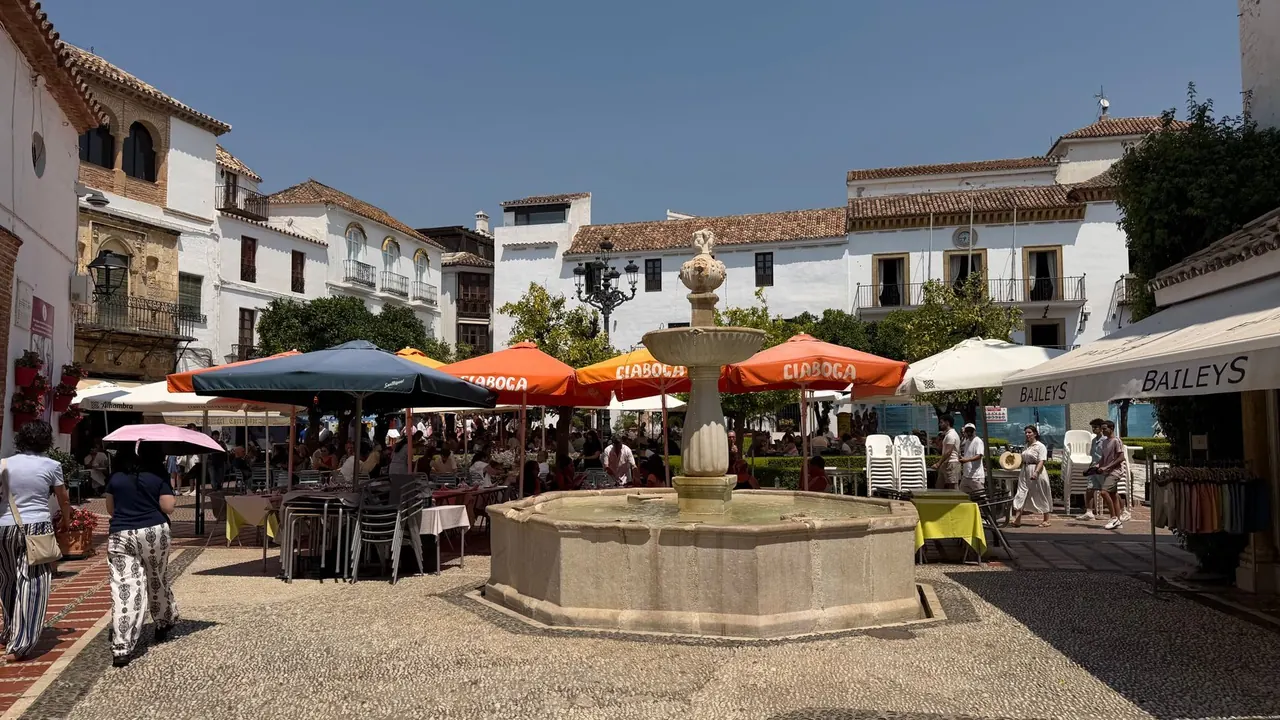
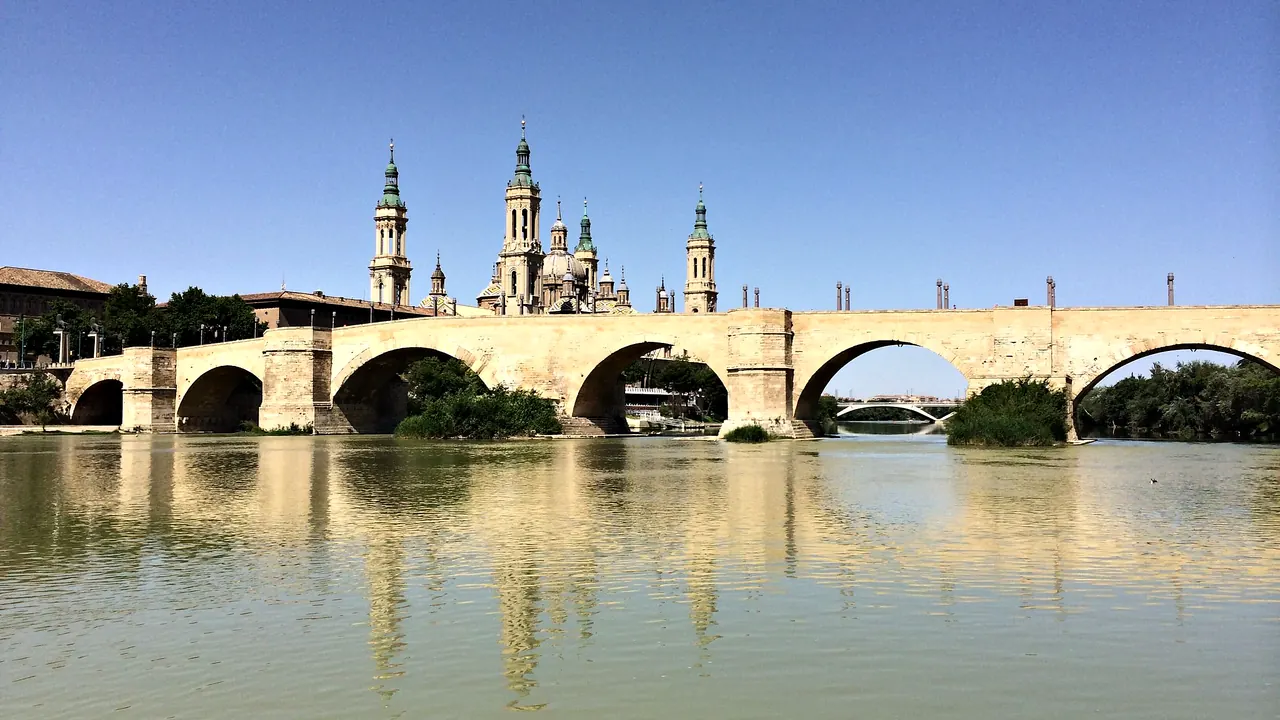
Photos: Marbella by Décio Franchini, Pexels License; Zaragoza by Pablo Alejandro Araujo Granda, CC BY-SA 2.0, cropped.
Marbella or Zaragoza?
Our verdict in twelve categories, each scored against the same fixed benchmark cities, and the climate month by month, so you can choose for your trip.
Choose Marbella for
- beaches
- wellness
- nature and the outdoors
Marbella is the one for a sun-and-sea vacation with some polish: long sandy beaches, mountains rising straight behind the coast, summer nights out at Puerto Banús and plenty to keep children busy along the shore. It suits visitors who have a car and a generous budget and who want to rest rather than sightsee, since the old town takes only an afternoon.
Choose Zaragoza for
- prices
- culture and sights
- getting around
If you would rather walk through two thousand years of history, pick Zaragoza. The Pilar basilica, La Seo and the Aljafería fill several days, and the flat centre needs no car. The tapas bars of El Tubo make evenings cheap and sociable, and the high-speed train puts Madrid and Barcelona within reach. There is no sea, though, and summers on the plain are fierce.
Scoreboard
Twelve categories on one fixed scale from 0 to 100. The shaded stretch is the gap between the two.
Your match
Pick a travel style or drag the sliders, and both match scores follow your weighting.
Too close to call, 2 points apart
Wins on beaches and wellness with your weighting.
Wins on prices and culture and sights with your weighting.
What matters to you?
Category by category
What the scores mean for a trip.
Beaches & swimming
There is no real contest here. Marbella's shore runs for roughly 27km of fine, greyish sand, from the town beaches of La Venus and El Fuerte to the dunes at Cabopino. The water is calm and clear and stays swimmable into early October, though it is cooler than further east in the Mediterranean.
Zaragoza sits on the Ebro plain, well over 200km from the coast, and nobody swims in the river. Summer swimming means the city's open-air pools, so beach lovers should add a few days on the coast.
Food & drink
Both cities eat well, but in different ways. Marbella's range is wide: sardine skewers on the beach, gazpacho and old-town tapas at one end, acclaimed tasting menus along the Golden Mile and plenty of international cooking at the other. In between, the dull, overpriced menus around the port are best avoided.
Zaragoza's cooking is narrower and more traditional. You hop between bars in El Tubo, each counter known for one dish, and eat ternasco lamb and borage with clams with cheap, generous reds from Cariñena and Somontano. It is the better table for traditional cooking, though fine dining and foreign cuisines are scarce.
Culture & sights
Zaragoza has far more to see. Its history runs from the Roman forum, river port and theatre of Caesaraugusta to the eleventh-century Aljafería palace, the Mudéjar wall of La Seo and the Pilar basilica with ceilings painted by the young Goya. That is enough for two or three full days.
Marbella's heritage fits into an afternoon: the whitewashed Casco Antiguo around the Plaza de los Naranjos, a museum of Spanish prints, Dalí bronzes on the Avenida del Mar and the Roman mosaics at Río Verde. For major monuments you have to drive to Ronda, Málaga or Granada.
Nightlife
In summer Marbella has the bigger nightlife, and the more expensive one. Champagne bars and clubs face the yachts at Puerto Banús, beach clubs with DJs line the Golden Mile and nights often end at dawn. From November to March it goes quiet.
Nights in Zaragoza are cheaper, student-driven and steadier through the year. They start with tapas in El Tubo and move to the bars around Plaza San Felipe and the Casco, with a few clubs open late. The high point is the Fiestas del Pilar in October, when the streets stay full until morning.
Nature & outdoors
Marbella has the more dramatic setting. Sierra Blanca rises straight behind the town, the climb to La Concha looks across to Morocco, and the fir forests of the Sierra de las Nieves are under an hour away. Add sailing, paddleboarding and a seaside path, and the mild winters mean you can do all of it year-round.
Zaragoza is surrounded by bare steppe swept by the cierzo wind, and its best landscapes need a drive: the beech woods of Moncayo, the climbing towers of the Mallos de Riglos and the badlands of the Bardenas Reales. In town, the Ebro paths and Parque del Agua are good for walks and bike rides.
Day trips
Both make excellent bases, but they work differently. From Marbella the outings are by car, along the coast and into the hills: the gorge at Ronda, Málaga, Gibraltar, white villages like Casares, and Granada as a long day. Without a car, buses make it slow going.
Zaragoza's advantage is the high-speed railway, which puts Madrid and Barcelona about an hour and a half away. With a hire car you can also explore the quieter towns of Aragon: Loarre castle, the war ruins of Belchite, Goya's birthplace at Fuendetodos and, with an early start, Albarracín.
Good for families
Marbella suits families better because it has what children usually want most: sheltered, lifeguarded beaches, a long flat promenade and resorts built around pools. Along the coast there are also an animal park, a zoo, water parks and a cable car, though most are reached by car.
Zaragoza is calm and easy with children. It has a flat centre, the river aquarium at the Expo site, playgrounds in the Parque del Agua and parades of giants during the Pilar fiestas. With no beach and sights aimed mainly at adults, though, younger children will run out of things to do sooner.
Getting around
Zaragoza is much easier to get around. The Pilar riverfront, the Casco and the Aljafería sit close together on flat ground, a tram line crosses the centre, and buses and bike-share cover the rest. You only need a car for rural Aragon.
Marbella is stretched thin along the motorway from San Pedro to Cabopino. The old town and the promenade are walkable, but there is no train and buses are slow, so most visitors hire a car or take taxis between the port, the town and where they are staying.
Shopping & style
Marbella has more to offer if designer labels are the point. International fashion and jewellery boutiques face the yachts at Puerto Banús, with a department store and malls nearby, and the old-town lanes sell linen, leather and ceramics.
Shopping in Zaragoza is the ordinary Spanish high street along Paseo de la Independencia, with older shops and pastry makers on Calle Alfonso I. The best souvenirs are candied fruit, Aragonese wine and ceramics from Muel, with the Mercado Central for local produce.
Affordability
Zaragoza is much cheaper for almost the whole year. Central hotels are good value, tapas and set lunches are generous, wine costs little and the Pilar basilica is free to enter. The one exception is fiesta week in October, when room prices jump.
Marbella is expensive by Spanish standards, especially in July and August and anywhere near Puerto Banús or the Golden Mile. Old-town tapas bars and out-of-season apartments bring costs down, and many visitors save by staying in a neighbouring town.
Live music & performing arts
Zaragoza has more live performance through the year. The Auditorio hosts touring orchestras, chamber music and jazz, and the nineteenth-century Teatro Principal stages plays and dance. The jota, Aragon's leaping folk song and dance, is easiest to see during the Pilar fiestas.
Live performance in Marbella mostly happens in summer, with big pop and rock acts in an old quarry amphitheatre and DJs at the beach clubs. The flamenco shows are staged for visitors, and for classical music or opera people go to Málaga.
Wellness & relaxation
Marbella is far better set up for rest. Spa resorts, retreats and detox clinics line the Golden Mile and the hills behind it. From October to May the town is mild, sunny and calm enough for promenade walks and golf, though high summer is too crowded and hot to relax.
Zaragoza offers hotel spas, an Arab-style bathhouse and a slow provincial pace of long lunches and evening walks along the Ebro. For real thermal baths, Alhama de Aragón is an excursion of a little over an hour.
When should you go?
Pick your month. The climate figures are measured averages, not a forecast.
Marbella in July
Zaragoza in July
Daytime high, °C
Rainfall in the month, mm
Where the figures come from
Marbella's temperatures are measured 40 km from the centre, at Malaga / Aeropuerto.
Marbella has no rain gauge within 25 km of the centre, so its rainfall comes from a gridded climate dataset read at the city rather than from a gauge further away.
Temperature and rainfall are climate normals, averaged over the years shown. Marbella: 1991-2020 normals, Malaga / Aeropuerto (39.7 km from centre). Zaragoza: 1991-2020 normals, Zaragoza / Aeropuerto (11.2 km from centre).
Marbella has the gentler year. Winters are mild, around 17°C in January, which makes walking and hiking pleasant, but November to March is also the wet season, with the most rain in December at about 115mm. From June to September the coast is almost rainless and very sunny. The sea warms to about 22°C by August and is swimmable from June into early October. May and late September suit both the beach and the hills.
Zaragoza's year is more extreme. Winters on the plain are cold, with highs near 11°C, and July and August reach about 33°C, too hot for sightseeing in the middle of the day. Rain is light all year, so temperature decides the best time to go. April, May, late September and October are the comfortable months for the streets, and in winter Marbella is the brighter and warmer of the two.
Which traveller are you?
On a beach and sun trip, Marbella wins outright. It has more than two dozen beaches, a swimming season that runs into October and chiringuitos grilling sardines on the sand. Zaragoza is over 200km inland and offers only municipal pools.
For a culture and arts trip, Zaragoza is the stronger choice. Roman Caesaraugusta, the Islamic Aljafería palace, Goya's ceilings in the Pilar and La Seo's Mudéjar wall fill several days, and the Auditorio adds a concert season. Marbella's old town takes an afternoon.
On a trip on a tight budget, your money goes much further in Zaragoza. Central hotels are good value most of the year, tapas and Cariñena wines cost little and nobody needs a car. Marbella can be done cheaply out of season, but summer rates climb steeply.
Before you go
| Measure | Marbella | Zaragoza |
|---|---|---|
| Official language | Spanish | Spanish |
| Currency | Euro (EUR) | Euro (EUR) |
| Sockets | CF230 V, 50 Hz | CF230 V, 50 Hz |
| Driving side | Right | Right |
| Time zone | UTC+1, UTC+2 in summer | UTC+1, UTC+2 in summer |
| Emergency number | 112 | 112 |
| Elevation | 22 m | 200 m |
| Main airport | Málaga-Costa del Sol Airport (AGP)39 km from centre166 non-stop destinations | Zaragoza Airport (ZAZ)13 km from centre12 non-stop destinations |
| Public holidays this year | 12 days | 12 days |
By the numbers
| Measure | Marbella | Zaragoza |
|---|---|---|
| City population | 159,786 | 693,091 |
| People per km² | 1,398 | 712 |
| Museums within 10 km | 6 | 22 |
| UNESCO World Heritage sites within 50 km | 0 | 1 |
| Swim season, months above 21 °C | 3 months | - |
Where else could you go?
Every comparison below shares a destination with this one, so you can follow Marbella or Zaragoza somewhere new.