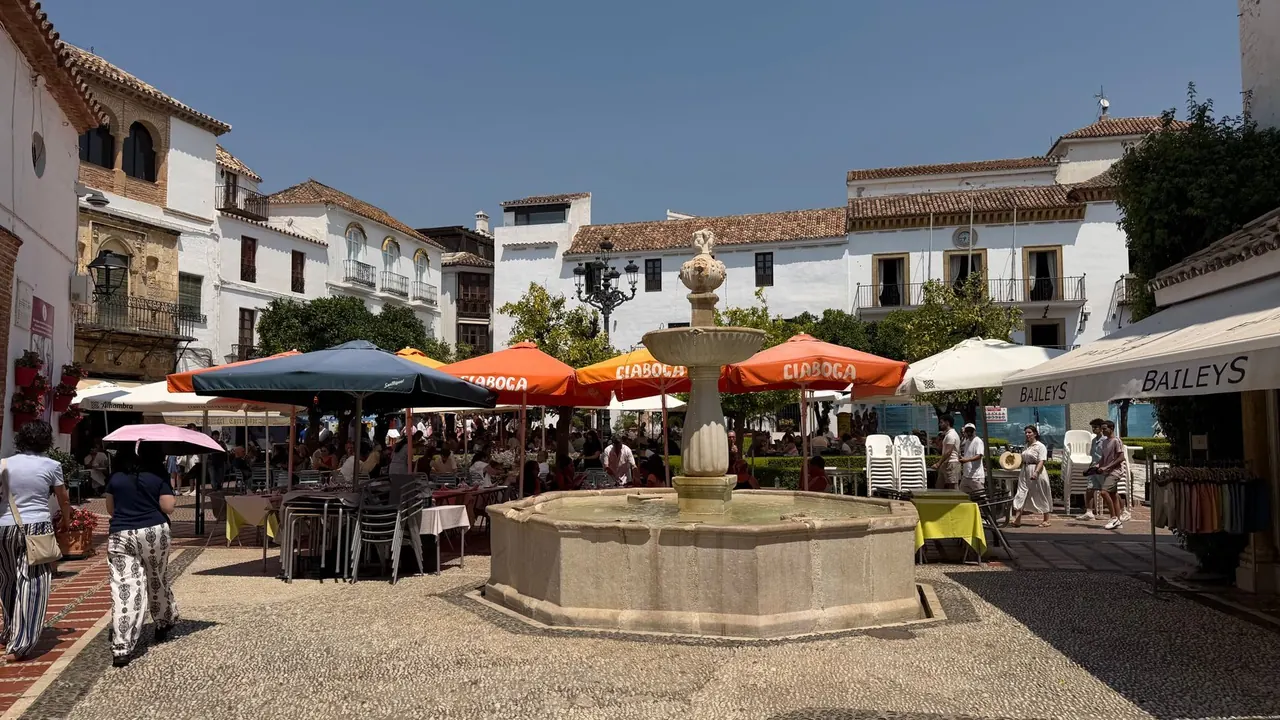
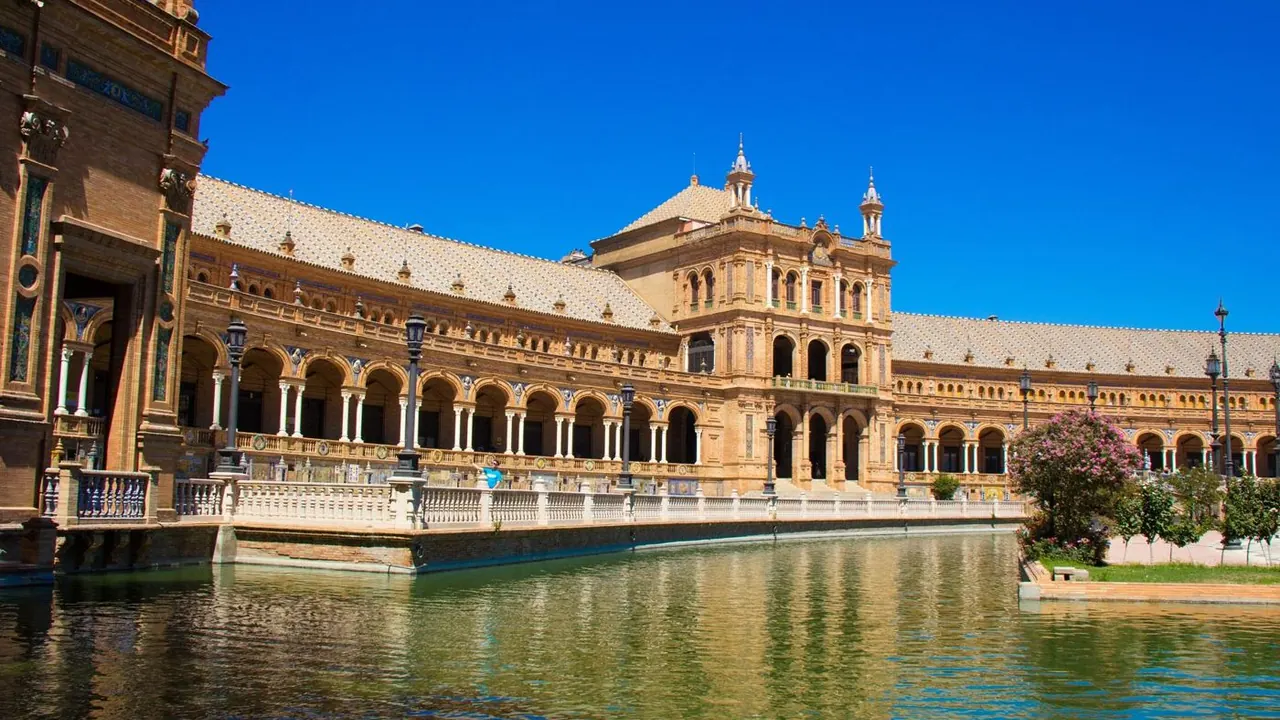
Photos: Marbella by Décio Franchini, Pexels License; Seville by Tibor Kovacs, CC BY 2.0, cropped.
Marbella or Seville?
Our verdict in twelve categories, each scored against the same fixed benchmark cities, and the climate month by month, so you can choose for your trip.
Choose Marbella for
- beaches
- nature and the outdoors
- families
Marbella suits a sun-and-sea trip where the beach comes first. It has a long shore of town beaches, beach clubs and chiringuitos, mountains rising straight behind it for walking, and resorts built around pools and spas. Families on a beach vacation and travellers who want polished summer nights in Puerto Banús will be at home there. Expect a high bill, a light dose of history, and a car for anything beyond the seafront.
Choose Seville for
- culture and sights
- live music and the arts
- getting around
Seville is the choice for anyone who travels to see things and eat well. The Alcázar, the cathedral and the lanes of Santa Cruz make one of Europe's great old centres, flamenco is a living art there, and the tapas bars of Triana and El Arenal are reason enough to come. It is flat and walkable, cheaper, and well connected by train to Córdoba and Jerez. The sea is a long day away, and high summer is fiercely hot.
Scoreboard
Twelve categories on one fixed scale from 0 to 100. The shaded stretch is the gap between the two.
Your match
Pick a travel style or drag the sliders, and both match scores follow your weighting.
Wins on beaches and nature and the outdoors with your weighting.
Wins on culture and sights and live music and the arts with your weighting.
What matters to you?
Category by category
What the scores mean for a trip.
Beaches & swimming
This is where the two cities differ most. Marbella is built around its shore: more than two dozen beaches over roughly 27km, from La Venus and El Fuerte in town to the dunes at Cabopino. The sand is fine and greyish, the water is mostly calm, and it is swimmable from early summer well into autumn.
Seville sits inland on the Guadalquivir. A beach day means driving or taking a coach to Matalascañas or Mazagón on the Huelva coast, which takes most of the day, and in town you swim in a hotel rooftop pool. Anyone who wants the sea every day should stay on the coast.
Food & drink
Seville is the better place to eat in the everyday sense. Its tapas culture is the main event: standing at tile-fronted counters in Santa Cruz, El Arenal and Triana over spinach with chickpeas, salmorejo and pork cheek, with manzanilla or fino from the nearby sherry towns.
Marbella is more uneven. The beach sardines grilled over driftwood and the old-town tapas bars are good, and it has a top tier of tasting-menu kitchens along the Golden Mile that Seville cannot match. Between those two ends, though, the seafront and port menus are often expensive and dull.
Culture & sights
Seville is one of the major heritage cities of Europe. The Mudéjar courtyards of the Real Alcázar, the cathedral with the Giralda, the Archivo de Indias, Plaza de España and the Murillos in the Museo de Bellas Artes easily fill three or four days, nearly all within walking distance.
Marbella's history is pleasant but slight. The Plaza de los Naranjos and its whitewashed lanes, the print museum, the Dalí bronzes on the Avenida del Mar and the Roman mosaics at Río Verde take about an afternoon. For more, you drive out to the bigger monuments elsewhere in Andalusia.
Nightlife
Both cities go out late, but the nights feel very different. Marbella is glamour and clubs: champagne bars facing the yachts in Puerto Banús, DJ beach clubs along the Golden Mile and dancing until dawn. The scene shrinks sharply from November to March.
Seville's nights are spent outdoors and talking rather than dancing. They drift from tapas counters to terraces on the Alameda de Hércules, Triana and around the Alfalfa, with riverside bars in summer. The club scene is mostly for students, apart from the all-night casetas of the April Fair.
Nature & outdoors
Marbella has real mountains at its back. You can hike from town up Sierra Blanca to La Concha and look across to Gibraltar and Morocco, the fir forests and gorges of Sierra de las Nieves are under an hour away, and the coast adds paddleboarding, sailing and dolphin-watching boats.
Seville is surrounded by flat farmland and orange orchards, so the outdoors means María Luisa Park, river paths and kayaking in town. Its standout is Doñana, a great wetland for flamingos and migrating birds about an hour and a half away. The heat rules out most outdoor plans in summer.
Day trips
Both are excellent bases, and the real difference is how you get around. From Seville most trips go by train: Córdoba's Great Mosque in under an hour on the high-speed line, Jerez for sherry bodegas, and onwards to Cádiz. Carmona and the Roman site of Itálica are even closer.
From Marbella you reach Ronda, Gibraltar, Málaga and the white villages of Casares and Mijas, but there is no train, so you really need a car. Granada is a long day from either city.
Good for families
Marbella is easier with children, mainly because the vacation centres on lifeguarded town beaches and a flat promenade made for scooters. Many apartment complexes are built around pools, and there are water parks, a zoo and an animal park along the coast, although you need a car to reach most of them.
Seville has María Luisa Park with its rowing boats, the maze in the Alcázar gardens and a summer water park on La Cartuja. Its summers are much harder going, though, often passing 40°C, so walking around the city with small children is really only practical in spring and autumn.
Getting around
Seville is far simpler to get around. The flat historic centre puts the cathedral, Triana and Plaza de España within a half-hour walk, and a tram, a metro line, buses and an extensive network of bike lanes with a public bike scheme fill the gaps. A car only gets in the way.
Marbella stretches thinly along the motorway from San Pedro to Cabopino. The old town and seafront are pleasant on foot, but the port, beach clubs and inland villages are far apart, so most visitors hire a car or rely on taxis.
Shopping & style
The two are on a par for shopping but sell very different things. Marbella means luxury: international fashion and jewellery boutiques facing the yachts at Puerto Banús, a department store and malls, plus linen, leather and ceramics in the old-town lanes.
Seville means local craft. There are hand-painted tiles from the old pottery quarter of Triana, and flamenco dresses, shawls, fans and guitars around Calle Sierpes, made for locals as much as for visitors. Big luxury labels are few.
Affordability
Seville costs noticeably less. A tapas evening and a cold beer are cheap, walking replaces transport, and rooms are moderate most of the year. The main exceptions are Holy Week and the April Fair.
Marbella is expensive by Spanish standards, especially in July and August, when villa and hotel rates rise and beach-club sunbeds and Golden Mile dinners cost far more than elsewhere. Eating in old-town tapas bars and visiting outside summer brings it closer to normal Andalusian prices.
Live music & performing arts
Seville is the home of flamenco, with nightly performances in intimate tablaos and peñas where local aficionados gather, and the Bienal brings the leading performers to the city. The Teatro de la Maestranza stages opera in the city where Carmen and The Barber of Seville are set.
Marbella offers summer pop and rock concerts in a quarry amphitheatre and flamenco shows aimed at visitors. For anything more serious, people head to Málaga.
Wellness & relaxation
Marbella is the better place to come specifically to rest. Spa resorts, yoga retreats and detox clinics are spread across the Golden Mile and the hills, and from October to May the town is calm and sunny, good for promenade walks and golf. High summer is much less restful.
Seville's appeal is its slow pace rather than its facilities. There are a few atmospheric Arab-style baths in old mansions, cool courtyards, the Alcázar gardens and long lunches, but the narrow streets are noisy at night and very crowded during Holy Week.
When should you go?
Pick your month. The climate figures are measured averages, not a forecast.
Marbella in July
Seville in July
Daytime high, °C
Rainfall in the month, mm
Where the figures come from
Marbella's temperatures are measured 40 km from the centre, at Malaga / Aeropuerto.
Marbella has no rain gauge within 25 km of the centre, so its rainfall comes from a gridded climate dataset read at the city rather than from a gauge further away.
Temperature and rainfall are climate normals, averaged over the years shown. Marbella: 1991-2020 normals, Malaga / Aeropuerto (39.7 km from centre). Seville: 1991-2020 normals, Sevilla / San Pablo (8.1 km from centre).
Marbella is a summer beach town with a long season. The sea is warm enough for comfortable swimming from June to early October and peaks at about 22°C in August, while daytime heat stays manageable for a coastal town. Spring and autumn are mild and very sunny, good for walking in the sierra. Rain comes from October onwards and is heaviest in December, at around 115mm, though winter days stay mild.
Seville is at its best in spring and again in October, when days are warm and pleasant for long walks through the old centre. From June to September it is far hotter than the coast, with July and August highs around 36°C, so sightseeing shrinks to early mornings and late evenings. Winters are cool and a little drier than Marbella's, with the wettest spell from October to December. For a summer trip, Marbella is the more comfortable city. For spring or autumn sightseeing, Seville is the better pick.
Which traveller are you?
On a beach and sun trip, Marbella is the clear pick. Its town beaches and the long sands towards Cabopino are on the doorstep, with loungers, chiringuitos and calm water. From Seville the nearest Atlantic beach is well over an hour away by car or coach.
For a culture and arts trip, Seville is in a different league. The Alcázar, the Gothic cathedral and the Giralda, the Museo de Bellas Artes and nightly flamenco in Triana and Santa Cruz fill several days. Marbella's old town and Dalí sculptures take an afternoon.
On a trip on a tight budget, Seville stretches the money further. Tapas and drinks are cheap, the walkable centre means you rarely pay for transport, and rooms are moderate outside Holy Week and the Fair. In Marbella, summer rates and Puerto Banús prices add up fast.
Before you go
| Measure | Marbella | Seville |
|---|---|---|
| Official language | Spanish | Spanish |
| Currency | Euro (EUR) | Euro (EUR) |
| Sockets | CF230 V, 50 Hz | CF230 V, 50 Hz |
| Driving side | Right | Right |
| Time zone | UTC+1, UTC+2 in summer | UTC+1, UTC+2 in summer |
| Emergency number | 112 | 112 |
| Elevation | 22 m | 18 m |
| Main airport | Málaga-Costa del Sol Airport (AGP)39 km from centre166 non-stop destinations | Seville Airport (SVQ)9 km from centre96 non-stop destinations |
| Public holidays this year | 12 days | 12 days |
By the numbers
| Measure | Marbella | Seville |
|---|---|---|
| City population | 159,786 | 689,423 |
| People per km² | 1,398 | 4,896 |
| Museums within 10 km | 6 | 24 |
| UNESCO World Heritage sites within 50 km | 0 | 1 |
| Swim season, months above 21 °C | 3 months | - |
Where else could you go?
Every comparison below shares a destination with this one, so you can follow Marbella or Seville somewhere new.