
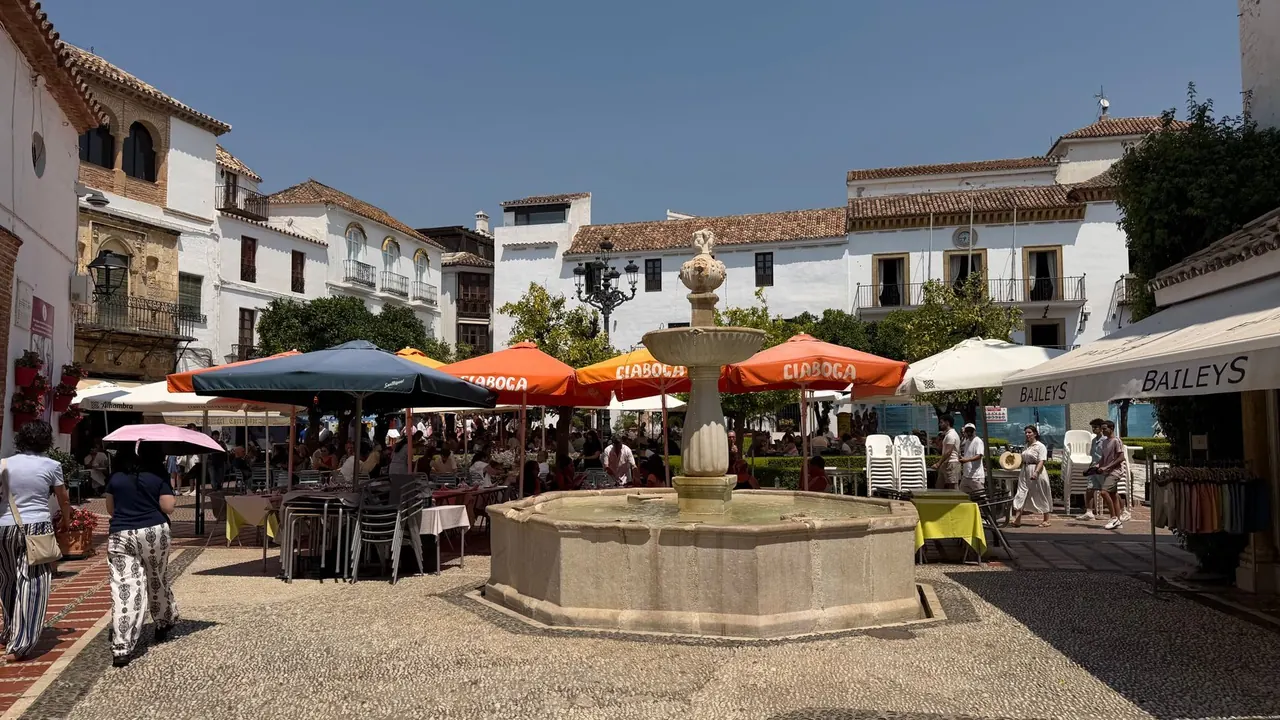
Photos: Lisbon by Riccardo Toso, Pexels License; Marbella by Décio Franchini, Pexels License.
Lisbon or Marbella?
Our verdict in twelve categories, each scored against the same fixed benchmark cities, and the climate month by month, so you can choose for your trip.
Choose Lisbon for
- culture and sights
- live music and the arts
- getting around
Lisbon suits travellers who want a real city first. Its strengths are the monasteries at Belem, the medieval lanes of Alfama, fado in the evening and cheap wine in neighbourhood tascas. You can get around it without a car, it costs less from day to day, and Sintra or Evora fit easily around the sightseeing. The beaches are an outing into cool Atlantic water rather than the reason to go.
Choose Marbella for
- beaches
- wellness
- families
Choose Marbella when the trip is built around the sea. The beaches start at the edge of town and the water is warmer and calmer. Families get flat promenades and resort pools, and anyone after rest will find spa resorts that are quiet outside summer. It also has the polished summer scene of Puerto Banús. Expect to pay more and hire a car, and to see the old town in an afternoon.
Scoreboard
Twelve categories on one fixed scale from 0 to 100. The shaded stretch is the gap between the two.
Your match
Pick a travel style or drag the sliders, and both match scores follow your weighting.
Wins on culture and sights and live music and the arts with your weighting.
Wins on beaches and wellness with your weighting.
What matters to you?
Category by category
What the scores mean for a trip.
Beaches & swimming
Lisbon has no beach of its own. You take the Cascais train to Carcavelos or Estoril, or cross the river to the long sands of Costa da Caparica. The Atlantic stays cool, and the swell often suits surfers better than swimmers, so it works as a day out from the city.
In Marbella the beach is the point. More than two dozen beaches run along the town's shore, from La Venus in the centre to the dunes at Cabopino, with loungers and chiringuitos all the way. The water is calmer and warmer, and the swimming season lasts into autumn.
Food & drink
Lisbon is the better place to eat for most visitors, because its best food is everyday food. That means grilled fish and bacalhau in family tascas, clams in seafood beer halls and custard tarts still warm from the pastelaria, with Alentejo or Douro wine poured cheaply by the glass. The Ribeira and Campo de Ourique markets make easy lunches.
Marbella eats best at the two ends of the range: sardines grilled on skewers on the beach and tapas in the Casco Antiguo, or acclaimed tasting menus along the Golden Mile. The middle ground around the port is pricey and forgettable, so you need to choose more carefully.
Culture & sights
This is where the two differ most. Lisbon fills three or four days of sightseeing: the Jeronimos Monastery and Belem Tower by the river, the Baixa grid rebuilt after the earthquake of 1755, the castle above Alfama, and museums such as the Gulbenkian and the National Tile Museum.
Marbella's heritage fits into an afternoon. There are the whitewashed lanes around the Plaza de los Naranjos, the Spanish print museum, the Dalí bronzes on the Avenida del Mar and a Roman villa at Río Verde. For major monuments you drive to Málaga, Ronda or Granada.
Nightlife
Lisbon's nights are cheaper and looser, and they carry on all year. Crowds drink in the street in Bairro Alto, move on to later bars in Cais do Sodre, then end up in riverside warehouse clubs until morning.
Marbella offers the glossier version, with champagne bars facing the yachts at Puerto Banús and DJ beach clubs along the Golden Mile. It is expensive and mostly a summer affair, and from November to March most evenings end with a quiet drink.
Nature & outdoors
Both have good outdoors close by, but of different kinds. Lisbon's is the Atlantic edge: surf at Carcavelos and Ericeira, kitesurfing at Guincho, the misty Sintra hills, kayaking under Arrabida's limestone ridges, and dolphins in the Sado estuary.
Marbella has proper mountain walking. Sierra Blanca rises right behind the town, La Concha is a demanding half-day climb with views to Morocco, and the Sierra de las Nieves has fir forests and ibex. The mild winters make it a walking base all year, though the coast itself is heavily built up.
Day trips
Both are good bases, and the real difference is how you travel. From Lisbon, Sintra's palaces are a short train ride away, and Evora, Obidos and the monasteries of Alcobaca and Batalha fill further days, with Sintra and Cascais on the train and the rest reached by road or rail.
From Marbella the trips are Andalusian: Ronda on its gorge, Málaga, the white villages, Gibraltar and, as a long day, the Alhambra in Granada. There is no train, so a car makes almost all of them far easier.
Good for families
Marbella is the easier choice with children. Its beaches are sheltered and lifeguarded in season, the flat promenade suits buggies and scooters, and many resorts are built around pools. The zoo, water parks and animal park are along the coast and are much easier by car.
Lisbon has strong single attractions, above all the Oceanario and the science centre at Parque das Nacoes, and children enjoy the tram and funicular rides. But the hills, stairways and slippery pavements make days with a pushchair hard going.
Getting around
Lisbon works well without a car. It has a metro, trams and funiculars for the hills, trains to Sintra and Cascais, and ferries across the river, all on one rechargeable card. The price is steep walking and crowded, slow trams.
Marbella stretches for kilometres along the motorway and has no train. Beyond the old town and the promenade, most visitors rely on a hire car or taxis, and buses to the inland villages are slow.
Shopping & style
Neither is a major shopping destination, but they suit different shoppers. Lisbon is the place for distinctive things to take home: azulejo tiles, cork, Burel wool and decorated sardine tins, plus the Feira da Ladra flea market and the independent shops of LX Factory.
Marbella is about big-name labels, in the boutiques facing the yachts at Puerto Banús and the department store beside the port. Beyond those there is little independent design to browse.
Affordability
Lisbon is clearly easier on the wallet. Coffee, tasca lunches, house wine and transport are cheap, and the main costs that push a trip up are central rooms and restaurants aimed at visitors.
Marbella is expensive by Spanish standards, especially in July and August and anywhere near Puerto Banús or the Golden Mile. Tapas in the old town and off-season apartments help, and many people save by staying in a neighbouring town.
Live music & performing arts
Lisbon has a living music of its own. Fado is sung every night in the casas of Alfama and Mouraria, in rooms that range from polished restaurants to tiny places where neighbours take turns, and the Gulbenkian orchestra and the Sao Carlos opera house add a formal scene.
Marbella's live performance is mostly summer concerts in the old quarry amphitheatre and flamenco staged for visitors. For opera, classical music or serious flamenco you go to Málaga.
Wellness & relaxation
Marbella is the better choice for rest. Spa resorts, retreats and detox clinics are spread along the Golden Mile and the hills behind it, and a few Arab-style bathhouses have hot and cold pools. From October to May the town is calm and sunny, good for golf and long walks.
Lisbon has no bathing tradition and few spas outside hotels. Rest there comes from long lunches and shady gardens such as the Gulbenkian's and Estrela, and a truly restful stay usually means sleeping out at Cascais or in the Sintra hills.
When should you go?
Pick your month. The climate figures are measured averages, not a forecast.
Lisbon in July
Marbella in July
Daytime high, °C
Rainfall in the month, mm
Where the figures come from
Marbella's temperatures are measured 40 km from the centre, at Malaga / Aeropuerto.
Marbella has no rain gauge within 25 km of the centre, so its rainfall comes from a gridded climate dataset read at the city rather than from a gauge further away.
Temperature and rainfall are climate normals, averaged over the years shown. Lisbon: 1991-2020 normals, Lisboa / Geof (1.1 km from centre). Marbella: 1991-2020 normals, Malaga / Aeropuerto (39.7 km from centre).
Lisbon is warm without being harsh. Summer highs of about 28°C still allow long days on foot, and June to August are almost dry, while spring and early autumn are the most comfortable seasons for its hills. The Atlantic only reaches about 19°C, so beach days are for the hardy. From October to January the rain is heavy, with more than 100mm in each of those months.
Marbella is hotter and a little sunnier. August reaches about 32°C, which is too hot for walking in the middle of the day. In return the sea warms to around 22°C and stays swimmable from June into early October. Its winters are slightly milder and brighter than Lisbon's, though November and December are its wettest months.
Which traveller are you?
For a beach and sun trip, Marbella is the clear choice. The beaches begin in town, and the sea is warmer and calmer than Lisbon's Atlantic. Sun loungers, chiringuitos and resort pools make long days by the water easy from June into early October.
On a culture and arts trip, Lisbon wins easily. Belem's monasteries, the medieval lanes of Alfama, the Gulbenkian and the Tile Museum fill several days. Fado in the old quarters then fills the evenings with music Marbella cannot match.
On a tight budget, your money goes further in Lisbon. Coffee, tasca lunches, wine by the glass and transport fares are all cheap, and you won't need a car. Marbella is expensive in summer, and because it is so spread out you usually end up paying for a hire car or taxis.
Before you go
| Measure | Lisbon | Marbella |
|---|---|---|
| Official language | Portuguese | Spanish |
| Currency | Euro (EUR) | Euro (EUR) |
| Sockets | CF230 V, 50 Hz | CF230 V, 50 Hz |
| Driving side | Right | Right |
| Time zone | UTC, UTC+1 in summer | UTC+1, UTC+2 in summer |
| Emergency number | 112 | 112 |
| Elevation | 100 m | 22 m |
| Main airport | Lisbon Humberto Delgado Airport (LIS)7 km from centre156 non-stop destinations | Málaga-Costa del Sol Airport (AGP)39 km from centre166 non-stop destinations |
| Public holidays this year | 14 days | 12 days |
By the numbers
| Measure | Lisbon | Marbella |
|---|---|---|
| City population | 545,796 | 159,786 |
| People per km² | 5,453 | 1,398 |
| Museums within 10 km | 80 | 6 |
| UNESCO World Heritage sites within 50 km | 3 | 0 |
| Swim season, months above 21 °C | None | 3 months |
Where else could you go?
Every comparison below shares a destination with this one, so you can follow Lisbon or Marbella somewhere new.