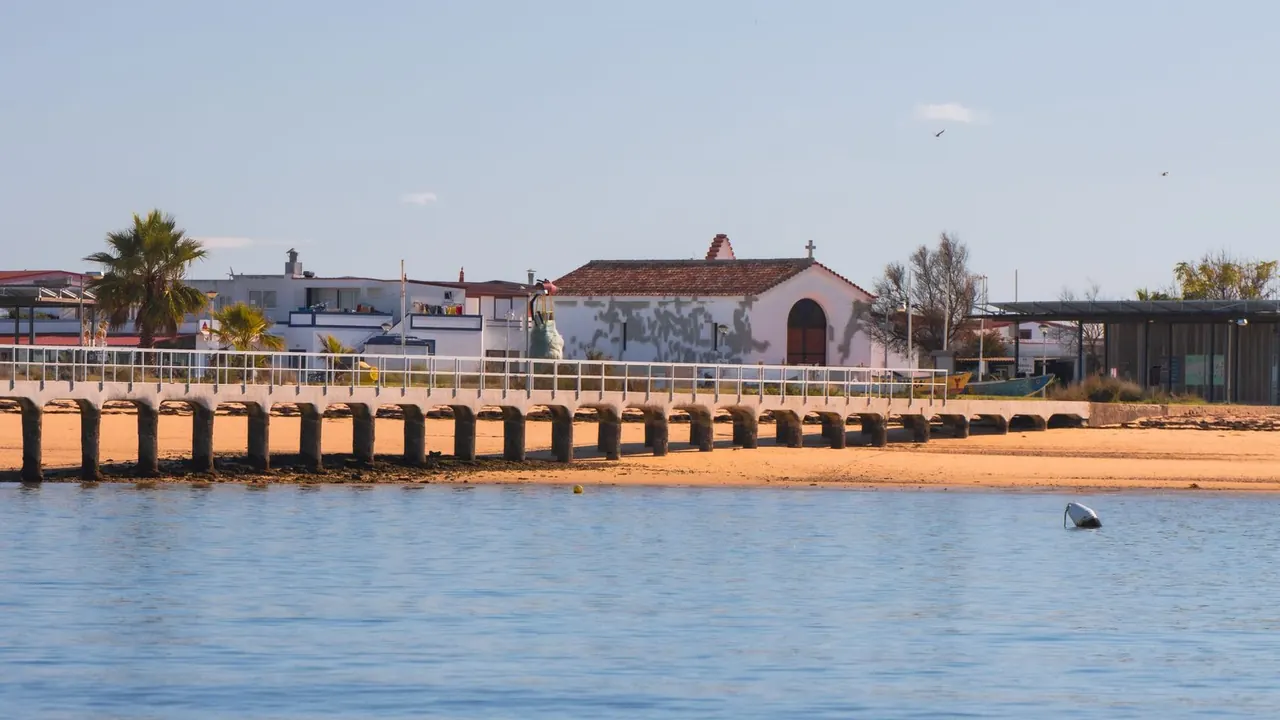
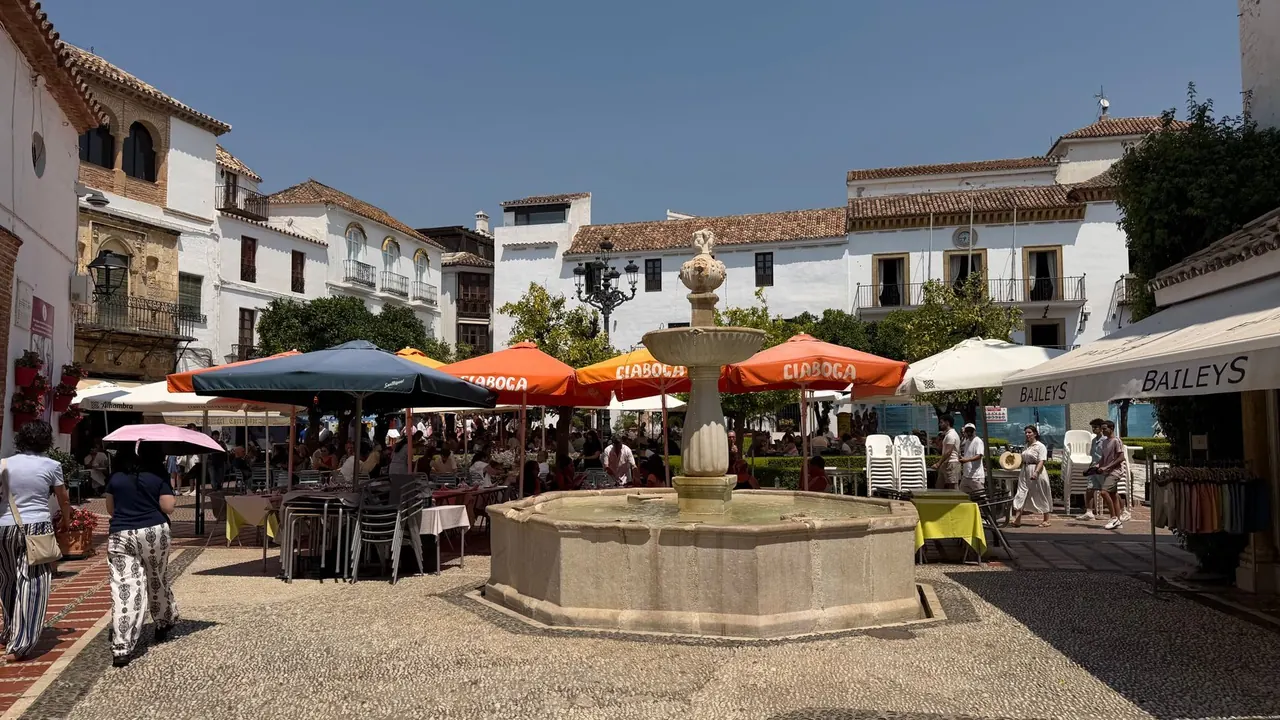
Photos: Faro by Efrem Efre, Pexels License; Marbella by Décio Franchini, Pexels License.
Faro or Marbella?
Our verdict in twelve categories, each scored against the same fixed benchmark cities, and the climate month by month, so you can choose for your trip.
Choose Faro for
- prices
- getting around
- culture and sights
Faro suits travellers who want a calm, sensibly priced base on the Algarve. The town is small enough to walk end to end, the airport is on its doorstep, and the Ria Formosa lagoon, with its birdlife, ferries and long island beaches, begins at the edge of the old town. Choose it for a quiet, unhurried trip that mixes beach days with easy outings to Tavira, Olhão and Loulé.
Choose Marbella for
- nightlife
- shopping
- wellness
If you want more going on, Marbella is the stronger choice. Summer nights run until dawn around Puerto Banús, the Golden Mile has serious restaurants and spas, and Sierra Blanca rises straight behind the town for proper hikes. It also gives you Ronda, Málaga and Granada for day trips. Expect to pay well for all of it, and plan on a car or taxis, because the town is spread along a long stretch of coast.
Scoreboard
Twelve categories on one fixed scale from 0 to 100. The shaded stretch is the gap between the two.
Your match
Pick a travel style or drag the sliders, and both match scores follow your weighting.
Wins on prices and getting around with your weighting.
Wins on nightlife and shopping with your weighting.
What matters to you?
Category by category
What the scores mean for a trip.
Beaches & swimming
Both cities are good for beaches, but in different ways. Faro's beaches lie out on the barrier islands of the Ria Formosa. You reach Praia de Faro by bus over a bridge, or take a summer ferry to Ilha Deserta and Culatra, where kilometres of sand are backed by nothing but dunes. They feel wild, but they are always a short trip away rather than outside your door.
Marbella's 27km of shore runs right through the town, from La Venus and El Fuerte out to the dunes at Cabopino. The sand is fine and greyish, and the beaches are lined with sun loungers, beach clubs and chiringuitos grilling sardines. It is more convenient and has more facilities, though a westerly wind can bring cold water for a day or two.
Food & drink
Faro's cooking is honest but narrow. It means lagoon clams and oysters, cataplana and fish sold by weight at simple grill houses around the old town and the marina. Even the best seafood is a train ride away in Olhão.
Marbella gives you more choice at both ends. Its old town tapas bars keep Andalusian cooking alive, while tasting-menu kitchens and international restaurants on the Golden Mile and around Puerto Banús cater to a wealthy crowd. The weak spot is the overpriced seafront menu by the port, so it pays to walk a few streets inland.
Culture & sights
Neither city takes much more than a day to see, and the difference is in the setting. Faro's sights are packed inside its medieval walls. You enter through the Arco da Vila to reach the cathedral, whose tower looks out over the lagoon, and the convent museum with its Roman mosaic. Just outside the walls is the bone-lined Capela dos Ossos.
Marbella's heritage is centred on the Plaza de los Naranjos and the whitewashed lanes around it. Add the Spanish prints museum and the Dalí bronzes along the Avenida del Mar. Its Roman villa at Río Verde and early Christian basilica sit out of town, so seeing everything means more travelling.
Nightlife
Here the two cities are far apart. In summer Marbella is one of Spain's famous places to go out, with champagne bars facing the yachts at Puerto Banús, DJ beach clubs that turn into evening parties and clubs open until dawn. Between November and March most of this closes down.
Faro is a student town with terraces on Rua do Prior and a few small late clubs, and it is livelier on weekends during term time. Anyone looking for big clubs from Faro ends up driving forty minutes to Albufeira.
Nature & outdoors
Marbella has the more dramatic scenery. Sierra Blanca rises behind the town, and the half-day climb to La Concha gives views to Gibraltar and Morocco. The fir forests and gorges of the Sierra de las Nieves, and the Caminito del Rey walkway, are within driving range.
Faro's outdoors is flat and watery. You can kayak or paddleboard the lagoon channels, or watch flamingos and spoonbills in the salt pans at Ludo. It is the better pick for birdwatchers and gentle cyclists, while hikers will prefer Marbella.
Day trips
Faro's day trips are smaller Algarve towns, many of them reachable by train. Tavira has its Roman bridge, Olhão its market halls, Silves its red sandstone castle and Loulé its hilltop castle. Seville is possible as a long day out.
Marbella has the bigger names within reach: the gorge and bridge at Ronda, Málaga's Alcazaba and Picasso Museum, the Rock of Gibraltar and, at a stretch, the Alhambra in Granada. The white villages of Casares and Mijas are closer still. Almost all of these need a car.
Good for families
Marbella is set up for beach vacations with children. Its town beaches are sheltered and lifeguarded, the long flat promenade suits scooters and buggies, and many resorts are built around pools. A zoo, an aquarium, a cable car and a safari park are all along the same coast.
Faro is quieter and smaller in scale. Children get gentle lagoon beaches, boat trips to the islands and a hands-on science centre by the waterfront. The marine park and water parks are thirty to forty minutes away near Albufeira and hard to reach without a car.
Getting around
Getting around is much easier in Faro. The old town, marina, shopping streets and station are all a short, flat walk apart. Buses run to the nearby airport and to Praia de Faro, ferries leave from below the walls, and a coastal railway, though slow, reaches Tavira and Lagos.
Marbella stretches along the motorway from San Pedro to Cabopino, so only the old town and the central seafront are easy to walk. There is no train, the airport is about an hour away by coach in Málaga, and taxis or a hire car fill the gaps.
Shopping & style
Marbella has a real luxury shopping scene. International fashion and jewellery boutiques line the port at Puerto Banús, and a department store and malls cover everything else. The old town adds linen, leather and ceramics, but independent design is thin.
Faro is practical rather than stylish. Rua de Santo António has Portuguese chains and shoe shops, and the best things to bring home are tinned fish, cork goods, painted pottery and salt flower from the lagoon pans.
Affordability
Faro is a working provincial town, and most everyday costs stay moderate: grilled fish lunches, coffee and pastries, buses and the few sights that charge entry. Rooms are the main expense, and only in July and August.
Marbella is expensive by Spanish standards, especially for prime sunbeds, beach clubs and dinners on the Golden Mile. You can keep costs down by eating in old town tapas bars or staying in a neighbouring town, but a stay in Faro will still cost noticeably less.
Live music & performing arts
Faro keeps a small stage programme going all year, while Marbella's live music comes mostly in summer. In Faro that means chamber music and recitals in the ornate nineteenth-century Teatro Lethes, and the regional orchestra and touring dance at the Teatro das Figuras. On many evenings, though, there is nothing on.
Marbella's main draw is an outdoor summer festival in an old quarry, which brings big international pop and rock acts, along with flamenco shows staged for visitors. For classical music or serious flamenco, people head to Málaga.
Wellness & relaxation
Marbella has long been a place where the wealthy come to rest. Spa resorts, yoga retreats and detox clinics are spread across the Golden Mile and the hills behind it, and a few Arab-style bathhouses offer hot and cold pools. Between October and May the town is calm enough to enjoy them.
Faro's resort spas are out along the golf coast to the west, and the nearest spring-water spa, at Caldas de Monchique, is over an hour away. What Faro does offer is a slow pace: sunset walks by the lagoon and quiet winter months.
When should you go?
Pick your month. The climate figures are measured averages, not a forecast.
Faro in July
Marbella in July
Daytime high, °C
Rainfall in the month, mm
Where the figures come from
Marbella's temperatures are measured 40 km from the centre, at Malaga / Aeropuerto.
Marbella has no rain gauge within 25 km of the centre, so its rainfall comes from a gridded climate dataset read at the city rather than from a gauge further away.
Temperature and rainfall are climate normals, averaged over the years shown. Faro: 1991-2020 normals, Faro / Aeroporto (2.8 km from centre). Marbella: 1991-2020 normals, Malaga / Aeropuerto (39.7 km from centre).
The two cities follow the same pattern through the year: hot, almost rainless summers and a wet season from October to April. In both, the sea is warm enough to swim in from June into early October and reaches about 22°C in August. Marbella gets hotter, with August highs of 32°C against Faro's 29°C, so midsummer afternoons there are hard going in the streets. Faro's summer is a little cooler and sunnier, which makes sightseeing in the middle of the day easier.
The winters differ more. Marbella is a shade milder but much wetter in late winter, with around 83mm of rain in March against Faro's 44mm, and both are at their wettest in December. Spring and autumn are the best seasons for walking and hiking in either city. Faro's sea also stays a little warmer through October, so it is the better bet for a late-season swim.
Which traveller are you?
For a food and nightlife trip, choose Marbella. It has tasting-menu kitchens on the Golden Mile and tapas in the Casco Antiguo, and in summer the bars and clubs of Puerto Banús stay open until dawn. In Faro most evenings end after a long fish dinner.
On a trip on a tight budget, Faro makes far more sense. Grilled fish lunches, house wine, buses and ferries all cost little, and you don't need a car to get around town. In Marbella, beach clubs and dinners near the port add up quickly.
For a shopping trip, Marbella is the place. Puerto Banús has a dense strip of international fashion and jewellery boutiques, with a department store next to the port. Faro offers high-street chains, cork goods and almond sweets, but no designer shopping at all.
Before you go
| Measure | Faro | Marbella |
|---|---|---|
| Official language | Portuguese | Spanish |
| Currency | Euro (EUR) | Euro (EUR) |
| Sockets | CF230 V, 50 Hz | CF230 V, 50 Hz |
| Driving side | Right | Right |
| Time zone | UTC, UTC+1 in summer | UTC+1, UTC+2 in summer |
| Emergency number | 112 | 112 |
| Elevation | 10 m | 22 m |
| Main airport | Faro - Gago Coutinho International Airport (FAO)3 km from centre91 non-stop destinations | Málaga-Costa del Sol Airport (AGP)39 km from centre166 non-stop destinations |
| Public holidays this year | 14 days | 12 days |
By the numbers
| Measure | Faro | Marbella |
|---|---|---|
| City population | 64,560 | 159,786 |
| People per km² | 319 | 1,398 |
| Museums within 10 km | 2 | 6 |
| UNESCO World Heritage sites within 50 km | 0 | 0 |
| Swim season, months above 21 °C | 3 months | 3 months |
Where else could you go?
Every comparison below shares a destination with this one, so you can follow Faro or Marbella somewhere new.