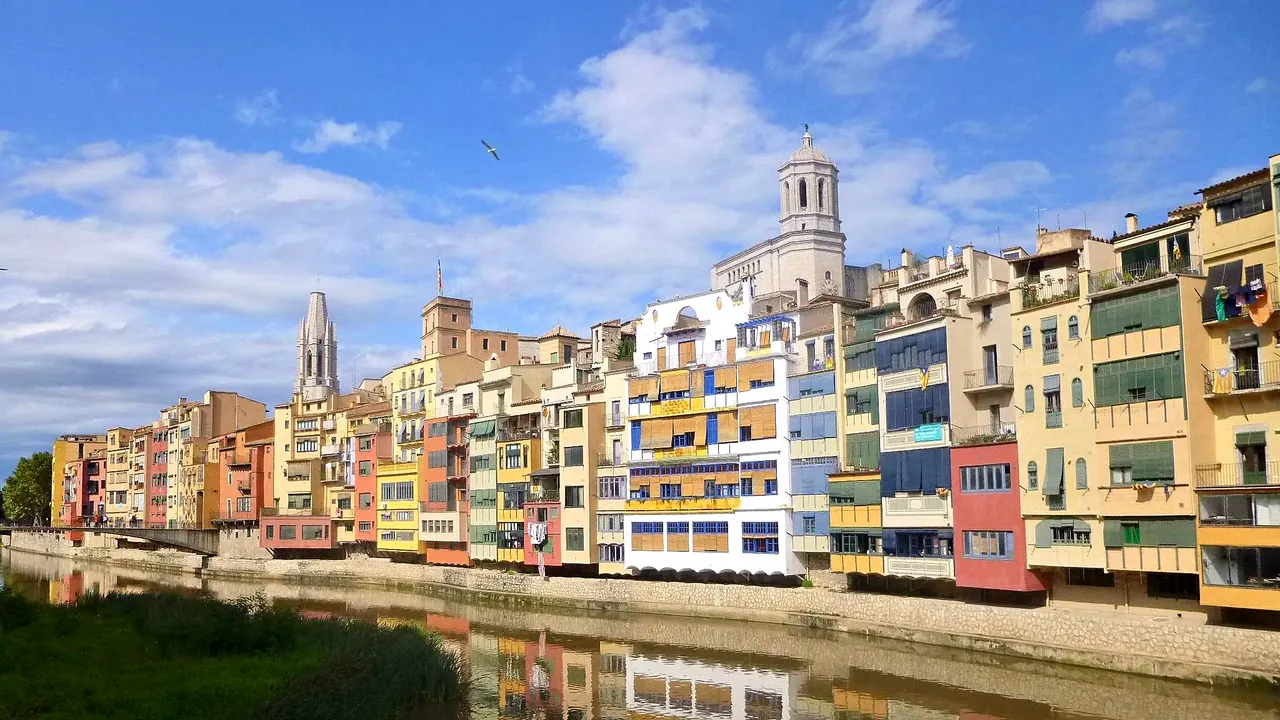
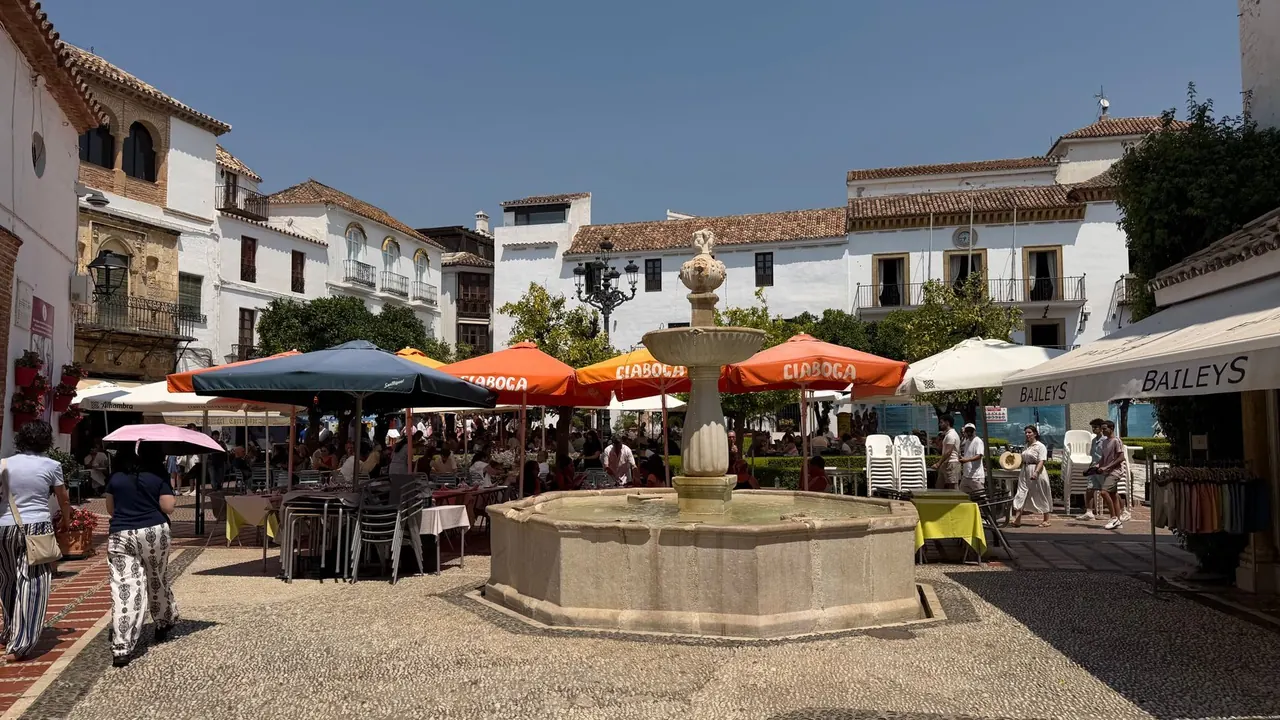
Photos: Girona by Zarateman, CC0; Marbella by Décio Franchini, Pexels License.
Girona or Marbella?
Our verdict in twelve categories, each scored against the same fixed benchmark cities, and the climate month by month, so you can choose for your trip.
Choose Girona for
- culture and sights
- getting around
- prices
Girona suits travellers who want a walkable medieval city with real depth. The Barri Vell, the cathedral and the old Jewish quarter reward slow exploring, and the country around it, with cycling lanes, volcanic hills, Dalí sites and stone villages, makes for active, curious days out. It also costs less to stay in, and Barcelona is a short train ride away for anything the city itself lacks.
Choose Marbella for
- nightlife
- families
- beaches
For a sun and sea vacation, Marbella is the stronger pick. Its long run of sheltered, lifeguarded town beaches gives families an easy daily routine, and summer evenings in Puerto Banús and the Golden Mile beach clubs run far later than anything in Girona. The luxury boutiques and spa resorts suit a more polished stay too. Expect to pay more for it, and to rely on taxis or a hire car.
Scoreboard
Twelve categories on one fixed scale from 0 to 100. The shaded stretch is the gap between the two.
Your match
Pick a travel style or drag the sliders, and both match scores follow your weighting.
Too close to call, 1 point apart
Wins on culture and sights and getting around with your weighting.
Wins on nightlife and families with your weighting.
What matters to you?
Category by category
What the scores mean for a trip.
Beaches & swimming
Girona has no beach of its own. The Costa Brava begins about 40 minutes away, and its pine-backed coves near Begur and L'Escala have some of the clearest water in Spain, but every swim is a day out planned around buses or a car.
In Marbella the sand starts at the edge of town and runs for about 27km, from La Venus and El Fuerte to the dunes at Cabopino. The sand is fine and greyish rather than the mix of sandy bays and rocky coves you find on the Costa Brava, and the shore is lined with sunbeds and chiringuitos, so Marbella is the place for a stay built around the beach.
Food & drink
The two eat about equally well, in different ways. Girona's cooking is tightly Catalan and local: mar i muntanya plates, botifarra with beans, cream-filled xuixos and Empordà wine, with serious tasting-menu kitchens next to old taverns. What it lacks is variety beyond the region.
Marbella offers more range. Sardines are grilled on skewers on the beach, there are tapas bars behind the Alameda, and there are international and high-end kitchens along the Golden Mile. Its weak point is the overpriced, forgettable menus near the port, so in both towns the better meals are a few streets away from where the visitors gather.
Culture & sights
Girona is well ahead here. The Barri Vell climbs from the Onyar to a cathedral with one of the widest Gothic naves in the world, past a Romanesque cloister, the Arab Baths and one of Europe's best-preserved Jewish quarters, and you can walk the medieval walls above it all.
Marbella has charm but less substance: the whitewashed lanes around the Plaza de los Naranjos, a museum of Spanish prints, Dalí bronzes on the Avenida del Mar and a Roman villa with mosaics. For the great monuments of Andalusia you drive to Ronda, Málaga or Granada.
Nightlife
In summer Marbella is a real place to go out. Beach clubs with DJs carry on into evening parties, and the clubs at Puerto Banús fill with a moneyed international crowd until dawn. The style is glossy and expensive, and from November to March it mostly goes quiet.
Girona's evenings are slower: terraces, long dinners, student bars in term time and a handful of late music bars at weekends. For a proper night out, people from Girona take the train to Barcelona.
Nature & outdoors
Both have mountains close by, but Girona offers more to do outdoors. Road cyclists come from around the world for its quiet lanes and the climbs of Rocacorba and Els Àngels, and old railway lines make flat greenways to Olot and the sea. Within reach are the volcanic beech forests of the Garrotxa, the cliff paths and coves of Cap de Creus and the high Pyrenees.
Marbella's outdoor life is about Sierra Blanca, rising straight behind town, with the hard climb to La Concha and views to Morocco, and the fir forests and gorges of the Sierra de las Nieves. Its mild winters make it the better choice for walking from December to February, though the coast itself is heavily built up.
Day trips
Both are strong bases, but Girona has more variety and better trains. Barcelona is under 40 minutes away by high-speed train, the Dalí Theatre-Museum at Figueres is half an hour away, and medieval Besalú, Peratallada, the ruins at Empúries and even Perpignan across the border are all within easy reach.
Marbella opens up the south of Andalusia: Ronda over its gorge, Málaga's Alcazaba and Picasso Museum, Gibraltar and the white villages of Casares and Mijas. With no train and slow buses, though, almost all of it depends on a car, and Granada is a long day.
Good for families
Marbella is the easier choice with children. It has sheltered, lifeguarded beaches, a flat promenade for buggies and scooters, and resorts built around pools. A zoo, an animal park, water parks and an aquarium are spread along the coast, though you need a car to reach most of them.
Girona is calm and safe, and children enjoy walking the city walls, but it has no attractions made for them, and the stairs and cobbles of the Barri Vell are hard going with a pushchair. Families there usually spend their days on Costa Brava beaches.
Getting around
Girona is far simpler on foot. The old town, the river and the modern centre are about twenty minutes' walk apart, though steep in places, and the station on the edge of the centre has fast trains to Barcelona and Figueres.
Marbella stretches along a motorway from San Pedro to Cabopino. Only the old town and the central seafront are walkable, there is no train, and many visitors move between their hotel, the port and the beach by taxi. In both places the countryside is best reached by car.
Shopping & style
Marbella wins for anyone who wants labels. Puerto Banús lines up international fashion and jewellery boutiques facing the yachts, with a department store and malls nearby, and the old town adds linen, leather and ceramics.
Girona's shopping is small and independent: fashion and book shops around the Rambla, Empordà cheese, oil and wine from the Mercat del Lleó, and a surprising number of cycling shops. Anyone looking for more than that goes to Barcelona.
Affordability
Girona is the cheaper stay. Everyday eating and set lunches are fairly priced, and the centre is walkable, so the main costs are old-town rooms in summer and the cycling season and a car for the region.
Marbella is expensive by Spanish standards, especially in July and August and anywhere near the Golden Mile or Puerto Banús. Old-town tapas bars and off-season apartments bring costs down, and many visitors save by staying in a neighbouring town.
Live music & performing arts
Neither is a destination for the stage, but Girona offers a little more. Its Auditori hosts touring orchestras and jazz, and the autumn Temporada Alta festival brings international theatre and dance, though many plays are in Catalan.
Marbella's live culture is a summer affair: big pop and rock acts in a quarry amphitheatre and flamenco staged for visitors. For opera or serious flamenco you go to Málaga, just as Girona sends classical fans to Barcelona.
Wellness & relaxation
Marbella has more for a restful stay built around treatments. Spa resorts, retreats and detox clinics sit along the Golden Mile and in the hills, and a few Arab-style bathhouses offer hot and cold pools. It is calmest from October to May, since high summer brings heat and parties.
Girona's calm comes from its pace, with quiet morning lanes and river walks, rather than from facilities. Its spas are mostly in hotels, but the thermal-spring town of Caldes de Malavella is about 20 minutes away.
When should you go?
Pick your month. The climate figures are measured averages, not a forecast.
Girona in July
Marbella in July
Daytime high, °C
Rainfall in the month, mm
Where the figures come from
Marbella's temperatures are measured 40 km from the centre, at Malaga / Aeropuerto.
Marbella has no rain gauge within 25 km of the centre, so its rainfall comes from a gridded climate dataset read at the city rather than from a gauge further away.
Temperature and rainfall are climate normals, averaged over the years shown. Girona: 1991-2020 normals, Gerona / Costa Brava (10.1 km from centre). Marbella: 1991-2020 normals, Malaga / Aeropuerto (39.7 km from centre).
Girona has a real summer and a real winter. July and August reach about 31°C, which is hot for climbing the old town's stairs, though the sea on the Costa Brava is at its warmest then, at about 24°C. Late spring and September are the best balance of warmth for walking and cycling, but autumn is also the wettest stretch, with October bringing about 86mm. Winter days are cool and grey enough that the city is for sightseeing only.
Marbella is milder in winter, with highs around 17°C and more sunshine all year. Its rain falls almost entirely between October and March, peaking at about 115mm in December, while June to August are practically dry. The beach season runs from June into early October. Spring and autumn are the most comfortable months for walking in the hills, and high summer is hot in both places.
Which traveller are you?
For a culture and arts trip, Girona is the better choice. It suits travellers who like to spend whole days on foot in one historic quarter and then take short train trips to see more. In Marbella, sightseeing mostly means driving elsewhere in Andalusia.
On a family trip with young children, Girona only works if you are happy to treat it as a quiet base and drive to the coast most days. Marbella is the simpler choice for parents who want beach, pool and children's outings close by.
On a food and nightlife trip, Girona suits couples who like a long Catalan dinner and then bed. Marbella is better for anyone who wants to eat late and carry on until morning, as long as they go in summer, when the scene is at its fullest.
Before you go
| Measure | Girona | Marbella |
|---|---|---|
| Official language | Spanish | Spanish |
| Currency | Euro (EUR) | Euro (EUR) |
| Sockets | CF230 V, 50 Hz | CF230 V, 50 Hz |
| Driving side | Right | Right |
| Time zone | UTC+1, UTC+2 in summer | UTC+1, UTC+2 in summer |
| Emergency number | 112 | 112 |
| Elevation | 70 m | 22 m |
| Main airport | Girona-Costa Brava Airport (GRO)10 km from centre18 non-stop destinations | Málaga-Costa del Sol Airport (AGP)39 km from centre165 non-stop destinations |
| Public holidays this year | 14 days | 12 days |
By the numbers
| Measure | Girona | Marbella |
|---|---|---|
| City population | 108,666 | 159,786 |
| People per km² | 2,779 | 1,398 |
| Museums within 10 km | 9 | 6 |
| UNESCO World Heritage sites within 50 km | 0 | 0 |
| Swim season, months above 21 °C | 3 months | 3 months |
Where else could you go?
Every comparison below shares a destination with this one, so you can follow Girona or Marbella somewhere new.
- Rondavs Marbella
- Malagavs Marbella
- Barcelonavs Girona
- Jerez de la Fronteravs Marbella
- Cadizvs Marbella
- Granadavs Marbella