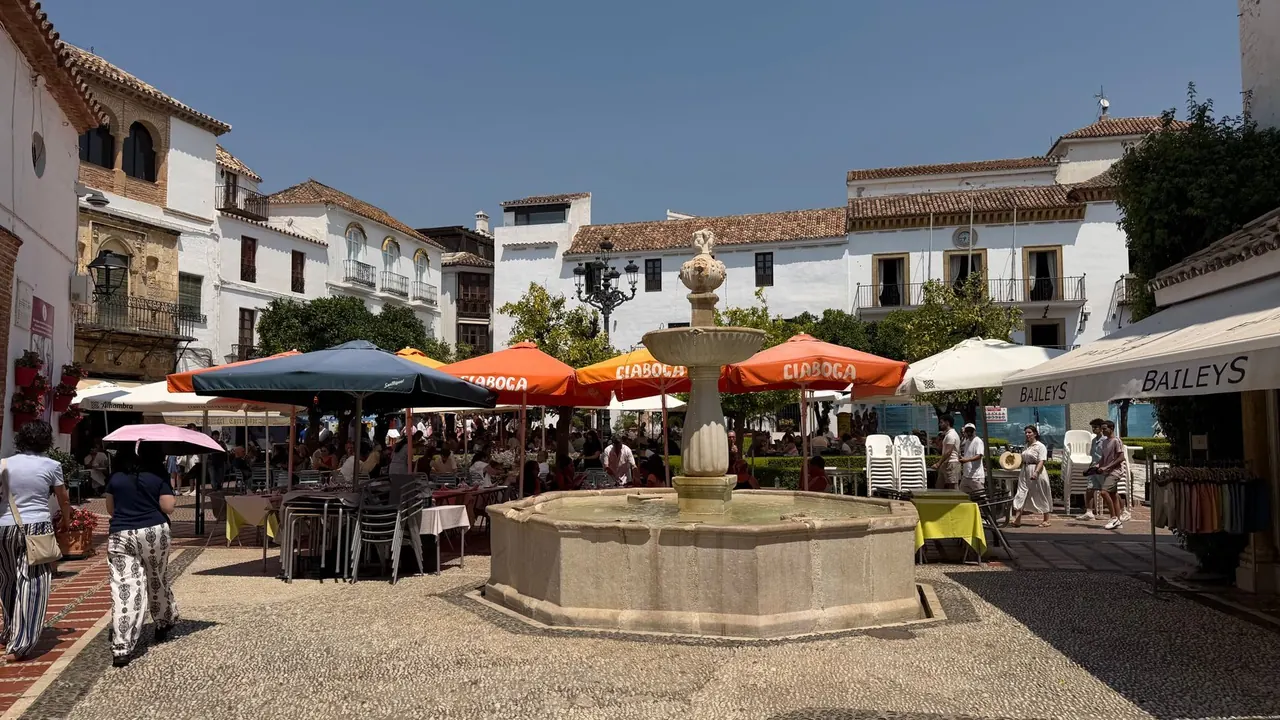
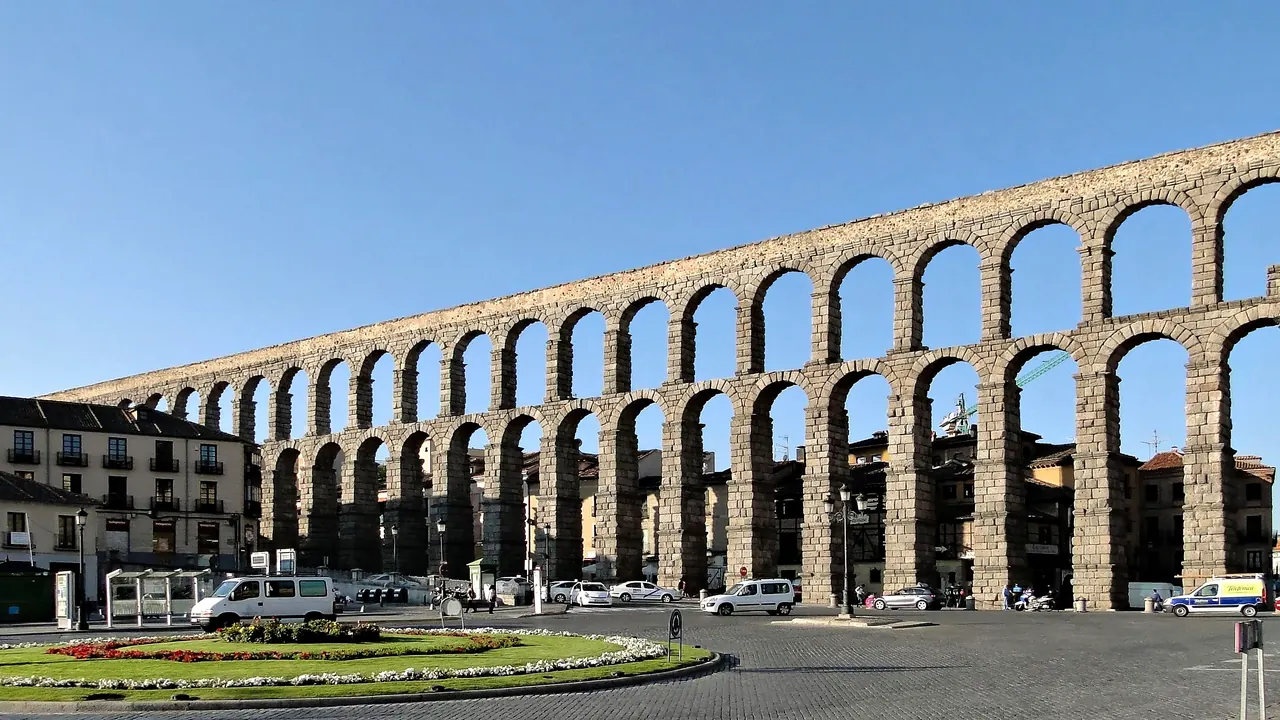
Photos: Marbella by Décio Franchini, Pexels License; Segovia by Bernard Gagnon, CC BY-SA 3.0, cropped.
Marbella or Segovia?
Our verdict in twelve categories, each scored against the same fixed benchmark cities, and the climate month by month, so you can choose for your trip.
Choose Marbella for
- beaches
- nightlife
- shopping
Marbella suits a sun-and-sea vacation, with days on the sand and nights that run late. Its long shoreline, the polished night scene of Puerto Banús, resort spas and sheltered town beaches give it the edge for anyone who wants warmth and comfort. Expect higher costs, and a car to get much beyond the promenade.
Choose Segovia for
- culture and sights
- prices
- getting around
If history at walking pace is what you want, Segovia is the stronger pick. The Roman aqueduct, the cathedral and the Alcázar sit along one ridge you can walk, roast suckling pig rounds off the day, and Madrid is a short high-speed train ride away. It is cheaper and quieter than Marbella, but there is no beach and little to do after the tapas round.
Scoreboard
Twelve categories on one fixed scale from 0 to 100. The shaded stretch is the gap between the two.
Your match
Pick a travel style or drag the sliders, and both match scores follow your weighting.
Wins on beaches and nightlife with your weighting.
Wins on culture and sights and prices with your weighting.
What matters to you?
Category by category
What the scores mean for a trip.
Beaches & swimming
The two could hardly be further apart here. Marbella has more than two dozen beaches along roughly 27km of shore, from La Venus and El Fuerte in the centre to the dunes at Cabopino. The sand is fine and greyish, the water calm and clear, and chiringuitos line the shore.
Segovia sits on the Castilian plateau, a long day's drive from any coast. The closest it gets to a swim is a hotel pool or a cold reservoir in the Guadarrama foothills, so if the sea matters, it belongs on another leg of the trip.
Food & drink
Marbella has the wider table. You can eat sardines grilled on skewers on the beach, tapas in the Casco Antiguo, and acclaimed tasting menus along the Golden Mile. The middle ground by the port is weak, though, and the better meals are a few streets inland.
Segovia's cooking is narrower and built around one famous dish: cochinillo from wood-fired ovens, followed by roast lechazo, judiones from La Granja and ponche segoviano. Ribera del Duero and Rueda wines are poured everywhere. Come for one memorable roast rather than for variety.
Culture & sights
Segovia is far ahead. The mortarless granite arches of the aqueduct, the late Gothic cathedral and the Alcázar on its cliff anchor a UNESCO old town. Romanesque churches such as San Martín, the Jewish quarter and the twelve-sided Vera Cruz add enough for a second, slower day.
Marbella has a pretty Casco Antiguo around the Plaza de los Naranjos, a museum of Spanish prints, Dalí bronzes on the Avenida del Mar and Roman mosaics at Río Verde. That is an afternoon's worth, and Andalusia's major monuments mean a drive.
Nightlife
In summer Marbella is a proper night out on the Spanish clock. There are champagne bars facing the yachts in Puerto Banús, clubs until dawn, and beach clubs whose DJ afternoons turn into parties along the Golden Mile. It is expensive and see-and-be-seen, and it shrinks sharply in winter.
Segovia's evenings are a tapas round on the terraces around Plaza Mayor, plus a few later student bars at weekends. There are hardly any clubs, so for a real late night you go to Madrid.
Nature & outdoors
Both have serious mountains on the doorstep, but of different kinds. Marbella pairs sierra and sea. You can hike La Concha, with views to Gibraltar and the Rif mountains, walk the fir forests of the Sierra de las Nieves or the Caminito del Rey, and go paddleboarding, sailing or dolphin-watching. Its mild winters make it a year-round walking base.
Segovia is high country, with the Scots pines of Valsaín, the passes of Navacerrada and Cotos, glacial lakes below Peñalara, and griffon vultures over the Duratón gorge. Walking is best from spring to autumn, and in winter there is snow.
Day trips
Both make good bases, and the difference lies in transport and setting. From Segovia, high-speed trains reach Madrid and Valladolid quickly, and buses run to La Granja and Ávila. A car adds Pedraza, Sepúlveda, El Escorial and Peñafiel, so the day trips are royal palaces and walled towns of Castile.
Marbella's day trips are Andalusian: Ronda's gorge, Málaga, Gibraltar, the white villages of Casares and Mijas, and Granada as a long day. With no train, almost all of these depend on a car.
Good for families
Marbella is the easier choice with children. The town beaches are sheltered and lifeguarded in season, the flat promenade suits buggies and scooters, and many resorts are built around pools. Along the coast there are an animal park, a zoo, water parks and an aquarium, all best reached by car.
Segovia has a real castle with a tower to climb and the giant arches of the aqueduct, but no zoo or theme park, and the steep cobbles are hard work with a pushchair. It suits a day or two of a longer trip, and the gardens at La Granja give children room to run.
Getting around
Marbella is the harder of the two to get around. The old town and the central seafront are easy walking, and the promenade suits a long stroll or a bike ride. The resort itself is strung out along the coast road, though, so getting between your hotel, Puerto Banús and the beach you like is often a taxi or bus ride. There is no railway, so you reach Marbella by coach from Málaga airport, and many visitors hire a car just to get about.
Segovia is much simpler. Everything worth seeing in the city is within one compact walk, so once you are in the old town you can forget about transport, apart from some stiff cobbled climbs. You can arrive by high-speed train and take a short bus up from the station, so a stay without a car is easy here in a way it rarely is in Marbella.
Shopping & style
Marbella is clearly better for shopping, mostly at the luxury end: international fashion and jewellery boutiques facing the yachts at Puerto Banús, a department store and malls, and linen, leather and ceramics in the old-town lanes. Segovia offers souvenirs along Calle Real, local ceramics and embroidery, and boxed ponche or La Granja beans to take home. For anything more, people go to Madrid.
Affordability
A stay in Marbella costs a lot by Spanish standards, especially in July and August and around Puerto Banús and the Golden Mile. You can bring the cost down with old-town tapas bars, cheap buses and apartments outside summer, and many visitors stay in a neighbouring town and come in for the day.
Your money goes noticeably further in Segovia. There are plenty of small family-run hotels and guesthouses, and the lunch menus in the newer town are fair value. Midweek and winter stays are inexpensive, and the famous roasts by the aqueduct are the main splurge.
Live music & performing arts
Neither is a place for opera or a full concert season. Serious audiences head to Málaga from Marbella and to Madrid from Segovia. What differs is the kind of event.
Marbella's high point is summer, when big pop and rock acts play an amphitheatre in an old quarry, alongside flamenco shows aimed at visitors. Segovia relies on its festivals, with the Titirimundi puppet festival in spring and concerts in churches and palace gardens in summer. Teatro Juan Bravo on Plaza Mayor fills some of the gaps between them.
Wellness & relaxation
If you want spa treatments, Marbella is the place. Resort spas, retreats and detox clinics are spread across the Golden Mile and the hills behind it, and there are a few Arab-style bathhouses. From October to May the calm, mild weather suits golf and long walks on the promenade, though high summer is anything but restful.
Segovia has only a handful of hotel spas. Its calm comes from the old town falling quiet once the coaches leave, with long lunches and evening walks along the walls in pine-scented mountain air.
When should you go?
Pick your month. The climate figures are measured averages, not a forecast.
Marbella in July
Segovia in July
Daytime high, °C
Rainfall in the month, mm
Where the figures come from
Marbella's temperatures are measured 40 km from the centre, at Malaga / Aeropuerto.
Marbella has no rain gauge within 25 km of the centre, so its rainfall comes from a gridded climate dataset read at the city rather than from a gauge further away.
Temperature and rainfall are climate normals, averaged over the years shown. Marbella: 1991-2020 normals, Malaga / Aeropuerto (39.7 km from centre). Segovia: 1991-2020 normals, Segovia (0.3 km from centre).
Marbella's beach season runs from June to early October. Afternoons are around 30°C and almost no rain falls. Because the Strait of Gibraltar is close, the sea stays fresh and only reaches about 22°C in August. Winters are mild and sunny enough for walking, but November to January is the wettest stretch, and December is the rainiest month at 115mm. Spring and autumn are the best balance for hiking and sightseeing.
Segovia's year swings much further. On the high plateau January highs are only around 8°C, which makes the cobbled streets cold going, while July and August reach 30°C under long hours of sunshine. May, June and September are the best months for the old town and the sierra. Rain is light and spread through the year, with no wet winter like Marbella's.
Which traveller are you?
For a beach and sun trip, Marbella is the only real choice. Its long run of fine sand, calm water and chiringuitos lasts from June into October, while landlocked Segovia offers nothing better than a pool or a chilly mountain reservoir.
On a culture and arts trip, Segovia wins easily. The aqueduct, the cathedral, the Alcázar and the Romanesque churches fill two unhurried days on foot, with Madrid close by train. Marbella's old town and Dalí sculptures take an afternoon at most.
For a food and nightlife trip, Marbella gives you more: sardines grilled on the beach, tapas in the old town and tasting menus, then late summer nights in Puerto Banús and the beach clubs. Segovia offers a superb roast, a gentle tapas round and early nights.
Before you go
| Measure | Marbella | Segovia |
|---|---|---|
| Official language | Spanish | Spanish |
| Currency | Euro (EUR) | Euro (EUR) |
| Sockets | CF230 V, 50 Hz | CF230 V, 50 Hz |
| Driving side | Right | Right |
| Time zone | UTC+1, UTC+2 in summer | UTC+1, UTC+2 in summer |
| Emergency number | 112 | 112 |
| Elevation | 22 m | 1,002 m |
| Main airport | Málaga-Costa del Sol Airport (AGP)39 km from centre165 non-stop destinations | Adolfo Suárez Madrid–Barajas Airport (MAD)68 km from centre241 non-stop destinations |
| Public holidays this year | 12 days | 12 days |
By the numbers
| Measure | Marbella | Segovia |
|---|---|---|
| City population | 159,786 | 52,375 |
| People per km² | 1,398 | 320 |
| Museums within 10 km | 6 | 11 |
| UNESCO World Heritage sites within 50 km | 0 | 2 |
| Swim season, months above 21 °C | 3 months | - |
Where else could you go?
Every comparison below shares a destination with this one, so you can follow Marbella or Segovia somewhere new.
- Rondavs Marbella
- Malagavs Marbella
- Madridvs Segovia
- Jerez de la Fronteravs Marbella
- Toledovs Segovia
- Cadizvs Marbella