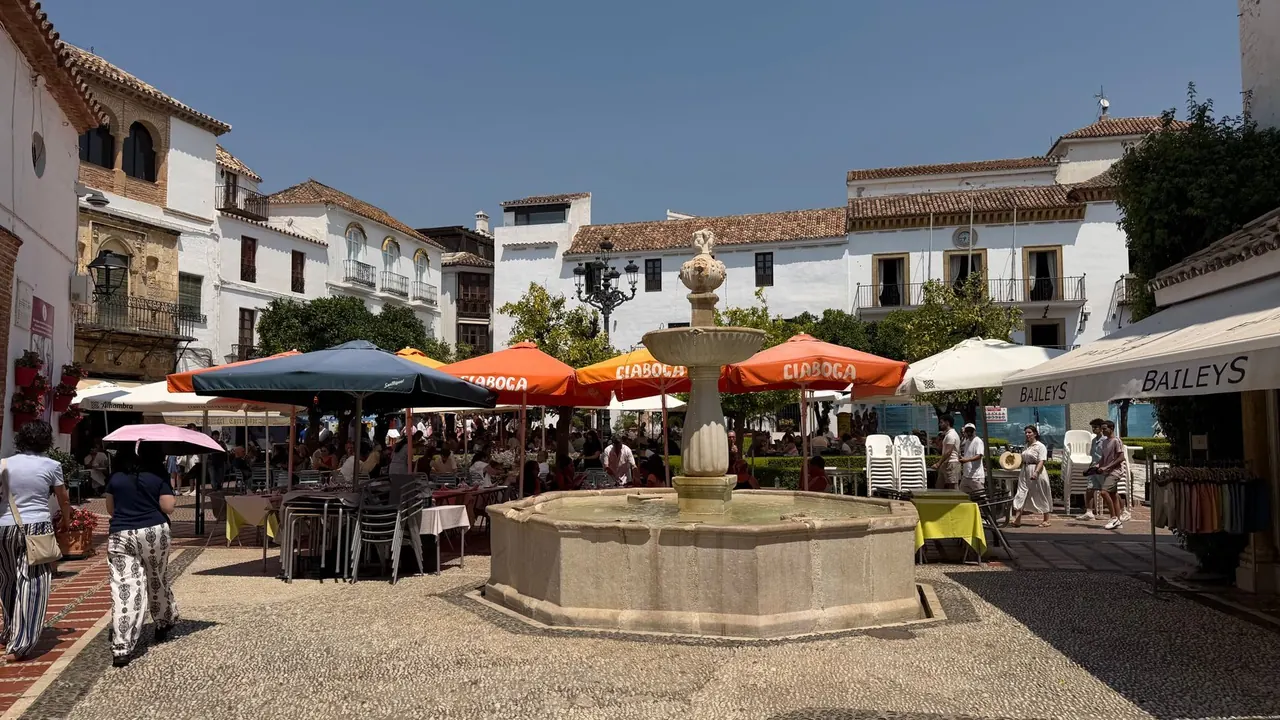
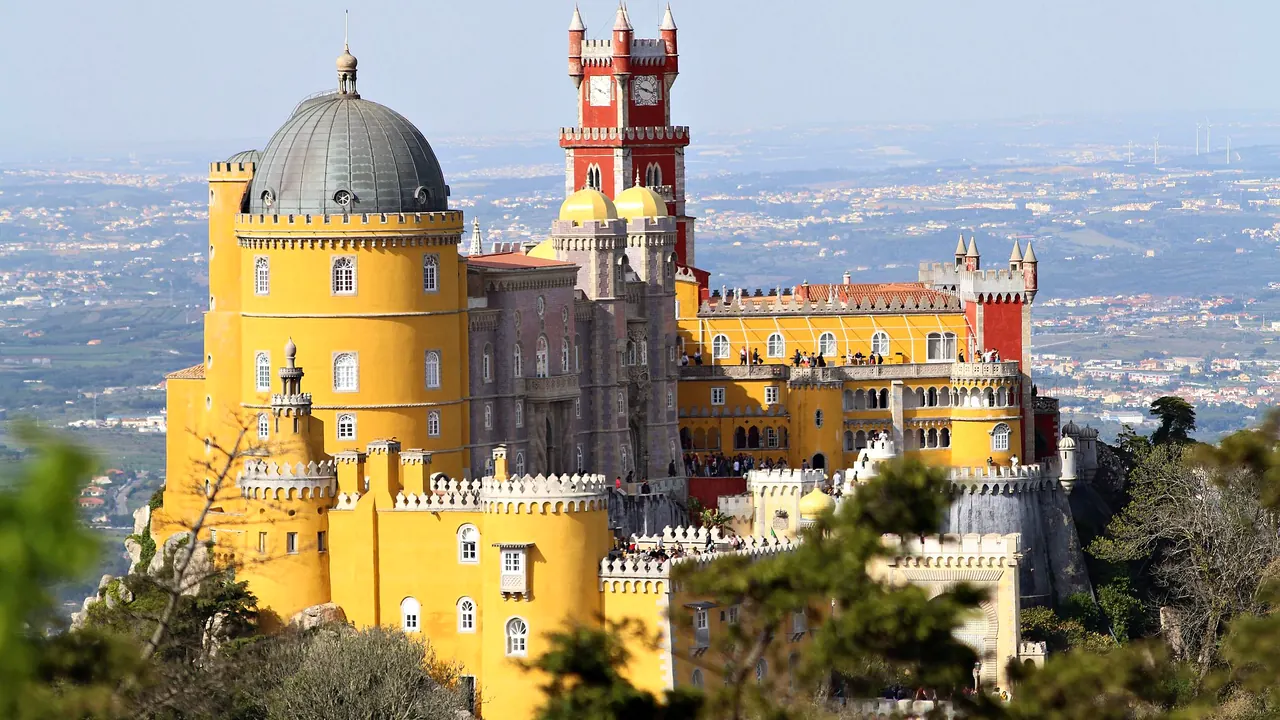
Photos: Marbella by Décio Franchini, Pexels License; Sintra by Chabe01, CC BY-SA 4.0, cropped.
Marbella or Sintra?
Our verdict in twelve categories, each scored against the same fixed benchmark cities, and the climate month by month, so you can choose for your trip.
Choose Marbella for
- nightlife
- shopping
- beaches
Marbella is the pick for a sun-and-sea vacation where the evenings matter as much as the days. It has long, sheltered town beaches and a calm sea warm enough for summer swimming. Meals run from beach sardines to tasting menus, and the polished nightlife centres on Puerto Banús. Families who want a pool, lifeguarded sand and big attractions along the coast are well served too, if they accept the prices and hire a car for the wider region.
Choose Sintra for
- culture and sights
- prices
- getting around
Travellers who would rather spend their days among palaces, forest trails and misty gardens should go to Sintra. Pena, the Moorish Castle, Quinta da Regaleira and Monserrate share a few square kilometres of wooded hillside. The Atlantic cliffs are close, and Lisbon is a short train ride away. It suits a quieter and cheaper few days built around sightseeing and walking, not lying on a beach or staying out late.
Scoreboard
Twelve categories on one fixed scale from 0 to 100. The shaded stretch is the gap between the two.
Your match
Pick a travel style or drag the sliders, and both match scores follow your weighting.
Wins on nightlife and shopping with your weighting.
Wins on culture and sights and prices with your weighting.
What matters to you?
Category by category
What the scores mean for a trip.
Beaches & swimming
Marbella is built around its shore. More than two dozen beaches line roughly 27km of coast, from La Venus and El Fuerte in town to the dunes at Cabopino, with fine greyish sand, sun loungers and chiringuitos. The water is calm and clear, and warm enough to swim from June into early autumn.
Sintra's coast is wilder and more dramatic but far less comfortable for swimming. Praia Grande, Praia das Maçãs and the cove at Adraga under its dark cliffs face cold Atlantic water and often heavy surf, and fog can roll in. They make a fine afternoon after the palaces, not a reason to stay.
Food & drink
Marbella has far more range. There are chiringuitos grilling sardines over fires, tapas bars in the Casco Antiguo and a real top tier of tasting-menu kitchens along the Golden Mile, even if the seafront middle ground is forgettable.
Sintra's signature is its pastry: the travesseiro and the queijada, bought warm from old pastry houses such as Piriquita. Its best meals are grilled fish in Azenhas do Mar and Praia das Maçãs. Dinner choice in town is small, and anyone wanting a serious meal tends to go into Lisbon.
Culture & sights
This is Sintra's great strength. Its UNESCO landscape packs in the Pena Palace, the ramparts of the Moorish Castle and the National Palace with its conical kitchen chimneys. Quinta da Regaleira's Initiation Well and Monserrate add to a list that rewards two full days, though there are no museums of weight.
Marbella's heritage is modest by comparison. The whitewashed lanes around the Plaza de los Naranjos, the Museo del Grabado Español, the Dalí bronzes on the Avenida del Mar and the mosaics at Río Verde fill an afternoon. For major monuments it relies on drives to Ronda, Málaga or Granada.
Nightlife
In summer Marbella is one of Spain's best-known places to go out. Afternoons at beach clubs with DJs give way to clubs at Puerto Banús that run until dawn, and the old town offers gentler terraces. In winter it shrinks to a quiet drink.
Sintra has almost nothing after dark: a few wine bars and terraces, no late opening and no clubs. Anyone wanting a night out takes the train to Lisbon and plans the ride back.
Nature & outdoors
Both have hills close to the sea, but Sintra puts its landscape on the doorstep. Trails climb straight from town through mossy forest of oak, cork and giant ferns to Pena Park, Cruz Alta and Peninha. The clifftop paths at Cabo da Roca, continental Europe's westernmost point, lie just to the west, and the cool, damp air keeps walking pleasant even in summer.
Marbella has higher and harsher terrain: the demanding climb up La Concha in Sierra Blanca, the fir forests and ibex of Sierra de las Nieves, and El Torcal and the Caminito del Rey further out. The drawbacks are a heavily built-up coastal strip and needing a car for most of it.
Day trips
Sintra has a slight edge, mainly because Lisbon, a whole capital, is about 40 minutes away by suburban train. Cascais is over the hills by bus, and a car brings Mafra, Óbidos, the monasteries of Alcobaça and Batalha, and Évora within reach.
Marbella's list is just as tempting: Ronda's gorge, Málaga's Alcazaba and Picasso Museum, Gibraltar, white villages such as Casares, and a long day to the Alhambra. Almost all of it depends on a car, though, as there is no train and the buses are slow.
Good for families
Marbella is the easier family base. Its sheltered, lifeguarded town beaches, flat promenade for buggies and scooters and pool-centred apartments make daily life simple. Animal parks, water parks and an aquarium lie along the coast.
Sintra enchants school-age children with castle walls and the tunnels of Regaleira. However, steep cobbles, crowded hill buses, rough surf and the lack of anything built for children make it hard work with toddlers.
Getting around
Sintra is easier to manage without a car for the core visit. The train from Lisbon stops a short walk from the compact centre, and the circular tourist bus or a tuk-tuk handles the climb to Pena and the castle. Driving in the narrow hill lanes, by contrast, is frustrating.
Marbella stretches along the motorway from San Pedro to Cabopino. The old town and the promenade are walkable, but with no train and hotels spread far apart, many visitors end up hiring a car or taking taxis.
Shopping & style
Marbella offers real luxury shopping. Fashion and jewellery boutiques face the yachts at Puerto Banús, with a department store and malls nearby and linen, leather and ceramics in the old town lanes.
Sintra's narrow streets sell hand-painted tiles, cork goods, linen and boxes of pastries. There are also antique azulejo dealers and the Sunday fair at São Pedro de Penaferrim, but no fashion streets, so serious shopping means Lisbon.
Affordability
Sintra is the cheaper stay. Tasca meals, coffee and pastries, and the train are all inexpensive, and the main cost is paying separate entry at each palace. Rooms in the outlying villages cost less than manor houses in the centre.
Marbella costs much more, especially in July and August around Puerto Banús and the Golden Mile. Old-town tapas, local buses and off-season rooms bring it down, and many visitors save by staying in a neighbouring town.
Live music & performing arts
Neither town is a place for regular live performance, and both send serious audiences on to Málaga or Lisbon. Marbella has a little more: a summer festival of big pop and rock acts in an old quarry amphitheatre, concerts at beach clubs and flamenco shows aimed at visitors.
Sintra's highlight is its long-running summer festival of classical music and dance, held in the palaces and quintas. For the rest of the year there is the Olga Cadaval cultural centre and the occasional evening of fado.
Wellness & relaxation
Marbella offers more for a pampering stay. Spa resorts, retreats and detox clinics are spread along the Golden Mile and the hills, and there are a few Arab-style bathhouses. From October to May it is calm and sunny, good for golf and long promenade walks, though high summer is hot and loud.
Sintra's spas are limited to a few hotels and manor houses. Its calm comes instead from staying in a quinta among old gardens and drifting mist, and enjoying the town once the day-trippers have gone.
When should you go?
Pick your month. The climate figures are measured averages, not a forecast.
Marbella in July
Sintra in July
Daytime high, °C
Rainfall in the month, mm
Where the figures come from
Marbella's temperatures are measured 40 km from the centre, at Malaga / Aeropuerto.
Marbella has no rain gauge within 25 km of the centre, so its rainfall comes from a gridded climate dataset read at the city rather than from a gauge further away.
Temperature and rainfall are climate normals, averaged over the years shown. Marbella: 1991-2020 normals, Malaga / Aeropuerto (39.7 km from centre). Sintra: 1991-2020 (rainfall 1961-1990) normals, Lisboa / Geof (22.7 km from centre).
Marbella has the longer and hotter beach season. The sea is swimmable from June into early October and reaches about 22°C in August. July and August climb to around 32°C with almost no rain, which is fine on the sand but heavy going for afternoon walks. Spring and autumn are the best months for sightseeing and hiking. Rain returns in October and is heaviest in December.
Sintra stays a few degrees cooler all year, with summer highs around 28°C. Its sea never gets much past 19°C, so the coast is for quick, bracing dips rather than long swims. That cooler summer makes June to September comfortable for walking between the palaces. Both places get plenty of summer sunshine. Sintra's wet season is heavier, though, peaking at about 97mm in November, and the hills can be in cloud when the plain below is clear.
Which traveller are you?
On a culture and arts trip, Sintra is the clear choice. Its UNESCO-listed hillside holds the Pena Palace, the National Palace and Quinta da Regaleira, enough for two full days. Marbella's old town and Roman villa take an afternoon at most.
For a food and nightlife trip, Marbella wins easily. Grilled sardines on the beach, tapas in the old town and serious tasting menus lead into a late Spanish night at Puerto Banús and the beach clubs. Sintra goes quiet once the last Lisbon train leaves.
On a beach and sun trip, choose Marbella. Its sheltered, lifeguarded town beaches and calm sea suit long days on a lounger from June to early October. Sintra's Atlantic beaches are cold and often rough, better for an afternoon out.
Before you go
| Measure | Marbella | Sintra |
|---|---|---|
| Official language | Spanish | Portuguese |
| Currency | Euro (EUR) | Euro (EUR) |
| Sockets | CF230 V, 50 Hz | CF230 V, 50 Hz |
| Driving side | Right | Right |
| Time zone | UTC+1, UTC+2 in summer | UTC, UTC+1 in summer |
| Emergency number | 112 | 112 |
| Elevation | 22 m | 193 m |
| Main airport | Málaga-Costa del Sol Airport (AGP)39 km from centre166 non-stop destinations | Lisbon Humberto Delgado Airport (LIS)22 km from centre156 non-stop destinations |
| Public holidays this year | 12 days | 14 days |
By the numbers
| Measure | Marbella | Sintra |
|---|---|---|
| City population | 159,786 | 385,606 |
| People per km² | 1,398 | 1,208 |
| Museums within 10 km | 6 | 12 |
| UNESCO World Heritage sites within 50 km | 0 | 3 |
| Swim season, months above 21 °C | 3 months | None |
Where else could you go?
Every comparison below shares a destination with this one, so you can follow Marbella or Sintra somewhere new.
- Lisbonvs Sintra
- Rondavs Marbella
- Malagavs Marbella
- Cadizvs Marbella
- Granadavs Marbella
- Sevillevs Marbella