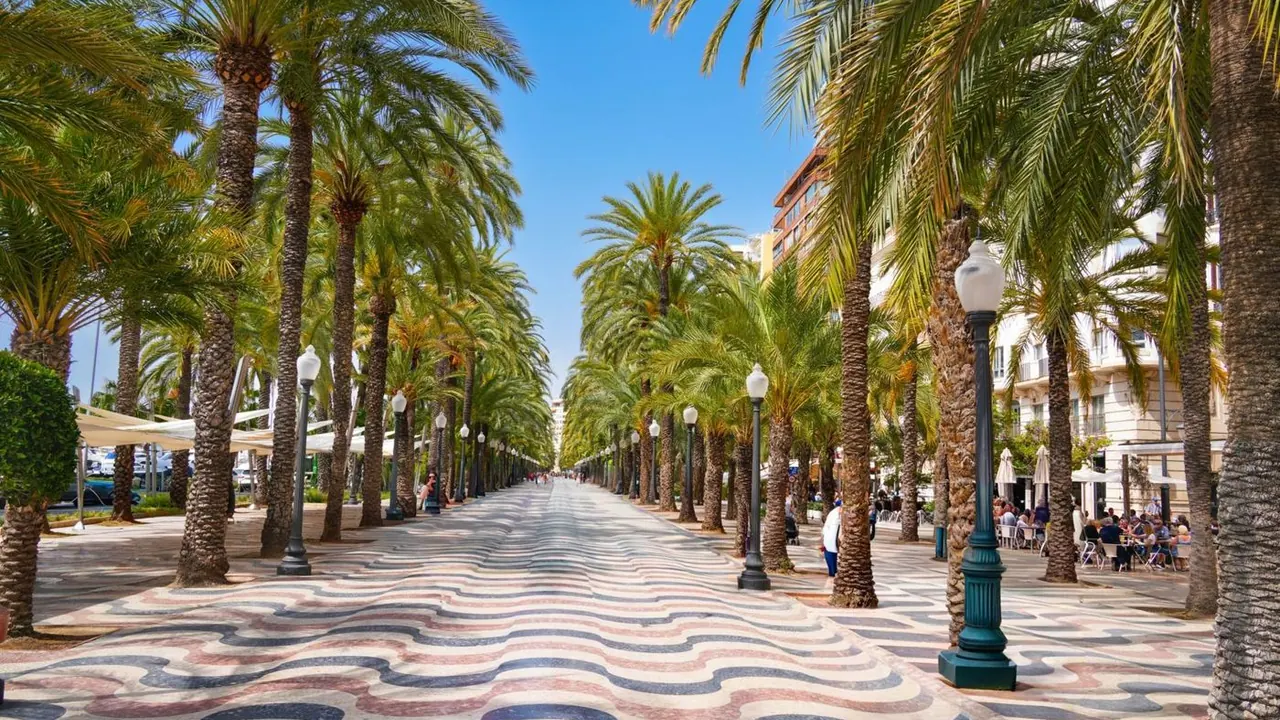
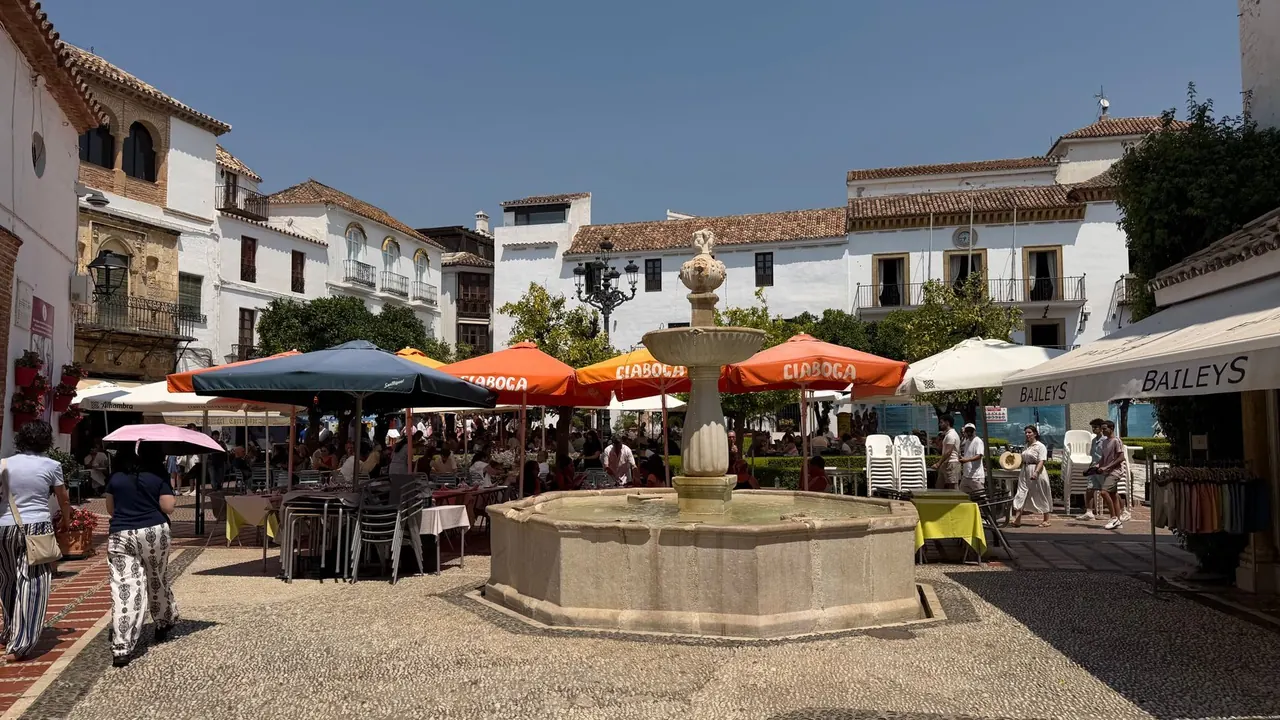
Photos: Alicante by Emilio Sánchez Hernández, Pexels License; Marbella by Décio Franchini, Pexels License.
Alicante or Marbella?
Our verdict in twelve categories, each scored against the same fixed benchmark cities, and the climate month by month, so you can choose for your trip.
Choose Alicante for
- prices
- getting around
- culture and sights
Alicante suits travellers who want a real Spanish city with a beach attached. The old quarter, the castle, the market and Postiguet are all within a short walk, the tram runs out to the long sands of San Juan, and the sea runs warmer through the summer. Add the rice cooking, a better museum and much lower costs, and it works for a first trip to the Costa Blanca, a long weekend or a stay that has to stretch the budget.
Choose Marbella for
- shopping
- wellness
- nature and the outdoors
Marbella is the choice if you want polish and are happy to pay for it. Its strengths are the yacht marina at Puerto Banús, the beach clubs, the luxury boutiques and the spa resorts on the Golden Mile, with Sierra Blanca rising straight behind the town. With a hire car it is also a good base for Ronda, Gibraltar and the white villages. The town itself has less to see, and it is spread out along the motorway.
Scoreboard
Twelve categories on one fixed scale from 0 to 100. The shaded stretch is the gap between the two.
Your match
Pick a travel style or drag the sliders, and both match scores follow your weighting.
Wins on prices and getting around with your weighting.
Wins on shopping and wellness with your weighting.
What matters to you?
Category by category
What the scores mean for a trip.
Beaches & swimming
Alicante has the better beaches for a city stay. Postiguet sits right below the castle, so you can swim between sightseeing stops. The tram runs out to Playa de San Juan, a long pale beach with shallow water, and the boat to Tabarca adds clear, rocky swimming. The sea here is also several degrees warmer at the height of summer.
Marbella's shore is longer and more fitted out, with fine greyish sand, rows of loungers, beach clubs and sardines grilled over open fires. The trade-off is cooler water from the Strait and the odd cold day when the westerly blows.
Food & drink
Alicante eats better day to day. Its rice dishes, arroz a banda, black rice and arroz con costra, give lunch a clear local identity. The Mercado Central, with its red prawns and mojama, and the tapas bars around the old town keep the standard high without much effort.
Marbella goes to both extremes. It has grilled sardines on the beach and plain Andalusian tapas in the Casco Antiguo, and also acclaimed tasting menus on the Golden Mile. In between, many seafront restaurants serve tired, overpriced menus, so you have to walk a few streets inland to eat well.
Culture & sights
Neither is a great museum city, but Alicante has more to fill the days. The Castillo de Santa Bárbara crowns the city with views over the bay, the Barrio de Santa Cruz climbs in stepped lanes beneath it, and the MARQ makes Iberian and Roman history easy to follow. Allow a couple of days.
Marbella's heritage fits into an afternoon: the Plaza de los Naranjos and its old town hall, the Spanish print museum and the Dalí bronzes along the Avenida del Mar. For more, there is the Roman villa at Río Verde, or a drive to the great Andalusian monuments.
Nightlife
Both stay out very late, but the evenings feel quite different. Alicante's nights centre on El Barrio, where small bars spill onto the steps under the castle. Students keep it going all year, and the Hogueras in June take over the streets for several nights.
Marbella is glossier and costs more. Champagne bars and clubs face the yachts at Puerto Banús, and daytime beach clubs with DJs carry on into the evening along the Golden Mile. Unlike Alicante's, the scene mostly closes down between November and March.
Nature & outdoors
Marbella has the more dramatic setting. Sierra Blanca starts right behind the town, the hike up La Concha looks across to Gibraltar and Morocco, and the fir forests of Sierra de las Nieves and the Caminito del Rey are both within reach for a day out.
Alicante's best outdoor asset is the sea. The marine reserve around Tabarca is good for snorkelling and diving, and the salt lagoons of Santa Pola have flamingos. Inland there are real mountains too, Puig Campana for hiking and the crags at Sella for climbing, but you need a car to reach most trailheads.
Day trips
Both are good bases. The difference is how you travel. From Alicante, much of it works without a car. The UNESCO palm grove at Elche is half an hour away, the coastal tram reaches Villajoyosa and Altea, and the train takes you to Valencia's old town and the City of Arts and Sciences.
Marbella's list is a little stronger: Ronda's gorge, Málaga's Alcazaba and Picasso Museum, Gibraltar, the white villages and, at a stretch, the Alhambra. Without a train, though, most of these trips mean hiring a car.
Good for families
For families, the real difference is how much driving you want to do. In Alicante, the shallow water at Playa de San Juan is a tram ride from the centre and Postiguet is a short walk away. The castle lift and the boat to Tabarca make easy half-day outings. Only the theme and water parks near Benidorm need a car.
Marbella suits a resort-style stay, with lifeguarded town beaches and apartment complexes built around pools. Its safari park, zoo, aquarium and water parks are spread along the coast from Estepona to Benalmádena and are awkward to reach by bus. Puerto Banús at night is no place for children.
Getting around
Alicante is far easier to get around. The old quarter, the port, the market and Postiguet are all about fifteen minutes apart on foot, a lift takes you up to the castle, and the tram and trains cover the beaches and the nearby towns.
Marbella stretches for many kilometres along the motorway, with hotels, villas and beach clubs far apart. Local buses help, but there is no train, so many visitors end up hiring a car or taking taxis.
Shopping & style
Marbella has the stronger shopping, but almost all of it is at the luxury end. International fashion and jewellery boutiques line the marina at Puerto Banús, with a department store and malls nearby, and the old town adds linen, leather and ceramics.
Alicante is more down to earth. It has Spanish chains along Avenida Maisonnave, turrón and saffron from the Mercado Central, and shoe factory outlets in nearby Elche. There is very little designer fashion.
Affordability
Your money goes much further in Alicante. Set lunch menus, tapas and local wine are fairly priced, the tram is cheap, and outside the summer peak and the Hogueras festival rooms are easy to find and cheap.
Marbella is one of the dearer places to stay in Spain. Sunbeds at the beach clubs and dinner near the port push costs up quickly. You can keep spending down with old-town tapas bars and an autumn visit, and some visitors save by staying in a neighbouring town.
Live music & performing arts
Neither town has much, though Alicante has the steadier calendar. The nineteenth-century Teatro Principal puts on drama, dance and touring musicals, and the provincial symphony orchestra plays at the ADDA concert hall through the season. Most of the programme is in Spanish.
Marbella's live culture is mostly summer concerts. Big pop and rock acts play an open-air festival in an old quarry, and the flamenco shows are mainly aimed at visitors. For classical music or serious flamenco, people go to Málaga.
Wellness & relaxation
Alicante has no organised wellness scene, so rest there is just the pace of the city: a morning on the sand, a long lunch and an unhurried evening in the old quarter, easiest outside the high summer weeks. For thermal waters, you have to drive about an hour to the springs at Archena or Fortuna in Murcia, which have been used since Roman times.
Marbella is the place to book rest as a programme, with a stay at a retreat offering treatments, yoga or a detox regime in the hills behind the coast. The catch is timing. Between October and May it is quiet and mild, but in high summer the heat, crowds and late nights make it far less restful.
When should you go?
Pick your month. The climate figures are measured averages, not a forecast.
Alicante in July
Marbella in July
Daytime high, °C
Rainfall in the month, mm
Where the figures come from
Marbella's temperatures are measured 40 km from the centre, at Malaga / Aeropuerto.
Marbella has no rain gauge within 25 km of the centre, so its rainfall comes from a gridded climate dataset read at the city rather than from a gauge further away.
Temperature and rainfall are climate normals, averaged over the years shown. Alicante: 1991-2020 normals, Alicante (2.8 km from centre). Marbella: 1991-2020 normals, Malaga / Aeropuerto (39.7 km from centre).
In midsummer the two are about equally hot on land, with August highs around 32°C in both, so July and August suit the beach and early mornings better than long afternoons on foot. Both get long, sunny days through the summer, and in both cities winter daytime highs stay in the high teens. The water is where they differ. Alicante's sea warms to 26°C by August and stays pleasant for swimming from early summer well into autumn. Marbella's is cooled by Atlantic water coming in through the Strait and tops out near 22°C.
Their rain comes at different times of year. Alicante is dry for most of it. Its wettest month is September, at 52mm, so late summer can bring a stormy day or two, but the winter stays fairly dry, which makes it the safer pick for a winter break. Marbella has almost no rain from June to September. The rain returns in October and keeps up through the winter, reaching 115mm in December and staying heavy into March. For walking and sightseeing, Alicante is at its best from March to May and again in October and November. In Marbella, April and May are the most reliable months, and late September is a good second choice before the autumn rain arrives.
Which traveller are you?
On a trip on a tight budget, Alicante is the clear pick. Rooms, set lunches and tapas cost noticeably less, the castle grounds are free, and the tram to the beaches is cheap. In Marbella, beach clubs and dinners around the port add up quickly.
For a short city break, Alicante also works better. The castle, the Barrio de Santa Cruz, the MARQ and the Mercado Central are all close together on foot. Marbella's sights fill an afternoon, and the rest of the town is spread along the coast.
For a relaxing and wellness trip, Marbella has more to offer. Spa resorts and retreats on the Golden Mile, Arab-style baths and golf make an autumn or spring stay restful. In Alicante, rest mostly means hotel spas and a long siesta.
Before you go
| Measure | Alicante | Marbella |
|---|---|---|
| Official language | Spanish | Spanish |
| Currency | Euro (EUR) | Euro (EUR) |
| Sockets | CF230 V, 50 Hz | CF230 V, 50 Hz |
| Driving side | Right | Right |
| Time zone | UTC+1, UTC+2 in summer | UTC+1, UTC+2 in summer |
| Emergency number | 112 | 112 |
| Elevation | 3 m | 22 m |
| Main airport | Alicante-Elche Miguel Hernández Airport (ALC)10 km from centre126 non-stop destinations | Málaga-Costa del Sol Airport (AGP)39 km from centre166 non-stop destinations |
| Public holidays this year | 13 days | 12 days |
By the numbers
| Measure | Alicante | Marbella |
|---|---|---|
| City population | 366,221 | 159,786 |
| People per km² | 1,819 | 1,398 |
| Museums within 10 km | 8 | 6 |
| UNESCO World Heritage sites within 50 km | 2 | 0 |
| Swim season, months above 21 °C | 5 months | 3 months |
Where else could you go?
Every comparison below shares a destination with this one, so you can follow Alicante or Marbella somewhere new.