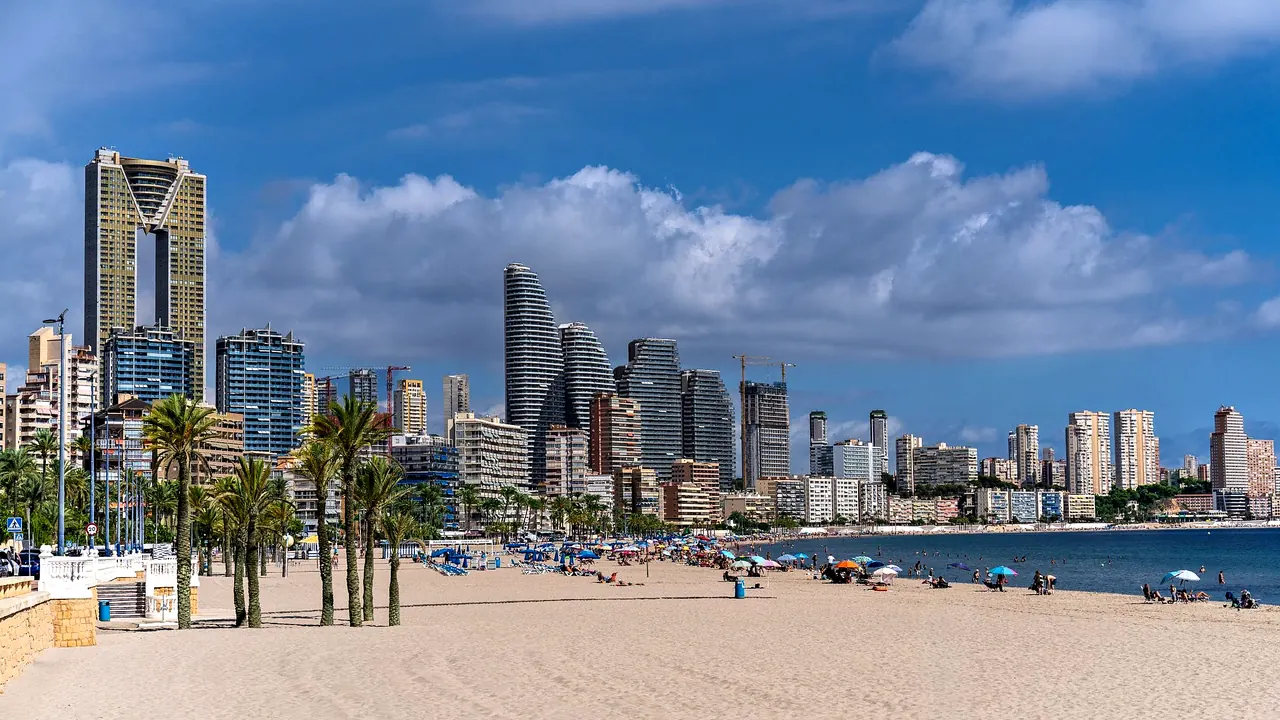
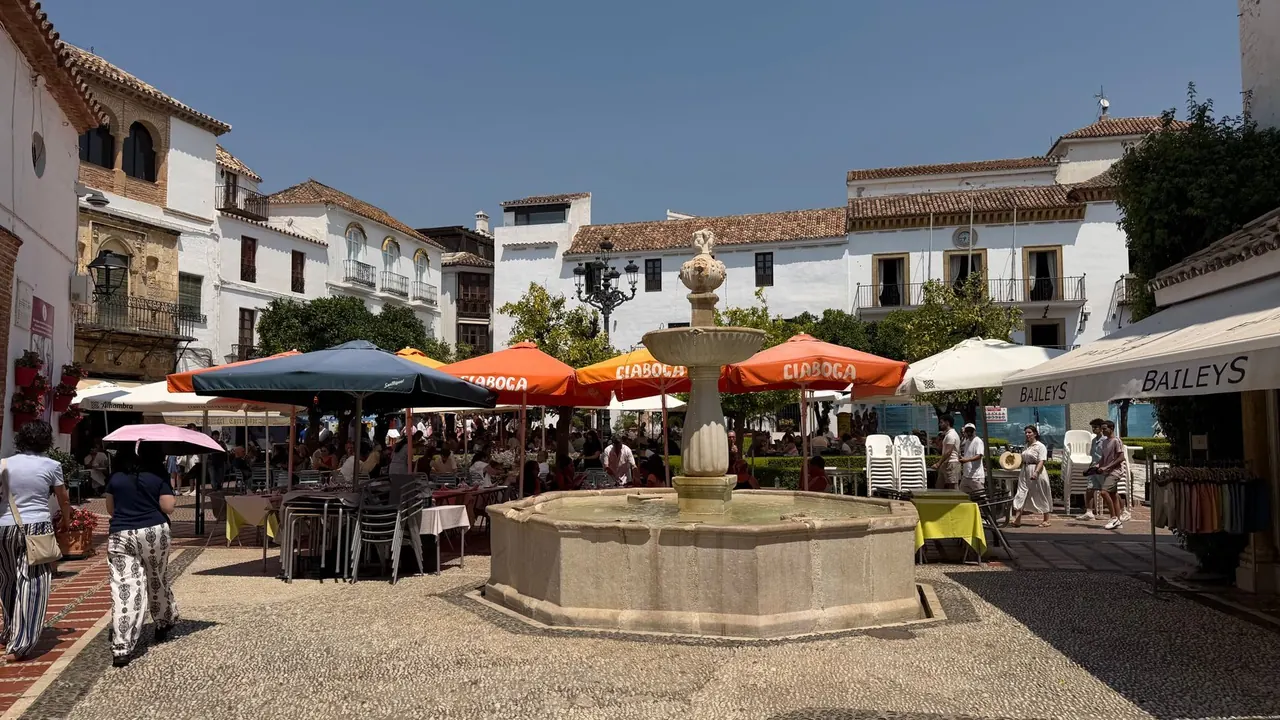
Photos: Benidorm by Emilio Sánchez Hernández, Pexels License; Marbella by Décio Franchini, Pexels License.
Benidorm or Marbella?
Our verdict in twelve categories, each scored against the same fixed benchmark cities, and the climate month by month, so you can choose for your trip.
Choose Benidorm for
- prices
- getting around
- families
Benidorm suits a straightforward beach vacation where the sand, the warm sea and the evenings matter most. Its two bays sit right in front of the hotels and children are catered for at every turn. Buses and the coastal tram cover the town and the nearby coast, so a car is only needed for the hills inland. Your money also goes further, especially for families and anyone staying for weeks in winter.
Choose Marbella for
- shopping
- wellness
- food and drink
Pick Marbella if you want the beach with more around it: better eating, from Andalusian tapas to tasting menus, a real old town, luxury shopping and spa resorts for resting. It is also the stronger base for exploring Ronda, Málaga and the white villages. It costs considerably more, though, and works best with a hire car.
Scoreboard
Twelve categories on one fixed scale from 0 to 100. The shaded stretch is the gap between the two.
Your match
Pick a travel style or drag the sliders, and both match scores follow your weighting.
Too close to call, level with your weighting
Wins on prices and getting around with your weighting.
Wins on shopping and wellness with your weighting.
What matters to you?
Category by category
What the scores mean for a trip.
Beaches & swimming
Benidorm has the edge for a pure beach trip. Levante and Poniente are two broad bays of groomed sand right in front of the hotels, with shallow, clear water that is several degrees warmer in high summer, so swimming lasts well into autumn. The trade-off is crowding, with the sand packed through July and August.
Marbella spreads its beaches along a far longer shore, from La Venus and El Fuerte in town to the dunes at Cabopino, with greyish sand, beach clubs and sardines grilled at the chiringuitos. Its sea is cooler, being close to the Strait, and a westerly wind can chill it suddenly, but there is more room to find a quieter stretch.
Food & drink
In Benidorm the seafront and the Rincón de Loix cook for package visitors, with fry-ups, roasts and pizza. The better meals take some looking for: the tapas lane in the old town, and the rice restaurants serving arroz a banda and arroz negro the Alicante way.
Marbella has more depth at both ends. Sardines grilled over driftwood and old-town tapas cover the Andalusian side. Several acclaimed tasting-menu kitchens around the Golden Mile and Puerto Banús give it a serious top tier that Benidorm lacks. Its weak spot is the overpriced, forgettable middle ground by the port.
Culture & sights
Neither is a heritage destination, but Marbella has more to fill an afternoon. Benidorm's past comes down to the whitewashed headland of the old village, its blue-domed church and the view from the Balcón del Mediterráneo, and the tower skyline is the town's real spectacle.
Marbella's Casco Antiguo around the Plaza de los Naranjos is larger and older, with a 16th-century town hall, fragments of the Moorish walls and a museum of Spanish prints. Beyond it are the Dalí bronzes on the Avenida del Mar and a Roman villa with mosaics at Río Verde.
Nightlife
Benidorm offers the bigger, cheaper and more relentless night out. Around the Rincón de Loix there are themed pubs, karaoke and drag cabaret, with stag and hen groups in fancy dress, and clubs on the edge of town run until dawn. The old town offers a calmer Spanish evening of tapas and terraces.
Marbella goes for glamour rather than volume. Puerto Banús has champagne bars beside the yachts and clubs full of a moneyed international crowd, and daytime beach clubs along the Golden Mile drift into evening parties. In both towns the scene shrinks sharply in winter.
Nature & outdoors
Both have mountains rising straight behind the coast, so the difference is in character. Benidorm's best walk is the Serra Gelada cliff path above the sea. Inland are Puig Campana, the Bernia ridge and the Algar waterfalls, and you can snorkel or dive around the island off the beach.
Marbella's walking is wilder and higher. The climb to La Concha in the Sierra Blanca looks across to Morocco on clear days, and the Sierra de las Nieves has fir forests, gorges and ibex. El Torcal and the Caminito del Rey are within reach for longer outings.
Day trips
From Benidorm the outings are easy but smaller in scale. Altea and Villajoyosa are minutes away, Guadalest's castle sits on its rock inland, and the coastal tram reaches Alicante without driving. Elche's palm grove and Valencia make the bigger days out.
Marbella has the richer list. Ronda's gorge, Málaga's Alcazaba and Picasso Museum, Gibraltar and white villages such as Casares and Mijas are all within about an hour, and the Alhambra in Granada makes a long but possible day. Almost all of it is far easier with a car.
Good for families
Benidorm is the easier choice with children. Its calm, gently shelving beaches and flat promenades come with a cluster of parks on the edge of town: a theme park, a long-running water park, a marine park and a zoo, all reachable by local bus. The one caveat is the adult nightlife behind Levante, which is easy to avoid by staying near Poniente.
Marbella's sheltered, lifeguarded beaches and resorts built around pools work well for a beach vacation. Its animal park, zoo, water parks and aquarium are spread along the coast in Estepona, Fuengirola and Benalmádena, though, which in practice means driving.
Getting around
Benidorm is far simpler to get around. Almost everything lies along the two promenades and the old town between them, local buses run out to the theme parks, and the tram links the coast from Alicante to Altea. Only the inland hills call for a car, and parking in town is scarce.
Marbella runs for kilometres along the motorway from San Pedro to Cabopino, with no train and slow buses. The old town and central seafront are pleasant on foot, but most visitors end up hiring a car or using taxis between the port, the town and their accommodation.
Shopping & style
Benidorm sells what a beach vacation needs: beachwear, sunglasses, souvenirs and turrón, plus weekly markets of clothes and fakes. Anyone wanting more takes the tram to Alicante.
Marbella is the place for big-name fashion. Puerto Banús has a dense strip of international boutiques and jewellers, with a department store and malls nearby, and the old town lanes add linen, leather and ceramics.
Affordability
Benidorm is much the cheaper of the two. A vast supply of rooms, all-inclusive packages and inexpensive drinks and set menus keep daily costs low, and long winter stays are especially good value. Peak summer weeks and days at the theme parks are the main extra costs.
Marbella is expensive by Spanish standards, and beach clubs, prime sunbeds and dinners around Puerto Banús cost well above the norm for the coast. Old-town tapas bars and apartments out of season soften the bill, and many visitors save by staying in a neighbouring town.
Live music & performing arts
Neither town is a serious place for the stage, and both send lovers of opera and classical music elsewhere: from Benidorm to Alicante or Valencia, from Marbella to Málaga. The flavour differs. Benidorm's entertainment is nightly and informal, with drag acts, comedians, tribute singers and a large dinner-show venue. Marbella's peaks in summer, when big pop and rock acts play an amphitheatre in an old quarry, and flamenco shows are staged for visitors.
Wellness & relaxation
Wellness in Benidorm means hotel spas with indoor pools, saunas and massage. The town is restful only out of season, when winter brings promenade walks and long lunches, and Poniente is always the quieter side.
Marbella takes rest far more seriously. It has a long tradition of wealthy visitors coming to recuperate, with spa resorts, yoga retreats and detox clinics across the Golden Mile and the hills, and a few Arab-style bathhouses. From October to May it is calm and mild, with golf and unhurried lunches.
When should you go?
Pick your month. The climate figures are measured averages, not a forecast.
Benidorm in July
Marbella in July
Daytime high, °C
Rainfall in the month, mm
Where the figures come from
Benidorm's temperatures are measured 38 km from the centre, at Alicante.
Benidorm has no rain gauge within 25 km of the centre, so its rainfall comes from a gridded climate dataset read at the city rather than from a gauge further away.
Marbella's temperatures are measured 40 km from the centre, at Malaga / Aeropuerto.
Marbella has no rain gauge within 25 km of the centre, so its rainfall comes from a gridded climate dataset read at the city rather than from a gauge further away.
Temperature and rainfall are climate normals, averaged over the years shown. Benidorm: 1991-2020 normals, Alicante (38.1 km from centre). Marbella: 1991-2020 normals, Malaga / Aeropuerto (39.7 km from centre).
Through the year the two have almost the same daytime temperatures: mild winters, comfortable springs and summer highs of about 31°C. The real differences are the sea and the rain. Benidorm's water is noticeably warmer, reaching 26°C in August against Marbella's 22°C, and it stays pleasant for swimming into October, while Marbella's sea is at its best from June to September. Benidorm is the drier of the two overall, though autumn is its wettest season, with September to November bringing around 40mm a month, roughly double its spring. Marbella has a proper rainy season from October to March, peaking in December at 115mm, and April is still fairly damp.
For walking the streets or heading into the hills, April, May and October are the comfortable months in both towns, while July and August are hot enough that hikes are best kept to early mornings. Sunshine is plentiful in both from late spring through summer. For a winter escape, Benidorm is the safer bet for dry days, while Marbella is at its most settled from May onwards, once the rains have passed.
Which traveller are you?
On a trip on a tight budget, Benidorm is the clear choice. Come outside July, August and Spanish long weekends, stay within walking distance of the promenades and use the tram for Altea and Alicante, so there is no car to hire. Marbella's long sprawl usually means taxis or a hire car.
For a relaxing and wellness trip, Marbella suits better. May works best, when the town is calm and the rains are over. Book a resort in the hills behind the Golden Mile and fill the gaps between treatments with early walks on the Sierra Blanca. In Benidorm you would have to put the retreat together yourself.
On a shopping trip, Marbella is the one to choose. Stay near Puerto Banús and the big labels are a short walk from your room, with the old town lanes for an afternoon of smaller finds. Benidorm's shops cover little beyond what a beach day needs.
Before you go
| Measure | Benidorm | Marbella |
|---|---|---|
| Official language | Spanish | Spanish |
| Currency | Euro (EUR) | Euro (EUR) |
| Sockets | CF230 V, 50 Hz | CF230 V, 50 Hz |
| Driving side | Right | Right |
| Time zone | UTC+1, UTC+2 in summer | UTC+1, UTC+2 in summer |
| Emergency number | 112 | 112 |
| Elevation | 15 m | 22 m |
| Main airport | Alicante-Elche Miguel Hernández Airport (ALC)48 km from centre126 non-stop destinations | Málaga-Costa del Sol Airport (AGP)39 km from centre165 non-stop destinations |
| Public holidays this year | 13 days | 12 days |
By the numbers
| Measure | Benidorm | Marbella |
|---|---|---|
| City population | 77,327 | 159,786 |
| People per km² | 2,008 | 1,398 |
| Museums within 10 km | 5 | 6 |
| UNESCO World Heritage sites within 50 km | 1 | 0 |
| Swim season, months above 21 °C | 5 months | 3 months |
Where else could you go?
Every comparison below shares a destination with this one, so you can follow Benidorm or Marbella somewhere new.
- Rondavs Marbella
- Alicantevs Benidorm
- Malagavs Marbella
- Valenciavs Benidorm
- Jerez de la Fronteravs Marbella
- Cadizvs Marbella