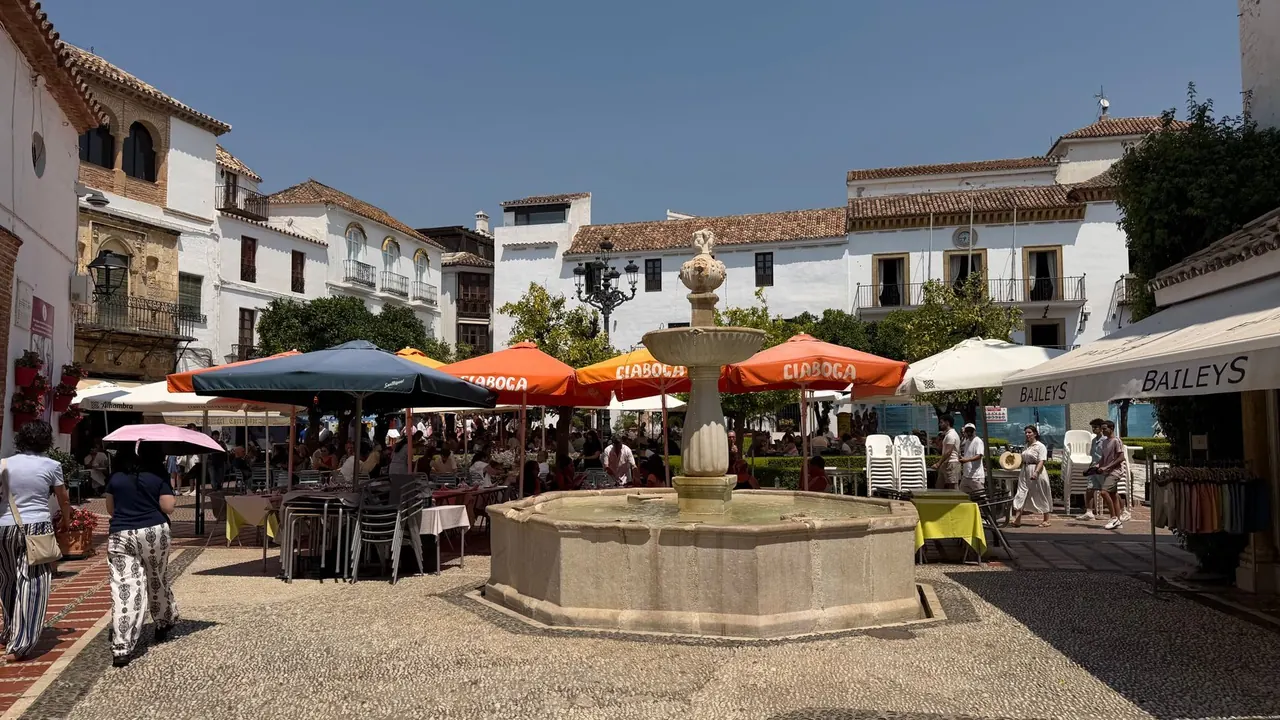
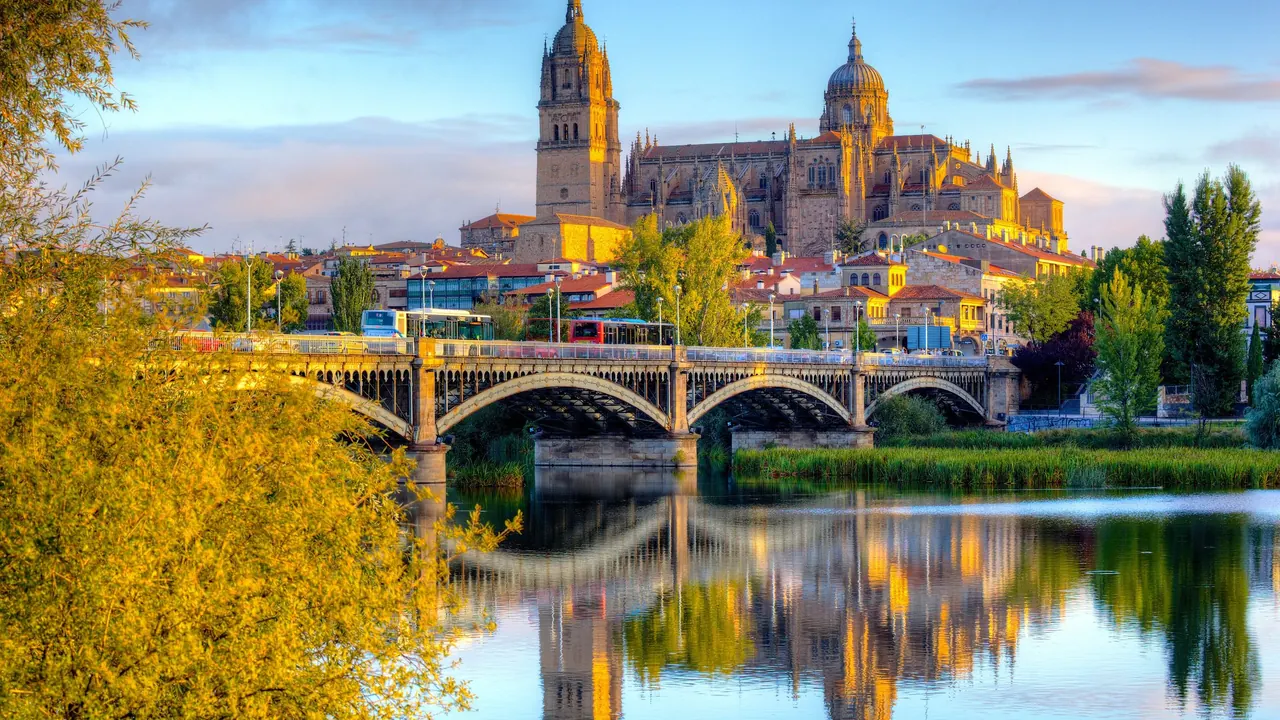
Photos: Marbella by Décio Franchini, Pexels License; Salamanca by Jiuguang Wang, CC BY-SA 3.0 ES, cropped.
Marbella or Salamanca?
Our verdict in twelve categories, each scored against the same fixed benchmark cities, and the climate month by month, so you can choose for your trip.
Choose Marbella for
- beaches
- families
- shopping
Marbella is the pick for a trip built around sun and sea. It has a long run of fine-sand beaches, a sea you can swim in from early summer well into autumn, and real mountains rising straight behind the town. It suits families who want a beach base with pools and coastal attractions nearby, and couples happy to spend on beach clubs and good dinners. A hire car opens up Ronda, Málaga and the white villages.
Choose Salamanca for
- culture and sights
- getting around
- prices
Travellers who would rather walk old streets than lie on a sunbed will get more from Salamanca. Its golden sandstone old town, the university and the two cathedrals fill two or three unhurried days on foot. The tapas bars are cheap and generous, and students keep the evenings busy in term time. It makes the better culture-led city break or base for touring Old Castile on a modest budget, but there is no beach at all.
Scoreboard
Twelve categories on one fixed scale from 0 to 100. The shaded stretch is the gap between the two.
Your match
Pick a travel style or drag the sliders, and both match scores follow your weighting.
Wins on beaches and families with your weighting.
Wins on culture and sights and getting around with your weighting.
What matters to you?
Category by category
What the scores mean for a trip.
Beaches & swimming
Marbella has more than two dozen beaches along its shore, from La Venus and El Fuerte in the centre to the dunes at Cabopino. The sand is fine and greyish, with loungers and chiringuitos along it, and the water is calm and clear, if a little cool so close to the Strait.
Salamanca sits on the high plain, a long way from any sea. On hot summer days locals swim in municipal pools or at river beaches on the Tormes, which is fine for an afternoon but nothing more.
Food & drink
The two eat about equally well, but in very different ways. Marbella has the sea: grilled sardines, fried fish and cold summer soups on the beach, plus a top tier of tasting-menu kitchens and international restaurants along the Golden Mile. Around the port you need to choose carefully, as many places serve the same tired menu.
Salamanca is all meat and the bar counter. There is ibérico ham from nearby Guijuelo, hornazo, suckling pig and morucha beef, and the Mercado Central for cheese and charcuterie. It is cheaper and more consistent, but there is little seafood or foreign cooking.
Culture & sights
Salamanca is one of Spain's great historic cities. Its Plateresque university façade, Old and New Cathedrals side by side, Casa de las Conchas and baroque Plaza Mayor are all built in the same glowing stone, and at night the floodlit centre is a sight in itself. Museums are the weak point, apart from the Casa Lis.
Marbella has a pretty Casco Antiguo around the Plaza de los Naranjos, a museum of Spanish prints and Dalí bronzes on the Avenida del Mar, and a Roman villa outside town. It is pleasant, but an afternoon is enough.
Nightlife
Both are well known for going out, but the crowds hardly overlap. Marbella is glamorous and expensive: champagne bars by the yachts in Puerto Banús, beach clubs with DJs that run into the night, and clubs open until dawn. It is busiest in summer and quiet in winter.
Salamanca runs on students and is cheap. Packed bars around the Plaza Mayor and Calle Bordadores lead on to dance bars and small clubs from Thursday to Saturday. It is liveliest in term time and quietens in high summer, the opposite of the coast.
Nature & outdoors
In Marbella the mountains come almost down to the beach. You can hike up La Concha in Sierra Blanca straight from town and see over to Gibraltar and Morocco on a clear day. The fir forests and gorges of Sierra de las Nieves are under an hour away, and the coast adds paddleboarding, sailing and dolphin trips.
Around Salamanca there is little beyond the riverside paths on the flat plain. The good landscapes, the Sierra de Francia, Las Batuecas and the granite canyon of the Arribes del Duero, are about an hour away and need a car.
Day trips
Marbella's day trips are more varied. You can reach the gorge town of Ronda, Málaga's Alcazaba and Picasso Museum, the British oddity of Gibraltar, white villages such as Casares, and even the Alhambra if you don't mind a long day.
Salamanca's trips are all historic towns: the walls of Ávila, the Romanesque churches of Zamora, the ramparts of Ciudad Rodrigo and the old village of La Alberca. Valladolid is easy by train, but from either base a car helps a great deal.
Good for families
Marbella is the easier choice with children. The town beaches are sheltered and lifeguarded, the flat promenade suits scooters and buggies, and many places to stay are built around pools. Within a short drive there are a zoo, water parks, an aquarium and an animal park.
Salamanca has small pleasures: hunting for the frog on the university façade and the astronaut on the cathedral, and climbing the towers. But there is nothing built for children, so one or two days is enough.
Getting around
Salamanca is very easy to get around. Almost everything is in a pedestrian old town you can walk across in about 20 minutes, and trains run to Madrid and Valladolid.
Marbella stretches thinly along the motorway from San Pedro to Cabopino. The centre and promenade are fine on foot, but there is no train, so most visitors rely on taxis, slow buses or a hire car.
Shopping & style
For shopping, Marbella is the stronger choice. Puerto Banús is lined with international fashion and jewellery boutiques, there are malls on the edge of town, and the old town has linen, leather and ceramics. Away from the big brands, though, there is little to browse.
Salamanca has high-street chains on the streets north of the Plaza Mayor. The things worth buying are local: ham and cheese from the Mercado Central, and charro silver filigree jewellery.
Affordability
Salamanca is much easier on the wallet. Thanks to the students, tapas stay cheap, a free tapa often comes with a drink, rooms are moderately priced and you can walk everywhere. The main extra costs are the admission fees for the cathedrals and the university.
Marbella is expensive for Spain, especially in July and August, when room rates rise and a day at a beach club or dinner by the port costs a lot. Old-town tapas bars, visits outside summer, or staying in a neighbouring town all bring costs down.
Live music & performing arts
Neither is a city for opera or a resident orchestra, but Salamanca has more going on through the year. The Teatro Liceo and a municipal arts centre host theatre, dance and flamenco, the university holds concerts in its historic halls, and tunas in black capes sing under the Plaza Mayor arcades.
Marbella's live music is mostly in summer: big pop and rock acts in a quarry amphitheatre, and DJs at the beach clubs. For serious flamenco or classical music you have to go to Málaga.
Wellness & relaxation
Marbella is built for pampering. Spa resorts, yoga retreats and detox clinics line the Golden Mile and the hills behind it. From October to May the mild, sunny weather makes it calm, but the summer heat and parties make it much less restful.
Salamanca offers rest through its slow pace rather than spas. Long lunches, a real siesta and the quiet cloisters of San Esteban and Las Dueñas set the tone. For mineral springs you drive out to the old balneario at Ledesma or to Baños de Montemayor.
When should you go?
Pick your month. The climate figures are measured averages, not a forecast.
Marbella in July
Salamanca in July
Daytime high, °C
Rainfall in the month, mm
Where the figures come from
Marbella's temperatures are measured 40 km from the centre, at Malaga / Aeropuerto.
Marbella has no rain gauge within 25 km of the centre, so its rainfall comes from a gridded climate dataset read at the city rather than from a gauge further away.
Temperature and rainfall are climate normals, averaged over the years shown. Marbella: 1991-2020 normals, Malaga / Aeropuerto (39.7 km from centre). Salamanca: 1991-2020 normals, Salamanca / Matacan (13.9 km from centre).
Marbella's beach season runs from June to early October, when the rain has almost stopped and the sea warms to about 22°C by August. July and August are hot and very sunny. From October the rain returns, peaking at about 115mm in December, but winter stays mild at around 17°C in January, with more sunshine than Salamanca gets at that time of year. That makes the cooler months good for walking and quiet stays.
Salamanca has a far harsher year. January highs reach only about 9°C, with cold, clear days. July heats up to around 31°C, much like the coast, but there is no sea breeze or water to cool off in. The best months for walking the streets are May, June, September and early October, when the days are warm and bright without being punishing. Rain is light all year, a little heavier in October.
Which traveller are you?
On a beach and sun trip, Marbella is the only real choice. It has kilometres of fine sand, calm water warm enough to swim in from June into October, and long, dry summers. Salamanca offers only river beaches and municipal pools.
For a culture and arts trip, Salamanca is far richer. Marbella's old town and Dalí bronzes fill an afternoon. Salamanca's UNESCO-listed centre, university façade, twin cathedrals and Plaza Mayor reward several days on foot, and student tunas sing in the evenings.
On a trip on a tight budget, Marbella takes planning: come outside summer, sleep in a neighbouring town and get around by bus. Salamanca is simpler and cheaper. Arrive by train, skip the car, avoid Easter and festival weekends, and choose which paid towers matter.
Before you go
| Measure | Marbella | Salamanca |
|---|---|---|
| Official language | Spanish | Spanish |
| Currency | Euro (EUR) | Euro (EUR) |
| Sockets | CF230 V, 50 Hz | CF230 V, 50 Hz |
| Driving side | Right | Right |
| Time zone | UTC+1, UTC+2 in summer | UTC+1, UTC+2 in summer |
| Emergency number | 112 | 112 |
| Elevation | 22 m | 798 m |
| Main airport | Málaga-Costa del Sol Airport (AGP)39 km from centre166 non-stop destinations | Adolfo Suárez Madrid–Barajas Airport (MAD)184 km from centre239 non-stop destinations |
| Public holidays this year | 12 days | 12 days |
By the numbers
| Measure | Marbella | Salamanca |
|---|---|---|
| City population | 159,786 | 146,110 |
| People per km² | 1,398 | 3,690 |
| Museums within 10 km | 6 | 13 |
| UNESCO World Heritage sites within 50 km | 0 | 1 |
| Swim season, months above 21 °C | 3 months | - |
Where else could you go?
Every comparison below shares a destination with this one, so you can follow Marbella or Salamanca somewhere new.
- Rondavs Marbella
- Malagavs Marbella
- Cadizvs Marbella
- Granadavs Marbella
- Sevillevs Marbella
- Cordobavs Marbella