Spain
Malaga
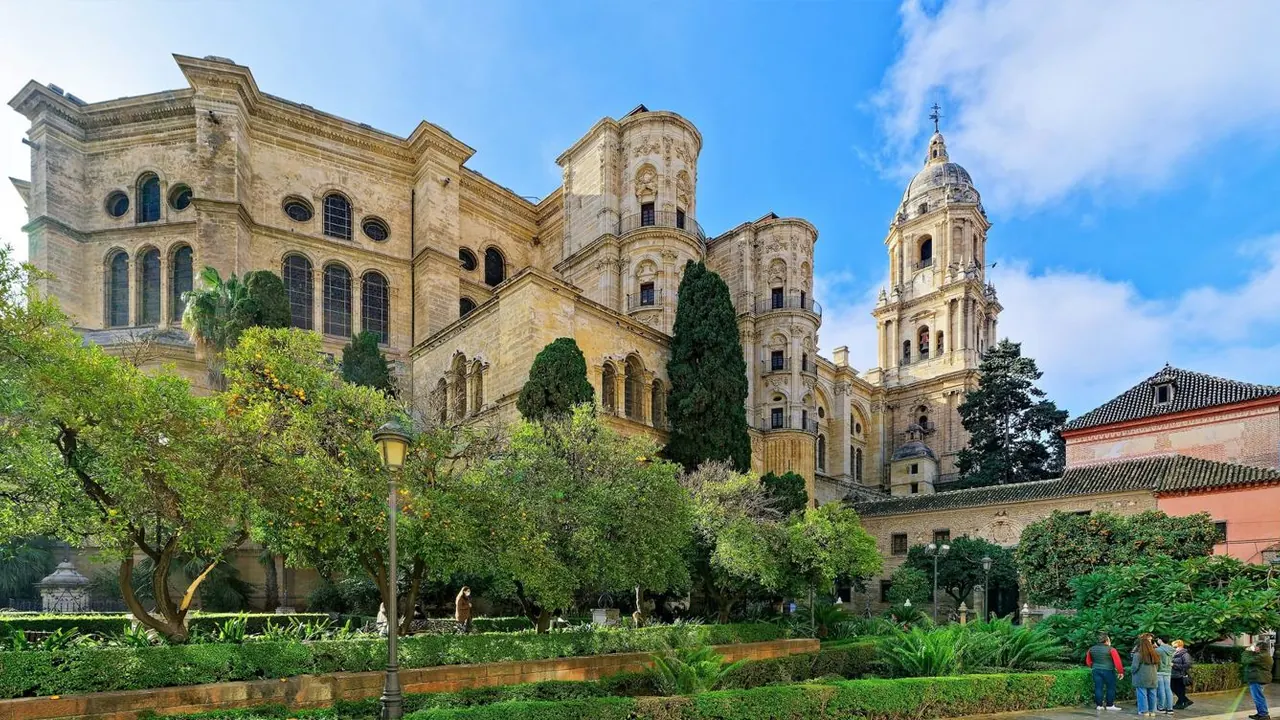
The cathedral from the gardens
- Day trips87
- Beaches77
- Nature & outdoors73
Photo: Holger Uwe Schmitt, CC BY-SA 4.0, cropped
Match
64
Every category weighted equally
- Beach & sun65
- Culture & arts63
- Food & nightlife62
- Family trip67
- Outdoors68
- Relax & unwind63
- Shopping & style62
- On a budget63
Malaga in twelve categories
Our verdict on each, scored 0 to 100 against the same fixed benchmark cities, so a score means the same thing on every page.
Beaches & swimming. Scores 77 out of 100.
Food & drink. Scores 68 out of 100.
Culture & sights. Scores 65 out of 100.
Nightlife. Scores 62 out of 100.
Nature & outdoors. Scores 73 out of 100.
Day trips. Scores 87 out of 100.
Good for families. Scores 70 out of 100.
Getting around. Scores 70 out of 100.
Shopping & style. Scores 55 out of 100.
Affordability. Scores 55 out of 100.
Live music & performing arts. Scores 45 out of 100.
Wellness & relaxation. Scores 42 out of 100.
Malaga category by category
Beaches & swimming
77The beach starts a few minutes' walk from the cathedral. La Malagueta is the city's main stretch of grey-brown sand, and the shore runs east through Pedregalejo and El Palo, old fishing quarters where families spend whole afternoons by the water and sardines roast on skewers in beached boats. West of the city the Costa del Sol is one long string of resort beaches through Torremolinos, Benalmadena and Fuengirola, all on the suburban train.
The sea is the Alboran, a little cooler than the rest of the Mediterranean, at about 22°C in August. On some days an easterly wind brings in colder water. Swimming is comfortable from June to October and beach days happen well beyond that. The sand is functional rather than beautiful. For clear water and small coves, head east to Nerja and Maro, about an hour away, where cliffs break the coast into proper bays.
Food & drink
68This is a city of tapas bars and fish. The local signatures are the espeto, sardines roasted on a cane skewer over driftwood fires on the beach, and pescaito frito, small fried fish eaten by the plateful at seafront places in Pedregalejo and El Palo. In the old town, tapas bars crowd the lanes around Calle Larios and Plaza de la Merced. The Atarazanas market, in an iron hall behind a Moorish gate, sells fish, olives and fruit and has counters where you can eat.
Malaga's sweet wines from moscatel and Pedro Ximenez grapes are poured from the barrel at old bodegas such as Antigua Casa de Guardia, which has been serving them since the nineteenth century. Mornings start with mitad or nube, the city's own names for coffee with milk, and toast with olive oil and tomato. There is a modest tier of ambitious restaurants, but the strength is casual eating at fair prices. Gazpacho's cold almond cousin, ajoblanco, is the dish to try in summer.
Culture & sights
65The historic core is small and layered. A Roman theatre sits at the foot of the Alcazaba, an eleventh-century Moorish palace-fortress of courtyards, fountains and horseshoe arches climbing the hill. Above it the walls of Gibralfaro castle give the best view of the city and the port. Down in the centre, the Renaissance cathedral was never finished, and its missing south tower earned it the nickname La Manquita, the one-armed lady.
Picasso was born here, and the Picasso Museum in a palace off Calle San Agustin shows his work across his whole life, alongside his birthplace house on Plaza de la Merced. The Carmen Thyssen collection covers Spanish painting of the nineteenth century, and the Museo de Malaga in the Aduana palace adds fine arts and archaeology. Contemporary art has a home at the CAC near the river. It is a rewarding two-day city rather than an endless one.
Nightlife
62Nights run on Spanish time. Dinner rarely begins before ten, and the old town fills afterwards with people moving between terraces and small bars around Plaza de la Merced, Calle Granada and Plaza Uncibay. On summer weekends the streets stay full well past two, and beach bars along La Malagueta and Pedregalejo keep going late.
The club scene in the city is small, with a few late venues in the centre and the port area. Bigger clubbing and the gay scene that the coast is known for are a short train ride away in Torremolinos, and Marbella's glossier nights are about an hour west. The mood is sociable and mixed in age rather than wild.
Nature & outdoors
73Hills rise straight behind the city. The Montes de Malaga natural park, a forest of pine and old farm tracks, starts on the northern edge and is good for walking and mountain biking. About an hour inland, the Caminito del Rey is a walkway pinned to the walls of a narrow gorge high above the Guadalhorce river. El Torcal near Antequera is a plateau of strange stacked limestone with marked trails and ibex.
East of the city the Sierras de Tejeda and Almijara have serious hikes above Nerja, and the Maro cliffs are good for kayaking and snorkelling. The Sierra Nevada, about two hours away, has skiing in winter and high walking in summer. Spring and autumn are the seasons to get out. In July and August heat pushes walks to the early morning.
Day trips
87Malaga is one of the best bases in Andalucia for days out. Cordoba and its great Mezquita are about an hour by fast train. Granada and the Alhambra are about an hour and a half by train or bus, though the Alhambra itself needs a full day. Seville is at the edge of a day trip at about two hours. Closer in, Antequera has the Bronze Age dolmens of Menga and Viera, a UNESCO site, and a handsome old town only half an hour away.
Ronda, split by its gorge and bridge, is under two hours by road or rail. To the east, Nerja and the hill village of Frigiliana make an easy pairing. Along the coast to the west there are Mijas's white streets, Marbella's old quarter and, at the far end, Gibraltar. With a car, the white villages of the Axarquia and the Serrania de Ronda fill out a long list.
Good for families
70Children are part of Spanish life here. They stay out late on summer evenings, are welcome in every tapas bar, and have room to run in the squares and along the palm-lined Paseo del Parque. The city beaches shelve gently into calm water, and the flat, pedestrianised centre is easy with a pushchair. Older children tend to enjoy the ramparts and gardens of the Alcazaba and the walk up to Gibralfaro.
Most of the attractions made for children are along the coast, a short suburban train ride west. Fuengirola has the Bioparc zoo, Benalmadena has a Sea Life aquarium and the Selwo Marina dolphin park, and the Selwo safari park is near Estepona. Inside the city there is little built specially for children, so a family stay mixes beach days with trips along the coast. July and August are very hot, which makes late spring and early autumn the easier seasons.
Getting around
70The centre is small, flat and largely pedestrianised, so the cathedral, museums, market, port and La Malagueta beach are all a short walk apart. Only the climb to Gibralfaro castle takes real effort, and a city bus goes up. The suburban train runs from the centre to the airport in about ten minutes and on along the coast to Torremolinos, Benalmadena and Fuengirola. A short metro serves the western districts.
For going further, the main station has fast trains to Cordoba, Seville and Madrid, and Granada and Ronda are reachable by rail or coach. A car is not needed in the city, but it becomes useful for the white villages, the Caminito del Rey, El Torcal and Nerja's coves, where buses are sparse.
Shopping & style
55Calle Larios is the main shopping street, a polished marble pedestrian street of Spanish high-street chains running from the port to Plaza de la Constitucion, with more shops in the lanes on either side. El Corte Ingles, the national department store, sits across the river. Muelle Uno on the port has a promenade of shops and terraces. The streets of the Soho district have a few independent shops among the street art.
For things to take home, the Atarazanas market has olive oil, almonds, cured ham and sweet wine. Ceramics and esparto work turn up in the inland villages. Real luxury shopping is an hour west in Marbella's Puerto Banus. In the city itself the range is pleasant rather than deep.
Affordability
55Eating and drinking are the good-value part of a stay. Tapas with a glass of wine, plates of fried fish, breakfast coffee and the local buses and suburban trains are all reasonably priced for Western Europe. Several of the main sights cost little to enter. Accommodation is the expensive part: rooms in the old town and near the beach are in heavy demand from spring to autumn. Staying slightly outside the centre or coming in winter makes a real difference.
Live music & performing arts
45The main stage is the Teatro Cervantes, a nineteenth-century theatre that hosts the Malaga Philharmonic, touring drama, dance and concerts. A second large theatre presents musicals and big productions. Flamenco is the live tradition a visitor will most want to see. It is performed in tablaos for visitors in the centre, and in a few peñas, the clubs where locals sing and play for each other, which feel more genuine.
Outside those, live music means small bar stages for jazz, rock and singer-songwriters, and the summer brings open-air concerts. Semana Santa is a performance in its own right, with brass bands and processions filling the streets. For serious opera or a deep theatre season, this is not the place.
Wellness & relaxation
42There is no historic bathing culture here, though the Moorish past is evoked in an Arab-style bathhouse in the old town, with warm pools, steam and massage beneath brick arches. Beyond that, wellness means hotel spas, and the larger resort spas and golf hotels along the coast towards Marbella. The pace helps more than the facilities: long lunches, a siesta through the hottest hours and evening walks along the Paseo Maritimo. Winter, sunny and mild, is the most restful season.
When should you go?
Pick a month to see what it is like. The climate figures are measured averages, not a forecast.
Malaga in July
Daytime high, °C
Rainfall in the month, mm
The whole year
Shaded against this city’s own year: the deepest cell is its best month for that figure and the palest its weakest.
Temperature and rainfall are climate normals, averaged over the years shown. Malaga: 1991-2020 normals, Malaga / Aeropuerto (8.2 km from centre).
Before you go
| Measure | Malaga |
|---|---|
| Official language | Spanish |
| Currency | Euro (EUR) |
| Sockets | CF230 V, 50 Hz |
| Driving side | Right |
| Time zone | UTC+1, UTC+2 in summer |
| Emergency number | 112 |
| Elevation | 18 m |
| Main airport | Málaga-Costa del Sol Airport (AGP)8 km from centre166 non-stop destinations |
| Public holidays this year | 12 days |
By the numbers
| Measure | Malaga |
|---|---|
| City population | 599,063 |
| People per km² | 1,517 |
| Museums within 10 km | 32 |
| UNESCO World Heritage sites within 50 km | 1 |
| Swim season, months above 21 °C | 3 months |
Compare Malaga with
Every comparison with a written verdict behind it.
- Alicante
- Barcelona
- Bilbao
- Cadiz
- Casablanca
- Cordoba
- Faro
- Fes
- Granada
- Lisbon
- Madrid
- Marbella
- San Sebastian
- Santiago de Compostela
- Seville
- Tangier
- Toledo
- Valencia