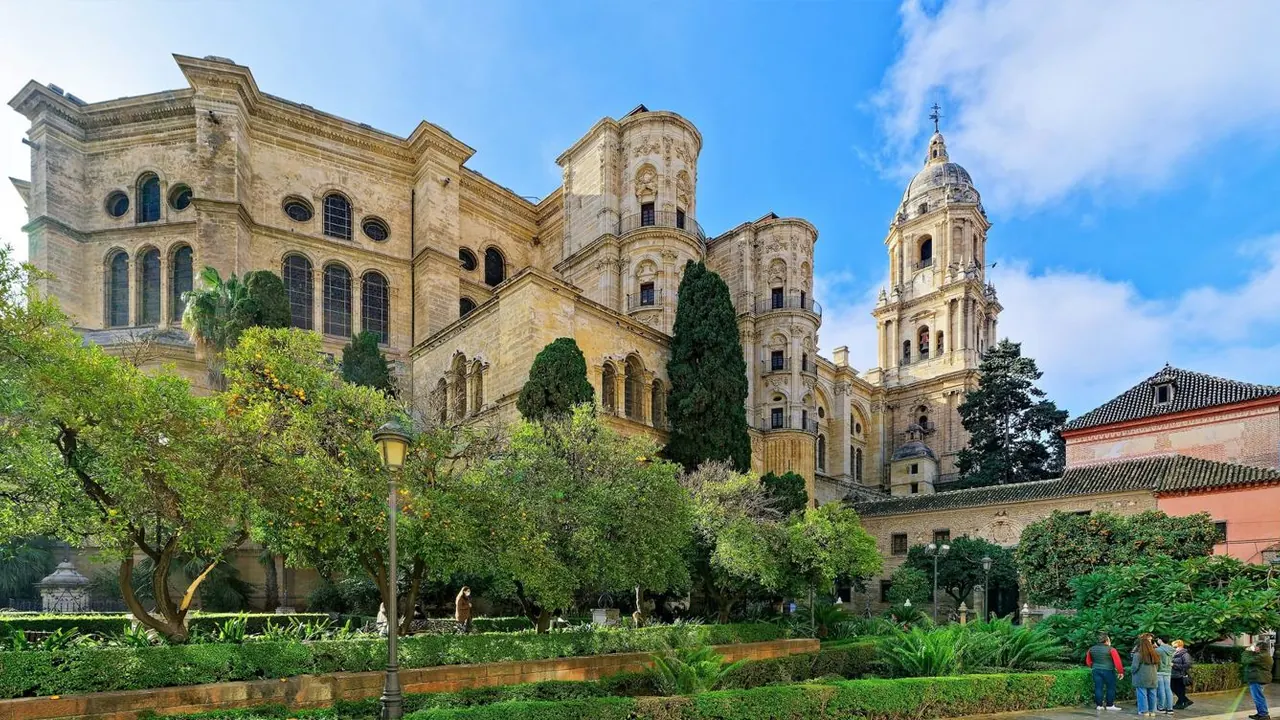
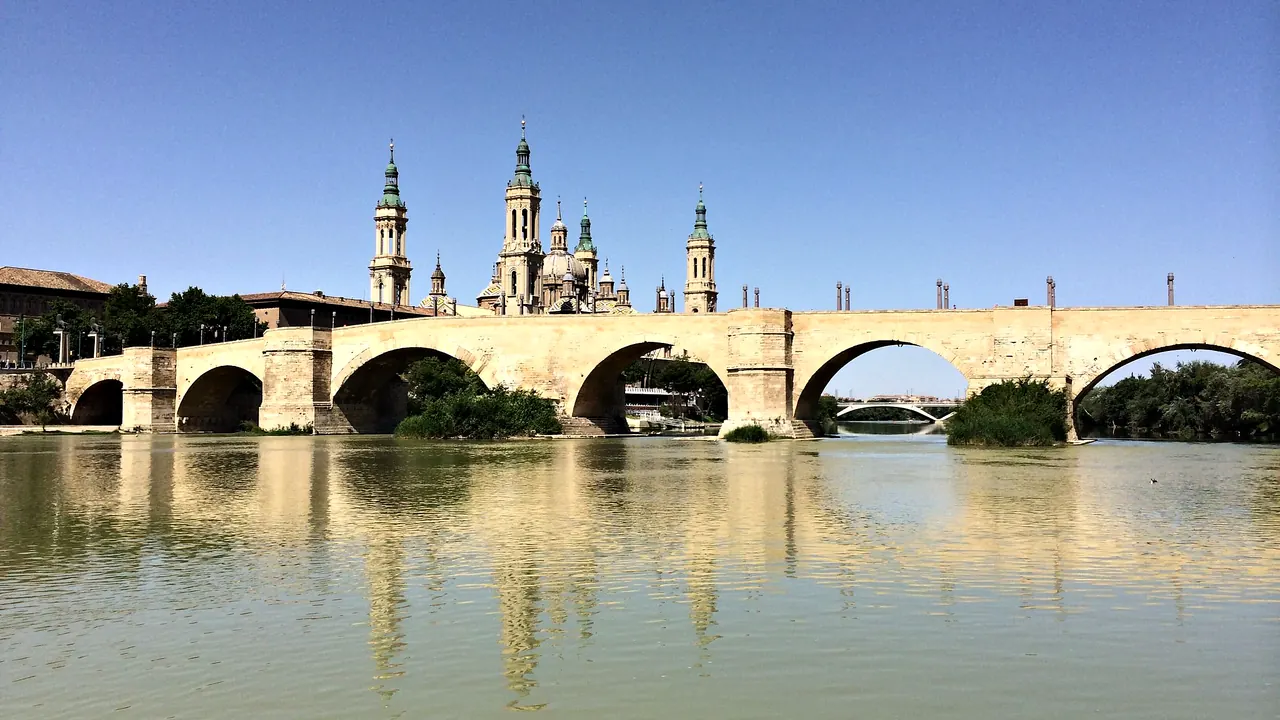
Photos: Malaga by Holger Uwe Schmitt, CC BY-SA 4.0, cropped; Zaragoza by Pablo Alejandro Araujo Granda, CC BY-SA 2.0, cropped.
Malaga or Zaragoza?
Our verdict in twelve categories, each scored against the same fixed benchmark cities, and the climate month by month, so you can choose for your trip.
Choose Malaga for
- beaches
- nature and the outdoors
- day trips
Malaga is the choice for anyone who wants the sea and a proper city in the same trip. La Malagueta is a short walk from the cathedral, the Alcazaba and the Picasso Museum, and fast trains put Granada, Cordoba and Ronda within a day's reach. It suits beach lovers, families who want to mix sand with sights, walkers heading for the gorges and sierras, and anyone chasing mild winter sun.
Choose Zaragoza for
- prices
Zaragoza rewards travellers who want an inland Spanish city at its own pace, with no resort crowd and noticeably lower costs. The Basílica del Pilar, La Seo and the Aljafería are the equal of Malaga's monuments, and the tapas lanes of El Tubo give a hearty local evening. Sitting on the high-speed line between Madrid and Barcelona, it also makes a natural stop on a rail journey across Spain. Just don't come expecting a beach.
Scoreboard
Twelve categories on one fixed scale from 0 to 100. The shaded stretch is the gap between the two.
Your match
Pick a travel style or drag the sliders, and both match scores follow your weighting.
Wins on beaches and nature and the outdoors with your weighting.
Wins on prices with your weighting.
What matters to you?
Category by category
What the scores mean for a trip.
Beaches & swimming
This is the starkest difference between the two. Malaga has sand within walking distance of the cathedral, the old fishing beaches of Pedregalejo and El Palo further east, and a whole coast of resort beaches on the suburban train. The water is a little cool by Mediterranean standards, but swimming season runs from June to October, and the Maro coves offer clearer water.
Zaragoza sits on the Ebro plain more than 200km from the sea, and nobody swims in the river. In summer the options are municipal open-air pools and hotel pools, so beach time means adding separate days on the coast.
Food & drink
Malaga has the more distinctive table, and most of it comes from the sea. Sardine espetos grill over driftwood in beached boats, plates of fried fish arrive in the seafront places of El Palo, and the Atarazanas market has counters where you can eat. In old bodegas, sweet moscatel is still drawn from the barrel, and in summer the local speciality is ajoblanco, a cold almond soup.
Zaragoza eats like the inland city it is. The evening ritual is a crawl through El Tubo, where each counter does one thing, followed by hearty Aragonese plates such as ternasco lamb and borage with clams, with robust local reds. It is satisfying but narrower, with little fine dining or variety.
Culture & sights
The two are closely matched and even share a pattern: each has a Roman theatre in the old town and an eleventh-century Islamic palace at its heart, the Alcazaba in Malaga and the Aljafería in Zaragoza. Where they part is in emphasis. Malaga leans towards art, with the Picasso Museum, his birthplace and the Carmen Thyssen collection of Spanish painting.
Zaragoza leans towards monuments and deep history: the vast Pilar basilica with ceilings by the young Goya, La Seo's Mudéjar brickwork and underground museums of the Roman forum, port and baths. It needs a day longer than Malaga's compact two-day circuit.
Nightlife
Malaga keeps going later and more often. Its old-town squares fill after dinner, summer weekends run well past two, beach bars at La Malagueta stay open late, and the clubbing and gay scene of Torremolinos is a short train ride away.
Zaragoza's nights depend more on the calendar. Students pack the bars around Plaza San Felipe and the Casco on Thursdays and weekends, but ordinary weeknights are quiet and the clubs are few. The exception is the Fiestas del Pilar in October, when the streets stay full until dawn for well over a week.
Nature & outdoors
Malaga has far more on its doorstep. Pine-forested hills begin at the northern edge of the city, the Caminito del Rey gorge and El Torcal's limestone are about an hour away, and there is kayaking under the Maro cliffs, with the Sierra Nevada further off for skiing or high walking.
Zaragoza's surroundings are dry, wind-scoured steppe, and in town the outdoors means the Ebro path and the big parks. The rewarding landscapes, the beech woods of Moncayo, the red towers of Riglos and the Bardenas badlands, are a drive away.
Day trips
From Malaga, trains and buses do most of the work. Granada's Alhambra, Cordoba's Mezquita, Ronda's gorge and the Antequera dolmens can all be reached without a car, and Seville is possible at a stretch. Nerja and Frigiliana pair up to the east, and Gibraltar is at the far end of the coast to the west, so the list is long and easy to work through.
Zaragoza's great advantage is the high-speed line, which puts both Madrid and Barcelona within about an hour and a half. Beyond that, the best of Aragon, Loarre castle, ruined Belchite, Tarazona and Albarracín, is mostly much easier with a hired car.
Good for families
Malaga gives children more to do. Gently shelving city beaches, the Alcazaba ramparts and a coast lined with the Bioparc zoo, an aquarium and dolphin and safari parks make for varied days, even if most of them are a short train ride west.
Zaragoza is calm and easy with a pushchair, and its riverside aquarium and Parque del Agua playgrounds fill a day well. Without a beach, though, and with sights aimed more at adults, it runs out sooner for younger children.
Getting around
Both have flat, walkable centres where the main sights sit close together, and neither needs a car in town. The difference is in the transport. Malaga's suburban train reaches the airport in about ten minutes and carries on along the beach resorts. Zaragoza relies on a north-south tram, dense buses and bike-share, with the high-speed station a short ride from the centre. In both, a car only comes into its own for the countryside.
Shopping & style
Malaga has a little more range. Calle Larios gives a handsome marble setting for the chains, Muelle Uno adds a port promenade, Soho has some independent shops, and Marbella's luxury boutiques are an hour away.
Zaragoza's shopping is everyday Spanish, along Paseo de la Independencia and in a large mall on the city's edge. Its souvenirs are its best side: candied frutas de Aragón, pastry shops on Calle Alfonso I and ceramics from Muel.
Affordability
Zaragoza is the cheaper stay, mainly because its central hotels stay reasonable for most of the year and its tapas and local wines cost little. October's fiestas are the one time rooms become expensive.
In Malaga, eating, drinking and local transport are fair value, but accommodation near the old town and beaches is in demand from spring to autumn. Staying further out or visiting in winter narrows the gap.
Live music & performing arts
Neither is a major stage city, and both are best approached by checking what is on. Malaga's draw is flamenco, best heard in the local peñas rather than the visitor tablaos, with the Teatro Cervantes for the Philharmonic and Semana Santa's processions as street theatre. Zaragoza is stronger on concert music in its large modern Auditorio, has the historic Teatro Principal, and its own folk tradition in the leaping jota, seen at its best during the Pilar fiestas.
Wellness & relaxation
Both offer much the same: an Arab-style bathhouse in town, hotel spas and a slow Spanish rhythm of long lunches and evening walks. Malaga has the softer setting, with resort spas towards Marbella and mild, sunny winters that suit a restful break. Zaragoza's nearest real thermal waters are at Alhama de Aragón, over an hour away, and its summer heat and cierzo wind are less soothing.
When should you go?
Pick your month. The climate figures are measured averages, not a forecast.
Malaga in July
Zaragoza in July
Daytime high, °C
Rainfall in the month, mm
Temperature and rainfall are climate normals, averaged over the years shown. Malaga: 1991-2020 normals, Malaga / Aeropuerto (8.2 km from centre). Zaragoza: 1991-2020 normals, Zaragoza / Aeropuerto (11.2 km from centre).
Malaga has the gentler year. Winter days are still around 17°C and often sunny, so walking the streets and the Gibralfaro climb is pleasant even in January, though November and December bring the most rain, up to 88mm. From June to September it is almost completely dry and very sunny, and the sea warms to about 23°C by August, comfortable for swimming from June to October. July and August are hot for sightseeing, so late spring and early autumn are the sweet spot.
Zaragoza swings harder between seasons. Winter highs sit around 11°C, with the cierzo wind making them feel colder, while July reaches about 33°C on the open plain, too hot for long afternoons outdoors. Rain is light all year and peaks modestly in spring. April, May, late September and October are the months to go, when days are warm and sunny without the summer heat.
Which traveller are you?
On a beach and sun trip, Malaga wins outright. City beaches start beside the old town, the Costa del Sol resorts are a suburban train ride west and Nerja's coves are an hour east, while Zaragoza is landlocked with only swimming pools to offer.
For a trip on a tight budget, Zaragoza stretches the money further. Central hotels stay good value for most of the year, set lunches and local Cariñena wines are cheap, and the Pilar basilica is free, whereas Malaga's rooms near the old town and beach are in heavy demand.
On an outdoors trip, Malaga makes the better base. The Montes de Malaga start at the city's edge and the Caminito del Rey and El Torcal are an hour away, while Zaragoza's best landscapes, Moncayo and the Mallos de Riglos, lie beyond a windswept steppe and need a car.
Before you go
| Measure | Malaga | Zaragoza |
|---|---|---|
| Official language | Spanish | Spanish |
| Currency | Euro (EUR) | Euro (EUR) |
| Sockets | CF230 V, 50 Hz | CF230 V, 50 Hz |
| Driving side | Right | Right |
| Time zone | UTC+1, UTC+2 in summer | UTC+1, UTC+2 in summer |
| Emergency number | 112 | 112 |
| Elevation | 18 m | 200 m |
| Main airport | Málaga-Costa del Sol Airport (AGP)8 km from centre166 non-stop destinations | Zaragoza Airport (ZAZ)13 km from centre12 non-stop destinations |
| Public holidays this year | 12 days | 12 days |
By the numbers
| Measure | Malaga | Zaragoza |
|---|---|---|
| City population | 599,063 | 693,091 |
| People per km² | 1,517 | 712 |
| Museums within 10 km | 32 | 22 |
| UNESCO World Heritage sites within 50 km | 1 | 1 |
| Swim season, months above 21 °C | 3 months | - |
Where else could you go?
Every comparison below shares a destination with this one, so you can follow Malaga or Zaragoza somewhere new.