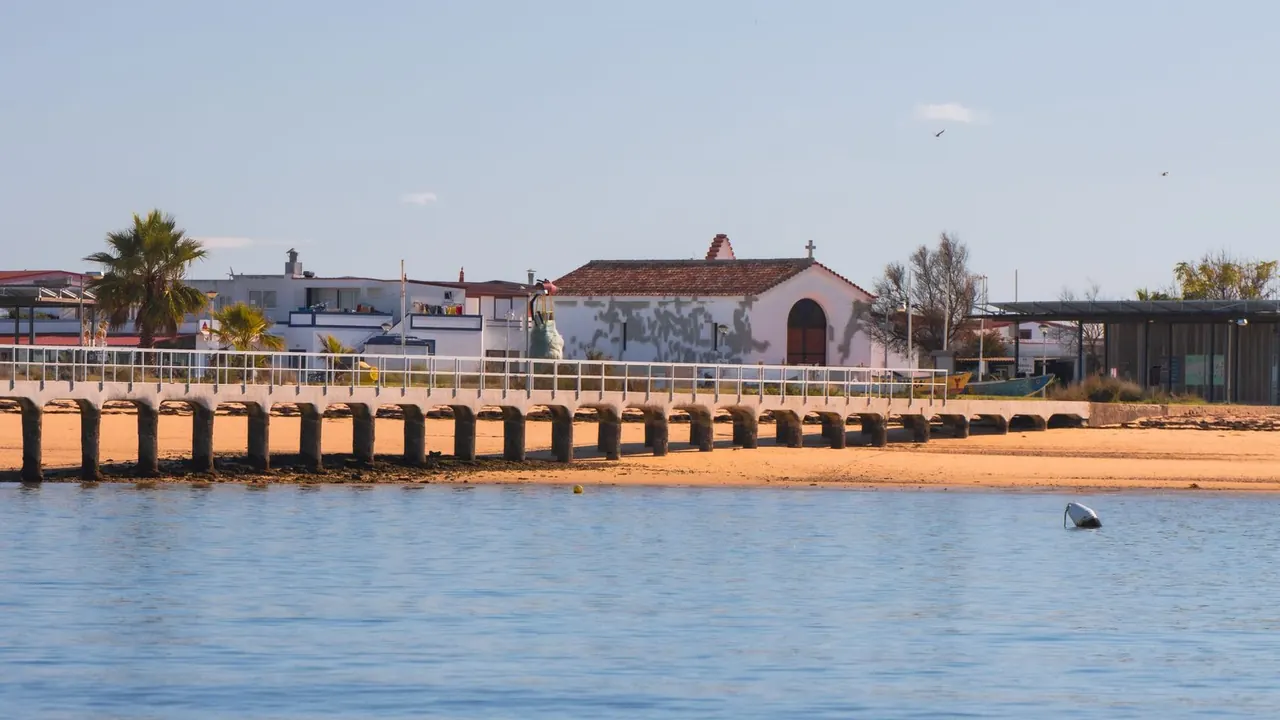
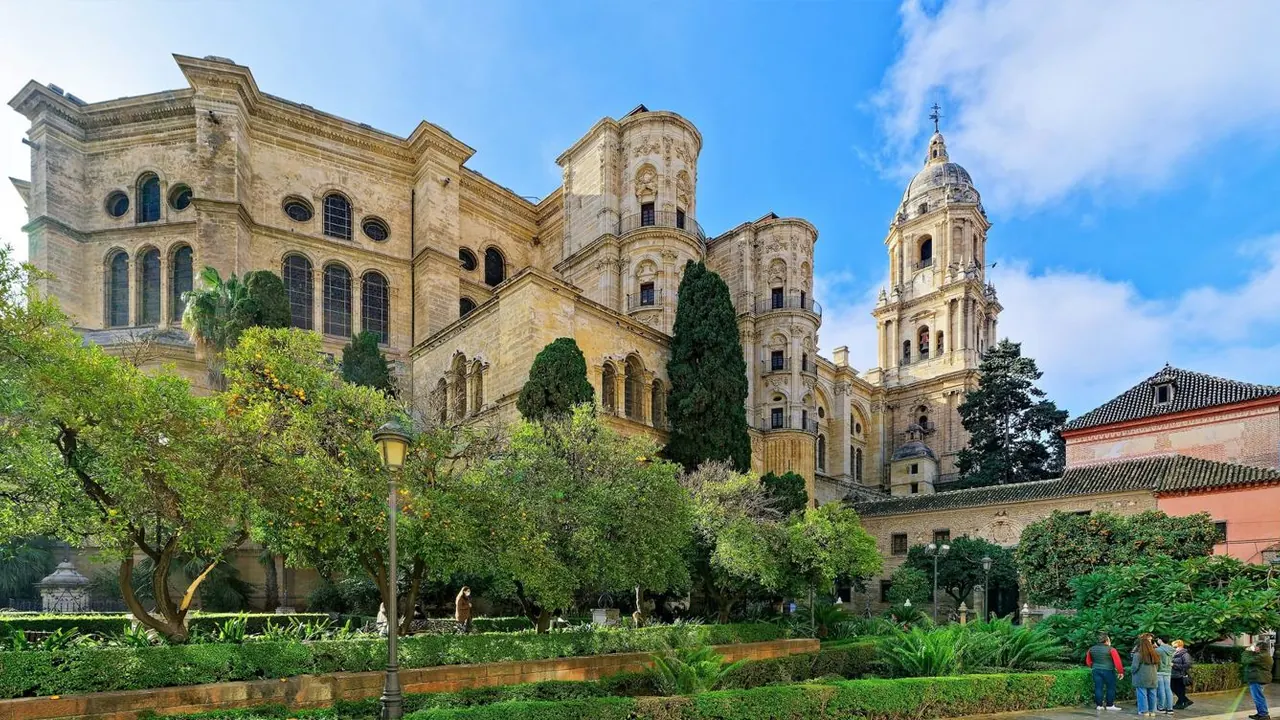
Photos: Faro by Efrem Efre, Pexels License; Malaga by Holger Uwe Schmitt, CC BY-SA 4.0, cropped.
Faro or Malaga?
Our verdict in twelve categories, each scored against the same fixed benchmark cities, and the climate month by month, so you can choose for your trip.
Choose Faro for
- prices
Faro suits a slower, quieter trip built around the Ria Formosa. You come for the lagoon, the boat rides out to the empty sand of Culatra and Ilha Deserta, the flamingos in the salt pans, and long fish lunches in a small walled old town. It is a good fit for couples and families who want calm, sunshine and nature more than sights, and who don't mind hiring a car to see the rest of the Algarve.
Choose Malaga for
- culture and sights
- nightlife
- day trips
Malaga is the better pick for a fuller trip with more to do on any given day. The city beach is a walk from the Alcazaba and the Picasso Museum, tapas bars keep the old town busy until late, and fast trains make Granada, Cordoba and Ronda easy days out. Choose it if you want culture, food and an evening scene as well as the sea, all without a car.
Scoreboard
Twelve categories on one fixed scale from 0 to 100. The shaded stretch is the gap between the two.
Your match
Pick a travel style or drag the sliders, and both match scores follow your weighting.
Wins on prices with your weighting.
Wins on culture and sights and nightlife with your weighting.
What matters to you?
Category by category
What the scores mean for a trip.
Beaches & swimming
The beaches are about equally good, but they are very different. Faro has no beach in town. Its sand is out on the barrier islands of the Ria Formosa: Praia de Faro is a short bus ride away, and in summer ferries cross to Culatra and Ilha Deserta, where long empty strands are backed by nothing but dunes.
Malaga puts the beach on the edge of the old town. La Malagueta and the fishing quarters of Pedregalejo and El Palo are on the doorstep, and the resort beaches of the Costa del Sol are a train ride west. The sand is greyer and more ordinary than Faro's island beaches. To find proper coves, you have to travel east to Nerja.
Food & drink
Malaga is the stronger place to eat. Faro does lagoon clams, oysters, cataplana and grilled fish well at honest grill houses, but there's little range beyond that, and the better seafood is in Olhão.
Malaga gives you whole lanes of tapas bars, sardine espetos and fried fish by the sea, the Atarazanas market with counters where you can eat, and its own sweet wines poured from the barrel in old bodegas. Here, eating out is an evening's entertainment rather than just a meal.
Culture & sights
The gap here is wide. Faro's Cidade Velha, with its cathedral tower over the lagoon, the Roman mosaic in the convent museum and the Capela dos Ossos, makes for one relaxed day, and then the town runs out.
Malaga has much more. The Moorish Alcazaba climbs above a Roman theatre, Gibralfaro castle sits on top, and the half-finished cathedral stands below. Add the Picasso Museum and his birthplace, the Carmen Thyssen collection and the Museo de Malaga, and you have two full days of sights.
Nightlife
Faro's evenings are quiet. There are bar terraces on Rua do Prior and by the marina, which liven up when the university is in term, but most visitors call it a night after dinner.\n\nMalaga keeps Spanish hours: dinner rarely starts before ten, and afterwards people drift between bars around Plaza de la Merced and Plaza Uncibay until well past two in summer. Torremolinos is a short train ride away for clubs.
Nature & outdoors
Faro's outdoors is flat and watery. You kayak or paddle through the channels of the Ria Formosa, watch spoonbills and flamingos at Ludo, and cycle the lagoon lanes, with gentle cork-oak walking inland.
Malaga has more variety and more drama. The pine hills of the Montes de Malaga start at the city's edge, and within reach are the gorge walkway of the Caminito del Rey, the limestone stacks of El Torcal, serious hikes above Nerja and the Sierra Nevada, which has skiing in winter.
Day trips
From Faro, the easy outings are small Algarve towns: Tavira, Olhão, Loulé, Silves and the Roman ruins at Milreu. Seville is a long day across the border.
Malaga is one of the strongest bases in southern Spain. Fast trains put Cordoba's Mezquita an hour away and the Alhambra in Granada not much further. Ronda, the dolmens of Antequera, Nerja and Frigiliana and the white villages also make good days out, so you could fill a week here without repeating yourself.
Good for families
Faro is gentle and safe, with calm lagoon beaches, boat rides to the islands that children love and a small science centre. The trouble is that the water parks and marine park near Albufeira are awkward to reach without a car.\n\nMalaga is easier with children. The city beaches are a walk away, the centre is flat and pedestrianised, and older children enjoy the Alcazaba ramparts. The zoo, aquarium and dolphin park along the coast are all on the suburban train.
Getting around
Both centres are small and flat, and the airports are close. Inside Faro, everything is a short walk, with buses to the beach and ferries to the islands. Beyond the town, the slow coastal railway leaves gaps, and most visitors end up hiring a car.
Malaga is easier to explore without a car. The suburban train runs to the airport in about ten minutes and along the coast, and fast trains from the main station reach Cordoba and Seville. You only really need a car for the white villages and Nerja's coves.
Shopping & style
Faro's shopping is practical: Portuguese chains on Rua de Santo António, cork goods, painted ceramics, tinned fish and flor de sal from the lagoon salt pans, with Loulé's market for more choice. Malaga offers more to browse. There's the marble-paved Calle Larios, El Corte Inglés, the port shops at Muelle Uno and independent shops in Soho, and Puerto Banús is an hour away for luxury.
Affordability
Both cities cost about the same, and in both the expense is in the rooms rather than in eating out. Faro is a provincial town where fish lunches, coffee, pastries and buses are cheap, but a hire car is often an extra cost. Malaga's tapas, fried fish and trains are also reasonable, and you don't need a car. However, rooms in the old town and near the beach are in demand from spring to autumn, so staying a little outside the centre helps.
Live music & performing arts
Malaga has more to see on stage. The Teatro Cervantes hosts the Malaga Philharmonic, drama and dance, flamenco is performed in tablaos and in the more authentic peñas, and the Semana Santa processions are a spectacle of their own. Faro has the ornate little Teatro Lethes and the Teatro das Figuras for touring shows and the regional orchestra, but fado is an import here, and on many nights nothing is on.
Wellness & relaxation
Neither city has a bathing tradition. Malaga at least has an Arab-style bathhouse in the old town, with warm pools and steam under brick arches, plus resort spas towards Marbella. Faro's spas are in the golf hotels west of town, and the nearest real spring-water spa is at Caldas de Monchique, well over an hour away. Faro's quiet lagoon evenings are restful in their own way.
When should you go?
Pick your month. The climate figures are measured averages, not a forecast.
Faro in July
Malaga in July
Daytime high, °C
Rainfall in the month, mm
Temperature and rainfall are climate normals, averaged over the years shown. Faro: 1991-2020 normals, Faro / Aeroporto (2.8 km from centre). Malaga: 1991-2020 normals, Malaga / Aeropuerto (8.2 km from centre).
Both cities have dry, rainless summers and wet, mild winters, and the seasons follow much the same pattern. Faro stays a little cooler in high summer, at around 29°C in July and August, and it gets more sunshine all year round. Malaga climbs to about 32°C in August, which makes midday walking hard work there. Beach weather in both runs from June to September and lasts into October. The sea peaks at about 22°C off Faro and 23°C off Malaga in August.
Spring and early autumn are the best seasons for exploring either city on foot. Rain sets in from October in both. Faro has the wetter December, with about 102mm, while Malaga's wettest stretch spreads across November and December. The Atlantic keeps Faro's sea a degree or two warmer than Malaga's in winter and spring, though at that time of year neither is warm enough for most swimmers.
Which traveller are you?
On a culture and arts trip, Malaga is the clear choice. It has the Alcazaba, the Roman theatre, Gibralfaro, the Picasso Museum and the Teatro Cervantes, and it's close to Granada and Cordoba. Faro's walled old town and its bone chapel fill a pleasant day but not much more.
For a food and nightlife trip, go to Malaga. Its tapas lanes around Plaza de la Merced, the espetos on the beach at Pedregalejo and its late Spanish dinners outclass Faro's narrower seafood scene, where most evenings wind down after a long meal and Albufeira is the place for clubs.
On a beach and sun trip, both work, so it comes down to style. Faro suits those who want kilometres of quiet sand and dunes on the lagoon islands, reached by ferry, and more sunshine. Malaga suits those who want the beach a short walk from their room.
Before you go
| Measure | Faro | Malaga |
|---|---|---|
| Official language | Portuguese | Spanish |
| Currency | Euro (EUR) | Euro (EUR) |
| Sockets | CF230 V, 50 Hz | CF230 V, 50 Hz |
| Driving side | Right | Right |
| Time zone | UTC, UTC+1 in summer | UTC+1, UTC+2 in summer |
| Emergency number | 112 | 112 |
| Elevation | 10 m | 18 m |
| Main airport | Faro - Gago Coutinho International Airport (FAO)3 km from centre91 non-stop destinations | Málaga-Costa del Sol Airport (AGP)8 km from centre166 non-stop destinations |
| Public holidays this year | 14 days | 12 days |
By the numbers
| Measure | Faro | Malaga |
|---|---|---|
| City population | 64,560 | 599,063 |
| People per km² | 319 | 1,517 |
| Museums within 10 km | 2 | 32 |
| UNESCO World Heritage sites within 50 km | 0 | 1 |
| Swim season, months above 21 °C | 3 months | 3 months |
Where else could you go?
Every comparison below shares a destination with this one, so you can follow Faro or Malaga somewhere new.