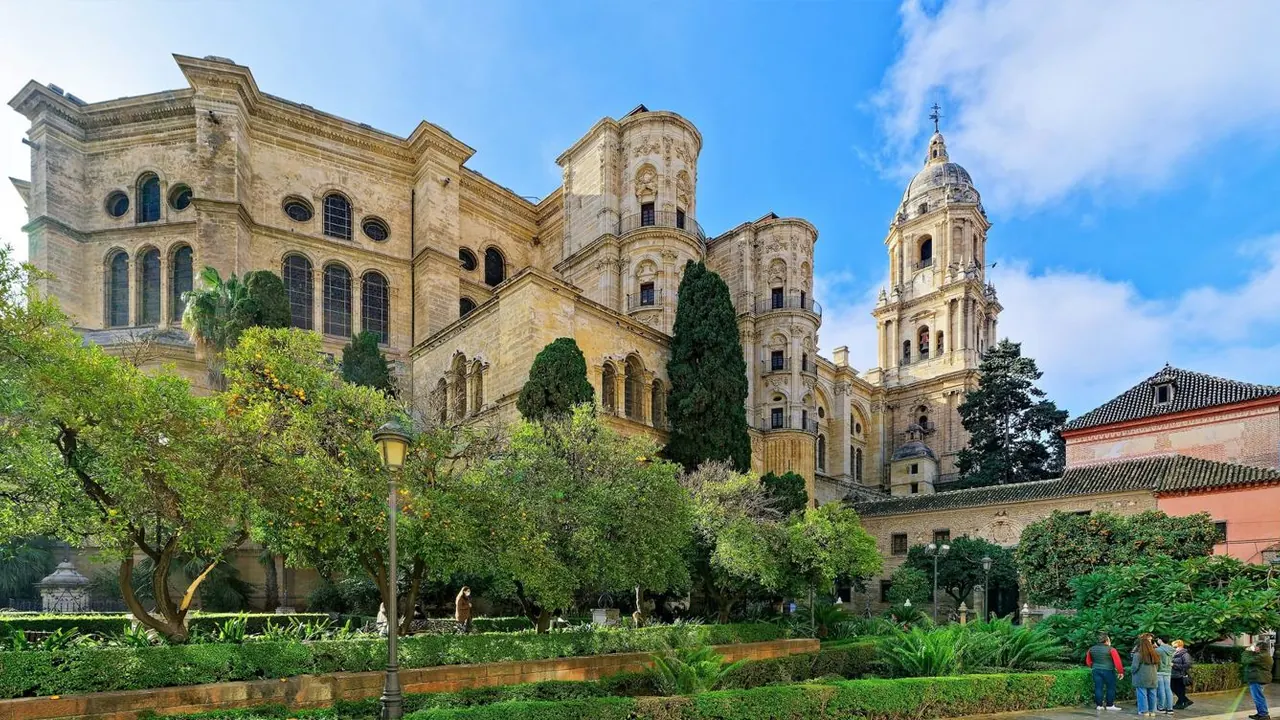
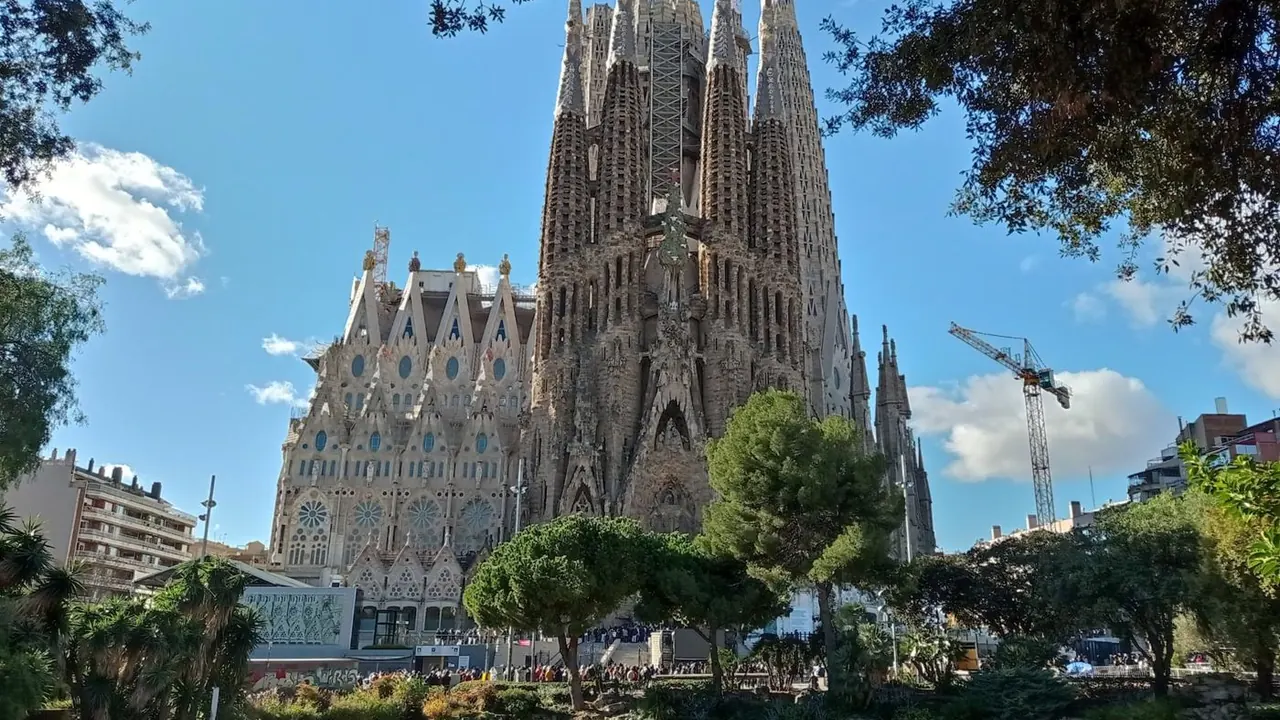
Photos: Malaga by Holger Uwe Schmitt, CC BY-SA 4.0, cropped; Barcelona by Canaan, CC BY-SA 4.0, cropped.
Malaga or Barcelona?
Our verdict in twelve categories, each scored against the same fixed benchmark cities, and the climate month by month, so you can choose for your trip.
Choose Malaga for
- prices
- day trips
- wellness
Malaga is the better choice for a slower, sunnier and somewhat cheaper stay that also works as a base for exploring. The old town is small enough to see in a couple of days, which leaves time for Granada, Cordoba, Ronda and the white villages, all within easy reach. Its winters are milder, it eats well and casually at fair prices, and the beach is a short walk from the cathedral.
Choose Barcelona for
- live music and the arts
- culture and sights
- nightlife
Barcelona suits travellers who want a big city with plenty in it. Gaudí's Modernista buildings, the Gothic Quarter and a deep museum list fill a week. It is also one of Europe's great places to eat and stay out late, and it has a real opera house and a summer of music festivals. You pay more for all of this, and it rarely feels restful, but on a trip built around the city itself it gives more back.
Scoreboard
Twelve categories on one fixed scale from 0 to 100. The shaded stretch is the gap between the two.
Your match
Pick a travel style or drag the sliders, and both match scores follow your weighting.
Wins on prices and day trips with your weighting.
Wins on live music and the arts and culture and sights with your weighting.
What matters to you?
Category by category
What the scores mean for a trip.
Beaches & swimming
On sand and swimming the two are much alike. Both have city beaches you can walk or take a short ride to, and both send you a little way along the coast for better ones. The difference is in character. Barcelona's man-made strip from Barceloneta to Mar Bella has volleyball nets and after-work swimmers, but in July and August it is packed and you have to watch your bag. Sitges and Castelldefels are the escape.
Malaga's grey-brown sand at La Malagueta and the old fishing quarters of Pedregalejo and El Palo feel more local, with families spending whole afternoons there and sardines roasting in boats. The Alboran Sea runs a little cooler, but the swimming season lasts into October, and Nerja's cliff coves have the clearest water of either city.
Food & drink
Barcelona is the more rewarding city to eat in. Catalan cooking is a cuisine in its own right, from calçots with romesco to suquet, and the range runs from workers' set lunches to one of Europe's leading tasting-menu scenes. Neighbourhood markets like Santa Caterina and Sant Antoni sit alongside the famous Boqueria.
Malaga eats more simply and does it well: espetos of sardines on the beach, plates of pescaito frito in El Palo, tapas around Plaza de la Merced and moscatel poured from the barrel. It is casual eating at fair prices, with a thinner layer of ambitious restaurants.
Culture & sights
Barcelona has far more to see. Gaudí's UNESCO-listed buildings are unique to the city, the Gothic Quarter and Santa Maria del Mar add a medieval layer, and the Picasso, Miró, MNAC and MACBA collections can fill a week of sightseeing.
Malaga's core is compact and layered rather than grand. The Roman theatre sits beneath the Moorish Alcazaba, with Gibralfaro above and the unfinished cathedral below. Its Picasso connection is a personal one, through his birthplace and a museum of his whole career, and two days covers it well.
Nightlife
Barcelona is the bigger night out by a wide margin. Each district has its own scene, with cocktail cellars in the Born, scruffy bars in the Raval, terraces in Gràcia's squares and the pintxos bars of Blai street. Serious electronic club nights run until dawn, and the main gay scene is in the Eixample.
Malaga's evenings centre on bar-hopping between terraces around Plaza de la Merced and Calle Granada, with a mixed-age, sociable crowd. Clubbing in the city is limited, so for that and for the gay scene people take the train to Torremolinos.
Nature & outdoors
There is little between them here, since both have wooded hills right behind the centre and serious country within a couple of hours. Barcelona has the Collserola park and its flat Carretera de les Aigües, with Montserrat's pinnacles and the Costa Brava's coastal paths further out, plus watersports off Mar Bella.
Malaga's surroundings are more dramatic. The Caminito del Rey gorge walk, the limestone stacks of El Torcal, the Maro cliffs for kayaking and the Sierra Nevada, with skiing in winter, all lie within reach.
Day trips
Malaga is the stronger base for days out. Two of Spain's great Moorish monuments are within reach: the Mezquita in Cordoba, about an hour by fast train, and the Alhambra in Granada. Ronda's gorge, the Antequera dolmens, Frigiliana and the white villages add many more options.
Barcelona still does well. Girona's medieval quarter is under forty minutes away by fast train, and Tarragona's Roman remains, the Dalí museum in Figueres, Montserrat and the cava cellars of the Penedès give a good spread of trips. Even so, Andalucia's cities are a bigger draw.
Good for families
Barcelona has a slight edge because so much for children sits inside the city: the aquarium, CosmoCaixa, the zoo and the Tibidabo funfair at the top of its funicular. PortAventura is an hour away. The crowded old town is the hard part with a pushchair.
Malaga is easier day to day. Its centre is flat and pedestrianised and its city beaches shelve gently, but its zoo, aquarium and dolphin park are along the coast, so a family stay involves more train rides west.
Getting around
Barcelona covers more ground more easily. Its flat centre and grid are good for walking, and a full metro with trams, buses and local trains on the same tickets reaches everywhere except the uphill sights, where funiculars and cable cars take over.
Malaga hardly needs transport in the centre, because the cathedral, museums, market and beach are all a short walk apart, and the suburban train runs to the airport and the resorts. For the white villages, El Torcal and Nerja's coves, though, buses are sparse and a car is useful.
Shopping & style
Barcelona offers much more for a shopping trip. The Passeig de Gràcia has fashion houses among Modernista façades, while the Born, Gràcia and the Raval offer independent designers, craft shops and vintage stores. Espadrilles and ceramics are good things to take home.
Malaga's shopping is mostly Spanish chains along the marble Calle Larios, with a few independents in Soho and good food buys at Atarazanas. For luxury you have to go to Puerto Banus.
Affordability
Malaga is the cheaper stay. Tapas, fried fish, coffee and local transport are reasonably priced, and several of the main sights cost little to enter. Rooms near the old town and beach are the expensive part, and coming in winter helps.
Barcelona costs more than most of Spain. Hotels are steep, and the tourist tax and Gaudí entry fees add up quickly on a sightseeing trip. Set lunches and market counters keep food costs reasonable if you stay away from the Rambla.
Live music & performing arts
Barcelona has a far deeper stage. The Liceu runs a full opera and ballet season, and a concert under the Palau de la Música's stained glass is memorable whatever is on the programme. Sónar, Primavera Sound and the Grec festival fill the summer, and jazz cellars run all year.
Malaga's Teatro Cervantes covers orchestra, drama and dance well. Flamenco is the real draw, best heard in the local peñas rather than the tablaos, and Semana Santa turns the streets into a stage.
Wellness & relaxation
Neither city is built for relaxation, and both offer similar options: an Arab-style bathhouse in the old town and hotel spas. The difference is in the pace. Barcelona's centre is noisy and its nights go late, so calm means a Gràcia terrace or the Collserola paths.
Malaga moves more slowly, with siestas, evening walks along the Paseo Maritimo, larger resort spas towards Marbella, and a mild, sunny winter that makes for a restful off-season.
When should you go?
Pick your month. The climate figures are measured averages, not a forecast.
Malaga in July
Barcelona in July
Daytime high, °C
Rainfall in the month, mm
Temperature and rainfall are climate normals, averaged over the years shown. Malaga: 1991-2020 normals, Malaga / Aeropuerto (8.2 km from centre). Barcelona: 1991-2020 normals, Barcelona / Aeropuerto (14.4 km from centre).
Both cities are at their best for the beach from June to September. Barcelona's sea is the warmer of the two in high summer, reaching about 25°C in August. Its rain comes in autumn, and September and October are the wettest months at around 83mm. Winters are cool and fairly grey, so most visitors save it for spring or early autumn, when the streets are comfortable to walk and the sea is still warm enough to swim in September.
Malaga is hotter and sunnier than Barcelona all year. Summer is almost completely dry, but August reaches 32°C, which makes afternoon sightseeing hard going. In winter daytime highs stay around 17°C, with clearly more sun than Barcelona, so it works as a winter-sun city. The rain is spread from October through to March and is heaviest in November and December, at up to 88mm, so a winter visit will usually have some wet days. Spring and October are the best months for combining the town, the coast and day trips.
Which traveller are you?
On a culture and arts trip, Barcelona is the clear choice. It has the Sagrada Família and the Eixample's Modernista façades, the Gothic Quarter, the Picasso Museum and the MNAC, and in the evenings the Liceu and the Palau de la Música. Malaga's sights are fine, but you will have seen most of them in two days.
For a food and nightlife trip, Barcelona again has more depth. You can work through Catalan cooking in Sant Antoni and Gràcia, go from vermouth to tasting menus, and then move on to cellar bars, square terraces and electronic club nights that last until dawn. Malaga's evenings are sociable but far smaller in scale.
On a trip with a tight budget, Malaga makes the money go further. Tapas, fried fish, sweet wine from the barrel and local trains all cost little, and several main sights are cheap to enter. Barcelona's Gaudí entry fees and tourist tax add up quickly over a stay.
Before you go
| Measure | Malaga | Barcelona |
|---|---|---|
| Official language | Spanish | Spanish |
| Currency | Euro (EUR) | Euro (EUR) |
| Sockets | CF230 V, 50 Hz | CF230 V, 50 Hz |
| Driving side | Right | Right |
| Time zone | UTC+1, UTC+2 in summer | UTC+1, UTC+2 in summer |
| Emergency number | 112 | 112 |
| Elevation | 18 m | 9 m |
| Main airport | Málaga-Costa del Sol Airport (AGP)8 km from centre165 non-stop destinations | Josep Tarradellas Barcelona-El Prat Airport (BCN)13 km from centre235 non-stop destinations |
| Public holidays this year | 12 days | 14 days |
By the numbers
| Measure | Malaga | Barcelona |
|---|---|---|
| City population | 599,063 | 1,731,649 |
| People per km² | 1,517 | 17,094 |
| Museums within 10 km | 32 | 95 |
| UNESCO World Heritage sites within 50 km | 1 | 3 |
| Swim season, months above 21 °C | 3 months | 3 months |
Where else could you go?
Every comparison below shares a destination with this one, so you can follow Malaga or Barcelona somewhere new.