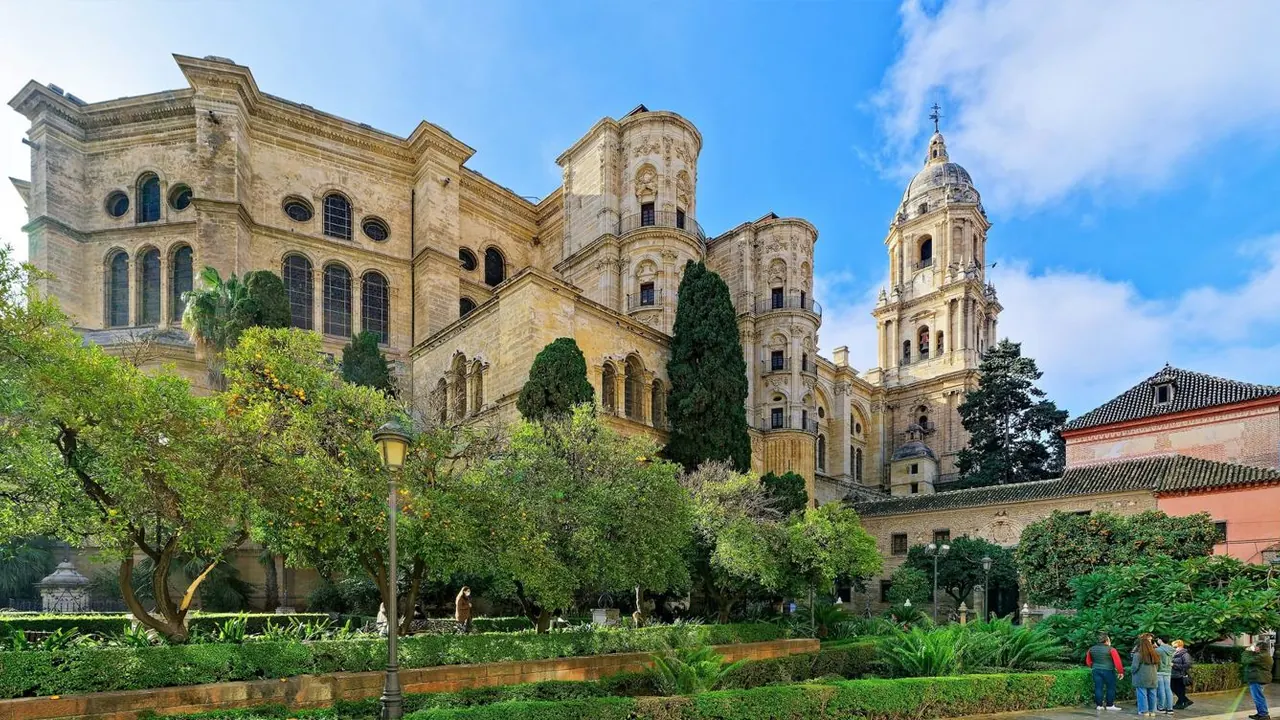
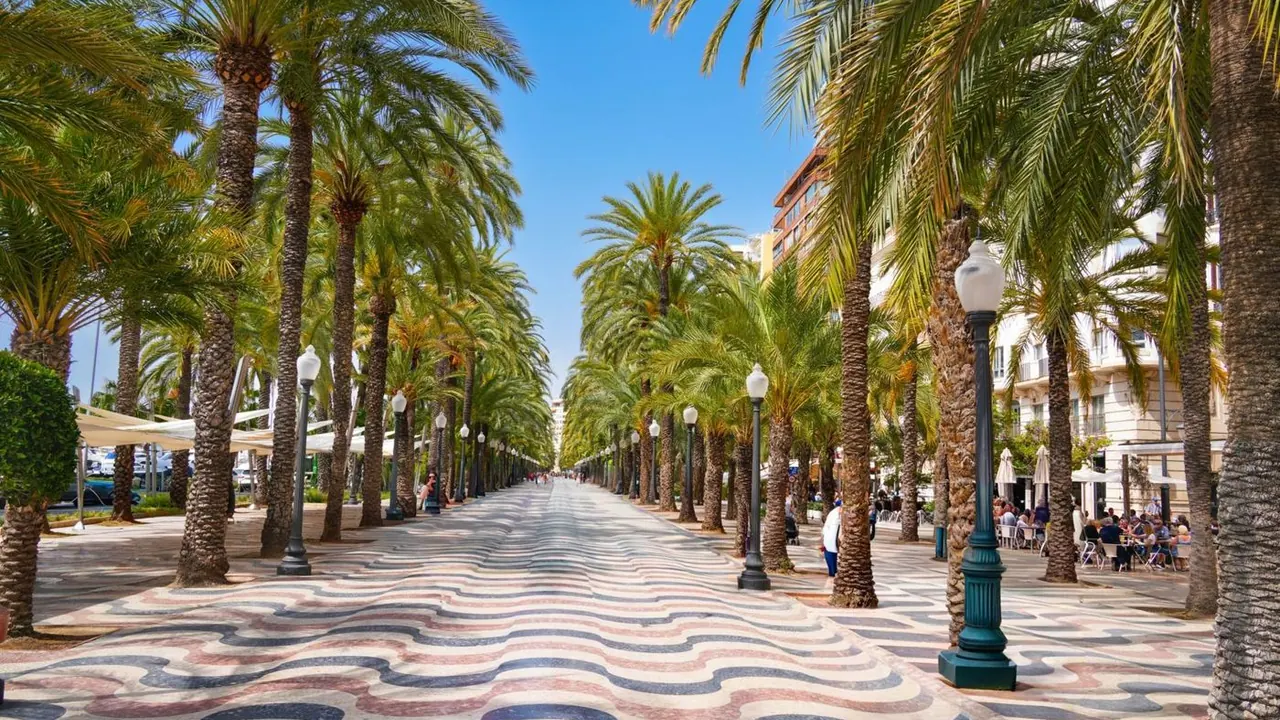
Photos: Malaga by Holger Uwe Schmitt, CC BY-SA 4.0, cropped; Alicante by Emilio Sánchez Hernández, Pexels License.
Malaga or Alicante?
Our verdict in twelve categories, each scored against the same fixed benchmark cities, and the climate month by month, so you can choose for your trip.
Choose Malaga for
- culture and sights
- day trips
- shopping
Malaga is the stronger pick if you want more than a beach. The Alcazaba, the Picasso Museum and a fuller set of galleries give it real depth in culture, and flamenco adds evenings Alicante cannot match. It is also an outstanding base for Andalucia, with Cordoba, Granada and Ronda all close enough for a day, and the gorges and sierras behind the city for walking. Choose it for a varied trip that moves between the city, the coast and the inland country.
Choose Alicante for
- beaches
- prices
Alicante suits a vacation built around the sea. Its beaches are the better ones, with Playa de San Juan's long fine sand and warmer water through late summer, and the city is a little easier on the budget. Winters are also drier, which makes it a good choice for a mild off-season stay of seafront walks, rice lunches and an unhurried pace. Its sights can be covered in a couple of days, so plan to spend most of the stay by the water.
Scoreboard
Twelve categories on one fixed scale from 0 to 100. The shaded stretch is the gap between the two.
Your match
Pick a travel style or drag the sliders, and both match scores follow your weighting.
Wins on culture and sights and day trips with your weighting.
Wins on beaches and prices with your weighting.
What matters to you?
Category by category
What the scores mean for a trip.
Beaches & swimming
Both cities have beaches within walking distance of the old town, but Alicante's are better. Postiguet sits right under the castle, and the tram runs out to Playa de San Juan, about 7km of fine pale sand with calm, shallow water. The sea is also warmer, and the boat to Tabarca adds clear water for snorkelling.
Malaga's La Malagueta and the stretches through Pedregalejo and El Palo have grey-brown sand that is practical rather than pretty, and the Alboran Sea runs a few degrees cooler. What it has instead is the fishing-quarter atmosphere along the shore, the resort strip on the suburban train, and the cliff-backed coves of Nerja and Maro about an hour east.
Food & drink
The food is equally good in both cities, but each has a different speciality. Alicante is rice country: arroz a banda, black rice and the egg-crusted arroz con costra, eaten at long lunches for two or more, with Jijona turrón for dessert and the modernist Mercado Central for prawns and mojama.
Malaga is about fish and tapas. Espetos of sardines roast over driftwood on the beach at El Palo, fried fish arrives by the plateful, and sweet moscatel and Pedro Ximénez wines are poured from the barrel in old bodegas. Come to Alicante for a long rice lunch. In Malaga you will eat in more casual rounds through the day.
Culture & sights
Malaga has much more to see. Its compact core layers a Roman theatre, the Moorish Alcazaba with its courtyards and horseshoe arches, Gibralfaro castle and the unfinished cathedral. The museums add the Picasso Museum and his birthplace, the Carmen Thyssen collection, the Museo de Malaga and the CAC for contemporary work.
Alicante's highlights are the Castillo de Santa Bárbara, the flowerpot steps of the Barrio de Santa Cruz and the MARQ, an archaeology museum that is well worth the time. Both cities fill about two days, but Malaga's two days have far more art and history in them.
Nightlife
Evenings are much the same in both: dinner late, then hours spent drifting between small bars, with beach bars busy on summer nights. In Alicante the centre of it is El Barrio, where drinkers spill onto the steps below the castle, while the port has the dressier bars and clubs. The Hogueras in late June turns the city into several nights of street parties.
Malaga's evenings move between the squares around Plaza de la Merced and Plaza Uncibay. Its own clubs are few, but Torremolinos, with its larger club and gay scene, is a short train ride away, and Marbella is within reach for a glossier night.
Nature & outdoors
Malaga has the better outdoors. The pine forest of the Montes de Malaga starts on the city's edge, and within reach are the Caminito del Rey walkway along the gorge, El Torcal's stacked limestone and the Sierras de Tejeda and Almijara. The Sierra Nevada adds winter skiing and high summer walking.
Alicante has its own good options. Puig Campana and the Sierra de Aitana offer real mountain hikes, Sella is known for climbing, the Tabarca marine reserve is good for diving, and flamingos feed in the Santa Pola salt lagoons. Most of it needs a car, though, and the range is narrower.
Day trips
Malaga is the stronger base for day trips, because some of Spain's greatest sights are within easy range. Cordoba's Mezquita is about an hour away by fast train, and Granada's Alhambra about an hour and a half. Ronda's gorge, the Antequera dolmens and the white villages of the Axarquia fill out a long list.
Alicante has good outings but fewer major ones. Elche's palm grove is half an hour away, and Altea, Guadalest and Tabarca make pleasant days. Valencia is about two hours by train, so it is a stretch for a single day.
Good for families
Families are equally well looked after in both. Children stay out late and are welcome everywhere, and neither city has much built specially for them. The difference is where the extras are. Alicante's strength is its shallow, roomy beach at San Juan, with the theme and water parks near Benidorm about 45 minutes away by car.
In Malaga, the Bioparc zoo, the Sea Life aquarium and the dolphin park are along the coast on the suburban train, which saves a car. Older children also tend to enjoy the Alcazaba's ramparts.
Getting around
Both centres are easy on foot, with the beach, market and old quarter close together, and each has a lift or bus for the one steep climb. Alicante's tram runs slowly but scenically up the coast to San Juan, Benidorm and Dénia.
Malaga is better connected beyond the city. The suburban train reaches the airport in about ten minutes and continues along the Costa del Sol, and fast trains to Cordoba, Seville and Madrid leave from the main station. In both cities you only need a car for the mountains and remote coves.
Shopping & style
Malaga offers more shopping, though neither city is a shopping destination. Calle Larios gives it a polished marble main street of chains, with El Corte Inglés, the shops on Muelle Uno and a few independents in Soho, and Puerto Banús is an hour away for luxury.
Alicante's Avenida Maisonnave area is practical rather than appealing. Its distinctive draw is the shoe-factory outlets in nearby Elche, and the Mercado Central is good for turrón and saffron to take home.
Affordability
Day to day, the two cost about the same. Tapas, a glass of local wine and public transport are fair value in both, and the main sights cost little to enter. In Alicante, the lunchtime rice dishes are especially good value away from the seafront.
The real difference is the cost of a room. Alicante's rooms get expensive mainly in July and August and during the Hogueras, and they are much cheaper from October to May. Malaga's old town and beachfront stay in demand from spring to autumn, so you save there by staying outside the centre or coming in winter.
Live music & performing arts
Malaga has the richer stage. The Teatro Cervantes hosts the Malaga Philharmonic, and flamenco gives visitors a real reason to go out, whether in the tablaos in the centre or in the peñas where locals perform for each other. Semana Santa fills the streets with brass bands and processions.
Alicante has the Teatro Principal and the ADDA concert hall with the provincial orchestra, but most of the programme is in Spanish and there is no comparable living tradition to seek out.
Wellness & relaxation
Rest in either city mostly means sun, long lunches and a siesta rather than spas. Malaga has an Arab-style bathhouse in the old town, with warm pools and steam under brick arches, and the large resort spas towards Marbella.
Alicante has no bathhouse of that kind, but the Roman-era thermal springs at Archena and Fortuna are about an hour away. Its palm-shaded Explanada is a calm place for a slow walk outside high summer.
When should you go?
Pick your month. The climate figures are measured averages, not a forecast.
Malaga in July
Alicante in July
Daytime high, °C
Rainfall in the month, mm
Temperature and rainfall are climate normals, averaged over the years shown. Malaga: 1991-2020 normals, Malaga / Aeropuerto (8.2 km from centre). Alicante: 1991-2020 normals, Alicante (2.8 km from centre).
Through the warm half of the year the two cities feel much alike. From June to September both are hot, peaking above 30°C in August, so sightseeing on foot is best kept to mornings and evenings. Spring and October are pleasant for walking in both. The sea is where they part: Alicante's water reaches about 26°C in August and stays warm into October, while Malaga's Alboran Sea stays a few degrees cooler and can be chilled by an easterly wind. Both get plenty of sunshine from May to August.
Winter shows the real difference. Daytime highs are the same mild level in both, but Malaga gets most of its rain from October to March, with about 88mm in December, while Alicante stays dry all year apart from a short wet spell in September. For a winter stay that needs reliable dry days, Alicante is the safer bet. Malaga's winter still has plenty of sun between the showers.
Which traveller are you?
On a beach and sun trip, Alicante has the edge. Playa de San Juan offers long stretches of fine pale sand and shallow water, the sea is noticeably warmer in late summer, and Tabarca and the Costa Blanca coves are close by for variety.
For a culture and arts trip, Malaga is clearly the richer choice. The Alcazaba, the Roman theatre and the Picasso Museum fill the centre, and Cordoba's Mezquita and Granada's Alhambra are close enough for day trips. Flamenco in the evening completes the picture.
On a trip on a tight budget, Alicante stretches money a little further. Tapas, set lunches and the tram are fair value, the castle grounds cost almost nothing, and rooms outside high summer are easy to find. Its drier winter also makes off-season stays more dependable.
Before you go
| Measure | Malaga | Alicante |
|---|---|---|
| Official language | Spanish | Spanish |
| Currency | Euro (EUR) | Euro (EUR) |
| Sockets | CF230 V, 50 Hz | CF230 V, 50 Hz |
| Driving side | Right | Right |
| Time zone | UTC+1, UTC+2 in summer | UTC+1, UTC+2 in summer |
| Emergency number | 112 | 112 |
| Elevation | 18 m | 3 m |
| Main airport | Málaga-Costa del Sol Airport (AGP)8 km from centre165 non-stop destinations | Alicante-Elche Miguel Hernández Airport (ALC)10 km from centre126 non-stop destinations |
| Public holidays this year | 12 days | 13 days |
By the numbers
| Measure | Malaga | Alicante |
|---|---|---|
| Population | 599,063 | 366,221 |
| People per km² | 1,517 | 1,819 |
| Museums within 10 km | 32 | 8 |
| UNESCO World Heritage sites within 50 km | 1 | 2 |
| Swim season, months above 21 °C | 3 months | 5 months |
Where else could you go?
Every comparison below shares a destination with this one, so you can follow Malaga or Alicante somewhere new.
- Benidormvs Alicante
- Marbellavs Malaga
- Rondavs Malaga
- Granadavs Malaga
- Valenciavs Alicante
- Cordobavs Malaga