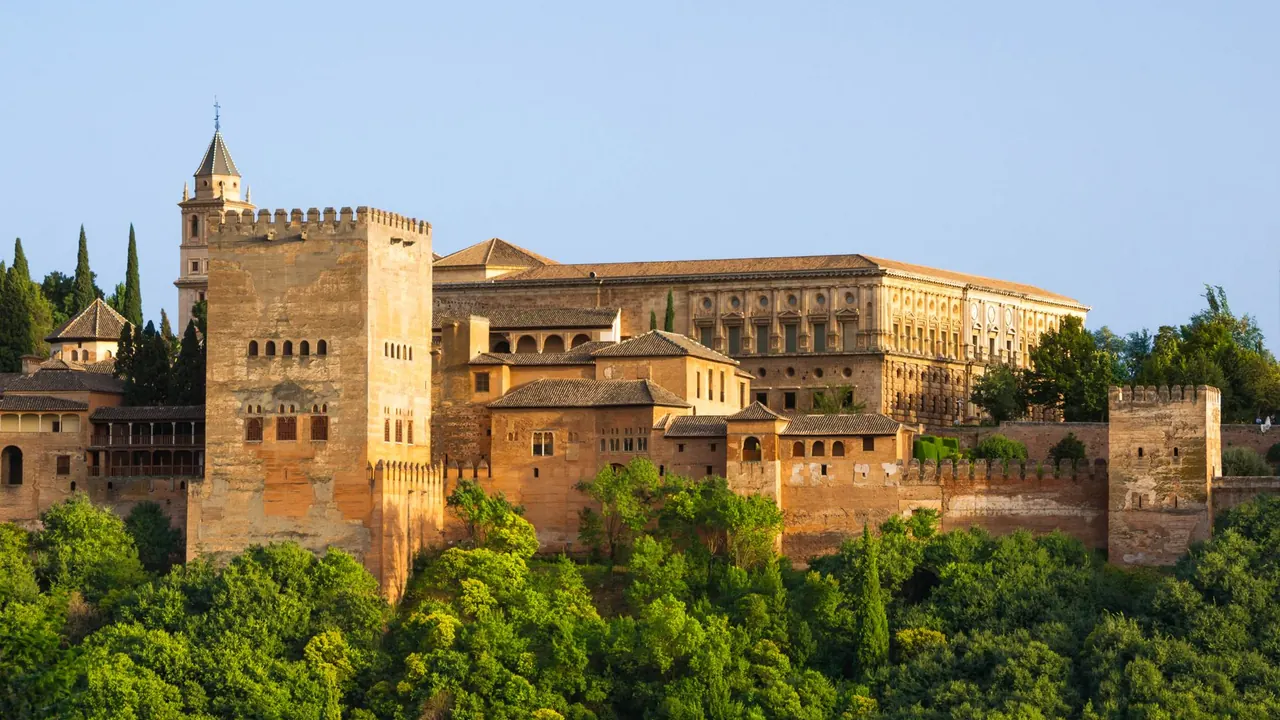
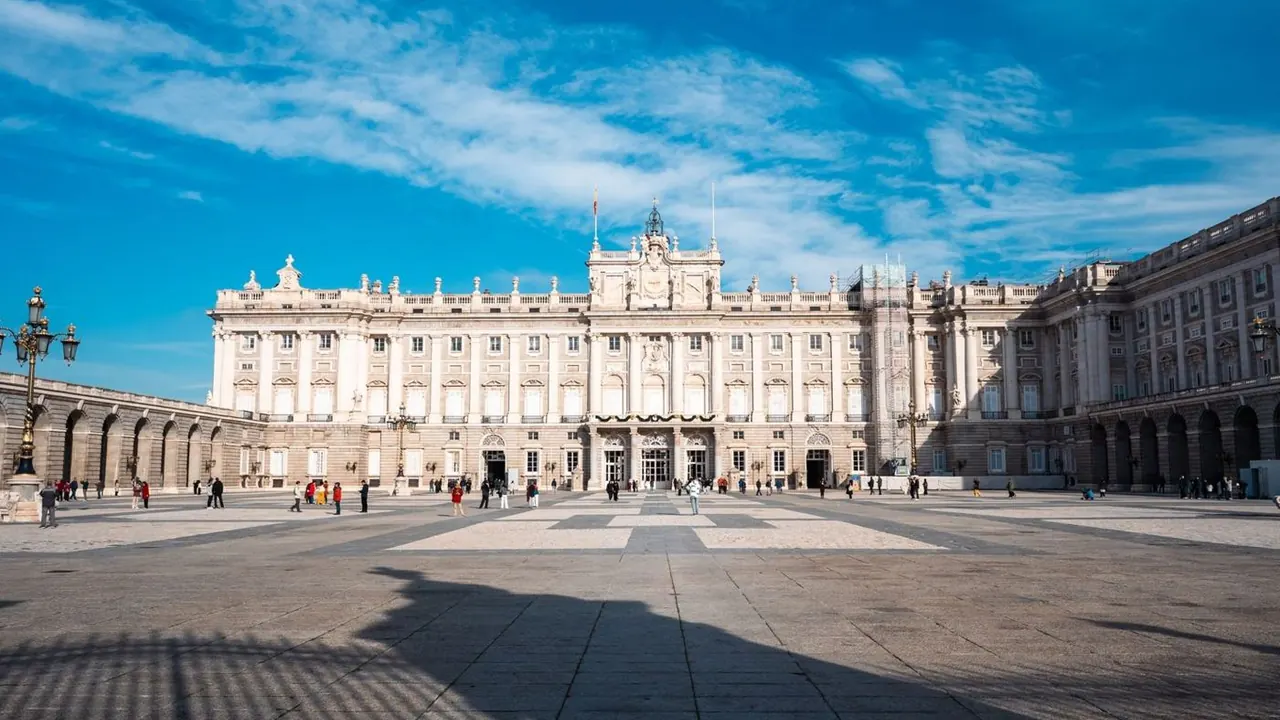
Photos: Granada by Jebulon, CC0; Madrid by Mert Ocak, Pexels License.
Granada or Madrid?
Our verdict in twelve categories, each scored against the same fixed benchmark cities, and the climate month by month, so you can choose for your trip.
Choose Granada for
- beaches
- nature and the outdoors
- prices
Granada suits a traveller who wants one extraordinary monument, mountains on the doorstep and a slower, cheaper pace. The Alhambra and the whitewashed lanes of the Albaicín give it a Moorish heart that Madrid does not have. The Sierra Nevada offers summer hiking and winter skiing, and the free tapa keeps evenings inexpensive. The Costa Tropical is also close enough for a day by the sea.
Choose Madrid for
- shopping
- nightlife
- live music and the arts
Madrid is the better pick for painting, late nights and sheer range. The museums along the Paseo del Prado can fill several days, the food runs from zinc-counter tapas to serious tasting menus, and the bars and clubs keep going until dawn. Fast trains put Toledo, Segovia and Ávila within easy reach for a day. It is also the easier base for shopping, opera and theatre, and for families who want a flat centre and a metro.
Scoreboard
Twelve categories on one fixed scale from 0 to 100. The shaded stretch is the gap between the two.
Your match
Pick a travel style or drag the sliders, and both match scores follow your weighting.
Wins on beaches and nature and the outdoors with your weighting.
Wins on shopping and nightlife with your weighting.
What matters to you?
Category by category
What the scores mean for a trip.
Beaches & swimming
Neither city has a beach of its own, but Granada at least has a coast within reach. The Costa Tropical lies about an hour south over the mountains. Its coves and bays at Salobreña, Almuñécar and La Herradura make a proper day out, or a few nights' stay if the sea matters.
Madrid has nothing like this. The sea is far beyond a day trip, and a summer swim there means the big municipal open-air pools or the reservoirs at the foot of the Sierra de Guadarrama.
Food & drink
Both cities eat in rounds of tapas, but the experience differs. In Granada, a small plate still comes free with every drink, so an evening on Calle Navas or in the Realejo is cheap and local: Alpujarras ham, aubergine with cane honey, remojón salad, and mint tea in the teterías of Calderería Nueva. What Granada lacks is range and a strong top end.
Madrid has both. Its own Castilian food, such as cocido and calamari sandwiches near Plaza Mayor, sits alongside Galician seafood houses, Basque grills and a tier of high-end tasting menus. Market halls such as San Miguel and San Fernando add more choice, and vermouth on a Sunday is a ritual of its own.
Culture & sights
Both are major sightseeing cities, with Madrid slightly ahead on depth, but they offer different things. Granada is about one site and its setting: the Nasrid palaces, the Alcazaba and the Generalife on their ridge, the Moorish Albaicín facing them, and the Royal Chapel where Ferdinand and Isabella lie. You can see the core in a few unhurried days.
Madrid's strength is painting rather than old stone. The Prado, the Reina Sofía with Guernica, and the Thyssen can keep an art lover busy for days. Around them is a grand Habsburg and Bourbon city of palaces and plazas, with little of the medieval layering that makes Granada so striking.
Nightlife
Madrid is the far bigger night out. It has distinct scenes in Malasaña, Chueca, La Latina and Huertas, large clubs around Gran Vía and Sol, and plazas full well after midnight, all week in summer.
Granada's nights come from its students. You drift from tapas to the bars of Calle Elvira and the pubs around Pedro Antonio de Alarcón. The mood is cheerful but informal, with few big clubs, and the city goes noticeably quiet in summer when the university empties.
Nature & outdoors
Granada has the more dramatic outdoors, and it starts closer to town. The Sierra Nevada gives you skiing above Pradollano in winter and high routes towards Mulhacén and the Veleta in summer. On its southern side, the terraced valleys and chestnut woods of the Alpujarras are crossed by old mule paths.
Madrid's mountains are the granite Sierra de Guadarrama, about an hour north, with the boulders of La Pedriza and the lakes below Peñalara. Where Madrid does better is green space inside the city, with the Retiro, Casa de Campo and Madrid Río for running and cycling.
Day trips
Granada has a good list of its own. Córdoba, with the Mezquita and its old Jewish quarter, is an easy day by fast train, and Antequera's dolmens and the El Torcal karst are closer still. Most of the rest, such as Úbeda and Baeza, the Alpujarras villages and the cave houses of Guadix, depend on a car or bus, and Seville is just too far to go there and back in a day.
Madrid is the stronger base because fast trains run in every direction. Toledo and Segovia are each about half an hour away, and Ávila, Salamanca and Cuenca are not much further. El Escorial, Aranjuez and Alcalá de Henares are all nearby too, so you could take a different trip every day of a week without hiring a car.
Good for families
Madrid is the easier city with children. The Retiro has rowing boats and puppet shows, Casa de Campo has the zoo, aquarium, cable car and funfair, and a flat centre with lifts in many metro stations makes it easy with a pushchair.
Granada has one excellent day in the Parque de las Ciencias, and the Alhambra's fountains hold young children's attention better than most monuments. Beyond that the choice is thin, and the steep cobbled lanes of the Albaicín and the Alhambra hill are hard work with small children.
Getting around
Madrid does it with a metro: a large, air-conditioned network with a line to the airport, backed by the commuter trains from Atocha and Chamartín. Its historic core is also flat enough to walk.
Granada is a city for walking with a bit of help. The lower town is level and compact, but the hills up to the Alhambra, the Albaicín and Sacromonte are steep enough that most visitors use the small red minibuses. You only need a car for the mountain villages.
Shopping & style
Madrid is a real shopping city, with each district suited to a different budget. There are luxury houses on Calle Serrano in Salamanca, flagship stores and department stores around Sol and Gran Vía, and independent fashion and vintage shops in Malasaña and Conde Duque. On Sunday mornings there is the Rastro flea market.
Granada is better for a few local crafts than for a day of shopping. Look for inlaid taracea woodwork, blue and green Fajalauza ceramics, and guitars from local workshops, while the Alcaicería is atmospheric but full of souvenirs. Beyond that there are mainly Spanish chains.
Affordability
Granada stretches a budget further. The free tapa with each drink makes eating out unusually cheap, and rooms in the lower town and the Realejo cost less than in the big cities. The extra costs gather around the Alhambra: rooms with views, terraces facing the palace, and flamenco shows aimed at visitors.
Madrid sits in the middle for a European capital. Hotels cost what you would expect, but the midday set menu and the free museum hours help keep daily spending in check.
Live music & performing arts
Madrid has the fuller programme all year. There is opera at the Teatro Real, the national orchestra at the Auditorio Nacional, zarzuela at its own theatre and musicals along Gran Vía. Its best tablaos present serious flamenco every night.
Granada's stage life is smaller but more rooted in place. It has the zambra danced in the Sacromonte caves, rawer evenings in Albaicín peñas, and the legacy of Lorca and Falla. Its high point is the summer music and dance festival, held inside the Alhambra and the Generalife.
Wellness & relaxation
Granada is the better place to slow down. Its hammams in the lower Albaicín revive the city's Moorish bathing tradition and suit an evening after a day on the hills. The spa towns of Lanjarón and Alhama de Granada are both within an hour, and tea houses and shaded garden houses set a gentle pace.
Madrid has a few Arab-style bathhouses and hotel spas, but the city itself is late, social and loud. The calm moments come from a long lunch or an afternoon in the Retiro or the Botanical Garden.
When should you go?
Pick your month. The climate figures are measured averages, not a forecast.
Granada in July
Madrid in July
Daytime high, °C
Rainfall in the month, mm
Temperature and rainfall are climate normals, averaged over the years shown. Granada: 1991-2020 normals, Granada / Caserío Hospicio (5 km from centre). Madrid: 1991-2020 normals, Madrid (1.7 km from centre).
Both cities are at their best in spring and autumn, roughly April to early June and late September to October, when the streets are pleasant for walking. Summers are hot and dry in both. Granada is the fiercer of the two, reaching about 35°C in July with almost no rain, against around 33°C in Madrid. Those are the months to start early and rest through the afternoon. They are also the warm, sunny months for a beach day from Granada on the coast to the south, which Madrid cannot offer.
Madrid's wettest spell is in autumn, with about 64mm in October. Granada's rain is spread more evenly from autumn to spring. Winter is milder in Granada, with highs near 13°C in January against about 10°C in Madrid, and it is sunnier too. Winter is also when Granada can add a day of skiing in the Sierra Nevada.
Which traveller are you?
On a beach and sun trip, Granada is the one to choose. The pebble and dark-sand coves of Salobreña, Almuñécar and La Herradura are about an hour south, close enough for a day out, while from Madrid the sea is simply too far away.
For a food and nightlife trip, Madrid wins easily. It has tapas counters on Cava Baja, cooking from every Spanish region and a top tier of tasting menus. After dinner come the bars of Malasaña, Chueca and La Latina, and clubs that run past dawn every weekend.
On an outdoors trip, Granada has the bigger mountains much closer. The Sierra Nevada rises straight above the city, with Mulhacén to climb, ski slopes about 45 minutes away and the Alpujarras villages to walk between. Madrid's Guadarrama is fine, but smaller in scale.
Before you go
| Measure | Granada | Madrid |
|---|---|---|
| Official language | Spanish | Spanish |
| Currency | Euro (EUR) | Euro (EUR) |
| Sockets | CF230 V, 50 Hz | CF230 V, 50 Hz |
| Driving side | Right | Right |
| Time zone | UTC+1, UTC+2 in summer | UTC+1, UTC+2 in summer |
| Emergency number | 112 | 112 |
| Elevation | 693 m | 663 m |
| Main airport | F.G.L. Airport Granada-Jaén Airport (GRX)16 km from centre13 non-stop destinations | Adolfo Suárez Madrid–Barajas Airport (MAD)14 km from centre239 non-stop destinations |
| Public holidays this year | 12 days | 12 days |
By the numbers
| Measure | Granada | Madrid |
|---|---|---|
| City population | 233,975 | 3,506,730 |
| People per km² | 2,659 | 5,801 |
| Museums within 10 km | 20 | 88 |
| UNESCO World Heritage sites within 50 km | 1 | 4 |
Where else could you go?
Every comparison below shares a destination with this one, so you can follow Granada or Madrid somewhere new.