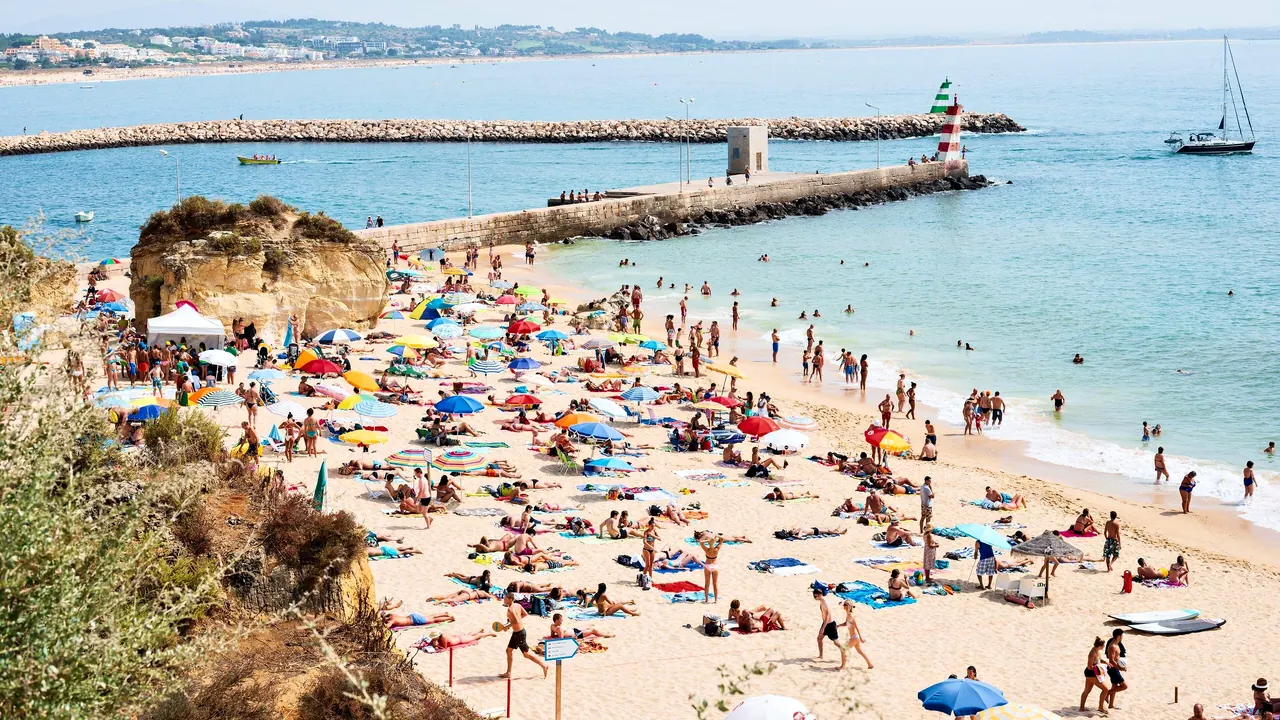
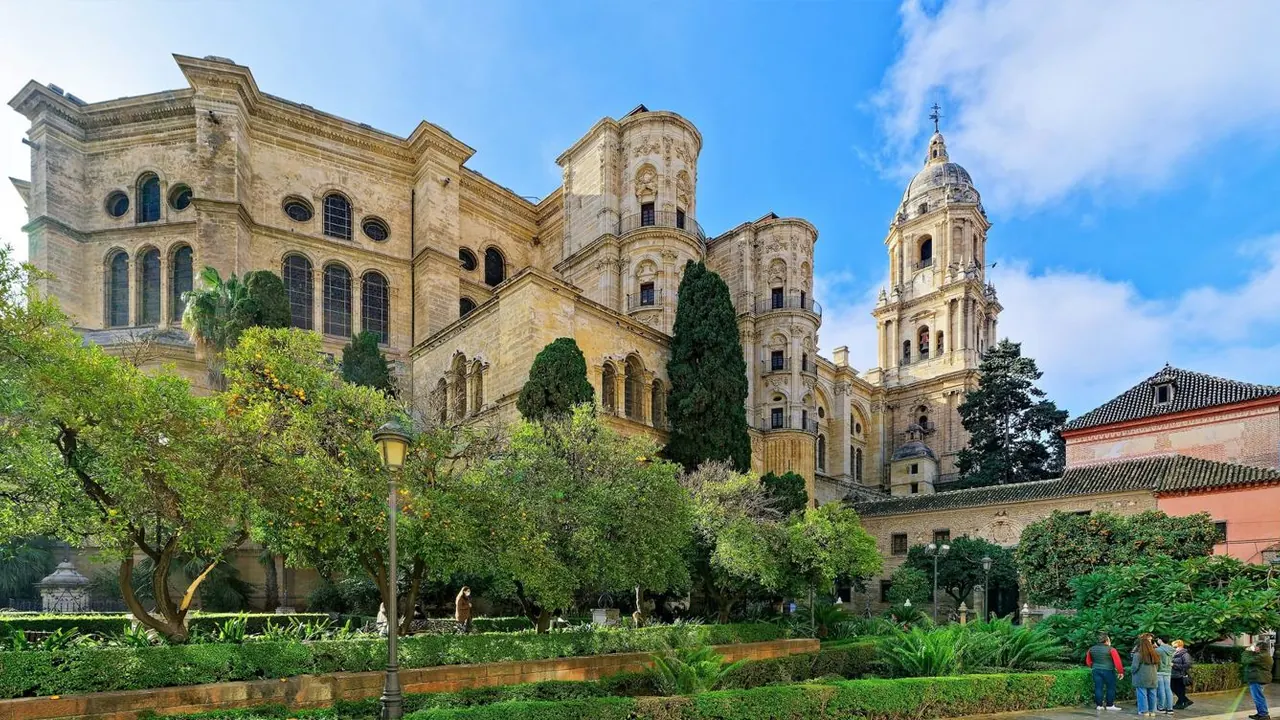
Photos: Lagos, Portugal by Norbert Nagel, CC BY-SA 4.0, cropped; Malaga by Holger Uwe Schmitt, CC BY-SA 4.0, cropped.
Lagos, Portugal or Malaga?
Our verdict in twelve categories, each scored against the same fixed benchmark cities, and the climate month by month, so you can choose for your trip.
Choose Lagos, Portugal for
- nature and the outdoors
- beaches
Lagos suits a vacation built around the coast itself. The golden coves under the cliffs are a short walk from the old town, kayaks slip into the grottoes at Ponta da Piedade, and the wild Costa Vicentina with its surf breaks is close by. It is a small town, so come for sea, sand and clifftop walks rather than museums, shops or long evenings of eating out, and plan to hire a car if you want to see more of the region.
Choose Malaga for
- day trips
- culture and sights
- shopping
Malaga is the better pick for a trip that mixes the beach with a real city. A Moorish fortress, a Roman theatre and the Picasso Museum sit within a flat, walkable centre, the tapas bars stay full late into the night, and fast trains put Granada, Cordoba and Ronda within a day's reach. The city sand is plain, but almost everything else a traveller might want is close at hand without a car.
Scoreboard
Twelve categories on one fixed scale from 0 to 100. The shaded stretch is the gap between the two.
Your match
Pick a travel style or drag the sliders, and both match scores follow your weighting.
Wins on nature and the outdoors and beaches with your weighting.
Wins on day trips and culture and sights with your weighting.
What matters to you?
Category by category
What the scores mean for a trip.
Beaches & swimming
The two are close as beach towns, but the beaches are very different. Lagos has the prettier coast: small golden coves like Camilo and Dona Ana sit under carved cliffs and sea stacks, reached by long wooden stairs, and Meia Praia gives you 4km of open sand. The catch is the Atlantic, which stays fresh even in high summer.
Malaga's city beaches, La Malagueta, Pedregalejo and El Palo, are plain grey-brown sand. What they offer instead is warmer water, a longer swimming season and the whole Costa del Sol strung along the suburban railway. For scenery like Lagos's coves, you have to travel an hour east to Nerja and Maro.
Food & drink
Malaga is the stronger place to eat. Its tapas bars around Plaza de la Merced, the espetos of sardines grilled over driftwood on the beach, plates of fried fish in El Palo, the Atarazanas market counters and the old bodegas pouring sweet wine from the barrel add up to a proper eating culture, and it costs little.
Lagos does grilled fish and cataplana well, and its riverside market is good. But the old town is lined with restaurants aimed at visitors, so a good meal means looking a street or two back or heading to the harbour.
Culture & sights
Malaga has far more to see. The Alcazaba climbs the hill above a Roman theatre, Gibralfaro crowns the ridge, and the unfinished cathedral stands in the centre. Add the Picasso Museum, Picasso's birthplace and the Carmen Thyssen collection and you have two full days of sightseeing.
Lagos fits its history into a morning: the old walls, the harbour fort, the gilded interior of the Church of Santo António, and the slave market museum, which tells a hard story about the Age of Discovery.
Nightlife
Malaga has the fuller nights. Dinner starts at ten, the terraces and small bars around Plaza Uncibay and Calle Granada stay busy past two at weekends, and the crowd is mixed in age. For bigger clubs, Torremolinos is a short train ride away.
Lagos is younger and rowdier: backpackers, surfers, pub crawls and small bars in the old town lanes. But it is mostly a summer scene, and it goes quiet from November to March.
Nature & outdoors
Both are strong for the outdoors, but in different ways: Lagos is about the sea, Malaga about the mountains. From Lagos you can kayak into the grottoes at Ponta da Piedade, walk the clifftops to Luz, follow the Fishermen's Trail on the wild Costa Vicentina or surf there all year.
Malaga's countryside is the high ground inland. There is the Caminito del Rey gorge walk, the limestone stacks of El Torcal, serious hikes in the sierras above Nerja, and skiing in the Sierra Nevada in winter.
Day trips
Here Malaga is far ahead and is one of the great bases in southern Spain. The Alhambra in Granada and the Mezquita in Cordoba are both easy train trips, Ronda's gorge is under two hours away, and Antequera's dolmens are half an hour off.
From Lagos the best outing is to Sagres and Cape St Vincent, with Silves's Moorish castle and the Monchique hills inland. These are pleasant days out rather than major sights, and most of them need a car.
Good for families
Malaga is a little easier with children. The centre is flat and pedestrianised, which makes it fine for pushchairs, the city beaches slope gently, and the zoo, aquarium and dolphin park along the coast are all on the suburban train.
Lagos has Meia Praia's shallow, roomy shore and a relaxed pace. But the prettiest coves are down steep stairs, the old town is cobbled, and the attractions built for children are outside town and need a drive.
Getting around
Both are places you explore on foot, so the real difference is how well each connects to everything beyond it. Lagos is compact but not effortless: the old town's cobbled lanes climb and dip, and Meia Praia lies across the river by footbridge. The town is the last stop at the far western end of the Algarve line, and the trains towards Faro take their time, so it feels like the end of the road rather than a junction.
Malaga is the easier of the two by a clear margin. Its centre is flat and largely pedestrianised, a city bus spares you the one steep climb to Gibralfaro, and a suburban line strings the coastal resorts together. The main station is on Spain's high-speed network, so Seville and Madrid are a train ride away, and only the inland villages and gorges are hard to reach without driving.
Shopping & style
Malaga offers real shopping: the marble Calle Larios lined with Spanish chains, El Corte Ingles, the shops along Muelle Uno and a few independents in Soho, with Puerto Banus not far away for luxury. Lagos is for browsing hand-painted ceramics, cork goods and surf gear, plus honey and medronho brandy from the market, and not much more.
Affordability
Both cost about the Western European average, but they save you money in different ways. In Malaga, cheap tapas, cheap local trains and low-cost sights balance the price of rooms, which stay in demand from spring right through autumn.
In Lagos the swing between seasons is sharper: beach rooms are expensive in July and August, then much cheaper from October to May. That makes it a good-value base for a long off-season stay.
Live music & performing arts
In Lagos, live performance mostly means guitar and fado evenings for visitors in summer, cover bands in the bars and a modest programme at the municipal cultural centre. For serious concerts or theatre you would have to go to Faro or Lisbon.
The Teatro Cervantes gives Malaga a proper stage. The nineteenth-century theatre is home to the Malaga Philharmonic and hosts touring drama and dance. Flamenco is played in the local peñas as well as in the tablaos, and during Semana Santa brass bands and processions fill the streets.
Wellness & relaxation
Neither town is a spa destination, and in both the slow pace does more for rest than the facilities do. Lagos leans towards yoga and surf retreats on its quieter fringes, with the Roman-era thermal springs of Caldas de Monchique an hour inland.
Malaga has an Arab-style bathhouse in the old town and large resort spas along the coast towards Marbella. Its sunny, mild winter is the calmest time to come.
When should you go?
Pick your month. The climate figures are measured averages, not a forecast.
Lagos, Portugal in July
Malaga in July
Daytime high, °C
Rainfall in the month, mm
Where the figures come from
Lagos, Portugal's temperatures are measured 63 km from the centre, at Faro / Aeroporto.
Lagos, Portugal has no rain gauge within 25 km of the centre, so its rainfall comes from a gridded climate dataset read at the city rather than from a gauge further away.
Temperature and rainfall are climate normals, averaged over the years shown. Lagos, Portugal: 1991-2020 normals, Faro / Aeroporto (63.4 km from centre). Malaga: 1991-2020 normals, Malaga / Aeropuerto (8.2 km from centre).
Both towns have the same dry, sunny summer and a wet early winter, but Malaga runs hotter and its sea is warmer. In July and August Lagos reaches about 29°C with almost no rain and slightly more sunshine than Malaga, while Malaga climbs to around 32°C, which makes midday sightseeing in its streets hard work. The Atlantic off Lagos stays fresh, peaking at about 20°C, whereas Malaga's sea reaches about 23°C and is still pleasant for swimming well into October.
Spring and autumn are the best seasons in both for walking, sightseeing and mild beach days, with May, June and September the sweet spot. The rain arrives in October and is heaviest in November and December, when Malaga sees about 88mm and Lagos a little less. Winters are mild and fairly sunny in both, with daytime highs in the mid-teens, good for walking and city days but not for swimming.
Which traveller are you?
On a beach and sun trip, Lagos has the more beautiful shore: golden coves under honey-coloured cliffs and sea stacks, and the long open sand of Meia Praia, all within walking distance. The water is cooler, but the setting is far more striking than Malaga's grey-brown sand.
For a culture and arts trip, Malaga is the clear choice. It has the Alcazaba, the Roman theatre, the Picasso Museum and the Carmen Thyssen collection, plus flamenco and the Philharmonic at the Teatro Cervantes, and Granada and Cordoba are close by train.
For a short city break, Malaga works far better. The airport train reaches the centre in minutes, the flat old town packs museums, tapas bars and a beach into a few streets, and the nights run late. Lagos rewards a slower stay and needs a car to get beyond town.
Before you go
| Measure | Lagos, Portugal | Malaga |
|---|---|---|
| Official language | Portuguese | Spanish |
| Currency | Euro (EUR) | Euro (EUR) |
| Sockets | CF230 V, 50 Hz | CF230 V, 50 Hz |
| Driving side | Right | Right |
| Time zone | UTC, UTC+1 in summer | UTC+1, UTC+2 in summer |
| Emergency number | 112 | 112 |
| Elevation | 3 m | 18 m |
| Main airport | Faro - Gago Coutinho International Airport (FAO)63 km from centre91 non-stop destinations | Málaga-Costa del Sol Airport (AGP)8 km from centre165 non-stop destinations |
| Public holidays this year | 14 days | 12 days |
By the numbers
| Measure | Lagos, Portugal | Malaga |
|---|---|---|
| City population | 31,049 | 599,063 |
| People per km² | 146 | 1,517 |
| Museums within 10 km | 6 | 32 |
| UNESCO World Heritage sites within 50 km | 0 | 1 |
| Swim season, months above 21 °C | None | 3 months |
Where else could you go?
Every comparison below shares a destination with this one, so you can follow Lagos, Portugal or Malaga somewhere new.
- Albufeiravs Lagos, Portugal
- Marbellavs Malaga
- Farovs Lagos, Portugal
- Rondavs Malaga
- Granadavs Malaga
- Cordobavs Malaga