Photos: Cascais by Jorge Franganillo, CC BY 2.0, cropped; Malaga by Holger Uwe Schmitt, CC BY-SA 4.0, cropped.
Cascais or Malaga?
Our verdict in twelve categories, each scored against the same fixed benchmark cities, and the climate month by month, so you can choose for your trip.
Choose Cascais for
- wellness
- nature and the outdoors
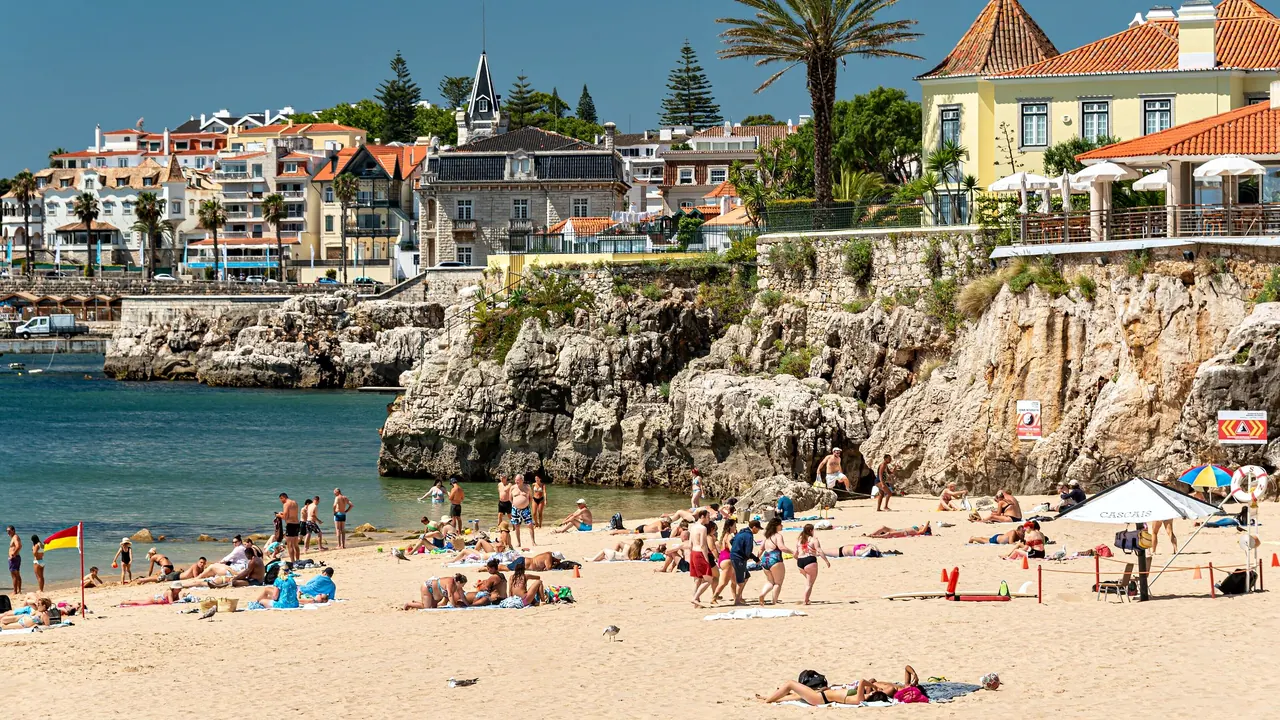
Cascais suits travellers who want a calm, well-kept seaside town with wild Atlantic coast on one side and Lisbon on the other. The appeal lies in the cliffs, surf and misty forest trails at its edge, an easy train into the capital, and quiet evenings. It costs more to stay in, and the town's own sights, food and nightlife are slim, so it works best as a restful base rather than a destination in itself.
Choose Malaga for
- nightlife
- culture and sights
- shopping
Malaga is the better pick for a fuller city vacation. A Moorish fortress, a Roman theatre and Picasso's museum sit a short walk from a city beach. Tapas lanes stay busy until late, the sea is warmer for longer and the summer is hotter, and a stay costs less. It also puts Granada, Cordoba and Ronda within reach by train or road.
Scoreboard
Twelve categories on one fixed scale from 0 to 100. The shaded stretch is the gap between the two.
Your match
Pick a travel style or drag the sliders, and both match scores follow your weighting.
Wins on wellness and nature and the outdoors with your weighting.
Wins on nightlife and culture and sights with your weighting.
What matters to you?
Category by category
What the scores mean for a trip.
Beaches & swimming
Both have beaches you can walk to, but they suit different swimmers. Cascais has small, sheltered sandy coves right below its old centre, linked by a promenade to Estoril, plus Carcavelos for surf and the wild sweep of Guincho for watching the waves. The Atlantic stays cool, so a swim there is a quick, bracing plunge.
Malaga gives you more beach and warmer water. La Malagueta is minutes from the cathedral, and the shore carries on to the fishing quarters of Pedregalejo and El Palo, with the long Costa del Sol beaches a train ride west. The sand is plain grey-brown, but the swimming season lasts months longer. For pretty coves like Cascais's, you would head out to Nerja and Maro.
Food & drink
Seafood carries the menu in each place, but the range is very different. In Cascais the best meals are grilled sea bream, clams in garlic and coriander, and a long lunch overlooking the waves on the road to Guincho. Beyond that the choice narrows to tourist menus and gelato, and keen eaters take the train into Lisbon for dinner.
Malaga gives you far more to eat. The lanes around Plaza de la Merced are full of tapas bars, and the city has its own dishes: sardines roasted on skewers over beach fires, plates of pescaito frito in Pedregalejo, ajoblanco in summer, and sweet moscatel poured from the barrel in old bodegas. The Atarazanas market, where you can eat at the counters, makes a better morning out than Cascais's Mercado da Vila.
Culture & sights
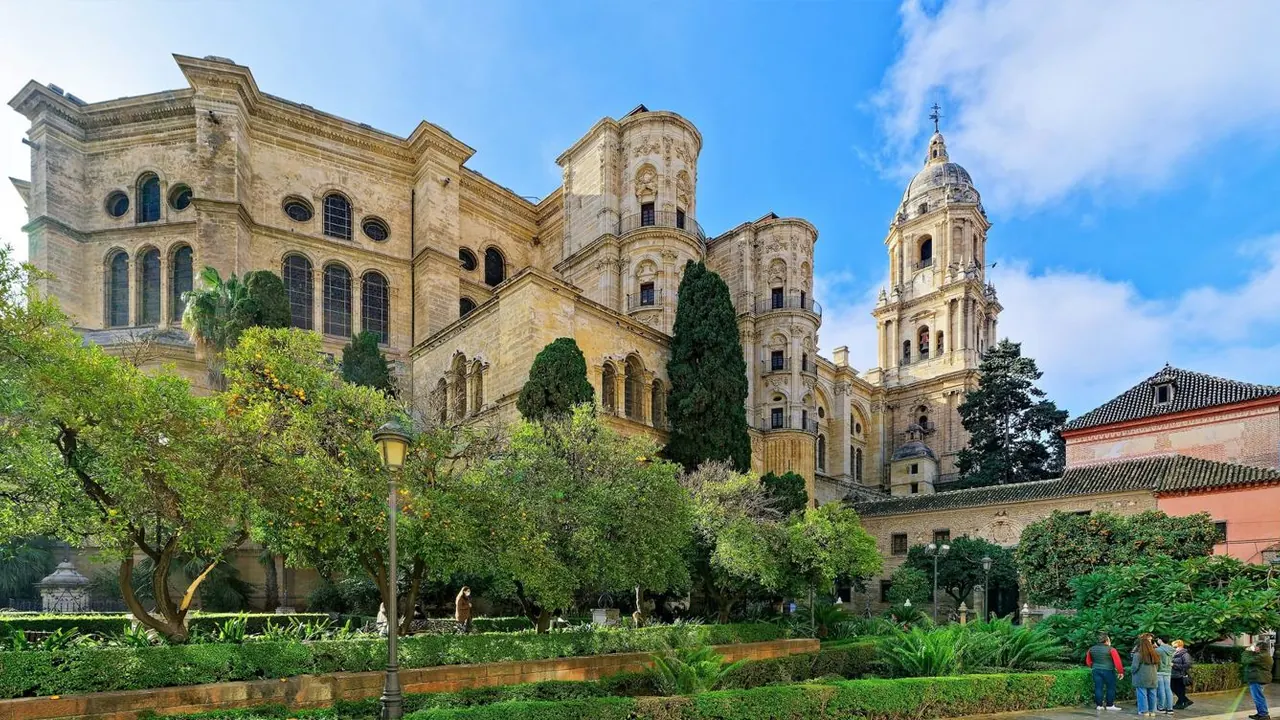
Malaga has far more to see. It has a Roman theatre, the Moorish Alcazaba climbing the hill to Gibralfaro castle, and the unfinished cathedral. Picasso's birthplace and a museum of his work are here too, along with the Carmen Thyssen collection and the Museo de Malaga, which is easily two good days.
Cascais's heritage is charming rather than grand. Its aristocratic seafront villas date from its time as a royal summer retreat, and it has the Citadel, the Paula Rego museum in its red towers and a lighthouse museum. You can see it all in an easy day, and for major monuments you go to Sintra or Lisbon.
Nightlife
Evenings in Cascais mean a wine bar or a cocktail terrace in the old centre, or a dressier night at the Estoril casino. Outside July and August the town winds down early. A big night out means Lisbon, and you have to plan around the last train back.
Malaga keeps Spanish hours. Dinner starts late, and then the crowd moves between bars around Plaza de la Merced, Calle Granada and Plaza Uncibay, with beach bars at La Malagueta open late too. Clubbing in the city is limited, but Torremolinos is a short train ride away.
Nature & outdoors
Both are strong for the outdoors, but the landscapes differ. In Cascais it is the Atlantic edge, almost all close to town: the Boca do Inferno arch, dunes and cliffs along the cycle path to Guincho, Cabo da Roca, and the mossy cork-oak forest of the Serra de Sintra. Wind and surf make it a place for water sports, though the summer north wind makes cycling hard work.
Malaga's nature is mountains and gorges, mostly an hour or more away. The Montes de Malaga start at the city's edge, and further out are the Caminito del Rey, El Torcal's limestone stacks, and the sierras above Nerja. The Sierra Nevada even has winter skiing. The summer heat pushes walks into the early morning.
Day trips
Both are excellent bases. Cascais's best outings are short and close: Lisbon by coastal train past Belém, and Sintra's palaces over the ridge. Mafra, Ericeira and Óbidos fill further days, and Évora is a long stretch.
Malaga's outings are longer but bigger in scale. It has fast trains to Cordoba's Mezquita, Granada's Alhambra and, at a push, Seville. Ronda, Antequera's dolmens and the white villages add many more options.
Good for families
Cascais is the quieter place to bring young children, though nothing in town is built for them. It has shallow, sheltered coves, a flat promenade for scooters and the peacocks in Marechal Carmona park. Its drawbacks are a sea cold enough to put small swimmers off, and a train trip to reach the Lisbon Oceanarium or zoo.
Malaga does a little more for families. Children are welcome in tapas bars late into the evening, the city beaches shelve gently into warmer water, and older ones can explore the Alcazaba's ramparts. The Bioparc zoo, an aquarium and the Selwo parks are a short train ride along the coast, best visited in late spring or early autumn.
Getting around
Cascais relies on one coastal line, while Malaga is a proper transport hub. In Cascais the harbour, coves and promenade are a short stroll apart, and the train runs straight along the shore into Lisbon. Buses out to Guincho and the Sintra hills are slow, so a car helps if you want to see the region.
Malaga's flat, pedestrianised centre is just as easy on foot, with only the climb to Gibralfaro taking effort. The suburban train reaches the airport in about ten minutes and runs on down the coast, and fast trains go to Cordoba, Seville and Madrid. You only need a car for the inland villages and gorges.
Shopping & style
Cascais is a place for browsing. Its pedestrian streets have surf brands, small boutiques, azulejo tiles, cork goods and tinned fish in decorative tins, and serious fashion means a trip to Lisbon.
Malaga has more choice. Calle Larios is a marble street of Spanish high-street chains, El Corte Ingles is across the river, and there are shops along the port at Muelle Uno and a few independents in Soho. The Atarazanas market is good for olive oil, almonds and ham to take home.
Affordability
Malaga is the cheaper stay. Tapas, fried fish, coffee and local transport are all reasonably priced, and several major sights cost little to enter. Rooms near the old town and the beach are the costly part.
Cascais is an upmarket resort and one of the dearer places to sleep in Portugal, and the seafront restaurants charge resort prices. Set lunches in the back streets and the train into Lisbon help. In both places, avoiding high summer makes the biggest difference to what you spend on a room.
Live music & performing arts
Malaga has the stronger evenings out. The Teatro Cervantes hosts the city's philharmonic, touring dance and drama, and flamenco is easy to find, in tablaos and, more genuinely, in the local peñas. During Semana Santa the brass bands and processions turn the streets into a stage.
Cascais has the long-established Teatro Experimental, which plays in Portuguese, plus cabaret at the Estoril casino and a summer jazz tradition. For fado or orchestras you take the train to Lisbon.
Wellness & relaxation
Neither is a true spa destination, and Cascais just edges it. Its quiet pace for most of the year, seafront walks and early nights do much of the work. Estoril's thermal-spring past lives on in thalassotherapy and good hotel spas, though summer weekends bring crowds from Lisbon.
Malaga relaxes you in a more Spanish way, with long lunches, a siesta through the heat and evening walks on the Paseo Maritimo. An Arab-style bathhouse in the old town and the resort spas towards Marbella cover the treatments, and the mild, sunny winter is its calmest season.
When should you go?
Pick your month. The climate figures are measured averages, not a forecast.
Cascais in July
Malaga in July
Daytime high, °C
Rainfall in the month, mm
Temperature and rainfall are climate normals, averaged over the years shown. Cascais: 1991-2020 normals, Lisboa / Geof (23.6 km from centre). Malaga: 1991-2020 normals, Malaga / Aeropuerto (8.2 km from centre).
Cascais has the milder, cooler summer of the two, with highs around 28°C in July and August. The Atlantic stays cool all year, peaking around 19°C, so swimming is brisk even in high season and the beach months are really July to September. Rain returns in October, and November is the wettest month at 121mm. The winter is grey and cool, but spring and autumn are fine for coastal walks.
Malaga runs hotter and sunnier. August reaches 32°C, which makes midday sightseeing hard work in high summer, and the sea warms to about 23°C. That gives a longer, more comfortable swimming season from June into October. Its winters are milder and brighter than Cascais's, and the rain is lighter. It is a reasonable choice for a winter city break, while Cascais is better kept for the warmer half of the year.
Which traveller are you?
On a culture and arts trip, Malaga is the clear choice. The Alcazaba, Gibralfaro, the Roman theatre and the Picasso Museum are all in the city itself, and flamenco and the Teatro Cervantes fill the evenings. In Cascais most of that means a train into Lisbon.
For a food and nightlife trip, Malaga again. Sardine espetos, fried fish and sweet wine from the barrel lead into dinner at ten and old-town squares that stay full past two. Cascais eats well on grilled fish but is mostly asleep by midnight.
Surfers, windsurfers and kitesurfers will be happier in Cascais. Carcavelos is a few stops up the line, and the steady wind and waves at Guincho are a short ride along the coastal cycle path. Malaga's calm Alboran Sea has nothing comparable.
Before you go
| Measure | Cascais | Malaga |
|---|---|---|
| Official language | Portuguese | Spanish |
| Currency | Euro (EUR) | Euro (EUR) |
| Sockets | CF230 V, 50 Hz | CF230 V, 50 Hz |
| Driving side | Right | Right |
| Time zone | UTC, UTC+1 in summer | UTC+1, UTC+2 in summer |
| Emergency number | 112 | 112 |
| Elevation | 0 m | 18 m |
| Main airport | Lisbon Humberto Delgado Airport (LIS)26 km from centre157 non-stop destinations | Málaga-Costa del Sol Airport (AGP)8 km from centre165 non-stop destinations |
| Public holidays this year | 14 days | 12 days |
By the numbers
| Measure | Cascais | Malaga |
|---|---|---|
| City population | 214,124 | 599,063 |
| People per km² | 2,198 | 1,517 |
| Museums within 10 km | 6 | 32 |
| UNESCO World Heritage sites within 50 km | 3 | 1 |
| Swim season, months above 21 °C | None | 3 months |
Where else could you go?
Every comparison below shares a destination with this one, so you can follow Cascais or Malaga somewhere new.