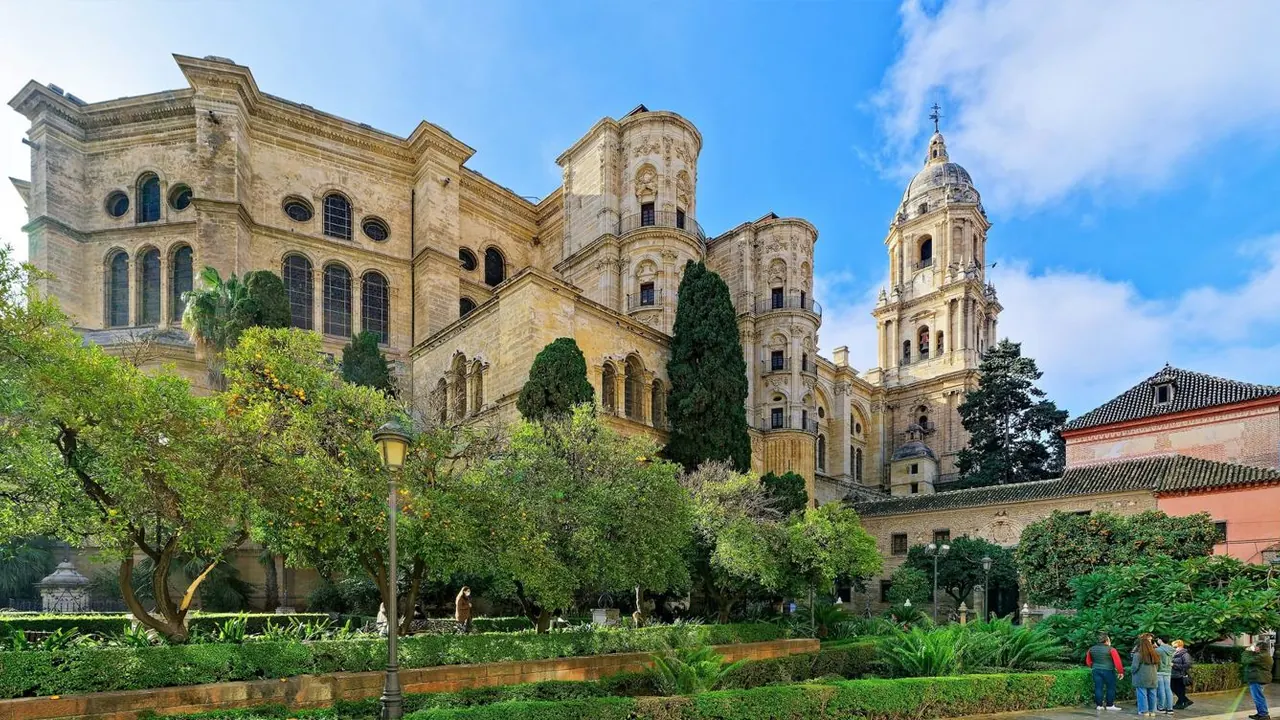
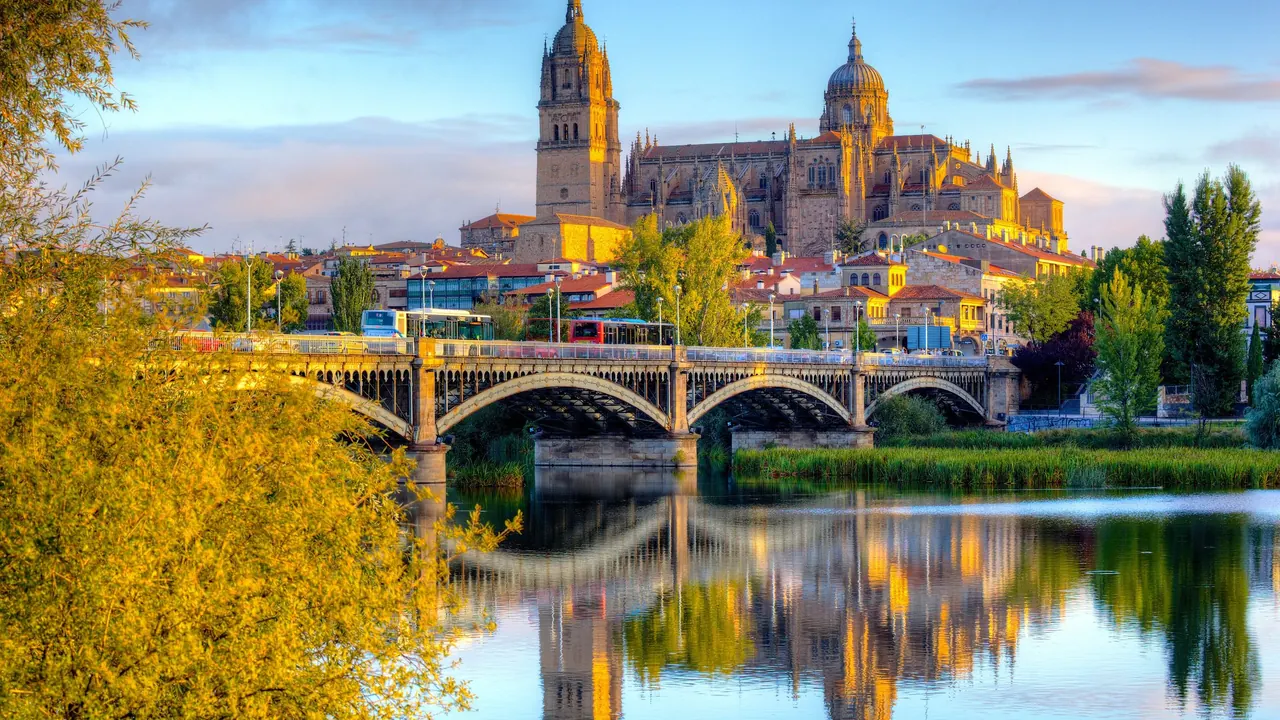
Photos: Malaga by Holger Uwe Schmitt, CC BY-SA 4.0, cropped; Salamanca by Jiuguang Wang, CC BY-SA 3.0 ES, cropped.
Malaga or Salamanca?
Our verdict in twelve categories, each scored against the same fixed benchmark cities, and the climate month by month, so you can choose for your trip.
Choose Malaga for
- beaches
- families
- shopping
Malaga is the choice when the sea is part of the plan. You get a working city beach a short walk from the cathedral, sardines grilled on the sand, hills and gorges within an hour, and fast trains to Granada, Cordoba and Seville. It suits families, people who want to swim as well as see things, and anyone who wants to cover a lot of Andalucia from one comfortable base.
Choose Salamanca for
- prices
- culture and sights
- getting around
Salamanca is for travellers who want the town itself to be the attraction. Its golden sandstone old city, the Plaza Mayor and the ancient university make a more complete historic setting than anything in Malaga's centre. Student life keeps the bars cheap and the nights long. It works best for couples, friends and anyone on a budget who is happy with stone, tapas and Castilian towns rather than a coastline.
Scoreboard
Twelve categories on one fixed scale from 0 to 100. The shaded stretch is the gap between the two.
Your match
Pick a travel style or drag the sliders, and both match scores follow your weighting.
Wins on beaches and families with your weighting.
Wins on prices and culture and sights with your weighting.
What matters to you?
Category by category
What the scores mean for a trip.
Beaches & swimming
Malaga has a real seaside right on its doorstep. La Malagueta starts a few minutes from the cathedral, and the shore continues east through Pedregalejo and El Palo, where espetos roast in old boats on the sand. The resort beaches to the west are on the suburban train. The sand is grey and plain, but for clear water and coves Nerja and Maro are about an hour east.
Salamanca stands on the Castilian plain, far from any coast. In summer, swimming means municipal pools or the river beaches along the Tormes and the province's reservoirs. That is pleasant for an afternoon but no reason to choose the city.
Food & drink
Both cities eat at the bar counter, but the menus come from different landscapes. Malaga cooks the sea: sardines grilled on canes over driftwood, plates of fried small fish in El Palo, and fish counters in the Atarazanas market. Sweet moscatel wine is poured straight from the barrel in old bodegas. The range is wider, from summer ajoblanco to a small group of ambitious restaurants.
Salamanca cooks the meat of the uplands. It has ibérico ham from nearby Guijuelo, hornazo pastry, roast suckling pig and morucha beef, with red wine from Toro and Ribera del Duero. It is generous and hearty food, but there is little seafood and not much variety beyond Castilian cooking.
Culture & sights
Salamanca is the more rewarding place simply to walk through. The whole UNESCO-listed old city is built of the same golden sandstone. The Plaza Mayor is one of Spain's finest baroque squares, and it is joined by the Plateresque university façade with its hidden frog, two cathedrals side by side and the Casa de las Conchas. At night the floodlights make the stone glow.
Malaga's centre is smaller and more mixed: a Roman theatre, the Moorish Alcazaba, Gibralfaro castle and an unfinished cathedral. Where it does better is its museums. The Picasso Museum and the Carmen Thyssen collection are stronger than anything in Salamanca, where Casa Lis stands almost alone.
Nightlife
The two cities are about equally lively after dark, but the crowds are different. Malaga's nights are sociable and mixed in age. Late dinners lead to terraces around Plaza de la Merced and beach bars at Pedregalejo. For proper clubs and the gay scene, people take the train to Torremolinos.
Salamanca's nights are run by students. From Thursday to Saturday, cheap bars around the Plaza Mayor and Calle Bordadores fill up and lead on to dance bars open long after midnight, with many foreign language students in the crowd. It goes much quieter in high summer, when Malaga is at its busiest.
Nature & outdoors
Malaga has wilder country much closer. The pine-covered Montes de Malaga begin at the edge of the city. The Caminito del Rey gorge walk and the limestone formations of El Torcal are about an hour away. There is snorkelling under the Maro cliffs and, further off, skiing in the Sierra Nevada.
Around Salamanca there is open wheat plain, with green space close by limited to the paths along the Tormes. Good walking starts about an hour out, in the chestnut woods of the Sierra de Francia and Las Batuecas or along the granite canyon of the Arribes del Duero. You will need a car for almost all of it.
Day trips
Malaga puts some of Spain's greatest sights within a day by rail. The Mezquita in Cordoba is about an hour away by fast train and the Alhambra in Granada not much further, with Ronda, the Antequera dolmens and Seville all reachable too. There are also white villages and Gibraltar along the coast.
Salamanca's list is quieter but still good. Ávila's walls and Zamora's Romanesque churches are both about an hour away. Further out are the border fortress of Ciudad Rodrigo and the half-timbered villages of La Alberca and Mogarraz, but many of these places are hard to reach without a car.
Good for families
In Malaga, a family can easily split the days between the beach and other outings. The city beaches are calm and shallow, and the coastal train runs to the Bioparc in Fuengirola, the aquarium and dolphin park in Benalmadena and a safari park further west. Older children also like climbing the Alcazaba.
Salamanca is safe and easy-going with children, who enjoy searching for the carved frog and astronaut and climbing the cathedral towers. Little beyond that is aimed at them, though, and the summer heat and harsh winters narrow the good weeks. It works better as a day or two on a wider trip.
Getting around
Both centres are easy on foot. Salamanca is the more self-contained: almost every sight is within a twenty-minute walk from the Plaza Mayor to the Roman bridge, so the buses are hardly needed, although some streets are cobbled and gently sloping.
Malaga's centre is flat and largely pedestrianised. Its advantage is rail. The airport is ten minutes away by suburban train, the same line runs along the coast, and fast trains go to Cordoba and Seville. In both cities, a car only matters for the villages and hills.
Shopping & style
Malaga has more to offer, though nothing exceptional. The marble-paved Calle Larios holds the Spanish chains, El Corte Ingles is across the river, and there are shops at Muelle Uno on the port and a few independents in Soho. Real luxury shopping is in Puerto Banus, an hour away.
In Salamanca, the chains line the streets running north from the Plaza Mayor, and beyond them the best buys are local: ham and cheese from the Mercado Central, and charro jewellery, the province's silver filigree buttons and pendants.
Affordability
Salamanca is the cheaper stay overall. Its large student population keeps bar prices down, a drink often comes with a free tapa, and rooms near the old town are moderately priced except on festival weekends. The one thing that adds up is the entry charges at the cathedrals and the university.
In Malaga, food, coffee and local trains are fair value and several sights cost little to enter. Rooms are where the money goes: those in the old town and near the beach are in heavy demand from spring to autumn, and staying further out or coming in winter helps.
Live music & performing arts
Malaga has the fuller programme. The nineteenth-century Teatro Cervantes is home to the Malaga Philharmonic and has a modest lyric season, and flamenco ranges from tablaos aimed at visitors to local peñas where the playing is more personal. In Semana Santa the brass bands and processions fill the streets.
Salamanca has the Teatro Liceo and a municipal arts centre for touring shows, plus university choral concerts in historic halls. Its most memorable sound costs nothing: caped student tunas singing under the arcades of the Plaza Mayor. Neither city is worth the trip for opera lovers.
Wellness & relaxation
Neither city is a spa destination, and in both the slow rhythm of long lunches and siestas relaxes you more than any treatment does. Malaga's version is warm-weather rest: an Arab-style bathhouse in the old town, larger resort and golf-hotel spas along the coast towards Marbella, and evening walks by the sea on mild winter days.
Salamanca's strength is the old spa tradition. The balneario at Ledesma is built over mineral springs about half an hour away, and the Roman-era thermal waters of Baños de Montemayor are about an hour south. In town, the quiet cloisters of San Esteban and Las Dueñas are good places to sit for an hour.
When should you go?
Pick your month. The climate figures are measured averages, not a forecast.
Malaga in July
Salamanca in July
Daytime high, °C
Rainfall in the month, mm
Temperature and rainfall are climate normals, averaged over the years shown. Malaga: 1991-2020 normals, Malaga / Aeropuerto (8.2 km from centre). Salamanca: 1991-2020 normals, Salamanca / Matacan (13.9 km from centre).
Malaga has a long warm season. The sea is pleasant for swimming from June to October and is at its warmest in August at about 23°C. High summer is hot, dry and very sunny, with highs near 32°C in August, so it is best to see the town early or late in the day. Spring and autumn are the easiest seasons for walking. The wet season runs through late autumn and winter, and December is the wettest month at about 88mm, but even then the days are mild and there is still plenty of sun.
Salamanca has a much harsher inland climate. January highs reach only about 9°C, and the short, greyer winter days make long walks a cold business. July is as hot as on the coast at around 31°C, with no sea to cool off in. It is drier than Malaga across the year, and October is its wettest month. The best times are May and June, and September into early October, when the sandstone streets are comfortable to walk all day.
Which traveller are you?
On a beach and sun trip, Malaga is the clear choice. La Malagueta and the fishing quarters of Pedregalejo and El Palo are within walking distance, the resort beaches are a short train ride away, and the summer sea is warm. Salamanca has only pools and river beaches.
On a family trip with children, Malaga has more to fill the days. The city beaches are calm and shelve gently, and the Bioparc, an aquarium and dolphin and safari parks are along the coastal railway. Salamanca has no zoo, aquarium or theme park, and its main sights are mostly churches.
On a tight budget, Salamanca stretches the money further. Student demand keeps bar prices low, a drink often comes with a free tapa, and modest guesthouses sit close to the old town. In Malaga the food is fairly priced, but central rooms get expensive from spring to autumn.
Before you go
| Measure | Malaga | Salamanca |
|---|---|---|
| Official language | Spanish | Spanish |
| Currency | Euro (EUR) | Euro (EUR) |
| Sockets | CF230 V, 50 Hz | CF230 V, 50 Hz |
| Driving side | Right | Right |
| Time zone | UTC+1, UTC+2 in summer | UTC+1, UTC+2 in summer |
| Emergency number | 112 | 112 |
| Elevation | 18 m | 798 m |
| Main airport | Málaga-Costa del Sol Airport (AGP)8 km from centre166 non-stop destinations | Adolfo Suárez Madrid–Barajas Airport (MAD)184 km from centre239 non-stop destinations |
| Public holidays this year | 12 days | 12 days |
By the numbers
| Measure | Malaga | Salamanca |
|---|---|---|
| City population | 599,063 | 146,110 |
| People per km² | 1,517 | 3,690 |
| Museums within 10 km | 32 | 13 |
| UNESCO World Heritage sites within 50 km | 1 | 1 |
| Swim season, months above 21 °C | 3 months | - |
Where else could you go?
Every comparison below shares a destination with this one, so you can follow Malaga or Salamanca somewhere new.