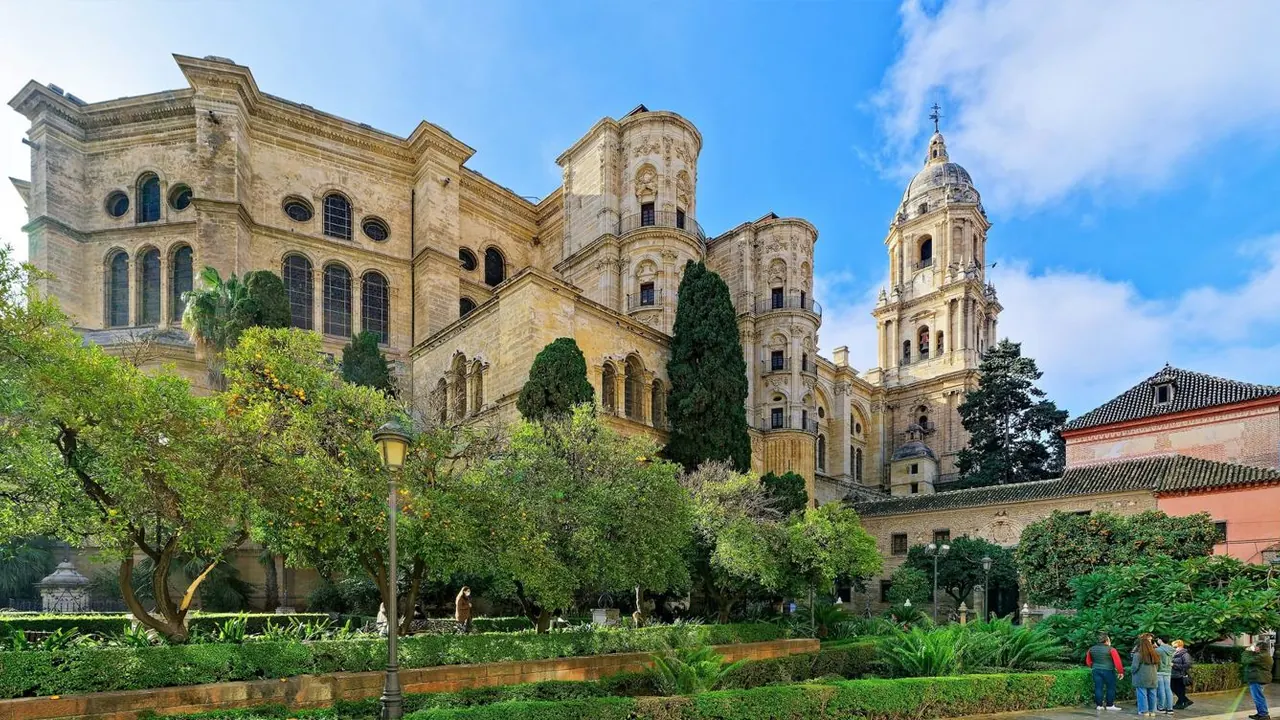
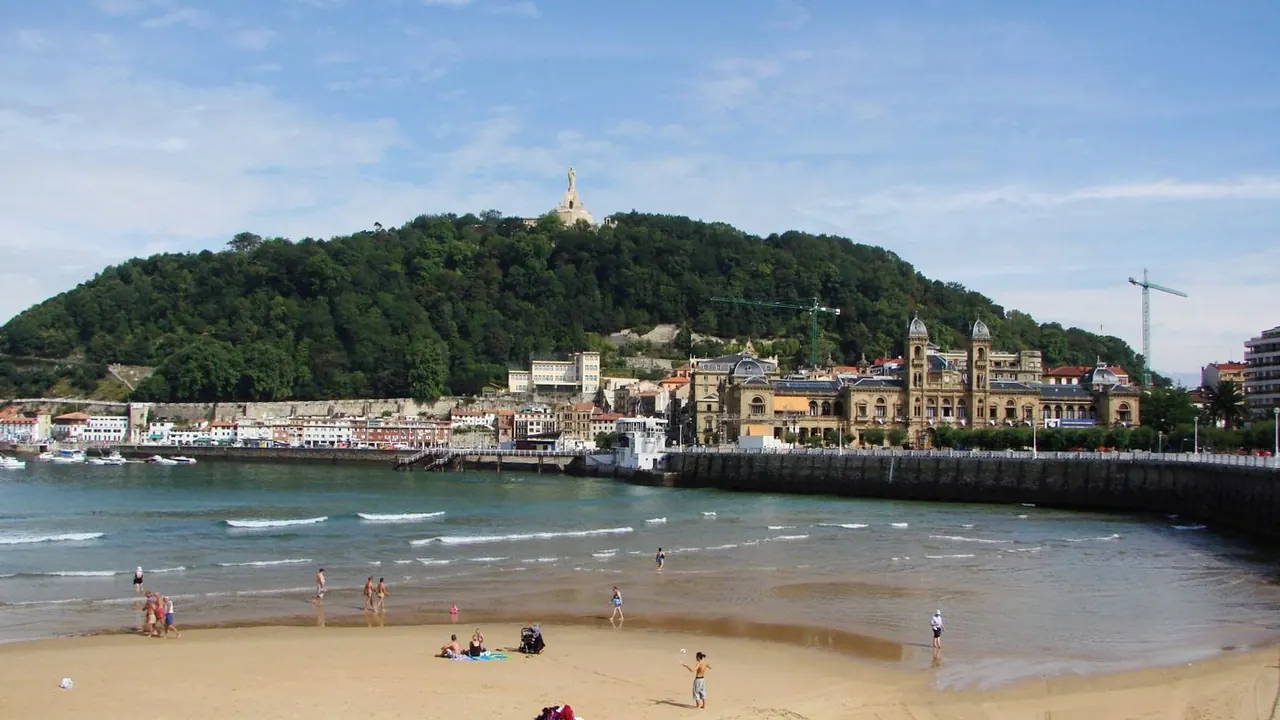
Photos: Malaga by Holger Uwe Schmitt, CC BY-SA 4.0, cropped; San Sebastian by Guérin Nicolas, CC BY-SA 3.0, cropped.
Malaga or San Sebastian?
Our verdict in twelve categories, each scored against the same fixed benchmark cities, and the climate month by month, so you can choose for your trip.
Choose Malaga for
- prices
- nightlife
- shopping
Malaga suits travellers who want sun, a long beach season and plenty to see. Its Moorish fortress, Picasso museums and late Andalusian nights fill a city stay, and fast trains put Granada, Cordoba and Seville within reach. It is also the cheaper of the two by a clear margin, which matters on a longer trip or with a family.
Choose San Sebastian for
- food and drink
- getting around
- wellness
San Sebastian is the choice for people who travel to eat. The pintxo bars of the Parte Vieja and the celebrated restaurants in the hills make every meal part of the plan. The rest of the city is just as appealing: a beautiful bay you can walk end to end, green coastal paths and the French Basque coast close by. In return you accept rain in any month, a short swimming season and some of the highest hotel bills in Spain.
Scoreboard
Twelve categories on one fixed scale from 0 to 100. The shaded stretch is the gap between the two.
Your match
Pick a travel style or drag the sliders, and both match scores follow your weighting.
Wins on prices and nightlife with your weighting.
Wins on food and drink and getting around with your weighting.
What matters to you?
Category by category
What the scores mean for a trip.
Beaches & swimming
Malaga has the better beach vacation, and the reason is the climate rather than the sand. From La Malagueta east through Pedregalejo and El Palo, its city beaches have months of dependable sun. The Costa del Sol resorts are a short train ride west, and the clear coves at Nerja and Maro are about an hour away. The sand itself is grey-brown and plain.
San Sebastian has the more beautiful city beach. La Concha is a sheltered shell of pale sand in the heart of town, Ondarreta is quieter and Zurriola has Atlantic surf. In August the sea is no colder than Malaga's, but the season is short and summer days can be grey.
Food & drink
Food is where San Sebastian pulls ahead. Bar counters in the Parte Vieja and Gros are covered with pintxos, txakoli is poured from height, La Bretxa market shows off the produce, and a fine-dining scene of national fame sits in the hills. From January to spring the Astigarraga cider houses add another reason to come. The one weakness is that almost everything is Basque.
Malaga eats more simply and costs less. Sardine espetos roasted on the beach, plates of pescaito frito in El Palo and sweet moscatel from the barrel at old bodegas are the pleasures here, along with the counters at the Atarazanas market.
Culture & sights
Malaga has more to see. A Roman theatre sits below the Moorish Alcazaba, Gibralfaro castle stands above, and the unfinished cathedral is in the centre. Picasso's birthplace and museum, the Carmen Thyssen and the Museo de Malaga give it real depth in art.
San Sebastian is more a townscape to enjoy than a list of sights. Its draws are the elegant streets around Buen Pastor, the baroque Santa Maria at the end of the Parte Vieja, the San Telmo Museum and Chillida's Peine del Viento on the rocks at Ondarreta.
Nightlife
Malaga goes out later and has more choice. Dinner starts around ten, and the terraces around Plaza de la Merced and Calle Granada stay full past two on summer weekends. The clubs and gay scene of Torremolinos are a short train ride away.
San Sebastian's evenings start earlier and centre on the pintxo crawl, which is very sociable until late. After that the choice narrows to a few bars and clubs, except in high summer and Semana Grande.
Nature & outdoors
There is as much outdoors in one as the other, but the landscapes are very different. Malaga's country is dry and dramatic and mostly inland: the gorge walkway of the Caminito del Rey, the stacked limestone of El Torcal and the Sierra Nevada, with skiing in winter. In summer the heat means walking at dawn.
San Sebastian's is green and coastal, and it starts from the edge of town. Paths run over Monte Ulia to Pasaia and across Jaizkibel to Hondarribia, and there is surf at Zurriola. Rain is part of the deal in every season.
Day trips
Both are excellent bases, but Malaga reaches more of the great sights. Granada's Alhambra, Cordoba's Mezquita and, at a stretch, Seville are all reachable by train, and Ronda and the Antequera dolmens are closer still.
San Sebastian's strength is being near a border. Bilbao's Guggenheim, Pamplona, walled Hondarribia and the French Basque towns of Biarritz and Saint-Jean-de-Luz are all easy outings, and the Rioja Alavesa vineyards are under two hours away.
Good for families
Both are easy with children, and in both they are welcome in the squares late into the evening. The difference is where the attractions are. Malaga's are along the coast, including the Bioparc, Sea Life and Selwo, so a family stay mixes beach days with train trips, and July and August can be too hot.
San Sebastian keeps its attractions in town: the harbour aquarium, the Eureka science museum and the funicular to the funfair on Monte Igueldo. But a run of rainy days can rule out the beach.
Getting around
San Sebastian is easier to get around. The Parte Vieja, La Concha, Gros and Zurriola are all linked by a flat promenade with bike lanes, and the Euskotren runs to the French border.
Malaga's pedestrianised centre is also compact, and the train to the airport takes about ten minutes. Many of its best outings, though, such as the white villages, El Torcal and the Caminito del Rey, are much easier with a car.
Shopping & style
Malaga offers more. Calle Larios has the main chains on polished marble, El Corte Ingles is across the river, Muelle Uno lines the port, and Puerto Banus has luxury labels an hour away.
San Sebastian is smaller in scale. Its best buys are boutiques in the Centro and Basque goods such as espadrilles, berets, Idiazabal cheese and tinned anchovies.
Affordability
Malaga is the far cheaper stay. Eating, drinking and local transport are reasonably priced, and the main expense is a room near the old town or the beach in high season.
San Sebastian is among the most expensive places to stay in Spain, as hotels are scarce and summer pushes rates to the levels of big capitals. Its famous restaurants are a splurge, so the free beaches and walks matter more here.
Live music & performing arts
The two are level, but what they offer is different. In Malaga, flamenco is the thing to see, best in the peñas where locals perform for each other. The Teatro Cervantes covers concerts and drama, and Semana Santa fills the streets with brass bands.
San Sebastian's music is focused on summer festivals: Jazzaldia in July, with free concerts on Zurriola beach, and the Quincena Musical's orchestral and opera season in August, mostly at the Kursaal.
Wellness & relaxation
San Sebastian is slightly ahead for relaxation, thanks to its history as a royal seaside resort. The old bathing pavilion on La Concha is a seawater spa looking straight onto the bay, and the city's calm, orderly pace adds to the rest.
Malaga has an Arab-style bathhouse in the old town and resort spas towards Marbella. Its best restorative trick is a sunny winter of long lunches and evening strolls along the Paseo Maritimo.
When should you go?
Pick your month. The climate figures are measured averages, not a forecast.
Malaga in July
San Sebastian in July
Daytime high, °C
Rainfall in the month, mm
Where the figures come from
San Sebastian's station stands 252 m above the city centre, so the centre is likely a little warmer than the figures say.
Temperature and rainfall are climate normals, averaged over the years shown. Malaga: 1991-2020 normals, Malaga / Aeropuerto (8.2 km from centre). San Sebastian: 1991-2020 normals, San Sebastian / Igueldo (6.1 km from centre).
Malaga is dry from May to September, and the sea is warm enough for swimming from June into October. July and August are hot, with highs around 32°C, so in those months you sightsee early and late and rest through the afternoon. October brings the first real rain, and the wetter months run on until March. Winter stays mild at about 17°C and is often sunny, though, which makes November to April good for walking the old town and hiking inland.
San Sebastian has a much shorter warm season. Only July and August are reliable for the beach, with highs near 23°C and the sea at much the same temperature as Malaga's. It rains in every month, most heavily in November, at about 203mm. Winters are cool, grey and wet, and Malaga gets far more sunshine all year. The Basque city is at its best from June to September, when walking and eating outdoors are most pleasant. Malaga is at its best either side of high summer.
Which traveller are you?
For a beach and sun trip, Malaga is the clear pick. Its city beaches run from La Malagueta to El Palo, the Costa del Sol resorts are a train ride away and you can swim from June to October, while San Sebastian's swimming season is short and often grey.
On a trip on a tight budget, Malaga makes your money last much longer. Tapas, fried fish, local trains and many sights cost little. San Sebastian is among Spain's most expensive places to sleep, and a long pintxo crawl soon adds up.
For a food and nightlife trip, San Sebastian wins at the table, with pintxo bars, txakoli, cider houses and some of Spain's most celebrated restaurants. If your evenings should run on past midnight, though, Malaga's terraces and Torremolinos clubs keep going much later.
Before you go
| Measure | Malaga | San Sebastian |
|---|---|---|
| Official language | Spanish | Spanish |
| Currency | Euro (EUR) | Euro (EUR) |
| Sockets | CF230 V, 50 Hz | CF230 V, 50 Hz |
| Driving side | Right | Right |
| Time zone | UTC+1, UTC+2 in summer | UTC+1, UTC+2 in summer |
| Emergency number | 112 | 112 |
| Elevation | 18 m | 6 m |
| Main airport | Málaga-Costa del Sol Airport (AGP)8 km from centre166 non-stop destinations | San Sebastián Airport (EAS)16 km from centre11 non-stop destinations |
| Public holidays this year | 12 days | 13 days |
By the numbers
| Measure | Malaga | San Sebastian |
|---|---|---|
| City population | 599,063 | 189,866 |
| People per km² | 1,517 | 3,118 |
| Museums within 10 km | 32 | 14 |
| UNESCO World Heritage sites within 50 km | 1 | 3 |
| Swim season, months above 21 °C | 3 months | 2 months |
Where else could you go?
Every comparison below shares a destination with this one, so you can follow Malaga or San Sebastian somewhere new.