
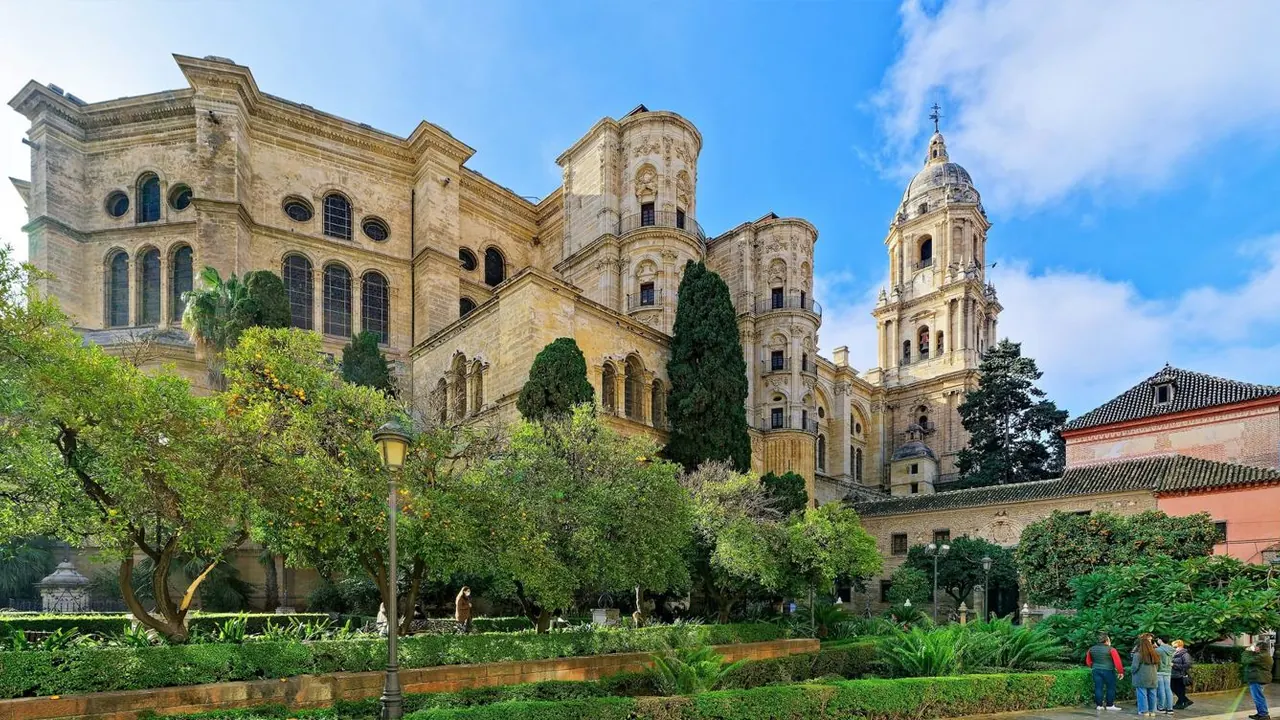
Photos: Lisbon by Riccardo Toso, Pexels License; Malaga by Holger Uwe Schmitt, CC BY-SA 4.0, cropped.
Lisbon or Malaga?
Our verdict in twelve categories, each scored against the same fixed benchmark cities, and the climate month by month, so you can choose for your trip.
Choose Lisbon for
- live music and the arts
- culture and sights
- nightlife
Lisbon is the better choice for a city trip in the full sense. Its monuments run from the Manueline cloisters of Belem to the medieval lanes of Alfama, its museums are deeper, and its evenings are longer and livelier. Fado in the old quarters gives it a musical identity Malaga cannot match, and the tasca cooking and cheap Portuguese wine reward anyone who eats where residents eat. It suits travellers who don't mind steep streets and treat the beach as an extra rather than the point.
Choose Malaga for
- beaches
- families
- wellness
Malaga works better when sun, sea and ease matter most. The beach starts a short walk from the cathedral, the sea is noticeably warmer, and the flat, pedestrianised centre is far kinder to families with pushchairs. It is also a superb base for Andalucia, with Granada, Cordoba and Ronda all within a day's reach. Choose it for a relaxed mix of beach afternoons, tapas and grand day trips rather than a dense run of city sightseeing.
Scoreboard
Twelve categories on one fixed scale from 0 to 100. The shaded stretch is the gap between the two.
Your match
Pick a travel style or drag the sliders, and both match scores follow your weighting.
Too close to call, 1 point apart
Wins on live music and the arts and culture and sights with your weighting.
Wins on beaches and families with your weighting.
What matters to you?
Category by category
What the scores mean for a trip.
Beaches & swimming
Malaga is a genuine beach city and Lisbon is not. In Malaga you walk from the cathedral to La Malagueta, carry on east to the fishing quarters of Pedregalejo and El Palo, or ride the train west to the resorts, and the sea is warm enough for comfortable swimming over five months. The sand is plain, but Nerja's coves are within an hour.
Lisbon's beaches all involve a journey, by train to Carcavelos and Cascais, across the river to Costa da Caparica or by car to the Arrabida coves. The Atlantic stays cool and the swell often favours surfers over swimmers, so a beach day there is a break from sightseeing rather than a reason to come.
Food & drink
Both cities are built around fish, but Lisbon has the broader and more rewarding table. Its tascas turn out bacalhau, grilled fish and daily stews, the seafood beer halls and the custard tart habit add variety, and good Portuguese wine from several regions is poured cheaply almost everywhere.
Malaga's strengths are narrower and more casual: espetos of sardines over beach fires, fried fish in El Palo, tapas crawls around Plaza de la Merced and sweet moscatel from the barrel. It is easy, fair-priced eating, though with fewer serious meals to seek out than in Lisbon's residential neighbourhoods.
Culture & sights
Lisbon has the larger and more varied heritage. Belem's monuments to the age of discovery, the rebuilt Baixa, the castle quarter of Alfama and museums such as the Gulbenkian and the Ancient Art Museum easily fill three or four days.
Malaga's history is concentrated in a small, layered core: the Roman theatre, the Moorish Alcazaba, Gibralfaro and the unfinished cathedral. Picasso is its great draw, with his museum and birthplace, backed by the Carmen Thyssen collection. It is rewarding but done in about two days.
Nightlife
Lisbon gives a much bigger night out. Bairro Alto's street drinking, the later bars of Cais do Sodre, cocktails in Principe Real and riverside warehouse clubs that run until morning offer a clear choice of moods within one city.
Malaga's evenings are pleasant and sociable, with late dinners and terraces around Plaza de la Merced and Calle Granada, but the city's own club scene is small. Proper clubbing and the gay scene mean a train to Torremolinos, or a longer trip to Marbella.
Nature & outdoors
The two are about even for getting outdoors, but the settings differ. Lisbon's is a wild Atlantic coast: Sintra's misty hills, the cliffs at Cabo da Roca, kitesurfing at Guincho, surfing at Ericeira and dolphin trips on the Sado estuary.
Malaga looks inland to real mountains, from the Montes de Malaga on its edge to the Caminito del Rey gorge, the limestone stacks of El Torcal and winter skiing in the Sierra Nevada. Summer heat there pushes walks to the early morning, while Lisbon stays walkable for longer.
Day trips
Lisbon's outings lead to palaces, monasteries and small walled towns. Sintra, about forty minutes away by train, fills a full day with the Pena Palace, the Moorish Castle and the Quinta da Regaleira, while Cascais and Mafra make gentler half days. Further afield, Evora's Roman temple is about an hour and a half away, and the UNESCO monasteries of Alcobaca and Batalha, Tomar's Templar convent and walled Obidos make a longer circuit of heritage towns.
From Malaga the trips are to whole cities. Fast trains put Cordoba's Mezquita about an hour away and Granada's Alhambra about an hour and a half, Seville makes a long day at about two hours, and Ronda's gorge is under two. Closer in, Antequera's dolmens are half an hour off and Nerja pairs easily with Frigiliana, so the choice runs from short afternoons to some of the great monuments of Spain.
Good for families
In both cities children are welcome at the table late into the evening, so the difference lies in what there is to do. Lisbon puts its best attractions in one place: the Oceanario, one of Europe's large aquariums, sits beside the science centre, the riverside gardens and the cable car at Parque das Nacoes, and the trams, funiculars and Santa Justa lift make getting around part of the fun. The catch is the summer crowds on those trams.
Malaga comes out ahead because a whole family stay works there. Children have room to run in the squares and along the palm-lined Paseo del Parque, and older ones enjoy the Alcazaba ramparts and the walk up to Gibralfaro. The Bioparc in Fuengirola and the aquarium at Benalmadena are on the coastal train, but the Selwo safari park near Estepona is a longer trip past the end of the line. July and August are very hot, so late spring and early autumn are easier with children.
Getting around
Both are manageable without a car, but in different ways. Malaga's compact, level centre puts nearly everything within a short walk, and the train reaches the airport in about ten minutes.
Lisbon offers a fuller network of metro, suburban trains, ferries and historic trams, but walking means hills and long stairways, and the trams are slow and crowded. In Malaga you mostly walk. In Lisbon you mix walking with rides to avoid the climbs.
Shopping & style
Lisbon has slightly more character in its shops: azulejo tiles, cork, Burel wool and tinned sardines, along with Chiado's old shops, Principe Real's designers and the Feira da Ladra flea market.
Malaga's shopping is more mainstream, with Spanish chains along Calle Larios and the El Corte Ingles department store. Its best souvenirs are edible, such as olive oil, almonds and sweet wine from the Atarazanas market.
Affordability
Costs are much the same in both cities, with cheap everyday eating and transport set against expensive rooms. In Lisbon the price gap shows between tourist restaurants in Baixa and the tascas a few streets away. In Malaga it shows in the seasons, as rooms near the old town and beach are in heavy demand from spring to autumn and winter is noticeably easier.
Live music & performing arts
Lisbon has the richer stage. Fado heard in Alfama and Mouraria, from polished dinner houses to neighbourhood rooms, is a reason to come in itself, and the Gulbenkian orchestra, the Sao Carlos opera house and the Centro Cultural de Belem add a formal season.
Malaga's answer is flamenco, best heard in the local peñas rather than the tablaos for visitors, plus the Teatro Cervantes and the Philharmonic. Beyond that it is mostly bar stages and summer concerts.
Wellness & relaxation
Neither city is made for a spa trip, but Malaga is a little more restful. It has an Arab-style bathhouse in the old town, resort spas towards Marbella and a sunny, mild winter that suits slow days by the sea.
Lisbon has no bathing tradition to speak of, and its old quarters are noisy and hilly. Rest there means garden shade at the Gulbenkian or Estrela, or sleeping out on the Cascais coast or in the Sintra hills.
When should you go?
Pick your month. The climate figures are measured averages, not a forecast.
Lisbon in July
Malaga in July
Daytime high, °C
Rainfall in the month, mm
Temperature and rainfall are climate normals, averaged over the years shown. Lisbon: 1991-2020 normals, Lisboa / Geof (1.1 km from centre). Malaga: 1991-2020 normals, Malaga / Aeropuerto (8.2 km from centre).
Lisbon is the better city for summer walking. Highs sit around 28°C in July and August, and those months are as sunny as Malaga's, with slightly more sunshine in August. The Atlantic stays cool, never much above 19°C, so beach days are really a June to September affair. Rain sets in from October, and November is the wettest month at about 120mm, which makes late spring and September its most dependable times.
Malaga is warmer in every month. Its winter afternoons stay mild, its winter rain is lighter, and from autumn through to early spring it gets noticeably more sunshine than Lisbon. The sea warms to about 23°C in August, so swimming is comfortable from June well into October. The downside is high summer, when afternoons climb past 30°C and walking the streets is best left to the morning and evening. Spring and autumn are the seasons for sightseeing and day trips.
Which traveller are you?
For a beach and sun trip, Malaga is the clear pick. La Malagueta is walkable from the old town, the Costa del Sol resorts are on the suburban train, and the water is several degrees warmer than Lisbon's Atlantic, with a longer swimming season.
On a culture and arts trip, Lisbon offers more to fill the days. Belem's monastery and tower, the post-earthquake Baixa, the Gulbenkian and the Tile Museum add up to a richer programme, and fado nights in Alfama give the evenings a cultural thread of their own.
On a family trip with young children, Malaga is easier going. The flat, pedestrian centre suits pushchairs, the city beaches shelve gently, and the zoo, aquarium and safari parks along the coast are easy to reach. Lisbon's hills and slippery stone pavements make every outing more effort.
Before you go
| Measure | Lisbon | Malaga |
|---|---|---|
| Official language | Portuguese | Spanish |
| Currency | Euro (EUR) | Euro (EUR) |
| Sockets | CF230 V, 50 Hz | CF230 V, 50 Hz |
| Driving side | Right | Right |
| Time zone | UTC, UTC+1 in summer | UTC+1, UTC+2 in summer |
| Emergency number | 112 | 112 |
| Elevation | 100 m | 18 m |
| Main airport | Lisbon Humberto Delgado Airport (LIS)7 km from centre156 non-stop destinations | Málaga-Costa del Sol Airport (AGP)8 km from centre166 non-stop destinations |
| Public holidays this year | 14 days | 12 days |
By the numbers
| Measure | Lisbon | Malaga |
|---|---|---|
| City population | 545,796 | 599,063 |
| People per km² | 5,453 | 1,517 |
| Museums within 10 km | 80 | 32 |
| UNESCO World Heritage sites within 50 km | 3 | 1 |
| Swim season, months above 21 °C | None | 3 months |
Where else could you go?
Every comparison below shares a destination with this one, so you can follow Lisbon or Malaga somewhere new.