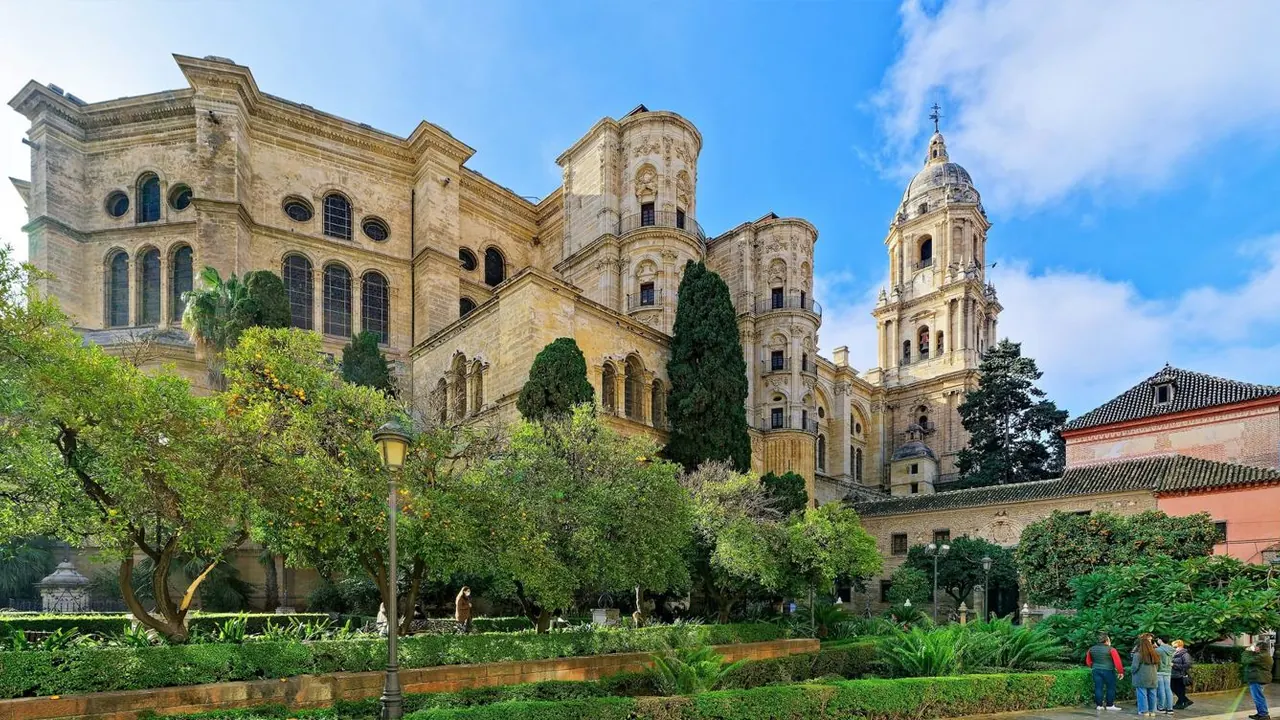
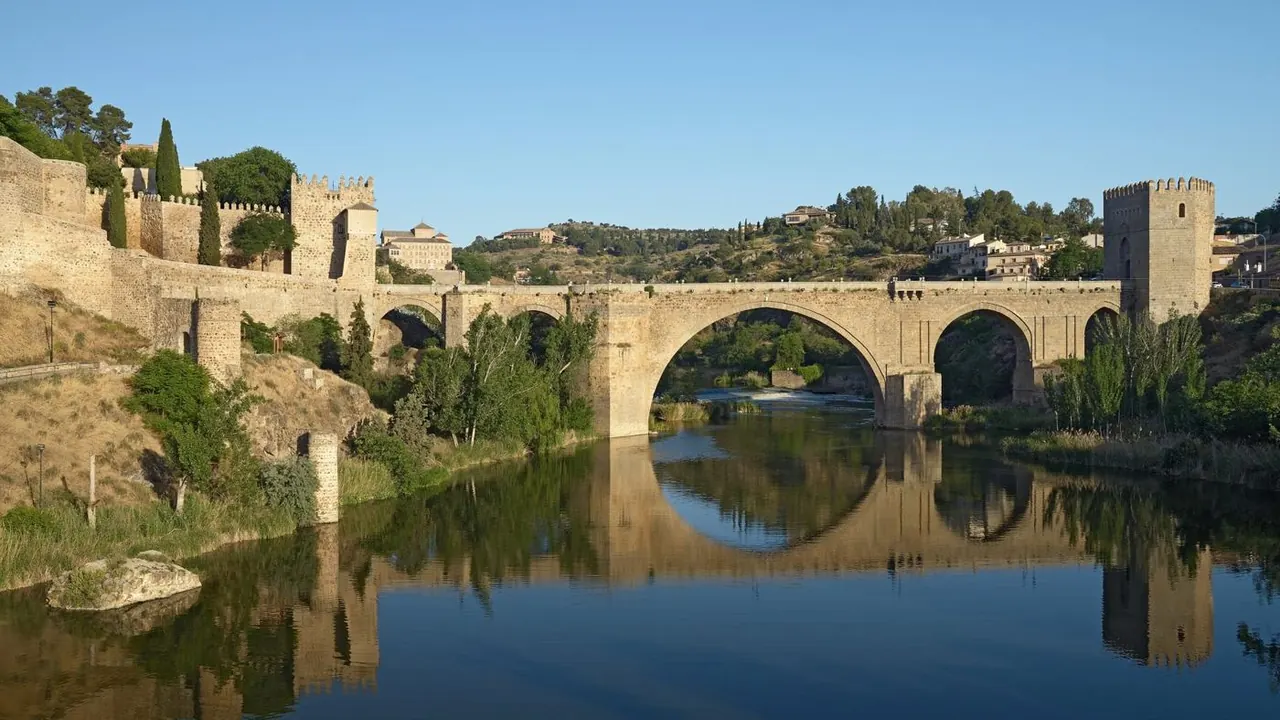
Photos: Malaga by Holger Uwe Schmitt, CC BY-SA 4.0, cropped; Toledo by Ввласенко, CC BY-SA 3.0, cropped.
Malaga or Toledo?
Our verdict in twelve categories, each scored against the same fixed benchmark cities, and the climate month by month, so you can choose for your trip.
Choose Malaga for
- beaches
- nightlife
- nature and the outdoors
Malaga is the better choice for a trip that mixes several things at once. You get a city beach a short walk from the cathedral, tapas and fried fish late into the evening, hills to walk behind the town, and fast trains to Granada, Cordoba and Ronda. It suits travellers who want sun and sea with a compact historic centre, families who need easy pavements and calm water, and anyone planning a longer stay with plenty of variety.
Choose Toledo for
- culture and sights
- prices
Toledo is for travellers who come mainly for history and are happy to give up the sea and the late nights to get it. The whole hilltop old town is the attraction: a great Gothic cathedral, synagogues, a small mosque and El Greco's paintings, all within a short walk inside one loop of the Tagus. It works best as two or three unhurried days, ideally with a night or two after the tour groups leave, and with Madrid half an hour away for everything Toledo lacks.
Scoreboard
Twelve categories on one fixed scale from 0 to 100. The shaded stretch is the gap between the two.
Your match
Pick a travel style or drag the sliders, and both match scores follow your weighting.
Wins on beaches and nightlife with your weighting.
Wins on culture and sights and prices with your weighting.
What matters to you?
Category by category
What the scores mean for a trip.
Beaches & swimming
This is the starkest difference between the two cities. Malaga has a sandy city beach at La Malagueta, a long shore running east through the fishing quarters of Pedregalejo and El Palo, and a string of resort beaches west along the Costa del Sol, all reachable by suburban train. The sand is plain grey-brown, but the clear coves at Nerja and Maro make up for it.
Toledo sits on the dry plateau of La Mancha, several hours from the coast, and the Tagus below its walls is not for swimming. On a hot day the only option is a hotel or municipal pool.
Food & drink
Malaga eats better and with more variety. Its food comes from the sea: sardines roasted on driftwood fires on the beach, plates of small fried fish, and the Atarazanas market with counters where you can eat. Cold ajoblanco in summer and the city's moscatel and Pedro Ximenez wines add their own local character.
Toledo's cooking is the heavier inland food of La Mancha: partridge, venison, wild boar, carcamusas stew and Manchego cheese, followed by convent marzipan. It can be very good, but the choice is narrower and the lanes near the cathedral are full of set menus for day-trippers. You have to look a few streets further out.
Culture & sights
Toledo is the richer destination for sights. Almost the whole hilltop is a monument. The Gothic cathedral has its sacristy of El Grecos and Goyas, and close by are the Cristo de la Luz mosque, the synagogues of Santa María la Blanca and El Tránsito, San Juan de los Reyes, and El Greco's own canvases in Santo Tomé. Few places show Spain's mixed heritage so densely.
Malaga has a fine core of its own, with the Roman theatre, the Moorish Alcazaba, Gibralfaro and the unfinished cathedral. Its strength is in museums, led by the Picasso Museum and the Carmen Thyssen. Each city fills about two days, but Toledo's two days are more packed.
Nightlife
Malaga is clearly the place for going out. After a late dinner the old town fills with people moving between bars around Plaza de la Merced, Calle Granada and Plaza Uncibay, and beach bars at La Malagueta and Pedregalejo keep going on summer weekends. Clubs and the gay scene are a short train ride away in Torremolinos.
In Toledo the evening means a few rounds of tapas near Zocodover. A small student crowd keeps a handful of bars going at weekends, and for a proper night out you take the train to Madrid.
Nature & outdoors
Malaga has far better countryside within reach. The pine forest of the Montes de Malaga starts at the city's edge, the Caminito del Rey gorge walkway and the limestone shapes of El Torcal are about an hour inland, and the Sierras de Tejeda and Almijara offer serious hikes. The Sierra Nevada even adds skiing in winter.
Toledo's best outdoor walk is the path that follows the Tagus gorge around the old town, with views back from the cigarrales on the far bank. Beyond that the land is flat plain, with the low Montes de Toledo and Cabañeros, about two hours away, for deer and birds of prey.
Day trips
Both cities are excellent bases, but Malaga has the more impressive list. Cordoba's Mezquita and Granada's Alhambra are both close by fast train or bus, and Ronda, Antequera's dolmens, Nerja and Frigiliana, and the coast towards Gibraltar fill many more days.
Toledo's great advantage is Madrid, half an hour away by high-speed train, with the Prado and the royal palace. Aranjuez, El Escorial, the windmills of Consuegra and Almagro's theatre follow, but Segovia, Ávila and Cuenca make long days, and much of the list works better with a car.
Good for families
Malaga is much easier with children. The city beaches shelve gently into calm water, the flat pedestrian centre suits a pushchair, and the Bioparc, aquarium and dolphin park are a short train ride along the coast.
Toledo appeals to young imaginations with its swords, armour and the castle-like Alcázar, and the history theme park on the outskirts is a real draw. The steep cobbled lanes and fierce summer afternoons are tiring, though, and a programme of churches and paintings soon wears thin, so a short stay works best.
Getting around
Both centres are small enough to explore on foot, and Malaga's is the more comfortable of the two. It is flat and largely pedestrianised, with the beach, museums and port all a short walk apart, and a suburban train reaches the airport in about ten minutes. Only the climb to Gibralfaro takes effort.
Toledo can be crossed in twenty minutes, but every walk goes up and down narrow, twisting cobbled lanes. Public escalators help on arrival, and the station sits across the river below the hill.
Shopping & style
Malaga has the better range, with high-street chains along the marble-paved Calle Larios, a national department store, the port promenade at Muelle Uno, and Puerto Banus within reach for luxury.
Toledo's shopping is narrower but more particular to the city: damascene gold-on-steel work, Toledo blades, convent marzipan and Talavera ceramics. Look for the workshops that make their own pieces, because the streets near the cathedral are full of souvenir stock.
Affordability
Overall costs are much the same, but the money goes on different things. In Malaga, eating, drinking and local trains are cheap and many sights cost little to enter, while rooms near the old town and the beach are the expensive part for much of the year.
In Toledo a free tapa often comes with each drink and the set lunches away from the cathedral are good value, but the cathedral, synagogues and El Greco sites each charge for entry, so a day of sightseeing adds up.
Live music & performing arts
Malaga offers more on an ordinary evening. The Teatro Cervantes hosts the Malaga Philharmonic, touring drama and dance, and flamenco can be seen both in tablaos for visitors and in the more genuine peñas.
Toledo's Teatro de Rojas has a modest regional programme, and organ or choral music sometimes fills the churches. Its standout occasion is Corpus Christi, when streets hung with tapestries frame the procession of the cathedral's monstrance.
Wellness & relaxation
Neither city is built for a spa vacation, though Malaga is the easier place to slow down. Alongside its Arab-style bathhouse there are resort spas and golf hotels towards Marbella, plus the mild, sunny winters and evening strolls along the Paseo Maritimo.
Toledo has a few bath houses and hotel spas, but its real calm comes in the early morning and the evening, when the tour groups have left and the terraces over the Tagus fall quiet.
When should you go?
Pick your month. The climate figures are measured averages, not a forecast.
Malaga in July
Toledo in July
Daytime high, °C
Rainfall in the month, mm
Temperature and rainfall are climate normals, averaged over the years shown. Malaga: 1991-2020 normals, Malaga / Aeropuerto (8.2 km from centre). Toledo: 1991-2020 normals, Toledo (2.3 km from centre).
Malaga has the gentler year. The sea is warm enough for swimming from June to October and is at its warmest in August, at about 23°C. Summer brings almost no rain and long sunny days, but August highs of about 32°C push sightseeing into the mornings and evenings. Spring and autumn are the best seasons for combining the beach with walking. Winter stays mild and fairly sunny, though November and December are the wettest months, with about 88mm in December.
Toledo, high on the inland plateau, has bigger swings. July and August reach about 35°C, which makes the steep lanes hard going in the afternoon, and winter highs drop to around 12°C, noticeably colder than on the coast. Rain is light all year and heaviest in October. The months to aim for are April to early June and late September to October, when the old town is comfortable to walk all day. Malaga, by contrast, still works well in winter.
Which traveller are you?
For a beach and sun trip, Malaga wins easily. La Malagueta is a walk from the old town, the suburban train runs west to the Costa del Sol resorts, and the coves at Nerja are an hour away. Toledo is hours from any sea.
On a culture and arts trip focused on great monuments, Toledo is the stronger choice. Its old town holds Spain's layered Roman, Islamic, Jewish and Christian past, with the cathedral, synagogues and El Greco's work all close together on one hill.
On a food and nightlife trip, Malaga has much more to offer. You can eat espetos and fried fish in El Palo, sip sweet wine from the barrel, and join crowded terraces around Plaza de la Merced until late. Toledo goes quiet once the day-trippers have gone.
Before you go
| Measure | Malaga | Toledo |
|---|---|---|
| Official language | Spanish | Spanish |
| Currency | Euro (EUR) | Euro (EUR) |
| Sockets | CF230 V, 50 Hz | CF230 V, 50 Hz |
| Driving side | Right | Right |
| Time zone | UTC+1, UTC+2 in summer | UTC+1, UTC+2 in summer |
| Emergency number | 112 | 112 |
| Elevation | 18 m | 523 m |
| Main airport | Málaga-Costa del Sol Airport (AGP)8 km from centre166 non-stop destinations | Adolfo Suárez Madrid–Barajas Airport (MAD)80 km from centre239 non-stop destinations |
| Public holidays this year | 12 days | 13 days |
By the numbers
| Measure | Malaga | Toledo |
|---|---|---|
| City population | 599,063 | 87,216 |
| People per km² | 1,517 | 376 |
| Museums within 10 km | 32 | 13 |
| UNESCO World Heritage sites within 50 km | 1 | 2 |
| Swim season, months above 21 °C | 3 months | - |
Where else could you go?
Every comparison below shares a destination with this one, so you can follow Malaga or Toledo somewhere new.