Photos: Malaga by Holger Uwe Schmitt, CC BY-SA 4.0, cropped; Segovia by Bernard Gagnon, CC BY-SA 3.0, cropped.
Malaga or Segovia?
Our verdict in twelve categories, each scored against the same fixed benchmark cities, and the climate month by month, so you can choose for your trip.
Choose Malaga for
- beaches
- nightlife
- shopping
Choose Malaga for a longer, mixed trip. The beach is a short walk from the cathedral, and tapas and grilled sardines run late into the night. Children are welcome everywhere, and fast trains reach Cordoba and Granada for the great Moorish monuments. It works as a base for a week or more, in almost any season.
Choose Segovia for
- culture and sights
- prices
Segovia suits travellers who want one remarkable old town, seen slowly. The aqueduct, the Alcázar and the Romanesque churches pack in more striking monuments than Malaga's core, and a lunch of roast suckling pig is a reason to go in itself. It is right for a few quiet days or a stop on the way from Madrid, with the Guadarrama for walking, but not for anyone who wants the sea, late nights or shops.
Scoreboard
Twelve categories on one fixed scale from 0 to 100. The shaded stretch is the gap between the two.
Your match
Pick a travel style or drag the sliders, and both match scores follow your weighting.
Wins on beaches and nightlife with your weighting.
Wins on culture and sights and prices with your weighting.
What matters to you?
Category by category
What the scores mean for a trip.
Beaches & swimming
Malaga has a city beach within walking distance of the cathedral at La Malagueta. The old fishing quarters of Pedregalejo and El Palo lie further east, and the resort strip of Torremolinos, Benalmadena and Fuengirola is on the suburban train. The sand is plain grey-brown and the Alboran Sea runs cool, but swimming is easy from June to October, and Nerja's coves are an hour away for clearer water.
Segovia sits on the Castilian plateau, with no coast within reach for a day out. A swim there means a pool or a cold reservoir in the Guadarrama foothills, so anyone who wants time by the sea should plan it for another part of the trip.
Food & drink
Malaga has the wider table. You can eat sardine espetos grilled on the beach, plates of fried fish in El Palo, tapas in the lanes around Plaza de la Merced, counter food at the Atarazanas market, and sweet moscatel poured from the barrel at old bodegas. Most of it is casual grazing, easy to try in many small rounds.
Segovia is built around one great meal: roast suckling pig or milk-fed lamb from a wood-fired oven, with judiones beans and ponche segoviano alongside. That lunch is worth the journey, but beyond the roasts the choice narrows quickly, and international cooking and fine dining are hard to find.
Culture & sights
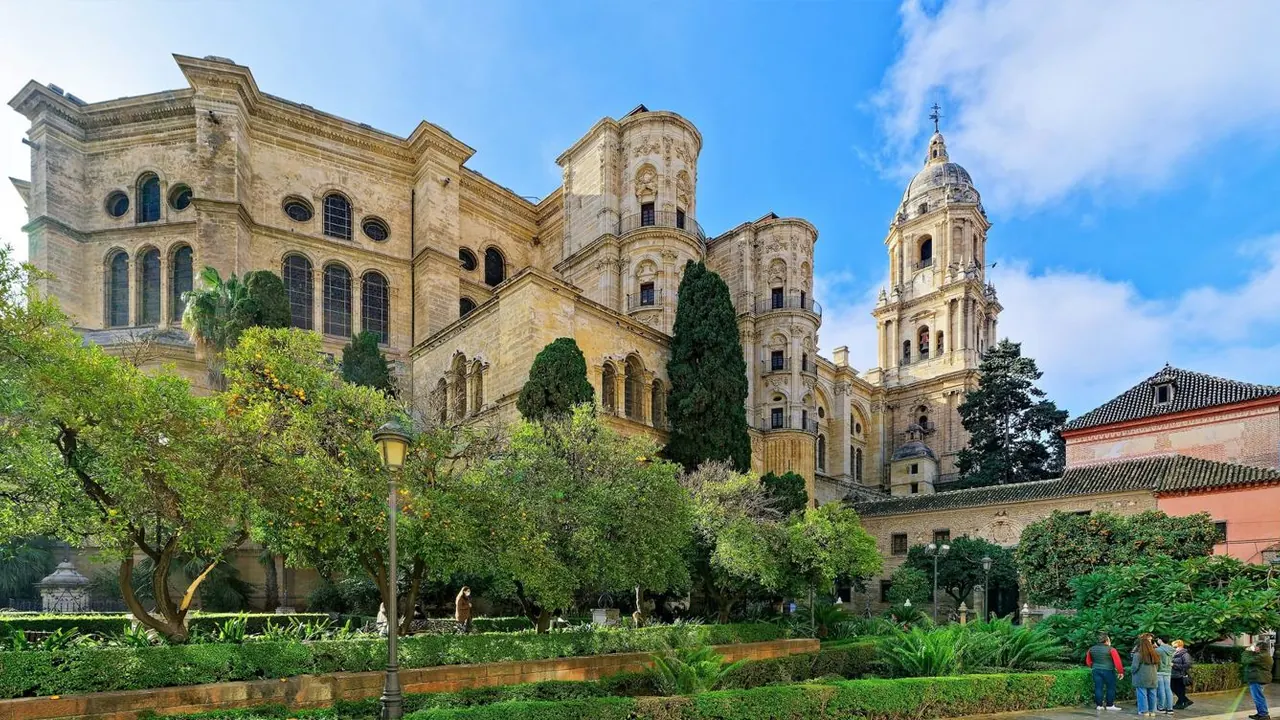
Malaga's history is layered into a small core: a Roman theatre, the Moorish Alcazaba climbing to Gibralfaro, and the unfinished cathedral. Much of its appeal is indoors, in the Picasso Museum, the Carmen Thyssen and the Museo de Malaga.
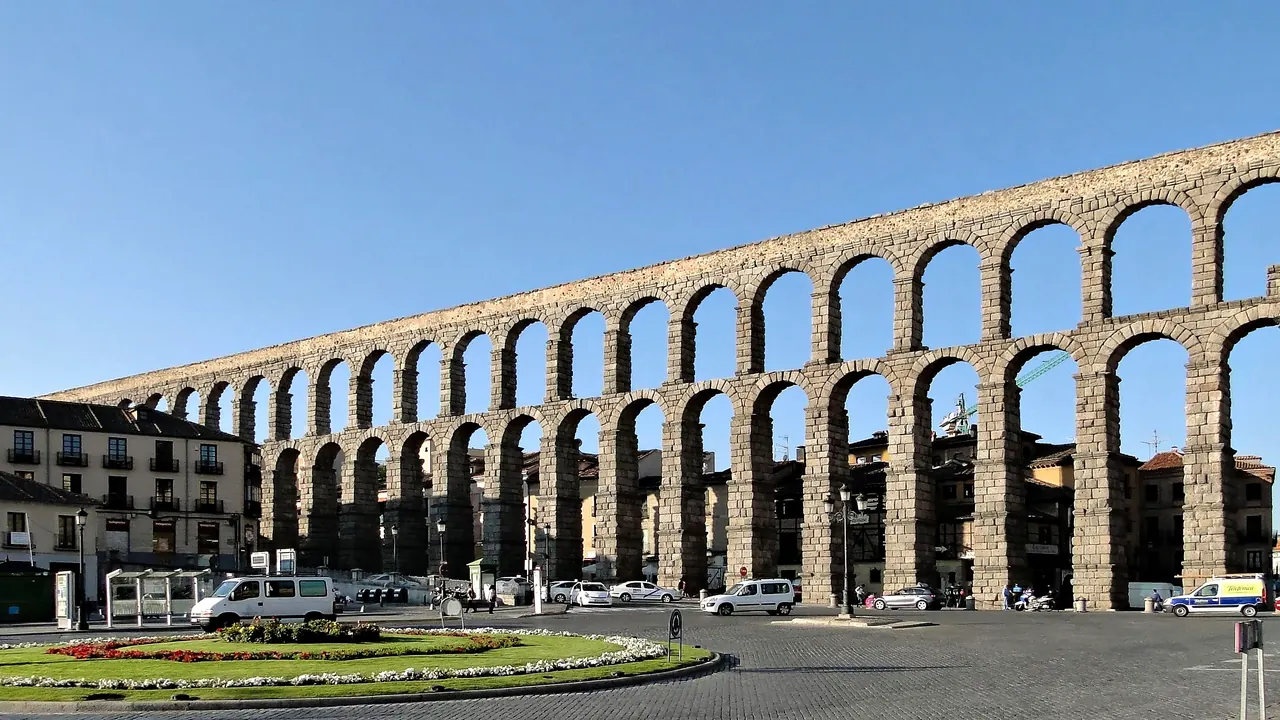
Segovia goes further on monuments, which matter more here than its modest museums. The mortarless arches of the Roman aqueduct, the late Gothic cathedral, the Alcázar on its cliff, a run of Romanesque churches and the twelve-sided Vera Cruz all fit inside a UNESCO-listed old town on one ridge. For a sightseer, it is the more memorable of the two.
Nightlife
Malaga stays up late. Dinner starts after ten, then people move between terraces and small bars around Plaza de la Merced and Calle Granada, the beach bars of La Malagueta keep going, and the clubs and gay scene of Torremolinos are a short train ride away.
Segovia's evenings are a tapas round on Plaza Mayor and a few student bars at weekends. On winter weeknights the old town goes quiet early, and for a big night out people head to Madrid.
Nature & outdoors
Both cities have mountains on the doorstep, but of different kinds. Malaga's outdoors are Mediterranean and varied: the pine-covered Montes de Malaga behind the city, the Caminito del Rey gorge walkway, El Torcal's stacked limestone, and kayaking and snorkelling off the Maro cliffs, with summer heat pushing walks to dawn.
Segovia's are alpine. In the Guadarrama there are Valsaín's Scots pines, the passes of Navacerrada and Cotos, and trails up to Peñalara's glacial lakes, and vultures circle the Hoces del Duratón further out. The high ground offers cooler walking in summer and snow close by in winter.
Day trips
From Malaga you can reach three of Spain's great cities. Cordoba's Mezquita is about an hour away by fast train, Granada's Alhambra a little further, and Seville is possible at a stretch. Ronda, the Antequera dolmens and Nerja with Frigiliana are closer.
Segovia is a strong base too, with La Granja twenty minutes away, Madrid under half an hour by high-speed train and Ávila about an hour. Its finest outings, though, such as Pedraza, Sepúlveda and Peñafiel castle, depend on a car, while more of Malaga's longer list works by rail.
Good for families
Malaga suits children better. The city beaches shelve gently, the flat pedestrian centre is easy with a pushchair, and the Bioparc, Sea Life and Selwo parks are along the coast by suburban train.
Segovia has a real storybook castle in the Alcázar, and the aqueduct impresses children too, but there is no zoo or aquarium, and the steep cobbles are hard work with a pushchair. A day or two there with children works well. A full week asks more of them.
Getting around
Both centres are best on foot, but Malaga's is flat, and its suburban train links the airport, the centre and the coast in minutes, with fast trains on to Cordoba, Seville and Madrid.
Segovia's sights run along one ridge that you can walk in a morning, though the cobbles climb steeply and the high-speed station is about fifteen minutes out by bus. In both places a car is what opens up the villages and trailheads.
Shopping & style
For anything beyond souvenirs, the shops are in Malaga. Marble-paved Calle Larios runs from the port to Plaza de la Constitucion, lined with Spanish chains. El Corte Ingles is across the river, Muelle Uno has shops along the port and Soho has a few independents among the street art. For luxury, Puerto Banus is an hour west.
Segovia offers souvenirs on Calle Real, some local ceramics and embroidery, and little else, so anyone after clothes or design ends up heading to Madrid. Both cities are good for edible gifts, from olive oil and sweet wine at the Atarazanas market to boxed ponche segoviano and La Granja beans.
Affordability
Overall costs come out much the same, but they fall in different places. In Malaga, eating and drinking are the bargain and the room is the expense, especially near the old town and the beach from spring to autumn.
In Segovia it works the other way round. Small family-run hotels keep rooms modest, while the famous roast in a dining room by the aqueduct is the splurge. Both cities are cheaper in winter, and Segovia is also cheaper midweek, when the visitors from Madrid have gone home.
Live music & performing arts
Malaga has more going on through the year. The Teatro Cervantes hosts the Malaga Philharmonic, a second large theatre puts on musicals, and flamenco is performed both in tablaos and in the peñas where locals play for each other.
Segovia's stage life comes in seasons: the Titirimundi puppet festival in spring, summer concerts in churches and palace gardens, and the Teatro Juan Bravo in between. Neither city suits anyone looking for a serious opera season.
Wellness & relaxation
An Arab-style bathhouse in Malaga's old town, with warm pools, steam and massage under brick arches, gives it the only real bathing experience of the two cities. The larger resort and golf spas towards Marbella add more. Segovia has no bathing tradition and only a handful of hotel spas.
In both cities the rest comes more from the pace than from the facilities. In Malaga that means a siesta through the hottest hours and evening walks along the Paseo Maritimo, at their best in the mild, sunny winter. In Segovia it means the hush of the old town once the coaches leave, walks along the walls and pine-scented air from the sierra.
When should you go?
Pick your month. The climate figures are measured averages, not a forecast.
Malaga in July
Segovia in July
Daytime high, °C
Rainfall in the month, mm
Temperature and rainfall are climate normals, averaged over the years shown. Malaga: 1991-2020 normals, Malaga / Aeropuerto (8.2 km from centre). Segovia: 1991-2020 normals, Segovia (0.3 km from centre).
Malaga is a city for the whole year. Summer is dry and hot, peaking at 32°C in August, which makes it beach weather rather than sightseeing weather. The sea is warm enough to swim in from June to October and reaches 23°C at its warmest. Spring and autumn are the best seasons for the streets and the hills. Winter stays mild at around 17°C by day and is still sunny, though rain sets in from October and November and December are the wettest months.
Segovia's climate is harsher. In winter the daytime high is about 8°C, which makes long hours outdoors cold work. July and August reach 30°C, though the air is dry. May to June and September to October are the most comfortable months for walking the ridge and the sierra, but May and October are also the rainiest. The difference between the two is sharpest in winter, when Malaga is at its gentlest and Segovia at its bleakest.
Which traveller are you?
For a beach and sun trip, Malaga is the only real option of the two. La Malagueta is a walk from the old town, resort beaches line the coast on the suburban train, and Segovia's nearest swim is a chilly mountain reservoir.
For a food and nightlife trip, Malaga wins as well. There are sardine espetos on the sand, fried fish in El Palo, tapas lanes that fill after a late dinner, and clubs a train ride away. Segovia has a superb roast lunch but quiet evenings.
For a short city break, Segovia fits neatly. Its aqueduct, cathedral, Alcázar and Romanesque churches line one walkable ridge and can be seen in a day or two, and Madrid is under half an hour away by high-speed train.
Before you go
| Measure | Malaga | Segovia |
|---|---|---|
| Official language | Spanish | Spanish |
| Currency | Euro (EUR) | Euro (EUR) |
| Sockets | CF230 V, 50 Hz | CF230 V, 50 Hz |
| Driving side | Right | Right |
| Time zone | UTC+1, UTC+2 in summer | UTC+1, UTC+2 in summer |
| Emergency number | 112 | 112 |
| Elevation | 18 m | 1,002 m |
| Main airport | Málaga-Costa del Sol Airport (AGP)8 km from centre165 non-stop destinations | Adolfo Suárez Madrid–Barajas Airport (MAD)68 km from centre241 non-stop destinations |
| Public holidays this year | 12 days | 12 days |
By the numbers
| Measure | Malaga | Segovia |
|---|---|---|
| City population | 599,063 | 52,375 |
| People per km² | 1,517 | 320 |
| Museums within 10 km | 32 | 11 |
| UNESCO World Heritage sites within 50 km | 1 | 2 |
| Swim season, months above 21 °C | 3 months | - |
Where else could you go?
Every comparison below shares a destination with this one, so you can follow Malaga or Segovia somewhere new.