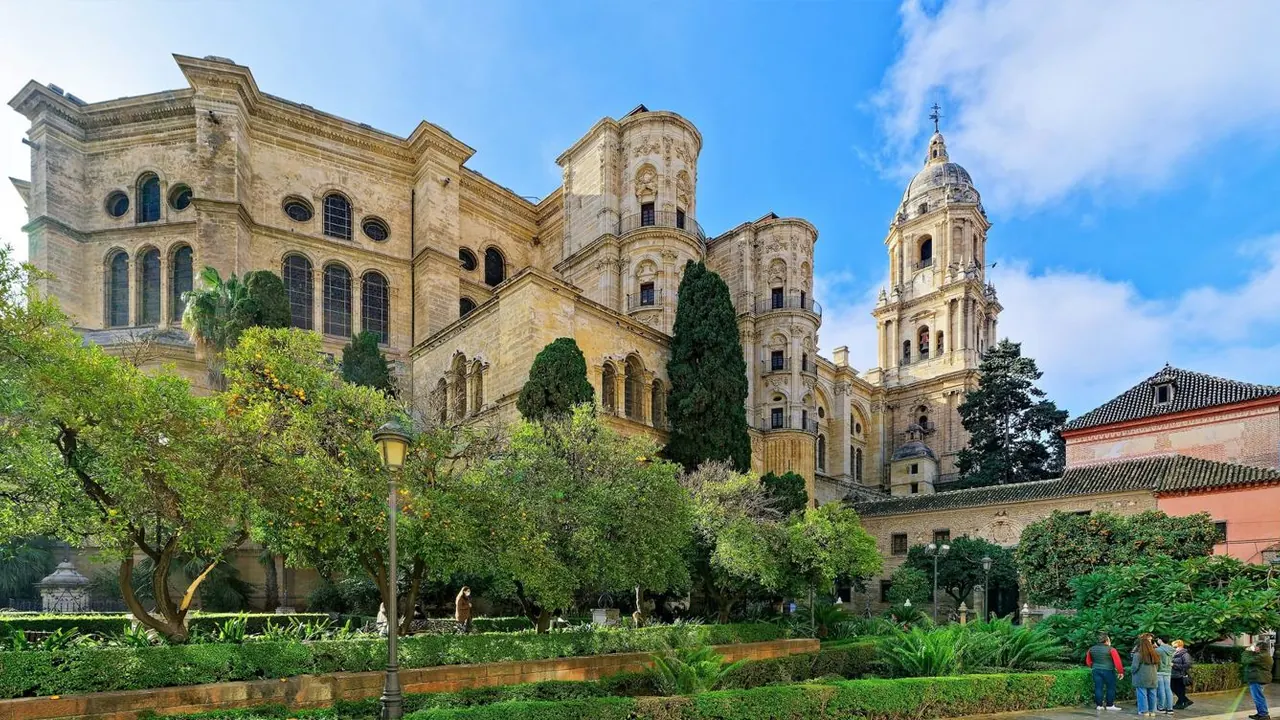
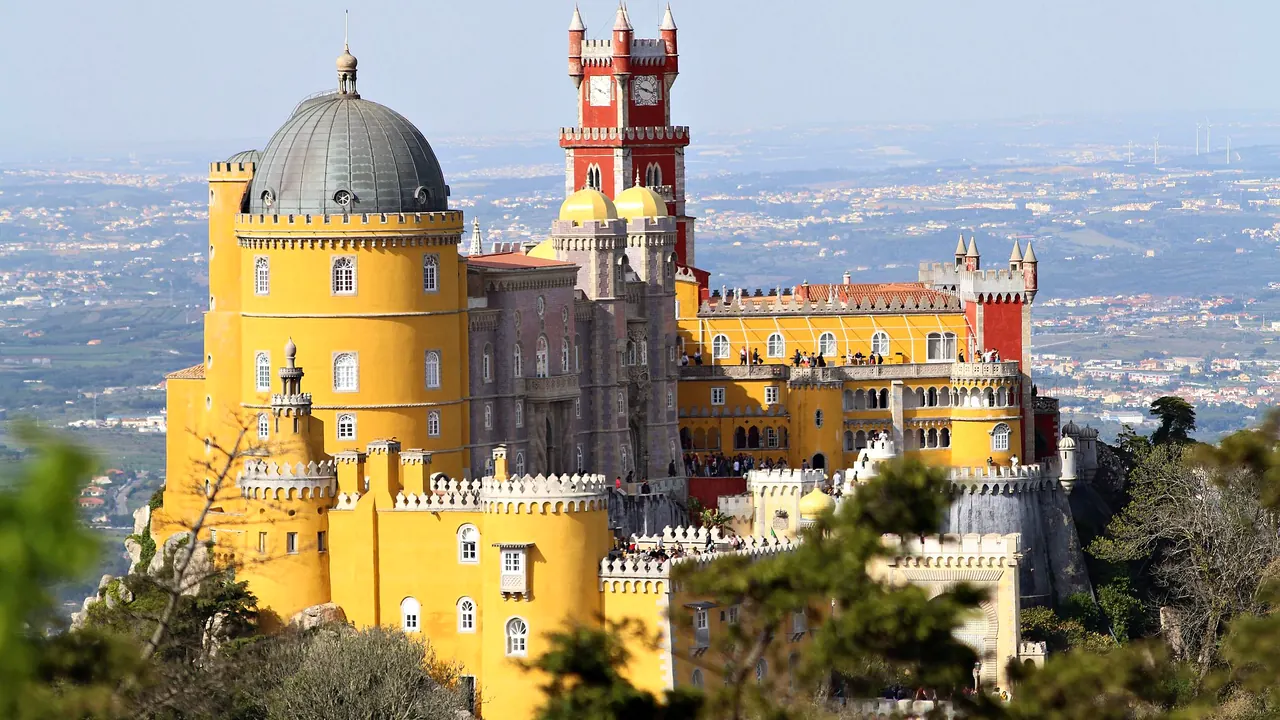
Photos: Malaga by Holger Uwe Schmitt, CC BY-SA 4.0, cropped; Sintra by Chabe01, CC BY-SA 4.0, cropped.
Malaga or Sintra?
Our verdict in twelve categories, each scored against the same fixed benchmark cities, and the climate month by month, so you can choose for your trip.
Choose Malaga for
- nightlife
- beaches
- food and drink
Malaga suits a trip that mixes city and sea. You get beach afternoons a short walk from the cathedral, tapas and fried fish late into the evening, and an old town that stays lively after dark. Families, and anyone who wants to eat well and stay out late, will find far more to do here. Fast trains to Granada and Cordoba make the days out easy.
Choose Sintra for
- culture and sights
- nature and the outdoors
Sintra is the choice for travellers who come for palaces, gardens and forest walks and are happy with quiet evenings. For sheer spectacle its hilltop castles and romantic estates outshine Malaga's sights, and the misty hills stay cool in summer. The trade-off is simple meals, a cold Atlantic and a train to Lisbon for any night out.
Scoreboard
Twelve categories on one fixed scale from 0 to 100. The shaded stretch is the gap between the two.
Your match
Pick a travel style or drag the sliders, and both match scores follow your weighting.
Wins on nightlife and beaches with your weighting.
Wins on culture and sights and nature and the outdoors with your weighting.
What matters to you?
Category by category
What the scores mean for a trip.
Beaches & swimming
Malaga is a real beach city. The grey-brown sand of La Malagueta starts a short walk from the centre, the shore runs east to the old fishing quarters of Pedregalejo and El Palo, and the suburban train reaches the resort beaches of the Costa del Sol. The Alboran Sea is comfortable for swimming from June to October, and Nerja's coves have clearer water.
Sintra's beaches are wilder and further away, about 20 minutes over the hills. Praia Grande and Praia da Adraga are handsome, but the Atlantic stays cold, the surf is often heavy and fog can roll in. They make an afternoon out from the palaces rather than days of swimming.
Food & drink
Eating is a large part of a stay in Malaga. There are sardine espetos and fried fish by the sea, tapas in the old-town lanes, the Atarazanas market, and sweet moscatel wine poured from the barrel at old bodegas. Prices are fair and there is plenty of choice.
Sintra's best food is its pastry: the almond-filled travesseiro and the queijada tart, eaten warm in the old town. Restaurants in the centre cater mainly to day-trippers, so the better meals are grilled fish in Azenhas do Mar and Praia das Maçãs. For anything ambitious you have to go to Lisbon.
Culture & sights
Sintra packs more into a smaller space. Pena Palace on its peak, the ramparts of the Moorish Castle, the tiled rooms and great chimneys of the National Palace and the grottoes of Quinta da Regaleira all share one UNESCO-listed landscape of hills and gardens. It is a place for wandering through romantic architecture rather than galleries.
Malaga's strength is its museums, which Sintra largely lacks. The Picasso Museum, the Carmen Thyssen and the Museo de Malaga sit close to the Alcazaba and a Roman theatre. It is a fine set for two days, but less extraordinary as a whole than Sintra's palaces.
Nightlife
There is no real contest here. Malaga eats late and then fills the old town around Plaza de la Merced and Calle Granada with people moving between terraces and bars until the small hours. Beach bars along La Malagueta stay open late, and bigger clubs are a train ride away in Torremolinos.
Sintra empties when the last trains leave for Lisbon. A few wine bars and terraces stay open into the evening, but a night out means taking the train into the capital, about forty minutes away, and planning how to get back.
Nature & outdoors
Both have green hills on the doorstep, but of different kinds. Malaga's outdoors is dry Mediterranean country spread over a wider area. There is the pine forest of the Montes de Malaga behind the city, the Caminito del Rey gorge walkway and El Torcal's limestone an hour inland, and the Sierra Nevada for winter skiing. Summer heat pushes walks into the early morning.
Sintra's outdoors is close at hand and damp: a mossy forest of oak, cork and ferns on a granite ridge, with trails from the town to Cruz Alta and Peninha and cliff paths out to Cabo da Roca. The hills are lower, but the cool microclimate keeps walking pleasant even in high summer, and Praia Grande adds surfing.
Day trips
Both are excellent bases, and the difference is in what they reach. From Malaga, fast trains run to the Mezquita in Cordoba and the Alhambra in Granada. Ronda, the dolmens at Antequera and Nerja are all within easy range, so the outings are mostly to other great Andalusian towns and cities.
Sintra's best day out is Lisbon itself, about forty minutes by train, with Cascais just over the hills. Beyond that, a car opens up the palace at Mafra, Óbidos and the monasteries of Alcobaça and Batalha. These are smaller places than Malaga's Moorish cities, but rich in history.
Good for families
Malaga is the easier place for a family. Children are welcome everywhere late into the evening, the beaches shelve gently and the flat centre suits a pushchair. The Bioparc zoo, Sea Life aquarium and Selwo parks are along the coast by train.
Sintra can delight school-age children with the walls of the Moorish Castle and the spiral of the Initiation Well. But steep cobbled paths, crowded hill buses and rough surf make it hard going with toddlers, and the attractions built for children are in Lisbon.
Getting around
In Malaga the cathedral, museums, market, port and beach are all a short, flat walk apart. The suburban train reaches the airport in about ten minutes and runs on to the coastal resorts. A car only matters for the villages and gorges inland.
Sintra's centre is walkable too, but the palaces sit high above it, reached by a stiff climb or a tourist bus that fills up at busy times. Narrow one-way roads and scarce parking make driving in the hills a chore, so any car for coastal trips is best kept outside town.
Shopping & style
Neither is a shopping destination, but Malaga offers far more. There is the marble-paved Calle Larios with its Spanish chains, El Corte Ingles, the national department store, the shops of Muelle Uno and a few independents in Soho, plus olive oil and sweet wine at the market. Luxury shopping is an hour west in Marbella.
Shopping in Sintra means souvenirs and crafts in the old-town lanes: hand-painted tiles, cork goods, linen and boxes of pastries. Old azulejos from the antique dealers and the Sunday fair at São Pedro de Penaferrim are the most interesting finds. For clothes or anything more, go to Lisbon.
Affordability
Overall costs are much the same, but the money goes in different places. In Malaga eating and drinking are the savings: tapas, fried fish and local transport are reasonable, and several sights are cheap to enter. Beds near the old town and the beach are expensive from spring to autumn.
In Sintra the food and the train are cheap, but each palace charges its own entry, so a full sightseeing plan costs more than the meals. Staying in the outlying villages or near the coast is much cheaper than the manor houses in the centre.
Live music & performing arts
Malaga has the fuller calendar. The Teatro Cervantes hosts the Malaga Philharmonic, drama and dance, and a second theatre stages musicals. Flamenco can be seen in tablaos for visitors or, more genuinely, in local peñas, and the Semana Santa processions are a kind of street theatre.
Sintra's highlight is its summer festival of classical music and dance, held in the palaces and quintas, and the Olga Cadaval centre puts on concerts through the year. Otherwise there is little to see, and regular theatre or opera means Lisbon.
Wellness & relaxation
Neither has a bathing tradition, so the difference lies in the kind of rest. Malaga offers an Arab-style bathhouse in the old town, resort spas along the coast towards Marbella and a slow rhythm of siestas and seafront walks. It is most restful in its mild, sunny winter.
Sintra's calm comes from its setting: a night in a quinta among old gardens, mist in the forest and a town that empties after the day-trippers go. By day the centre is crowded, so the peace is found in early mornings, evenings and estates such as Monserrate.
When should you go?
Pick your month. The climate figures are measured averages, not a forecast.
Malaga in July
Sintra in July
Daytime high, °C
Rainfall in the month, mm
Temperature and rainfall are climate normals, averaged over the years shown. Malaga: 1991-2020 normals, Malaga / Aeropuerto (8.2 km from centre). Sintra: 1991-2020 (rainfall 1961-1990) normals, Lisboa / Geof (22.7 km from centre).
Malaga is the warmer and drier of the two all year. From June to September its days are hot and almost rainless, with highs near 32°C in August. That suits the beach but makes midday sightseeing hard work, and the sea warms to about 23°C. Spring and October are the comfortable months for walking the old town. The rain comes back in autumn and peaks in November and December, though winter stays mild and sunny.
Sintra runs a few degrees cooler. Its summer highs of around 28°C make July and August pleasant for climbing to the palaces, but the sea never gets much past 19°C, so swimming is bracing even then. Its wet season is longer and heavier, running from October to January, with November reaching about 97mm. May, June and September give the best balance of dry days and mild walking weather.
Which traveller are you?
For a food and nightlife trip, Malaga is the clear pick. Sardine espetos on the beach, fried fish in El Palo and the tapas lanes around Plaza de la Merced lead on to terraces that stay full past two. Sintra goes quiet once the day-trippers leave.
On a culture and arts trip built around great buildings, Sintra wins. Pena Palace, the Moorish Castle, Quinta da Regaleira and Monserrate all sit within a few square kilometres. Malaga answers with the Alcazaba, the Picasso Museum and a fuller theatre calendar.
On a family trip with children, Malaga is the easier base. Its flat, pedestrianised centre is easy with a pushchair, the city beaches shelve gently, and the zoo, aquarium and dolphin park are a short train ride west. Sintra's steep cobbles and heavy surf suit older children better.
Before you go
| Measure | Malaga | Sintra |
|---|---|---|
| Official language | Spanish | Portuguese |
| Currency | Euro (EUR) | Euro (EUR) |
| Sockets | CF230 V, 50 Hz | CF230 V, 50 Hz |
| Driving side | Right | Right |
| Time zone | UTC+1, UTC+2 in summer | UTC, UTC+1 in summer |
| Emergency number | 112 | 112 |
| Elevation | 18 m | 193 m |
| Main airport | Málaga-Costa del Sol Airport (AGP)8 km from centre166 non-stop destinations | Lisbon Humberto Delgado Airport (LIS)22 km from centre156 non-stop destinations |
| Public holidays this year | 12 days | 14 days |
By the numbers
| Measure | Malaga | Sintra |
|---|---|---|
| City population | 599,063 | 385,606 |
| People per km² | 1,517 | 1,208 |
| Museums within 10 km | 32 | 12 |
| UNESCO World Heritage sites within 50 km | 1 | 3 |
| Swim season, months above 21 °C | 3 months | None |
Where else could you go?
Every comparison below shares a destination with this one, so you can follow Malaga or Sintra somewhere new.