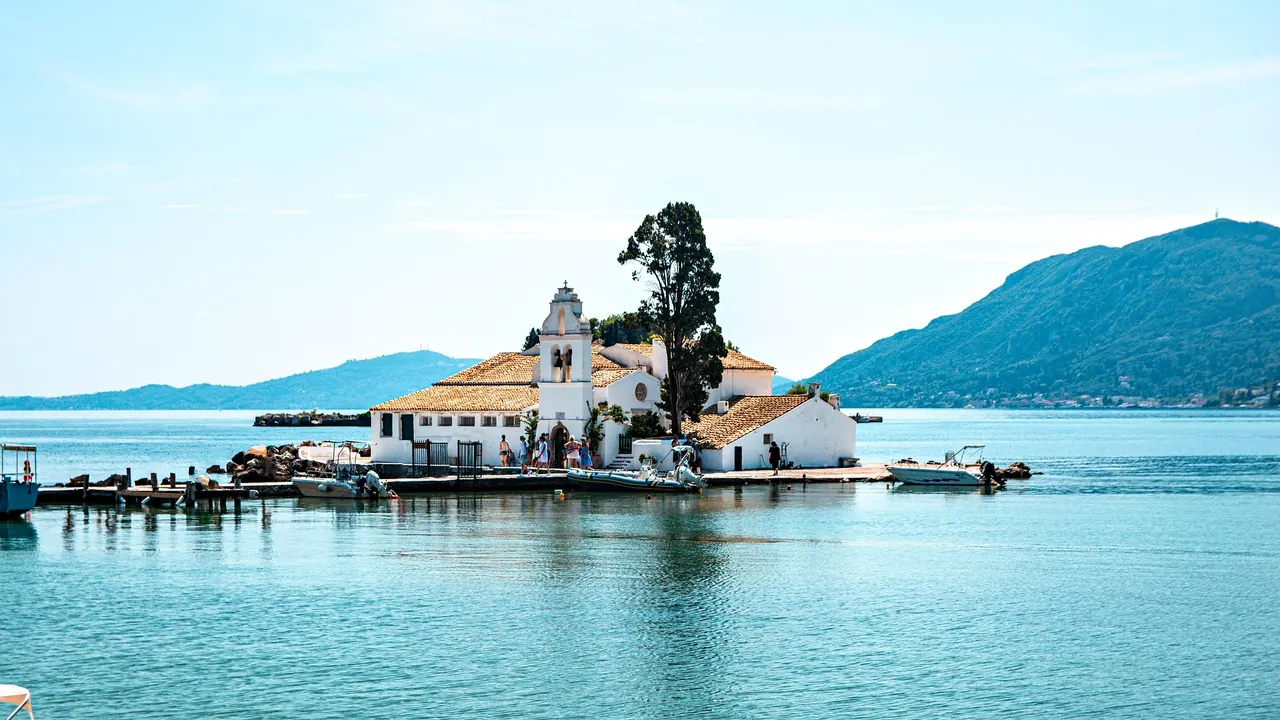
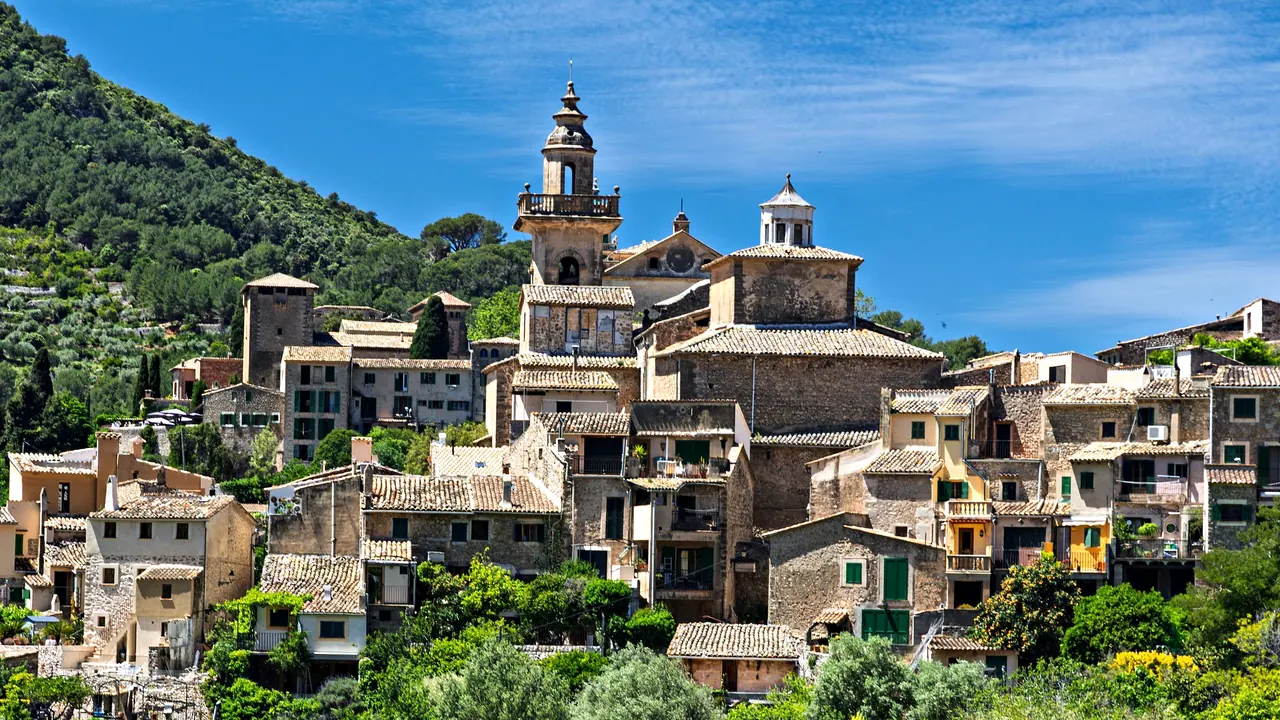
Photos: Corfu by Nico Hartnauer, Pexels License; Mallorca by Guerrero De la Luz, Pexels License.
Corfu or Mallorca?
Our verdict in twelve categories, each scored against the same fixed benchmark cities, and the climate month by month, so you can choose for your trip.
Choose Corfu for
- prices
- culture and sights
Corfu suits travellers who want a greener, gentler island and a smaller bill. Its Venetian old town is the most handsome single place on either island, the west coast gives long sandy beaches with sunsets, and boats run to Paxos, Antipaxos and across to Albania for Butrint. It costs less to stay and eat, as long as you accept that you will rely on a hire car or a single resort.
Choose Mallorca for
- nature and the outdoors
- shopping
- getting around
Mallorca is the better pick for an active trip or a family one. The Tramuntana mountains give it walking and road cycling that Corfu cannot match, and its northern bays are built around children. Palma adds real shopping, a stronger food scene and a city that stays open all year. Expect to pay more for all that, especially in high summer.
Scoreboard
Twelve categories on one fixed scale from 0 to 100. The shaded stretch is the gap between the two.
Your match
Pick a travel style or drag the sliders, and both match scores follow your weighting.
Wins on prices and culture and sights with your weighting.
Wins on nature and the outdoors and shopping with your weighting.
What matters to you?
Category by category
What the scores mean for a trip.
Beaches & swimming
Both islands give excellent beaches, so the choice is about the kind you want. Corfu's west coast has long sands at Glyfada, Agios Gordios and the dunes of Issos, with sunsets and some surf, while Paleokastritsa breaks into small clear coves and the northeast has calm pebble bays facing Albania. Its best water of all, at Antipaxos, needs a boat.
Mallorca's signature is the cala, a narrow inlet of white sand and turquoise water between pines, found along the southeast. Add the undeveloped dunes of Es Trenc and the long shallow bays of the north, and it suits both cove-hoppers and anyone who wants easy days on the sand.
Food & drink
Corfu's cooking stands apart within Greece, with Venetian-rooted dishes such as pastitsada, sofrito and bourdeto, kumquat liqueur and ginger beer. It is best found in Corfu Town's back lanes and village tavernas, since the resorts lean on package menus.
Mallorca gives a hungry visitor more to work with. Palma has tapas bars in the old town and Santa Catalina, the Olivar market and ambitious kitchens using island produce, and inland cellers in Inca and Sineu serve old-style food in former wine stores. Local wine from Binissalem rounds it off.
Culture & sights
The two are closely matched, but differ in where the interest lies. Corfu Town is the draw on its own: a UNESCO-listed old town of Venetian houses and kantounia lanes, framed by two fortresses, with the Liston arcades, a museum of Asian art and the Gorgon pediment. Outside it, the Achilleion and cliff-top Angelokastro are the main additions.
Mallorca's heritage gathers around Palma's Gothic cathedral and the Almudaina, with a stronger modern art offer at Es Baluard and the Miró foundation. Its countryside adds a wider spread of periods, from Bronze Age talaiotic villages to Alcúdia's Roman ruins and the Valldemossa charterhouse.
Nightlife
Each island has a loud party resort and a more grown-up town, and Mallorca has more of both. On Corfu, Kavos runs until dawn for young visitors, Ipsos and Dassia are smaller, and Corfu Town offers cocktails under the Liston and a few clubs on the coast road.
Mallorca has two big party resorts, Magaluf and Playa de Palma, and Palma itself gives a wider range of wine bars, cocktail bars and late clubs along the Paseo Marítimo. Crucially, Palma stays lively through the winter, while out of season Corfu's going out shrinks to its main town.
Nature & outdoors
Corfu is the softer landscape: green with olive groves and cypresses, wildflowers in spring, walks around Mount Pantokrator at about 900m and the island-long Corfu Trail. Sea caves at Paleokastritsa and the Korission lagoon add snorkelling and birdwatching.
Mallorca is in another league for the active traveller. The Tramuntana rises to about 1,400m and drops straight into the sea, with the Dry Stone Route, the Torrent de Pareis gorge and the hairpin climbs that draw road cyclists every spring and autumn. Deep-water soloing on sea cliffs and the S'Albufera wetlands widen the choice.
Day trips
On Corfu the day out means a boat: Paxos and Antipaxos, the mainland town of Parga, or the short crossing to Saranda for Butrint in Albania, a different country in a day. Most of these run only in the main season.
Mallorca offers more by land and through more of the year. Stone villages such as Deià and Fornalutx, the wooden train to Sóller, walled Alcúdia and the weekly markets at Sineu and Santanyí are all within easy reach, with boats to Cabrera and a ferry to Menorca as extras.
Good for families
Corfu works for a simple beach-and-pool stay, with gently shelving sand at Roda, Acharavi and Issos and tavernas that welcome children late. Beyond that there is one water park, boat trips and the fortresses for older children.
Mallorca is the easier family island. The bays of Alcúdia, Pollença and Cala Millor have resorts built around families, with flat promenades and kids' clubs, and rainy or restless days can go to water parks, a large aquarium near Palma or the underground lake at the Caves of Drach.
Getting around
Neither island is truly car-free, but Corfu leans on a hire car more heavily. Its green buses run too rarely to build a varied stay around, and the roads in the north and west are narrow and twisting, so many visitors pick one resort and add boat trips.
Mallorca's regional buses and rail lines from Palma reach the main towns and resorts, and most roads are good. A car is still needed for the coves and Tramuntana villages, where narrow roads and full car parks slow things in summer.
Shopping & style
Corfu's shopping is small-scale and mostly in Corfu Town: olive-wood boards, kumquat sweets, olive oil and soaps along Nikiforou Theotoki and behind the Liston, with little in the resorts.
Mallorca gives a proper shopping day in Palma, with international fashion on the Born and Jaume III and independent boutiques in the old town. Its crafts are more distinctive too, from Inca leather and shoes to Manacor pearls and siurell whistles, and village markets at Sineu and Pollença add produce and ceramics.
Affordability
Corfu is the cheaper island. Taverna meals, local wine and buses are fairly priced and package rooms on the north and east coasts are reasonable, though Kassiopi's villas and Corfu Town in midsummer cost more.
Mallorca is markedly dearer in July and August, when Palma's boutique hotels, Tramuntana estates, sunbeds and car hire add up. It narrows the gap in the north-bay package resorts and inland cellers, and in May, June or late September.
Live music & performing arts
Both have a modest programme, but its character differs. Corfu's music lives in public life: historic philharmonic bands playing in the Spianada and village squares, the Easter processions and kantades sung in tavernas.
Mallorca's offer is more formal and centred on Palma, with opera and theatre at the Teatre Principal, the Balearic Symphony Orchestra in winter and summer classical festivals at Bellver Castle, Valldemossa and Pollença.
Wellness & relaxation
Corfu's rest comes almost entirely from pace: a hill village or the quiet northeast coast, long lunches and empty afternoons, with resort spas and a few yoga retreats in the olive groves.
Mallorca offers a little more. Its upmarket hotels have good spas, the Font Santa thermal spring near Campos has been used since Roman times, and converted country estates in the Tramuntana and on the central plain make calm bases, with retreats running through the year.
When should you go?
Pick your month. The climate figures are measured averages, not a forecast.
Corfu in July
Mallorca in July
Daytime high, °C
Rainfall in the month, mm
Temperature and rainfall are climate normals, averaged over the years shown. Corfu: 1991-2020 normals, Kerkyra Airport (0.9 km from centre). Mallorca: 1991-2020 normals, Palma De Mallorca (3.6 km from centre).
Both islands have the same swimming season, roughly June to early October, with the sea reaching about 26°C in August. Summer is hotter on Corfu, at about 32°C in July and August against Mallorca's 30°C, so midday walking in Corfu Town or the hills is hard work then. May, June and September are the comfortable months on both for combining beach days with sightseeing.
The real difference comes in autumn and winter. Corfu's rain arrives in earnest from September and peaks in November at about 188mm, which is why the island is so green but also why a late-season trip can be wet. Mallorca stays much drier and sunnier through the cooler months, so it works far better for a spring, autumn or even winter break of walking and cycling.
Which traveller are you?
For an outdoors trip, Mallorca is the clear choice. The Serra de Tramuntana gives proper mountain walking on the GR221, famous cycling climbs such as Sa Calobra and sea-cliff climbing, while Corfu offers gentler walks around Pantokrator and the Corfu Trail.
On a trip on a tight budget, Corfu goes further. Taverna meals, local wine and package rooms on the north and east coasts are fairly priced, whereas Mallorca's summer hotels, sunbeds and car hire push costs up unless you visit outside July and August.
On a family trip with young children, Mallorca has the edge. The bays of Alcúdia and Pollença are shallow and calm, and there are water parks, a large aquarium and the Caves of Drach. Corfu has gentle beaches too but fewer outings made for children.
Before you go
| Measure | Corfu | Mallorca |
|---|---|---|
| Official language | Greek | Spanish |
| Currency | Euro (EUR) | Euro (EUR) |
| Sockets | CF230 V, 50 Hz | CF230 V, 50 Hz |
| Driving side | Right | Right |
| Time zone | UTC+2, UTC+3 in summer | UTC+1, UTC+2 in summer |
| Emergency number | 112 | 112 |
| Main airport | Corfu Ioannis Kapodistrias International Airport (CFU)88 non-stop destinations | Palma de Mallorca Airport (PMI)201 non-stop destinations |
| Public holidays this year | 15 days | 13 days |
By the numbers
| Measure | Corfu | Mallorca |
|---|---|---|
| Population | 100,854 | 949,047 |
| People per km² | 161 | 262 |
| Swim season, months above 21 °C | 5 months | 5 months |
Where else could you go?
Every comparison below shares a destination with this one, so you can follow Corfu or Mallorca somewhere new.
- Lefkadavs Corfu
- Ibizavs Mallorca
- Formenteravs Mallorca
- Menorcavs Mallorca
- Kefaloniavs Corfu
- Barcelonavs Mallorca