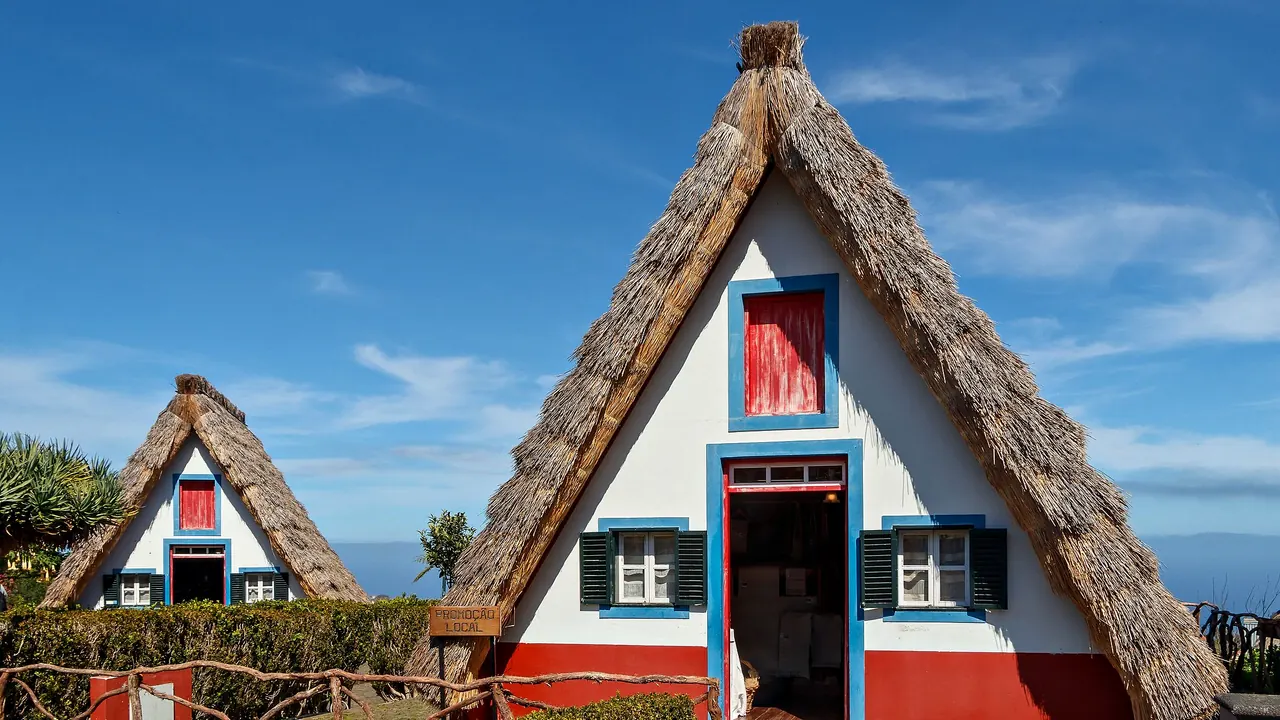
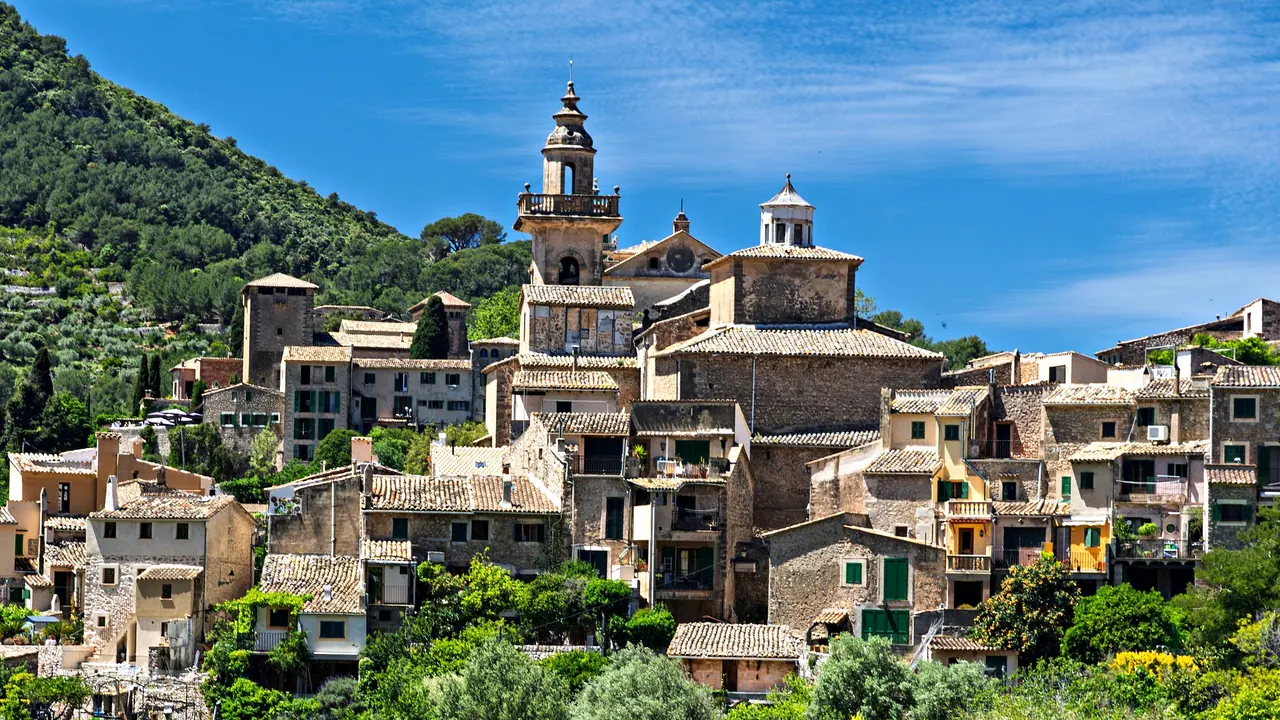
Photos: Madeira by H. Zell, CC BY-SA 3.0, cropped; Mallorca by Guerrero De la Luz, Pexels License.
Madeira or Mallorca?
Our verdict in twelve categories, each scored against the same fixed benchmark cities, and the climate month by month, so you can choose for your trip.
Choose Madeira for
- prices
- nature and the outdoors
Madeira is the island for walkers and for people who like a mild, even climate more than a hot one. It has the levada paths through the laurel forest, the ridge between its highest peaks, and a slow pace that suits couples and anyone happy to end the day with a long dinner. Prices are a little gentler too, but you give up sandy beaches, much of a night out and a full programme of sights.
Choose Mallorca for
- beaches
- nightlife
- day trips
Mallorca is the better choice for a classic summer island trip. It has turquoise coves and long, shallow bays, family resorts built around children, and Palma for the cathedral, the museums and late nights. It also has proper mountain walking in the Tramuntana, though its outdoor season is shorter, and the peak months are hot, busy and expensive.
Scoreboard
Twelve categories on one fixed scale from 0 to 100. The shaded stretch is the gap between the two.
Your match
Pick a travel style or drag the sliders, and both match scores follow your weighting.
Wins on prices and nature and the outdoors with your weighting.
Wins on beaches and nightlife with your weighting.
What matters to you?
Category by category
What the scores mean for a trip.
Beaches & swimming
This is where the two islands differ most. Madeira rises steeply from deep water, so its shore is mostly black boulders. Swimming means Funchal's lidos, the volcanic pools at Porto Moniz and Seixal's black-sand cove, and the golden sand at Calheta and Machico had to be imported. For a real sandy beach you have to go to Porto Santo for a few nights.
Mallorca has the kind of beach most people picture. There are the white-sand calas of the southeast, the long wild dunes of Es Trenc and the shallow bays in the north. Its sea is also noticeably warmer in summer, though the small coves fill up early.
Food & drink
Both islands eat well, in quite different ways. Madeira's table looks to the grill and the sea: espetada cooked on bay-wood skewers, black scabbardfish with banana, limpets and bolo do caco, with poncha at village counters and old vintages of Madeira wine in the Funchal lodges.
Mallorca's cooking is built on pork and olive oil, with sobrassada, pa amb oli and tumbet, and Palma has more places to eat out, from tapas bars in Santa Catalina to the Mercat de l'Olivar. On both islands the best food is concentrated in a few places: in Mallorca, Palma and the inland cellers rather than the resort strips.
Culture & sights
Mallorca gives you much more to see. Palma alone has La Seu standing over the sea wall, the Almudaina palace, the round Bellver Castle, the Miró studios and modern art at Es Baluard. Around the island there is Chopin's charterhouse at Valldemossa, Alcúdia's walls and Bronze Age talaiotic villages.
Madeira's heritage is pleasant but compact. There is the carved cedar ceiling of Funchal's Sé, the merchant house museums, the wine lodges, Monte's pilgrimage church and the thatched houses of Santana. Most visitors see it all in a day or two.
Nightlife
Mallorca goes out far harder, at least in summer. Palma has cocktail bars in the old town and clubs along the Paseo Marítimo that run until dawn, and Magaluf and Playa de Palma are full-scale party resorts. Out of season, though, the resorts close and only Palma stays lively.
Madeira's evenings centre on Funchal's Zona Velha, where small bars and poncha counters spill onto the lanes behind painted doors. It is a gentle scene that stays much the same through the year, and most nights end over dinner and a glass of Madeira.
Nature & outdoors
Both are excellent walking islands, and Madeira has the edge. Its volcanic spine is higher and wilder. The ridge path from Pico do Arieiro to Pico Ruivo crosses jagged peaks above the cloud, and level levada paths lead through the UNESCO-listed laurel forest to waterfalls such as Caldeirão Verde and the 25 Fontes. Canyoning, paragliding and whale watching fill the days off the trail.
Mallorca's Tramuntana is a limestone range of olive terraces dropping to the sea. The GR221 crosses it, and road cyclists climb the hairpins to Sa Calobra. The coast adds sea kayaking, sailing and deep-water soloing, and the S'Albufera wetlands draw birdwatchers. What holds Mallorca back is summer, when the heat makes the hills hard work by midday, so walkers do best between autumn and spring.
Day trips
Mallorca has many more places to visit in a day. The old wooden train runs to Sóller, and there are stone villages such as Deià and Fornalutx, the walled town of Alcúdia and weekly markets at Sineu and Santanyí. Boats go out to Cabrera, and a ferry crosses to Menorca.
On Madeira, a day out is mostly about the scenery. A loop by car takes in Câmara de Lobos, Santana and Porto Moniz, all small places. Porto Santo is the only real trip to somewhere else, and it makes a long day by ferry.
Good for families
Mallorca is one of Europe's easiest family beach destinations. It has calm, shallow water at Alcúdia and Cala Millor, resorts with kids' clubs and flat promenades, water parks near Palma and the underground lake at the Caves of Drach.
Madeira suits a quieter family trip. Children enjoy the cable car to Monte and the wicker toboggan ride down, as well as dolphin trips and the gentler levadas. But the island has little sand, Funchal's hills are hard work with a pushchair, and there is no theme park.
Getting around
On both islands most visitors hire a car, but Mallorca is the easier place to manage without one. Palma's buses, the regional network and a few rail lines are enough for a resort stay with some outings. Its main challenges are summer parking and coaches on the Sa Calobra road.
Madeira's fast tunnel road brings most of the coast within an hour. The roads up to the trailheads, though, are steep, hairpinned and unnerving, and the slow buses do not suit an early start on a walk.
Shopping & style
Mallorca is the better place to shop. Palma has international fashion on the Passeig des Born and independent boutiques in the old-town lanes, and there is leather from Inca and pearls from Manacor. The village markets at Sineu and Pollença add ceramics and baskets.
Madeira's shopping is mostly its crafts. Look for hand embroidery on linen, wickerwork from Camacha and bottles of Madeira wine from the old lodges, but there is little fashion beyond that.
Affordability
Madeira is generally the cheaper stay. Its grill houses, poncha and market fruit are good value, Funchal rooms are reasonably priced outside New Year and Easter, and the trails cost nothing to walk. Car hire and guided activities are what push the cost up.
Mallorca in July and August is expensive, especially boutique hotels in Palma, Tramuntana estates and anywhere near the best coves. Package resorts in the north and east, inland cellers and trips in May, June or late September bring the cost down a good deal.
Live music & performing arts
Neither island is a place to plan a trip around performances, but Mallorca has more on. Palma's Teatre Principal has a short opera season, the Balearic Symphony plays through the winter, and summer brings concerts in Bellver's courtyard and the Chopin festival in Valldemossa.
Madeira has smaller pleasures to come across. There is the Teatro Baltazar Dias, fado evenings in the old town, bailinho dancers in red-striped costumes, and the Flower Festival in spring.
Wellness & relaxation
Both islands offer quiet rather than a bathing culture, and the calm comes in different forms. Madeira has a long history as a place to recover. You can stay in old quintas set in gardens, use the spas in the clifftop hotels west of Funchal and spend afternoons in the botanical and Monte gardens.
Mallorca has its one Roman-era thermal spring, the Font Santa near Es Trenc, along with yoga retreats and country estates among almond and olive groves. To keep it calm there, though, you need to stay well away from the resort strips in midsummer.
When should you go?
Pick your month. The climate figures are measured averages, not a forecast.
Madeira in July
Mallorca in July
Daytime high, °C
Rainfall in the month, mm
Temperature and rainfall are climate normals, averaged over the years shown. Madeira: 1991-2020 normals, Funchal (2 km from centre). Mallorca: 1991-2020 normals, Palma De Mallorca (3.6 km from centre).
Madeira hardly has seasons. Daytime highs stay around 20°C even in winter and rise only gently into the high twenties in late summer, so walking is comfortable all year. Summer is almost completely dry. The rain arrives in October and is heaviest in December at about 104mm, when the high trails turn wet and cold. The sea never gets properly warm: it is at its best from August to October and cool for the rest of the year.
Mallorca has a real summer and a real winter. August brings 30°C and a sea of about 26°C, and June to October is warm enough to swim, with far more sunshine than Madeira in the middle of the year. That heat makes the hills hard work by midday, so spring and autumn suit walking better. Autumn is also the wettest stretch. Winter highs drop to around 16°C, too cool for the beach, and that is when Madeira's mildness counts most.
Which traveller are you?
For a beach and sun trip, choose Mallorca. Its southeastern coves and the long calm bays of Alcúdia and Pollença have the sand and warm water that Madeira lacks. On Madeira, swimming mostly means lidos, sea ladders and rock pools.
On an outdoors trip, Madeira has the edge. The levada paths, the misty laurel forest and the peak-to-peak ridge walk make it one of Europe's great walking islands, and it stays walkable all year. Mallorca's Tramuntana is very good too, but mainly in spring and autumn.
On a family trip with young children, Mallorca is far easier. It has gently shelving beaches, resorts with kids' clubs, water parks and the boat ride through the Caves of Drach. Madeira's steep streets and lack of sand make it harder going, even with the toboggan ride from Monte.
Before you go
| Measure | Madeira | Mallorca |
|---|---|---|
| Official language | Portuguese | Spanish |
| Currency | Euro (EUR) | Euro (EUR) |
| Sockets | CF230 V, 50 Hz | CF230 V, 50 Hz |
| Driving side | Right | Right |
| Time zone | UTC, UTC+1 in summer | UTC+1, UTC+2 in summer |
| Emergency number | 112 | 112 |
| Main airport | Cristiano Ronaldo International Airport (FNC)46 non-stop destinations | Palma de Mallorca Airport (PMI)201 non-stop destinations |
| Public holidays this year | 16 days | 13 days |
By the numbers
| Measure | Madeira | Mallorca |
|---|---|---|
| Population | 254,368 | 949,047 |
| People per km² | 343 | 262 |
| Swim season, months above 21 °C | 5 months | 5 months |
Where else could you go?
Every comparison below shares a destination with this one, so you can follow Madeira or Mallorca somewhere new.
- Ibizavs Mallorca
- Formenteravs Mallorca
- Menorcavs Mallorca
- Barcelonavs Mallorca
- Costa Bravavs Mallorca
- Costa Blancavs Mallorca