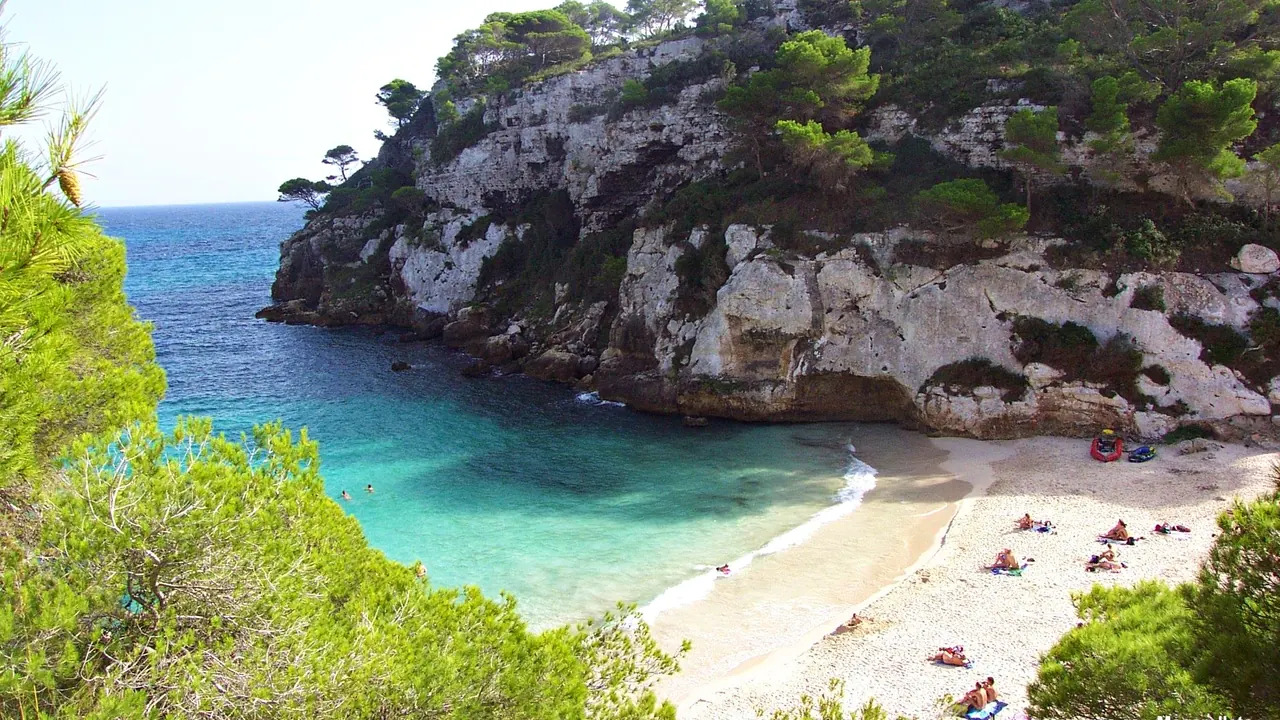
Photos: Menorca by Turismo Menorca from Menorca, España, CC BY 2.0, cropped.
Costa Brava or Menorca?
Our verdict in twelve categories, each scored against the same fixed benchmark cities, and the climate month by month, so you can choose for your trip.
Choose Costa Brava for
- day trips
- nightlife
- food and drink
Costa Brava suits travellers who want more than a beach from the same trip. The coves around Begur and Calella de Palafrugell are fine for swimming. Around them you also get Empordà cooking, Girona's old town, the Dalí museum in Figueres, the cliff paths to Cap de Creus and Barcelona close enough for a day out. It pays back anyone willing to drive and to plan around the crowds of high summer, and it costs a little less.
Choose Menorca for
- getting around
- beaches
Menorca is the better choice when the beach is the whole point. Its southern coves of white sand and turquoise water are among the loveliest in the Mediterranean, the island is small enough that no drive tires anyone, and the evenings stay calm. The trade-off is a narrower stay: fewer places to eat well, little going out, few outings beyond the two old towns, and higher summer prices.
Scoreboard
Twelve categories on one fixed scale from 0 to 100. The shaded stretch is the gap between the two.
Your match
Pick a travel style or drag the sliders, and both match scores follow your weighting.
Wins on day trips and nightlife with your weighting.
Wins on getting around and beaches with your weighting.
What matters to you?
Category by category
What the scores mean for a trip.
Beaches & swimming
Both coasts are made for swimming, and they are close enough to call level, with Menorca a shade ahead. The difference is in kind. The Costa Brava's coves at Aiguablava, Sa Riera and Tamariu have green water under pine cliffs, and there are kilometres of open sand at the Bay of Roses and Pals. Its town beaches at Lloret and Platja d'Aro are packed in summer.
Menorca's best coves on the south coast, such as Macarelleta and Mitjana, have whiter sand and more turquoise water, and many have no buildings at all, so you bring your own shade. The north offers wilder, red-sand bays, and the sea is a little warmer through the summer.
Food & drink
The Costa Brava is the clear choice for anyone who travels to eat. Empordà cooking pairs seafood with meat and game, the auctions at Palamós and Roses supply fish to the whole coast, local wine comes with every meal, and the country around Girona has long drawn serious food lovers.
Menorca has a real identity of its own: lobster caldereta in Fornells, Mahón cheese, pomada and pastries. Beyond the harbours and the farms the choice narrows quickly, and many kitchens close outside summer.
Culture & sights
The Costa Brava has more to see. Its sights include the Dalí Theatre-Museum in Figueres and his house at Portlligat, Girona's cathedral steps and Jewish quarter, the Greek and Roman ruins of Empúries, and Sant Pere de Rodes above Cap de Creus. They are spread across the province, though, so seeing them takes a car and several days.
Menorca's offer is smaller but unusual. Its UNESCO-listed Bronze Age monuments, such as the Naveta des Tudons and the taulas at Torralba d'en Salord, exist nowhere else. Add Ciutadella's palaces and the Georgian streets of British-era Mahón, and two or three days covers it.
Nightlife
The Costa Brava has a proper party scene in Lloret de Mar and Platja d'Aro, with big clubs open until dawn all summer. Away from those resorts the villages are as quiet as anywhere on Menorca.
Menorca's nights mostly mean drinks on the quays at Ciutadella and Mahón and a sunset at the cave club near Cala en Porter. Its liveliest nights are the summer town festivals, especially Sant Joan in Ciutadella with its rearing horses.
Nature & outdoors
The Costa Brava's landscape is more dramatic and more varied. The Camí de Ronda runs past red cliffs between Calella de Palafrugell and Tamariu, and the coast ends at the bare headland of Cap de Creus. The Medes Islands reserve offers some of Spain's best diving, the Garrotxa volcanoes are an hour inland and the high Pyrenees are about two hours away.
Menorca is gentler: dry-stone walls, wild olive and southern gorges such as the Barranc d'Algendar. Its great asset is the Camí de Cavalls, about 185km of coastal path right round the island, and there is birdwatching at S'Albufera des Grau. There are no mountains.
Day trips
This is where the two differ most. From the Costa Brava, Barcelona is an easy day out by fast train from Girona, and there are many smaller trips too: Collioure and Perpignan over the French border, Besalú's fortified bridge, Vic's market square, the Empordà wine villages and Montserrat.
On Menorca a day out usually means the other end of the island, Ciutadella or Mahón, or a village such as Fornells. The only real trip off the island is the long ferry ride to Alcúdia on Mallorca.
Good for families
Both work well for children, but in different ways. The Costa Brava has more laid on: large campsites behind the shallow Bay of Roses, water parks near Lloret and Roses, and the cliff-top gardens at Blanes. You do need to keep clear of Lloret's party strip when choosing a base.
Menorca is simpler and calmer. It has low-rise resorts by sheltered beaches such as Cala Galdana and Son Bou, and every drive is short. There are few attractions built for children, so the sea has to do most of the work.
Getting around
Menorca is the easier of the two to get around. The island is about 50km long, one main road links Mahón and Ciutadella, and summer buses reach the main resorts. The catch is the controlled access to the popular southern coves, where you often have to take a shuttle or walk in.
On the Costa Brava you cover more distance. None of the beach towns has a railway station, the coastal buses are sparse, and the narrow roads down to Begur and Cadaqués jam in August, so a car is close to essential.
Shopping & style
Neither is a place to go for shopping, though the Costa Brava offers a little more. It has the pottery workshops of La Bisbal d'Empordà, the best range of independent shops in Girona and Barcelona within reach for a proper spree. Menorca's shopping is avarques sandals, leather goods from Ciutadella and Alaior, and cheese and gin from the cloister market in Mahón.
Affordability
The Costa Brava is the cheaper of the two. Prices range widely, from the boutique hotels of Begur and Cadaqués down to the low-cost rooms of Lloret and the campsites around Roses, and inland set lunches are good value. A hire car and parking still add to the bill.
Menorca is expensive in July and August, when rooms, villas and car hire all peak and harbour restaurants charge island prices. Renting an apartment and coming in June or September helps, and the beaches and many of the prehistoric sites cost nothing.
Live music & performing arts
Both are quiet outside summer, but the Costa Brava's summer season is bigger. It has opera and ballet in the castle grounds at Peralada, international acts in the garden at Cap Roig, the Porta Ferrada festival, and the havaneres sea songs at Calella de Palafrugell.
Menorca's offer is smaller and more intimate. Mahón's Teatre Principal dates from 1829, the Santa Maria organ gives summer recitals and Ciutadella holds a classical festival.
Wellness & relaxation
The two are about level, and on both the main restorative appeal is the slow pace of June and September, in a rural farmhouse or by a quiet cove. Only the Costa Brava has real spa culture, with the Roman baths and mineral springs of Caldes de Malavella near Girona. Menorca has no bathing tradition, but its low-rise calm makes winding down easy.
When should you go?
Pick your month. The climate figures are measured averages, not a forecast.
Costa Brava in July
Menorca in July
Daytime high, °C
Rainfall in the month, mm
Temperature and rainfall are climate normals, averaged over the years shown. Costa Brava: 1991-2020 normals, Gerona / Costa Brava (23.2 km from centre). Menorca: 1991-2020 normals, Menorca / Mahon (3.7 km from centre).
Both are summer destinations with much the same calendar, but Menorca has the drier and sunnier version. Its summer is almost rainless, with only about 6mm in July, and May is already bright and dry enough for walking and the first swims. On the Costa Brava the rain is spread more evenly through the year, so spring is greener and showery, and July and August reach about 31°C, which is too hot for walking the streets in the middle of the day.
The sea is warm enough for proper swimming on both from late June to September. Menorca's sea is a degree or so warmer and holds about 25°C into September, which makes early autumn a good time there. Autumn also brings the rain: the Costa Brava is at its wettest in October at about 86mm, while Menorca turns wet a little later and gets about 101mm in November. For walking on either, spring and late September are the comfortable months.
Which traveller are you?
On a beach and sun trip, Menorca is the stronger pick. Its southern coves at Macarella and Turqueta have white sand and very clear water, the sea runs slightly warmer, and summers are drier and sunnier than on the Catalan coast.
For a food and nightlife trip, the Costa Brava wins clearly. Empordà cooking, Palamós prawns and Girona's fine dining go well beyond Menorca's narrow range, and Lloret and Platja d'Aro have real clubs where Menorca's evenings end at the harbour bars.
On a trip with a tight budget, the Costa Brava goes further. The big campsites around Roses and L'Estartit, cheap rooms in Lloret and weekday set lunches inland are all cheaper than Menorca, where rooms, villas and car hire cost a lot in summer.
Before you go
| Measure | Costa Brava | Menorca |
|---|---|---|
| Official language | Spanish | Spanish |
| Currency | Euro (EUR) | Euro (EUR) |
| Sockets | CF230 V, 50 Hz | CF230 V, 50 Hz |
| Driving side | Right | Right |
| Time zone | UTC+1, UTC+2 in summer | UTC+1, UTC+2 in summer |
| Emergency number | 112 | 112 |
| Main airport | Girona-Costa Brava Airport (GRO)18 non-stop destinations | Menorca Airport (MAH)72 non-stop destinations |
| Public holidays this year | 14 days | 13 days |
By the numbers
| Measure | Costa Brava | Menorca |
|---|---|---|
| Population | - | 100,323 |
| People per km² | - | 145 |
| Swim season, months above 21 °C | 3 months | 5 months |
Where else could you go?
Every comparison below shares a destination with this one, so you can follow Costa Brava or Menorca somewhere new.
- Mallorcavs Menorca
- Mallorcavs Costa Brava
- Ibizavs Menorca
- Formenteravs Menorca
- Provencevs Costa Brava
- Ibizavs Costa Brava