Dordogne or Provence?
Our verdict in twelve categories, each scored against the same fixed benchmark cities, and the climate month by month, so you can choose for your trip.
Choose Dordogne for
- prices
- families
Choose the Dordogne for a slower, more contained countryside trip. Prehistoric caves, river castles and the golden-stone old town of Sarlat all lie within a short drive of one base. You get duck and walnuts at the markets, a canoe on the river, and evenings that end after dinner. It costs less than Provence and works especially well for families with school-age children.
Choose Provence for
- beaches
- nightlife
- shopping
Provence suits travellers who want more variety from one trip. It has a real coast of sand and calanques, wilder country such as the Verdon, lighter Mediterranean cooking, Roman and papal towns, and a summer festival season of world standing. It is dearer and more spread out, so it rewards people who are happy to move between bases or split the stay between the coast and the hills.
Scoreboard
Twelve categories on one fixed scale from 0 to 100. The shaded stretch is the gap between the two.
Your match
Pick a travel style or drag the sliders, and both match scores follow your weighting.
Wins on prices and families with your weighting.
Wins on beaches and nightlife with your weighting.
What matters to you?
Category by category
What the scores mean for a trip.
Beaches & swimming
The Dordogne has no coast at all. Swimming means gravel banks on the Dordogne and the Vézère below Beynac or La Roque-Gageac, a lake shore at Rouffiac, or more often the pool at the rented house. It is a pleasant summer afternoon, not a reason to go.
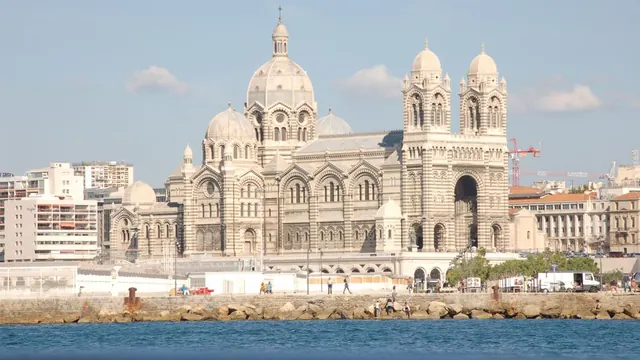
Provence has real seaside of several kinds: the long sand of Pampelonne, the pale, shallow water around Hyères and Porquerolles, and the deep turquoise calanques near Cassis. The catch is that the coast and the Luberon are far apart, so for a beach trip you need to stay on the Var coast or near Marseille.
Food & drink
Both regions eat around their weekly markets, but the plates are very different. The Dordogne cooks rich, land-based food: duck confit, foie gras, potatoes fried in duck fat, walnuts, cèpes and winter truffles, with Bergerac and Monbazillac wines alongside. It is superb for a few days and repetitive by the end of a week.
Provence eats lighter and more widely. It cooks with olive oil, garlic, herbs and fish, serves bouillabaisse in Marseille and couscous in the city's North African quarters, and its wines run from pale rosé to Bandol and Châteauneuf-du-Pape. Over a longer stay it has the edge, though away from Marseille it too stays largely French.
Culture & sights
These are two equally rich heritage trips from different eras. The Dordogne's great draw is prehistory: the painted caves, rock shelters and troglodyte sites of the Vézère valley around Les Eyzies. Then come the Middle Ages, in Sarlat's old town and the castles facing each other across the river. Nearly all of it lies within half an hour of a base near Sarlat.
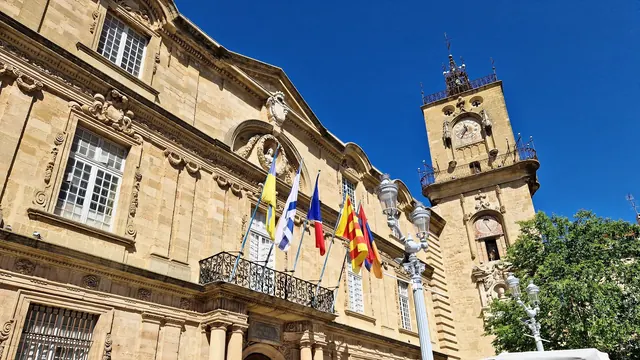
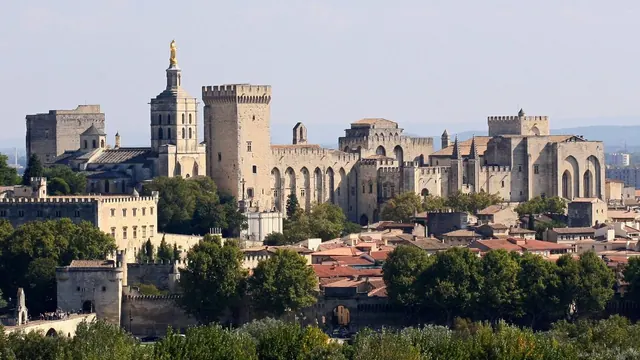
Provence is Roman and papal. It has the arena and theatre at Arles, the theatre at Orange and the Palais des Papes in Avignon, along with Cézanne's Aix and the MuCEM in Marseille. Because it is spread across several towns, it suits a trip that moves between bases.
Nightlife
In the Dordogne the night ends after dinner. A village night market with long tables and dancing in the square is as lively as it gets. Provence's villages are just as quiet, but Marseille has a real late-night scene around Cours Julien and La Plaine, Saint-Tropez has its summer beach clubs and Aix has student bars. Anyone who wants to go out should choose Provence and stay near one of those places.
Nature & outdoors
The Dordogne's countryside is soft and lived-in: rivers under pale cliffs, oak woods and walnut orchards. It is best seen from a canoe drifting past the castles of Beynac and Castelnaud, or from the greenway near Sarlat. It is lovely for gentle walking and cycling, but there is nothing wild.
Provence has far more range. There is the canyon of the Gorges du Verdon, the coastal trails of the Calanques, the bare climb of Mont Ventoux, the lagoons and flamingos of the Camargue and the lavender of Valensole. The drawback is the summer heat, when a high fire risk can close the massifs and calanques.
Day trips
The Dordogne easily fills a week, with a fine village within half an hour wherever you stay. Domme sits on its clifftop and Brantôme on its river island, and Rocamadour and Saint-Cirq-Lapopie in the Lot are further out. From the Bergerac side you can reach Saint-Émilion and Bordeaux.
Provence offers more outings, and more varied ones, from any base. You can visit Gordes, the ochre cliffs of Roussillon, L'Isle-sur-la-Sorgue, Les Baux and Châteauneuf-du-Pape, cross the Rhône to the Pont du Gard and Nîmes, or take the short ferry from Hyères to Porquerolles. In both regions nearly every outing needs a car.
Good for families
Both are vacations built around a rented house with a pool, and the difference lies in the children's ages. The Dordogne is made for eight-to-fourteen-year-olds: gentle canoe trips, siege engines and armour at Castelnaud, the prehistoric sites around Les Eyzies and tree-top parks.
Provence is easier with small children at the seaside, thanks to the shallow sand around Hyères and Porquerolles. Older ones get canoeing on the Sorgue, riding in the Camargue and the arenas of Arles. In both regions the drawbacks are July heat, long drives and steep villages that defeat pushchairs.
Getting around
You will want a car in either region. In both, the roads are good and the real problems are summer traffic and parking. In the Dordogne the trains stop at Périgueux, Bergerac and Sarlat, the caves and castles are out of reach without a car, and the queues build on the riverside road through La Roque-Gageac and Beynac.
Provence has a usable rail line linking Marseille, Aix, Avignon, Arles and Toulon, so a trip based in the towns can work without driving. Its summer bottleneck is the road into Saint-Tropez, where the ferries across the gulf are the better choice.
Shopping & style
In the Dordogne, shopping means filling the car boot with foie gras, confit in jars, walnut oil and estate wine from the markets of Sarlat and Issigeac, with summer brocantes on top.
Provence goes well beyond food. It has printed fabrics, olive-wood bowls, Marseille soap, Moustiers faience and santons, as well as the antiques dealers of L'Isle-sur-la-Sorgue, fashion in the old streets of Aix and a small cluster of luxury boutiques in Saint-Tropez in summer.
Affordability
The Dordogne is the cheaper of the two, with the prices of rural France, village set lunches, campsites and simple gîtes. Its costs come from summer house rentals near Sarlat and from a week of tickets for caves and castles and canoe hire.
Provence is dearer in season, above all for villas in the Luberon and Alpilles and for anything on the Var coast or in Saint-Tropez. Marseille, Avignon, Arles and the quieter villages of the Var and Haute-Provence soften the bill. In both regions, the months outside high summer cost noticeably less.
Live music & performing arts
Both regions come alive for performances only in summer, but on very different scales. The Dordogne has Sarlat's theatre festival in late July, Périgueux's mime and street-theatre festival, and classical concerts in Romanesque churches. Outside the summer there is little.
Provence has the Avignon festival, with its official programme in the courtyard of the Palais des Papes and a vast fringe. Add the Aix opera festival, opera in the Roman theatre at Orange and piano recitals at La Roque-d'Anthéron, and its opera houses in Marseille, Avignon and Toulon keep a programme going all year.
Wellness & relaxation
Neither region has a bathing culture, and in both the restorative part of a stay is the pace: market mornings, long lunches and afternoons by the pool. The Dordogne offers quiet rather than treatments, at its best in the Périgord Vert and in late spring or September.
Provence adds real spas. Aix has a thermal spa on the site of its Roman baths, Gréoux-les-Bains and Digne-les-Bains are old spa towns, and many country hotels offer lavender and olive-oil treatments. Its coast is anything but calm in high summer, though.
When should you go?
Pick your month. The climate figures are measured averages, not a forecast.
Dordogne in July
Provence in July
Daytime high, °C
Rainfall in the month, mm
Where the figures come from
Provence has no rain gauge within 25 km of the centre, so its rainfall comes from a gridded climate dataset read at the destination rather than from a gauge further away.
Provence's sunshine is measured 53 km from the centre, at Nimes / Courbessac.
Temperature and rainfall are climate normals, averaged over the years shown. Dordogne: 1991-2020 normals, Gourdon (21.2 km from centre). Provence: 2005-2020 (sunshine 1981-2010, rainfall 1991-2020) normals, Avignon / Morières-lès-Avignon (11.9 km from centre).
The Dordogne is at its best from late May to September. Summer days peak around 28°C, warm enough for swimming in the river from late June and still comfortable for walking around castles and old towns. Rain falls fairly evenly through the year. The wettest months are April and May, at about 83mm, and winters are cool and grey, with little sunshine.
Provence runs hotter, drier and sunnier. July reaches about 32°C with only 24mm of rain, which is ideal on the beach but tiring for a day of sightseeing in Avignon or Arles. May, June and September are the comfortable months for walking. The rain comes in autumn and peaks at around 102mm in October, when the Dordogne is drier. Through the winter Provence keeps noticeably more sunshine.
Which traveller are you?
On a beach and sun trip, Provence is the obvious choice. The Dordogne offers only river banks and small lakes. Provence has the sand of Pampelonne and Porquerolles, the calanques near Cassis and long, dry, sunny summers, provided you stay on the coast.
On a tight budget, the Dordogne goes further. Campsites, simple gîtes, village set lunches and wine bought from the grower keep costs at rural French levels. Provence in season, especially the Luberon, the Alpilles and the Var coast, is expensive.
On a family trip with school-age children, the Dordogne has a slight edge. Castles fire siege engines, canoe trips are gentle and the prehistoric sites sit close together. With toddlers, Provence's shallow sandy beaches around Hyères make for the easier vacation.
Before you go
| Measure | Dordogne | Provence |
|---|---|---|
| Official language | French | French |
| Currency | Euro (EUR) | Euro (EUR) |
| Sockets | CE230 V, 50 Hz | CE230 V, 50 Hz |
| Driving side | Right | Right |
| Time zone | UTC+1, UTC+2 in summer | UTC+1, UTC+2 in summer |
| Emergency number | 112 | 112 |
| Main airport | Bergerac Dordogne-Périgord airport (EGC)9 non-stop destinations | Marseille Provence Airport (MRS)126 non-stop destinations |
| Public holidays this year | 11 days | 11 days |
By the numbers
| Measure | Dordogne | Provence |
|---|---|---|
| Population | 417,614 | - |
| People per km² | 46 | - |
Where else could you go?
Every comparison below shares a destination with this one, so you can follow Dordogne or Provence somewhere new.
- French Rivieravs Provence
- French Alpsvs Provence
- Loire Valleyvs Dordogne
- Costa Bravavs Provence
- Cinque Terrevs Provence
- Corsicavs Provence