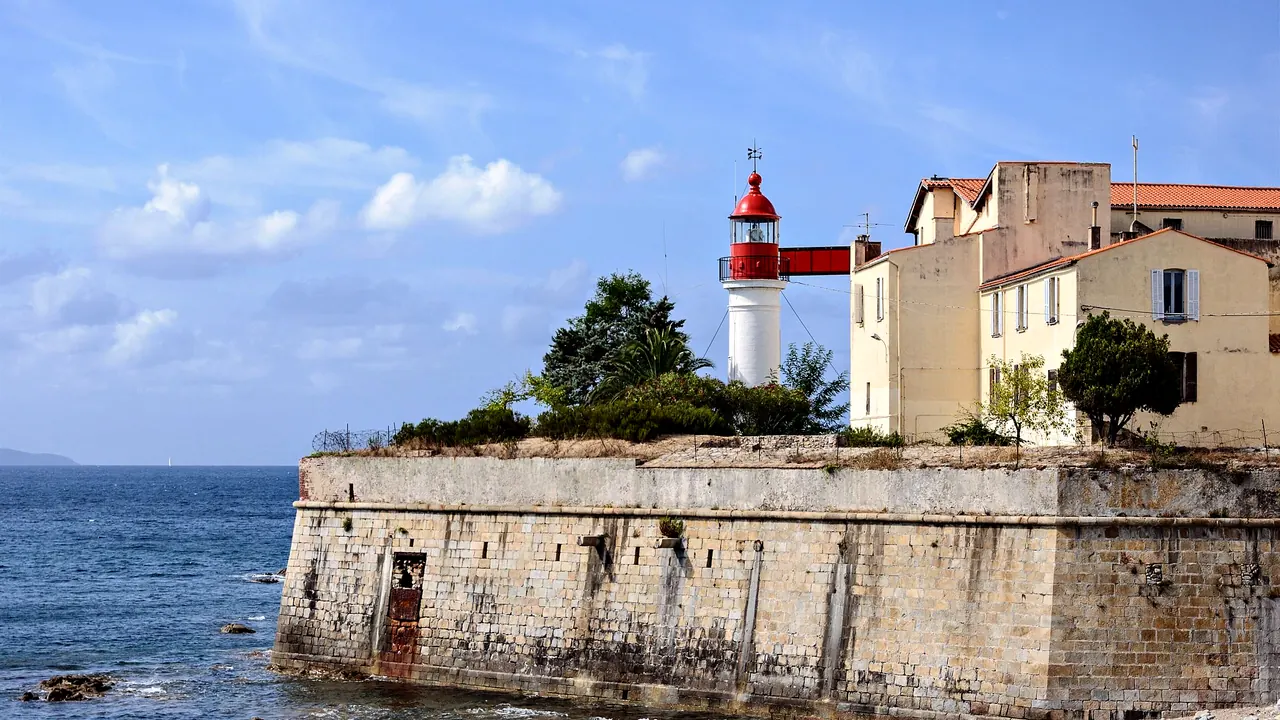
Photos: Corsica by Myrabella, CC BY-SA 3.0, cropped.
Corsica or Tuscany?
Our verdict in twelve categories, each scored against the same fixed benchmark cities, and the climate month by month, so you can choose for your trip.
Choose Corsica for
- beaches
- nature and the outdoors
Corsica is the choice for a trip built around the sea and the mountains. Its southern beaches around Porto-Vecchio and Bonifacio are among the finest in the Mediterranean, and the granite interior, from the needles of Bavella to the GR20, gives walkers, divers and kayakers far wilder country than Tuscany. Expect to drive a lot, to pay resort prices in summer and to spend quiet evenings.
Choose Tuscany for
- shopping
- day trips
- culture and sights
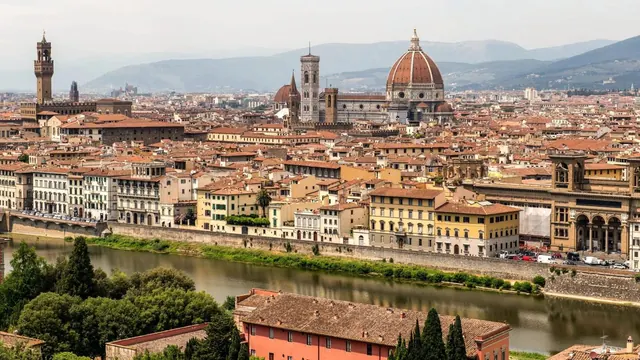
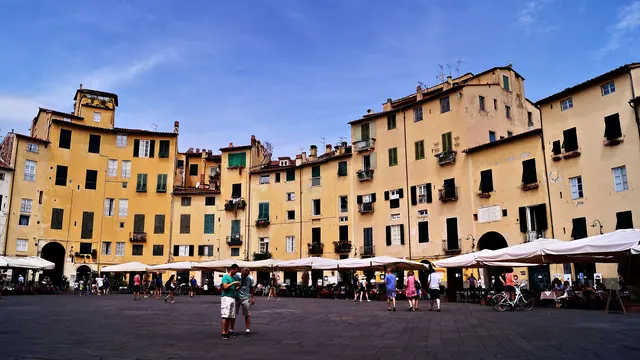
Travellers who want art, food and a full programme of outings will be happier in Tuscany. Florence, Siena and the hill towns offer far more sightseeing than Corsica can, and the wine country and trattorias are well ahead of the island's food. The hot springs of the south add a restful side to the trip. Trains link the main cities, though the countryside still needs a car, and the coast is something to add to the trip rather than the reason to come.
Scoreboard
Twelve categories on one fixed scale from 0 to 100. The shaded stretch is the gap between the two.
Your match
Pick a travel style or drag the sliders, and both match scores follow your weighting.
Wins on beaches and nature and the outdoors with your weighting.
Wins on shopping and day trips with your weighting.
What matters to you?
Category by category
What the scores mean for a trip.
Beaches & swimming
Corsica has the better beaches, and they are the island's main draw. In the south, Palombaggia, Santa Giulia and Rondinara have pale sand and turquoise water, and the Agriates in the north add remote bays that you reach by boat or a long track.
Tuscany's best swimming is on Elba and around Monte Argentario, at places like Cala Violina and the pine-backed strands of the Maremma. The long sands of Versilia are mostly private beach clubs. If you are based in Florence or the hill towns, the sea becomes a side trip.
Food & drink
Both cuisines come from the countryside, with boar, cured pork and sheep's cheese, but Tuscany cooks it at greater depth and has far more places to eat well. Florence's market halls, the Oltrarno trattorias and the lampredotto carts, together with the cellars of Chianti, Montalcino and Montepulciano, make food and wine a reason to travel.
Corsica's best meals are in inland village inns and the markets of Ajaccio and Bastia. Brocciu, figatellu and chestnut dishes are worth seeking out, along with Patrimonio wine, but summer menus at the beach resorts are often ordinary.
Culture & sights
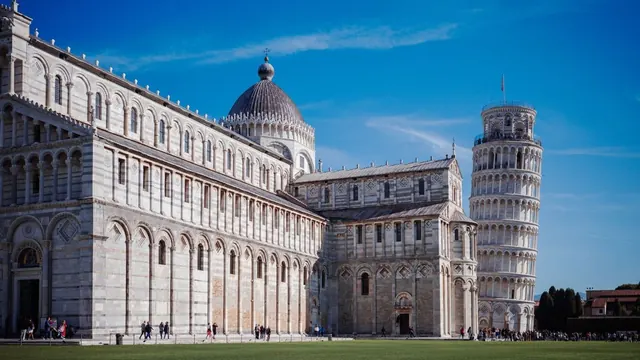
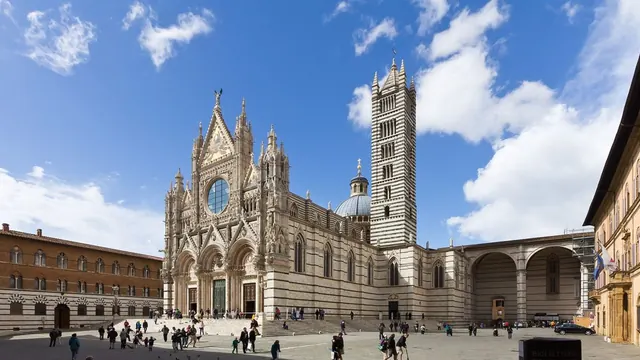
This is one of the widest gaps between the two. Tuscany is where the Renaissance began. Florence has the Uffizi, the David and the Duomo in a centre you can walk, and Siena's Campo, Pisa's cathedral square and Lucca's walls are close by. That is enough sightseeing for a whole trip.
Corsica's heritage is of another kind: Genoese citadels and watchtowers, Bonifacio on its limestone cliffs, the upper town of Corte and the carved stones of Filitosa. It rewards a road trip where the setting matters as much as the sights, but apart from the Palais Fesch it has little to set against Florence's galleries.
Nightlife
Neither is a destination for nights out, and in both an evening mostly means a long dinner and a drink outdoors. Tuscany gives more choice. Florence has student crowds on the steps of Santo Spirito and clubs that open late at weekends all year, and in summer the beach clubs and dance halls of Versilia stay busy until dawn.
Corsica's late nights are limited to July and August, at the open-air clubs above Porto-Vecchio and the harbour bars of Calvi. Elsewhere the island goes quiet early.
Nature & outdoors
Corsica is the wilder of the two. It is a granite mountain range rising straight from the sea, with the GR20, the needles of Bavella, the lakes above the Restonica gorge and the red cliffs of Piana and Scandola. Canyoning, diving around the Lavezzi islands and sea kayaking are all close at hand.
Tuscany's landscape is mostly farmland: the cypresses and wheat fields of the Val d'Orcia and Chianti, ideal for cycling and gentle walks between hill towns. The Apuan Alps and the Maremma park give it a rougher side, but nothing on Corsica's scale.
Day trips
Tuscany is made for day trips. From Florence or a Chianti farmhouse, Siena, Lucca, Pisa and San Gimignano are all easy to reach. Just beyond the border lie Bologna, the Cinque Terre, and Assisi and Orvieto in Umbria.
On Corsica, slow mountain roads mean each base has only a handful of outings. From the south you can go to Sartène or take the ferry to Sardinia, from Calvi to the Balagne villages, and from Bastia to Cap Corse. Seeing more of the island usually means changing base rather than going out and back.
Good for families
Tuscany suits families somewhat better, mainly because it has more to do away from the beach. There is the Pinocchio park at Collodi, cycling on Lucca's walls, and agriturismi with pools and animals. The shallow beaches of Versilia and the Maremma have lifeguards and playgrounds.
Corsica has calm, shallow bays such as Santa Giulia and plenty of family campsites, but almost nothing made for children, and the long winding drives tire young passengers. On both, children cope better at the coast than in the hot inland towns in high summer.
Getting around
Tuscany is much easier without a car. Florence is walkable, and regional trains run to Pisa, Lucca, Arezzo and Viareggio. Chianti, the Val d'Orcia and the Maremma still need a car.
On Corsica a car is close to essential. The narrow-gauge railway linking Ajaccio, Corte, Bastia and Calvi is a lovely ride but misses the south, buses are infrequent, and winding roads make every journey longer than the map suggests.
Shopping & style
Tuscany has real shopping, centred on the crafts of Florence: leather around Santa Croce, goldsmiths on the Ponte Vecchio, marbled paper in Oltrarno and the luxury houses of Via de' Tornabuoni. Other towns add their own specialities, such as alabaster in Volterra and ceramics in Montelupo.
On Corsica, shopping mostly means things to eat and drink, such as charcuterie, cheese, chestnut flour and wine, along with hand-forged knives. The markets of Ajaccio and Bastia and the craft villages of the Balagne are the places to look.
Affordability
Neither is cheap in summer, but Tuscany is somewhat easier on the budget. Central Florence, the Chianti villas and Forte dei Marmi are costly, but Lucca, Arezzo and the Maremma cost less, and trattoria meals and wine bought at the cellar door are reasonable.
On Corsica, car hire and ferry crossings come on top of resort prices in Porto-Vecchio, Bonifacio and Calvi. Campsites, inland villages and stays in June or September keep costs down.
Live music & performing arts
Tuscany has a real musical life, built on opera. Florence has the Maggio Musicale Fiorentino with its own opera house, Lucca puts on Puccini all year, his operas are staged outdoors at Torre del Lago in summer, and Siena's Accademia Chigiana holds concerts in palaces and churches.
Corsica's own tradition is unaccompanied polyphonic singing, heard in village churches, and there is summer jazz in Calvi. There is no opera, though, and little happens in the rest of the year.
Wellness & relaxation
Tuscany can build a whole trip around its hot springs. They range from the grand spa town of Montecatini to the free warm pools at Saturnia, the steaming medieval bath at Bagno Vignoni and the white limestone pools of Bagni San Filippo.
On Corsica, rest comes from the pace of life, with long lunches and silent mountain villages, rather than from spas. These are limited to upmarket hotels and a few simple springs such as Pietrapola.
When should you go?
Pick your month. The climate figures are measured averages, not a forecast.
Corsica in July
Tuscany in July
Daytime high, °C
Rainfall in the month, mm
Where the figures come from
Tuscany has no rain gauge within 25 km of the centre, so its rainfall comes from a gridded climate dataset read at the destination rather than from a gauge further away.
Tuscany's sunshine is measured 71 km from the centre, at Pisa / S. Giusto.
Temperature and rainfall are climate normals, averaged over the years shown. Corsica: 1991-2020 normals, Ajaccio (5.1 km from centre). Tuscany: 1995-2020 (sunshine 1991-2020, rainfall 1991-2020) normals, Firenze / Peretola (5.6 km from centre).
Corsica's season runs from June into early October. The sea is warm enough to swim from June and reaches about 25°C in August, and July is almost rainless, with the longest sunny days of the year. Low ground is hot in high summer, so July and August suit the beach better than hiking, and walkers do best in May, June and September. Rain sets in during October and is heaviest in November, and winter is mild but often grey.
Tuscany gets hotter inland, with August afternoons around 33°C that make Florence and Siena hard going on foot. The best months for sightseeing are May, June and September, when it is warm without the worst of the heat. Beach weather on the coast runs from June to late September. October and November are the wettest months in both, slightly wetter in Tuscany, and its winter days are cooler than the island's.
Which traveller are you?
For a beach and sun trip, Corsica is the stronger choice. Palombaggia, Rondinara and the Agriates bays have pale sand and clear water that Tuscany's coast rarely matches, as much of Versilia is rows of umbrellas, and the island's summers are drier.
On a culture and arts trip, Tuscany wins easily. Florence alone has the Uffizi, the Accademia and Brunelleschi's dome, with Siena, Pisa, Lucca and San Gimignano close by. Corsica's citadels and Napoleon's birthplace fill a few days, not a week.
For a relaxing and wellness trip, Tuscany has the clear edge. The hot springs at Saturnia, Bagno Vignoni and Montecatini give the rest a focus, and a Val d'Orcia farmhouse adds the quiet. Corsica slows you down too, but has little more than hotel spas.
Before you go
| Measure | Corsica | Tuscany |
|---|---|---|
| Official language | French | Italian |
| Currency | Euro (EUR) | Euro (EUR) |
| Sockets | CE230 V, 50 Hz | CFL230 V, 50 Hz |
| Driving side | Right | Right |
| Time zone | UTC+1, UTC+2 in summer | UTC+1, UTC+2 in summer |
| Emergency number | 112 | 112 |
| Main airport | Ajaccio Napoléon Bonaparte airport (AJA)29 non-stop destinations | Florence Airport, Peretola (FLR)46 non-stop destinations |
| Public holidays this year | 11 days | 13 days |
By the numbers
| Measure | Corsica | Tuscany |
|---|---|---|
| Population | 355,486 | 3,729,641 |
| People per km² | 41 | - |
| Swim season, months above 21 °C | 4 months | - |
Where else could you go?
Every comparison below shares a destination with this one, so you can follow Corsica or Tuscany somewhere new.
- Umbriavs Tuscany
- Sardiniavs Corsica
- Cinque Terrevs Tuscany
- Lake Gardavs Tuscany
- French Rivieravs Corsica
- Cinque Terrevs Corsica