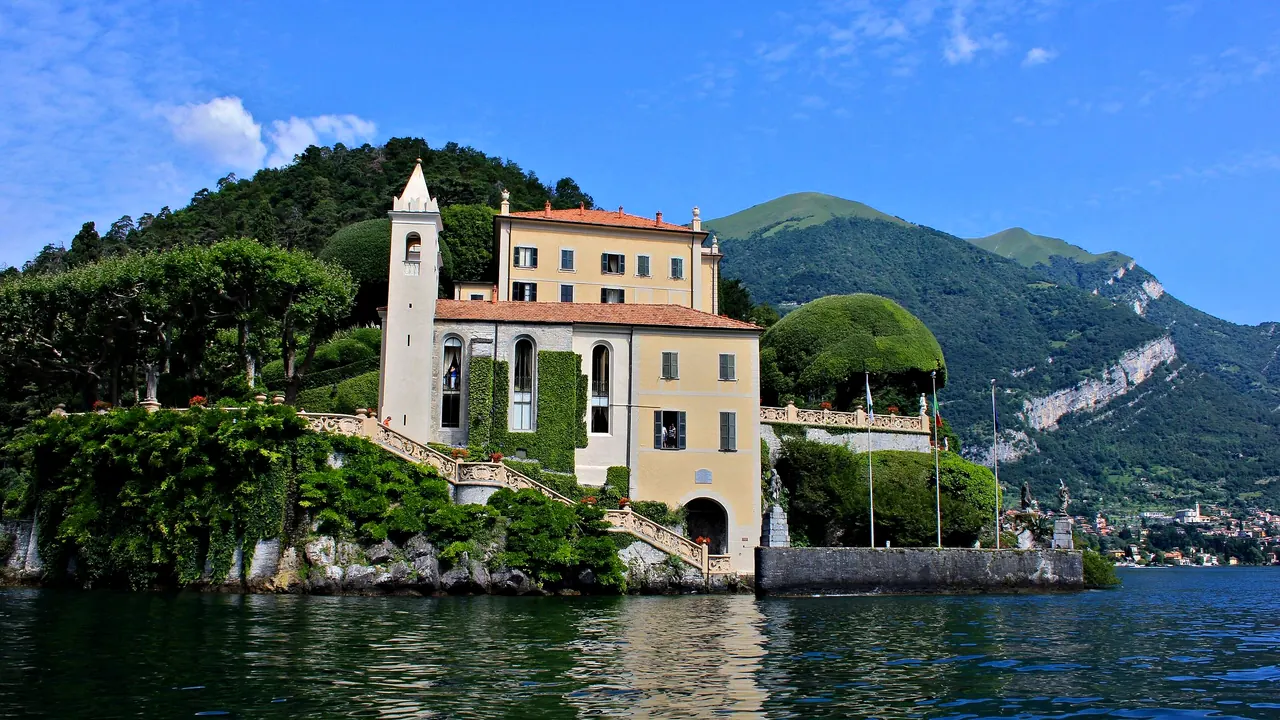
Photos: Lake Como by Navin75, CC BY-SA 2.0, cropped.
Lake Como or Tuscany?
Our verdict in twelve categories, each scored against the same fixed benchmark cities, and the climate month by month, so you can choose for your trip.
Choose Lake Como for
- nature and the outdoors
Lake Como suits a slower, narrower trip built around one view. You come for mountains rising straight out of deep water, villa gardens reached by boat and evenings on a quiet terrace once the ferries stop. It works best for couples and walkers who want to stay put in the central villages, take day trips to Milan, and give up variety for scenery.
Choose Tuscany for
- culture and sights
- shopping
- food and drink
Tuscany is the better pick for almost any other kind of vacation. It has the Renaissance art of Florence, Siena and the hill towns, much better food and wine, thermal springs, a real sea coast and more outings than one stay can cover. The cost of all that is planning and driving, because the countryside, the spas and the beaches lie a long way apart.
Scoreboard
Twelve categories on one fixed scale from 0 to 100. The shaded stretch is the gap between the two.
Your match
Pick a travel style or drag the sliders, and both match scores follow your weighting.
Wins on nature and the outdoors with your weighting.
Wins on culture and sights and shopping with your weighting.
What matters to you?
Category by category
What the scores mean for a trip.
Beaches & swimming
Tuscany has a real sea coast, which Lake Como cannot offer. On Elba there are sandy bays such as Fetovaia and Biodola in clear water. The Maremma has pine-backed strands and the small bay of Cala Violina, and Versilia has long stretches of sand lined with private beach clubs. The catch is distance: from Florence or the hill towns, the coast is a long drive.
On Lake Como, swimming means lidos, pebble strips and stone jetties at Lenno, Menaggio or the more open upper lake. The water is pleasant in high summer but cold below the surface, and the season is short. Treat a swim there as part of the day, not the reason for the trip.
Food & drink
Lake Como's kitchen is small and local. It centres on perch fried in butter and sage over risotto, salted shad, polenta and Valtellina cheese, best eaten in hill-village trattorias and the old cellar-like crotti rather than on the pricey lakefront terraces.
Tuscany is on a different level for eating. It has Florentine T-bone over coals, lampredotto from street carts and the market halls of San Lorenzo and Sant'Ambrogio. Above all there is the wine, with cellar visits in Chianti, Montalcino and Montepulciano that can fill a whole trip.
Culture & sights
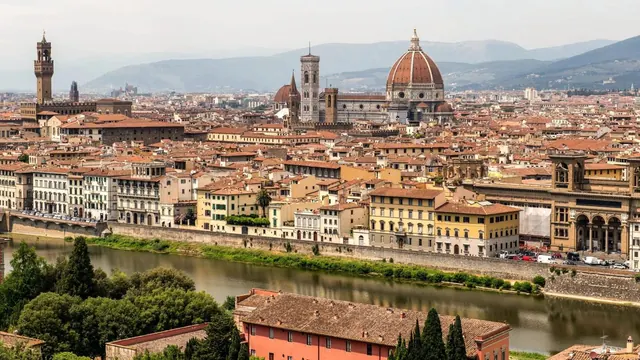
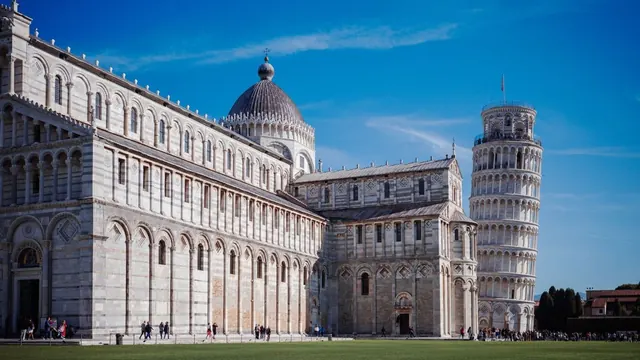
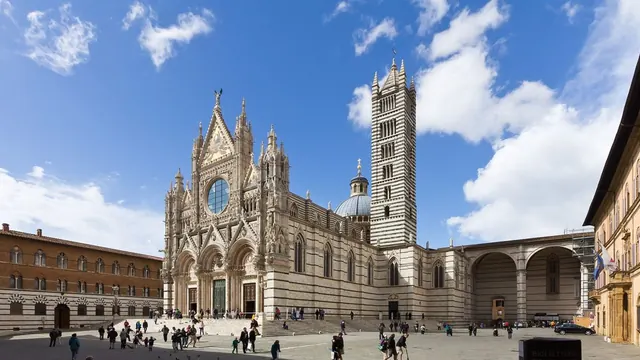
This is where the two differ most. Florence alone has Brunelleschi's dome, the Uffizi, Michelangelo's David and the Bargello within walking distance of each other. Siena, Pisa, Lucca, Pienza and Arezzo each add a world-class sight of their own.
Lake Como offers a gentler kind of sightseeing. It has aristocratic villas and terraced gardens such as Villa Carlotta and Villa del Balbianello, most reached by boat, plus Como's marble cathedral and its 1930s rationalist buildings. There are no major museums, and the villages themselves are much of the attraction.
Nightlife
Neither is a party destination, but Tuscany has a real night out when you want one. Students and visitors crowd the steps of Santo Spirito in Florence, and in summer the Versilia beach clubs and dance halls stay open until dawn.
Lake Como offers a terrace drink and little else. Como town has a few wine and cocktail bars, while Bellagio and Varenna empty after the last ferry, so anyone after more heads to Milan.
Nature & outdoors
Both are outstanding, but in different ways. Lake Como's appeal is drama: a deep glacial lake with peaks over 2,000m rising straight from the shore and snow on the northern summits into spring. There is serious walking on the Grigna and the Sentiero del Viandante, and the breva wind draws windsurfers and kitesurfers to the upper lake.
Tuscany's best-known landscape is farmed and gentle. Cypress lanes, vineyards and the Val d'Orcia's rolling fields make ideal country for cycling and walking between towns. Its wilder side is the Apuan Alps, the Casentino forests and the Maremma's coastal park, and Elba adds diving and sailing.
Day trips
Lake Como has good outings. Milan's Duomo and Last Supper are about an hour away by train, and Bergamo and Lugano are close. A ferry hop between Bellagio, Varenna and Menaggio fills a day without any planning.
Tuscany has far more choice. Siena, Lucca, Pisa, San Gimignano and the Montalcino and Pienza wine loop are all within easy reach, and Bologna, Assisi and the Cinque Terre lie just beyond the border. The main limit is time, not options.
Good for families
Tuscany is much easier with children. A farmhouse with a pool and animals can be paired with shallow, lifeguarded sandy beaches in Versilia or Maremma. There are also outings made for children, such as the Pinocchio park at Collodi and cycling on Lucca's walls.
Lake Como is safe and calm but harder work. Boat rides, the Brunate funicular and gelato make good days out, but steep stepped villages, narrow roads without pavements and hotels aimed at couples get in the way. The flatter upper lake, with its campsites, is the easiest base for families.
Getting around
On Lake Como you travel by boat. Ferries cross the central triangle of Bellagio, Varenna and Menaggio in minutes, and a stay there without a car works well. Driving the narrow, tunnelled shore roads in summer is best avoided.
Tuscany is a little easier overall but uneven. Florence is walkable, and the rail line to Pisa, Lucca and Arezzo makes a car-free trip simple. Chianti, the Val d'Orcia and the Maremma, though, really need a hire car, with parking outside the walls of each town.
Shopping & style
Lake Como has one real speciality, Como silk. You can buy scarves, ties and fabric in town and at mill outlets, and the Silk Museum tells the story of the trade. Serious fashion shopping means a trip to Milan.
Tuscany gives a shopper far more. Florence has leather workshops around Santa Croce, goldsmiths on the Ponte Vecchio, marbled paper in Oltrarno and the luxury houses of Via de' Tornabuoni. Around the region you will find alabaster in Volterra, ceramics in Montelupo and the big designer outlets in the Arno valley.
Affordability
Both are expensive in season, but Lake Como more so. The central lake is lined with grand villa hotels, lakefront dining charges for the view, and even modest rooms fill early. Staying in Como town, Lecco or the upper lake campsites keeps costs down.
Tuscany gives you more room to economise. Trattoria meals and wine from the cellar door are reasonable, and Lucca, Arezzo and the Maremma cost less than Florence. Car hire, though, adds a cost that a ferry-based stay on the lake avoids.
Live music & performing arts
Tuscany has the stronger programme, built around opera. Florence has the long-running Maggio Musicale Fiorentino with its own opera house. Puccini's operas are staged outdoors by the lake at Torre del Lago, and Lucca and Siena hold summer concert series.
Lake Como's main venue is Como's Teatro Sociale, a handsome old opera house, along with summer concerts in villa gardens and churches. For a night at La Scala you take the train to Milan.
Wellness & relaxation
Tuscany sits on hot springs and has bathed in them for centuries. You can soak in Saturnia's open terraced pools, the steaming medieval bath at Bagno Vignoni or the grand pump rooms of Montecatini, then rest at a farmhouse in the Chianti hills.
Lake Como's calm comes from its pace. Quiet villages after the day-trippers leave and villa hotel spas with pools over the water help, but there are no thermal baths and no public bathing tradition anywhere near the shore.
When should you go?
Pick your month. The climate figures are measured averages, not a forecast.
Lake Como in July
Tuscany in July
Daytime high, °C
Rainfall in the month, mm
Where the figures come from
Tuscany has no rain gauge within 25 km of the centre, so its rainfall comes from a gridded climate dataset read at the destination rather than from a gauge further away.
Tuscany's sunshine is measured 71 km from the centre, at Pisa / S. Giusto.
Temperature and rainfall are climate normals, averaged over the years shown. Lake Como: 1991-2020 normals, Lugano (22.8 km from centre). Tuscany: 1995-2020 (sunshine 1991-2020, rainfall 1991-2020) normals, Firenze / Peretola (5.6 km from centre).
Around the central lake, Lake Como has mild summers, with July and August highs of about 27°C. That is warm enough for a swim off a jetty and still comfortable for climbing the stepped lanes of the villages. The catch is rain. From April to November it falls heavily, peaking at around 178mm in May, so expect regular wet days even in high summer. The winter months are drier but cold and grey. June and early September give the best balance of warmth, sunshine and calm for walking.
Tuscany runs hotter and drier. Highs reach around 33°C in August, which makes July and August hard work for sightseeing in Florence or Siena and better spent on the coast or by a farmhouse pool. Summer is also much sunnier than at the lake. May, June and September are the best months for towns and countryside alike. In October the rain sets in, rising to about 124mm in November, though winter stays milder than on the lake.
Which traveller are you?
For a culture and arts trip, choose Tuscany. Florence's Uffizi, Accademia and frescoed churches, Siena's medieval centre and towns like Pienza and San Gimignano hold far more than Lake Como's villas and Como town's cathedral.
For a relaxing and wellness trip, Tuscany has the advantage. You can bathe in the natural hot springs at Saturnia, Bagno Vignoni and Montecatini and then spend unhurried days at a Val d'Orcia farmhouse. Lake Como has the quiet and some fine hotel spas but no thermal baths.
On an outdoors trip, Lake Como suits walkers and windsurfers. It has the Sentiero del Viandante, the Grigna summits and the afternoon breva wind on the upper lake. Tuscany suits cyclists and gentle hill-town walkers better, with the Apuan Alps for harder hiking.
Before you go
| Measure | Lake Como | Tuscany |
|---|---|---|
| Official language | Italian | Italian |
| Currency | Euro (EUR) | Euro (EUR) |
| Sockets | CFL230 V, 50 Hz | CFL230 V, 50 Hz |
| Driving side | Right | Right |
| Time zone | UTC+1, UTC+2 in summer | UTC+1, UTC+2 in summer |
| Emergency number | 112 | 112 |
| Main airport | Milan Malpensa International Airport (MXP)208 non-stop destinations | Florence Airport, Peretola (FLR)46 non-stop destinations |
| Public holidays this year | 13 days | 13 days |
By the numbers
| Measure | Lake Como | Tuscany |
|---|---|---|
| Population | - | 3,729,641 |
Where else could you go?
Every comparison below shares a destination with this one, so you can follow Lake Como or Tuscany somewhere new.
- Lake Gardavs Lake Como
- Umbriavs Tuscany
- Swiss Alpsvs Lake Como
- Cinque Terrevs Tuscany
- French Alpsvs Lake Como
- Lake Gardavs Tuscany