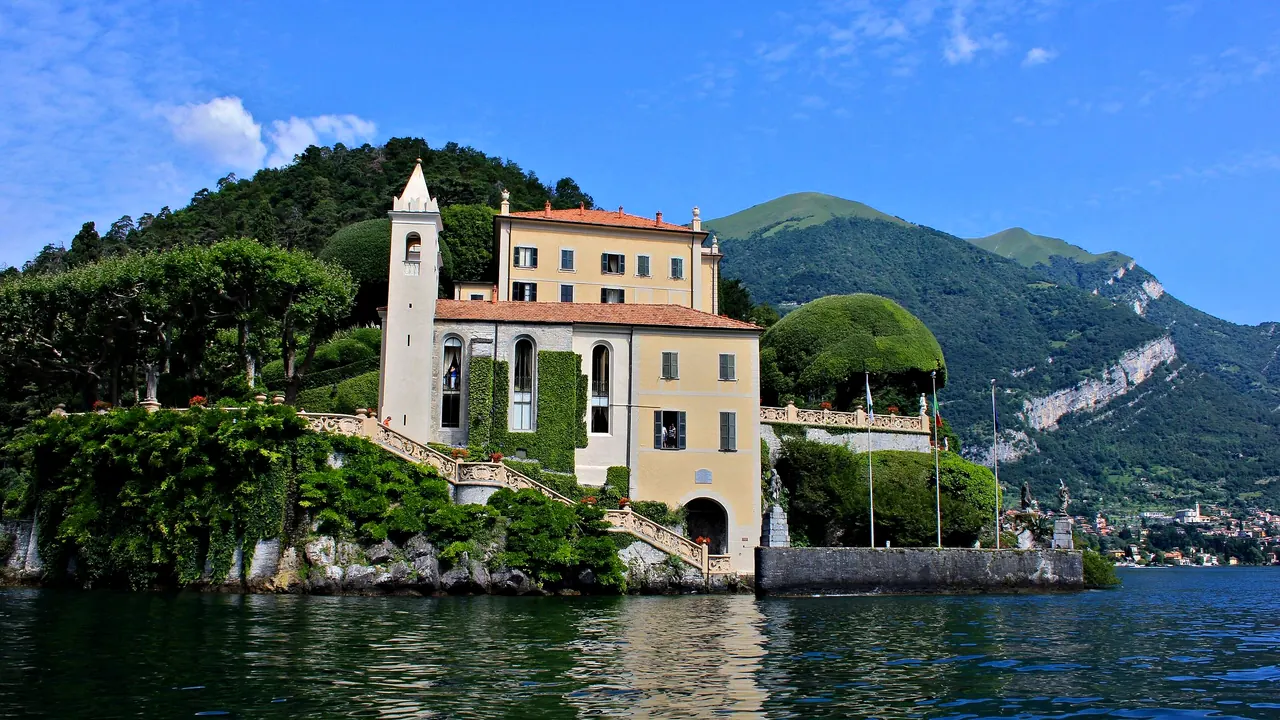
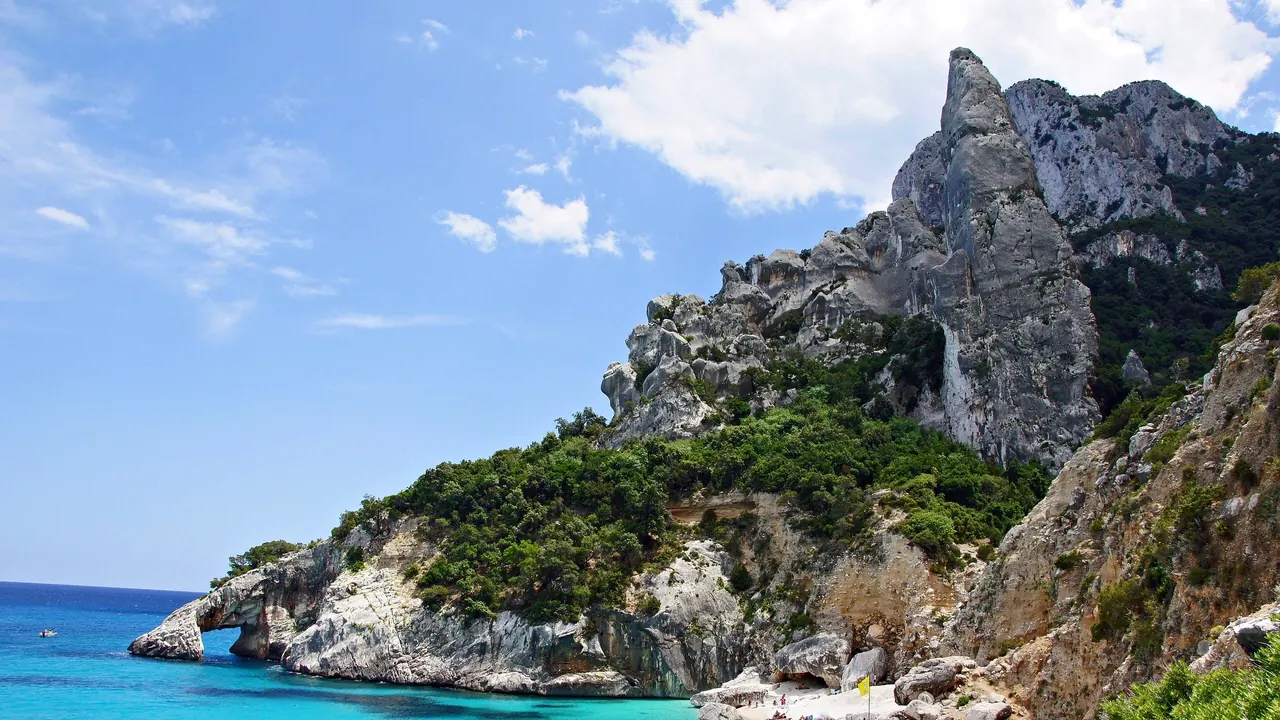
Photos: Lake Como by Navin75, CC BY-SA 2.0, cropped; Sardinia by Yesuitus2001, CC BY-SA 2.5, cropped.
Lake Como or Sardinia?
Our verdict in twelve categories, each scored against the same fixed benchmark cities, and the climate month by month, so you can choose for your trip.
Choose Lake Como for
- day trips
- getting around
- wellness
Lake Como suits travellers who want scenery and an easy rhythm without a car. You can spend your days going by ferry between Bellagio, Varenna and Menaggio, touring villa gardens and walking the mule tracks above the shore. Milan, Bergamo and Lugano are close enough for day trips. It is better for couples and walkers than for anyone wanting beaches or late nights. You should expect a higher bill and a wetter summer.
Choose Sardinia for
- beaches
- nightlife
- families
Sardinia is the choice for a sea trip. It has turquoise coves in the northeast, cliff bays along the Gulf of Orosei and shallow sand in the south where small children can paddle. The food is more distinctive, the nightlife livelier in high summer and families are better served. In return, you need a hire car, the drives are long, and the sights are spread across a large island.
Scoreboard
Twelve categories on one fixed scale from 0 to 100. The shaded stretch is the gap between the two.
Your match
Pick a travel style or drag the sliders, and both match scores follow your weighting.
Wins on day trips and getting around with your weighting.
Wins on beaches and nightlife with your weighting.
What matters to you?
Category by category
What the scores mean for a trip.
Beaches & swimming
This is where the two differ most. On Lake Como you swim from lidos, pebble strips and stone jetties at Bellagio, Lenno and Menaggio, or from the more open upper shore near Domaso. The water deepens and cools quickly, and a dip is a pleasure between ferry rides rather than the purpose of the trip.
Sardinia is a beach island first. It has granite coves with turquoise water around the Costa Smeralda and La Maddalena, pebble bays below the Orosei cliffs, and fine, shallow sand at Chia, Tuerredda and La Pelosa. When the mistral blows, there is usually a sheltered coast to escape to.
Food & drink
Lake Como cooks lake and mountain food: perch fried in butter on risotto, salted missoltini, and polenta and cheese from the Valtellina. The best meals are in hill trattorias and crotti, while the lakefront terraces mostly charge for the view.
Sardinia gives you more to discover and more that you will not find elsewhere in Italy. There is suckling pig roasted over myrtle wood, culurgiones, pane carasau, and bottarga and lobster along the coast. Long agriturismo set menus and Cagliari's San Benedetto market are high points. Neither place offers much international range.
Culture & sights
The two are level on culture, but the heritage is from different eras. Lake Como's sights are elegant and close together: aristocratic villas and gardens such as Villa Carlotta and Balbianello, mostly reached by boat, plus Como's marble cathedral and Terragni's 1930s rationalist buildings. There are no major museums.
Sardinia's heritage is far older and more unusual. It includes the Bronze Age nuraghi at Su Nuraxi, sacred wells, and the Mont'e Prama stone giants in Cagliari's archaeological museum, followed by the Phoenician and Roman ruins of Nora and Tharros and the Catalan old town of Alghero. Seeing it all means a lot of driving.
Nightlife
Lake Como is quiet after dark. An evening means a drink on a terrace, a few wine bars in Como town, and village waterfronts that empty after the last ferry. A real night out means taking the train to Milan.
Sardinia has more going on, though it depends on season and base. Porto Cervo's beach clubs and late venues draw a dressy crowd in July and August. Cagliari keeps its wine bars in the Marina and Castello quarters open all year, and Alghero's ramparts fill for aperitivo on summer evenings.
Nature & outdoors
Both are excellent outdoors, but in different ways. On Lake Como the landscape is the main event: mountains rise straight from the water to over 2,000m. The Sentiero del Viandante, the Greenway and the Grigna summits are all close to a ferry pier, and the breva wind makes Domaso a windsurfing spot.
Sardinia is wilder and rougher. It has the limestone Supramonte, the Gorropu gorge and the demanding Selvaggio Blu trek, sea caves near Cala Gonone, diving in the La Maddalena marine park, and flamingos in the lagoons. It rewards effort more than gentle strolls.
Day trips
Lake Como is the better base for day trips. Milan's Duomo and Last Supper are about an hour away by train, and Bergamo's upper town and Lugano are just as close. On days without a plan, ferry hops around the central triangle fill the time.
Sardinia's outings depend on your base, and the drives are slow. There is Bonifacio across the strait from Santa Teresa Gallura, the Alghero, Bosa and Capo Caccia circuit, Carloforte from Cagliari, and the Barbagia villages inland. These places are charming but small.
Good for families
Lake Como gives children short, varied outings rather than a place built around them. They can take a boat between villages, ride the funicular up to Brunate, swim at a summer lido or explore a villa garden, which holds young attention better than the rooms inside. Older children can add kayaking and easy hikes. Many lake hotels are aimed at couples, so the campsites and flatter shores near Domaso and Colico make the easiest family base.
Sardinia works better for families, because the sea fills the day without much planning. Beyond a few water parks and island boat trips, though, little is made for children. Choose your beach with care: the cliff coves of the Gulf of Orosei can mean a long, steep walk or a boat with small children. You will also be driving where the lake gives you ferries, and in July and August the middle of the day is best spent in the shade.
Getting around
Lake Como is simpler without a car. Ferries cross between Bellagio, Varenna, Menaggio and Cadenabbia in minutes, and trains run from Milan to Como and up the eastern shore. Driving is the trouble here, on narrow, crowded shore roads with scarce parking.
In Sardinia, a hire car is essentially required. Trains and buses rarely reach the beaches, and winding roads take longer than the map suggests. Choosing the right one of its three airports saves hours, and many Orosei coves are reachable only by boat.
Shopping & style
Neither is a shopping destination. What you buy reflects local trades. On Lake Como that means silk: scarves, ties and fabrics from Como's mills and outlets, with the Silk Museum to explain the trade and Milan nearby for fashion.
Sardinia offers crafts and food instead: red coral in Alghero, Pattada shepherd's knives, filigree gold, cork and woven rugs, plus pecorino and bottarga to take home. Porto Cervo's luxury boutiques only open for the summer crowd.
Affordability
Lake Como is expensive across the central lake in summer. The villa hotels around Bellagio, Tremezzo and Cernobbio fill early, lakefront terraces charge for the view, and boat taxis and private tours add up. Como town, Lecco and the campsites of the upper lake soften the bill, and the ferries and trains are reasonably priced.
Sardinia generally costs less, with one large exception. The Costa Smeralda in July and August is among the Mediterranean's priciest stretches. Around Cagliari, Alghero and Ogliastra, prices are moderate for Italy, and agriturismo menus are generous. In both places high summer costs most. On the island, car hire and ferries also climb in August, while June and September stay warm enough for the sea.
Live music & performing arts
The two are broadly level here, with thin programmes outside a single theatre. Lake Como has the handsome Teatro Sociale and summer concerts in villas and churches, and La Scala is close enough in Milan for an evening.
Sardinia's Teatro Lirico in Cagliari plays a similar role. What sets the island apart is its tradition: canto a tenore shepherd singing, launeddas pipes, the Time in Jazz festival at Berchidda and the costumed Sant'Efisio procession.
Wellness & relaxation
Rest on Lake Como comes from the setting and from good hotels. Once the day-trippers have left, the smaller villages away from Bellagio and Como go very quiet, and the grand hotels near Cernobbio and Tremezzo run full spas with lake views. For thermal baths you need a long drive up into the Valtellina.
Sardinia is about as restful, but the rest takes a different shape. Warm water still flows beside the Roman baths at Fordongianus, Sardara has thermal hotels, and the large beach resorts offer thalassotherapy. The deepest calm is inland and in Ogliastra, where farm stays keep to a slow village pace. In both places, late spring and September are the quietest times.
When should you go?
Pick your month. The climate figures are measured averages, not a forecast.
Lake Como in July
Sardinia in July
Daytime high, °C
Rainfall in the month, mm
Where the figures come from
Sardinia has no rain gauge within 25 km of the centre, so its rainfall comes from a gridded climate dataset read at the destination rather than from a gauge further away.
Temperature and rainfall are climate normals, averaged over the years shown. Lake Como: 1991-2020 normals, Lugano (22.8 km from centre). Sardinia: 1991-2020 normals, Olbia / Costa Smeralda (3.1 km from centre).
Lake Como is at its best from late spring to early autumn, but expect rain. June to August reach about 27°C, warm enough for a swim from a lido or jetty. July is the sunniest month. Rain is heavy from April right through November, though, and May is the wettest month at around 178mm, so a few grey or showery days are part of any visit. Winter highs stay in single figures, which makes December to February chilly and better for a quiet stay than for long days outdoors.
Sardinia is warmer and much drier. Summer is almost rainless, with only about 4mm in July. Highs of 32°C in July and August make inland sightseeing and hiking hard work in the middle of the day. The sea is warm enough to swim from June, peaks near 25°C in August and stays pleasant into early October. Spring and autumn are best for walking. Winter days are roughly twice as warm as on the lake, though November and December are the island's wettest months.
Which traveller are you?
For a beach and sun trip, Sardinia wins easily. It has pale-sand coves around La Maddalena, white bays on the Gulf of Orosei, a warm sea into early autumn and dry summers. Lake Como offers only lidos and stone jetties, and these are a pleasant extra rather than a reason to come.
On a family trip with young children, Sardinia is easier. Chia, the Costa Rei and La Pelosa have shallow, sandy water, and resort villages run pools and children's clubs. On Lake Como, the steep stepped lanes and narrow shore roads make life harder with small children.
On a relaxing and wellness trip, Lake Como has the gentler rhythm. You can drift between a terrace, a garden and a ferry with no car at all, and the villa hotels have spas with pools above the water. In Sardinia, rest usually comes with long drives in between.
Before you go
| Measure | Lake Como | Sardinia |
|---|---|---|
| Official language | Italian | Italian |
| Currency | Euro (EUR) | Euro (EUR) |
| Sockets | CFL230 V, 50 Hz | CFL230 V, 50 Hz |
| Driving side | Right | Right |
| Time zone | UTC+1, UTC+2 in summer | UTC+1, UTC+2 in summer |
| Emergency number | 112 | 112 |
| Main airport | Milan Malpensa International Airport (MXP)208 non-stop destinations | Olbia Costa Smeralda Airport (OLB)79 non-stop destinations |
| Public holidays this year | 13 days | 13 days |
By the numbers
| Measure | Lake Como | Sardinia |
|---|---|---|
| Population | - | 1,628,384 |
| Swim season, months above 21 °C | - | 3 months |
Where else could you go?
Every comparison below shares a destination with this one, so you can follow Lake Como or Sardinia somewhere new.
- Cinque Terrevs Lake Como
- Cinque Terrevs Sardinia
- Caprivs Sardinia
- Amalfi Coastvs Sardinia
- Sicilyvs Sardinia
- Mallorcavs Sardinia