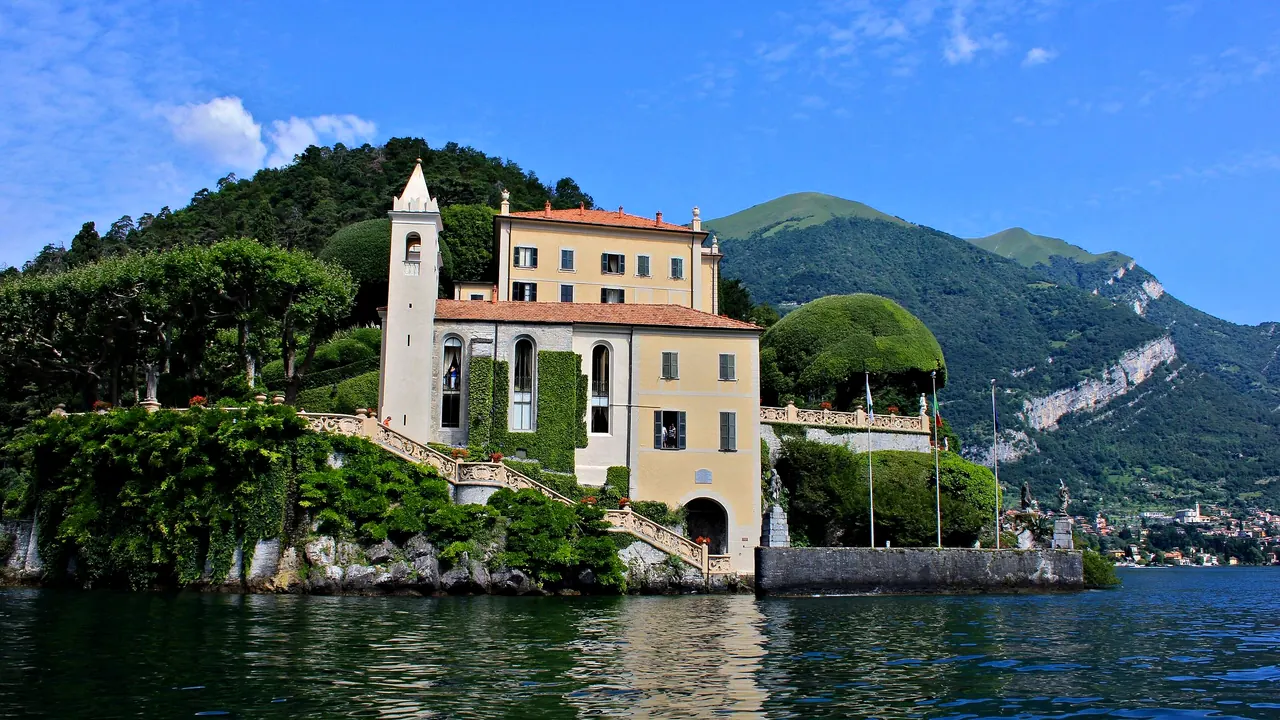
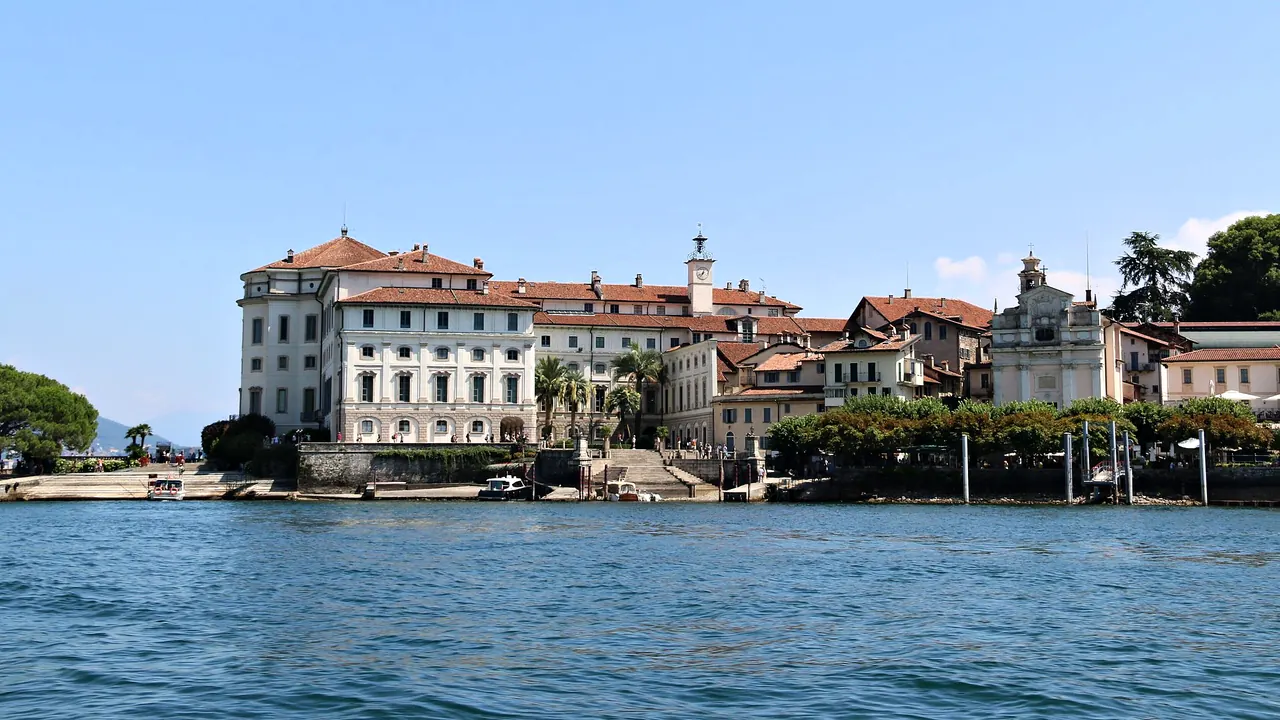
Photos: Lake Como by Navin75, CC BY-SA 2.0, cropped; Lake Maggiore by FrDr, CC BY-SA 4.0, cropped.
Lake Como or Lake Maggiore?
Our verdict in twelve categories, each scored against the same fixed benchmark cities, and the climate month by month, so you can choose for your trip.
Choose Lake Como for
- nightlife
- shopping
- wellness
Lake Como suits couples and walkers who want the more dramatic setting and are willing to pay for it. Its mountains rise straight out of the water, the villas of Bellagio, Varenna and Tremezzo are a short ferry hop apart in the central triangle, and Como town adds silk shops, a cathedral and a few bars for the evening. The cost of all this is real: it is the pricier lake, and its steep stepped villages are hard work with small children.
Choose Lake Maggiore for
- families
- prices
- getting around
Families and anyone watching their spending will get more from Lake Maggiore. The Italian shore has family-run hotels, agriturismi and campsites at ordinary prices, and there is more aimed at children, from the animal park at Stresa to the summer ride on Mottarone. It also reaches into Switzerland at Locarno and Ascona and up to the wild Val Grande, so it rewards a slower trip that moves around more, even if its evenings end earlier than Como's.
Scoreboard
Twelve categories on one fixed scale from 0 to 100. The shaded stretch is the gap between the two.
Your match
Pick a travel style or drag the sliders, and both match scores follow your weighting.
Too close to call, 1 point apart
Wins on nightlife and shopping with your weighting.
Wins on families and prices with your weighting.
What matters to you?
Category by category
What the scores mean for a trip.
Beaches & swimming
Neither lake is a beach destination, and the swimming is much the same on both: pebble strips, lidos and jetties, with water that feels fresh in high summer. The difference lies in where you swim. On Lake Como the lidos at Bellagio, Lenno and Menaggio fit around ferry hops in the central lake, and the upper lake near Gravedona and Domaso has the more open shores.
On Lake Maggiore the clearest water is on the upper Piedmont shore at Cannobio and Cannero Riviera, while the flatter southern end near Arona has gentler entries and even a little sand, which is easier with children.
Food & drink
The two lakes eat much alike, with perch in butter and sage, risotto and polenta on both menus, and both lack street food and variety. Lake Como's best meals are up in the hill villages, in family trattorias and the crotti built against the cool rock, with Valtellina Nebbiolo and cheeses coming down from the north.
Lake Maggiore has a few more highly regarded restaurants on the Verbania shore and at the southern end. It also has the Swiss grotti around Locarno and Ascona, where you eat at granite tables in the woods, and its wine lists lean towards Ghemme, Gattinara and Ticino Merlot.
Culture & sights
Both lakes rest their heritage on aristocratic villas and gardens rather than museums, so the choice is about style. Lake Como gives you a string of villas, Carlotta, Balbianello and Melzi, plus a real town in Como with a marble cathedral, Romanesque churches and its unusual 1930s rationalist buildings.
Lake Maggiore's showpieces are the Borromean Islands, with the Baroque palace and grottoes of Isola Bella and the botanical garden of Isola Madre. Around them are the frescoed Rocca di Angera, the cliffside hermitage of Santa Caterina del Sasso and the UNESCO-listed Sacro Monte of Ghiffa, though these sites are spread more thinly along the shores.
Nightlife
Lake Como has the livelier evenings of the two, though only by lakeside standards. Como town keeps a handful of wine and cocktail bars in its old centre and on the waterfront, and summer adds lounge bars and the occasional party night.
On Lake Maggiore the evening is mostly dinner and a stroll, with a few bars in Locarno, Ascona, Stresa and Verbania that stay busy on summer weekends and quiet down by midnight. From either lake, a proper night out means the train to Milan.
Nature & outdoors
Lake Como is the more vertical of the two. Peaks over 2,000m rise straight out of the water, the Sentiero del Viandante and the Greenway follow the shores, and the Grigna has proper summit routes. The steady breva wind makes Domaso and Colico a real centre for windsurfing and kitesurfing.
Lake Maggiore gives up some of that drama for range and wildness. You can walk up Mottarone for its view over seven lakes to Monte Rosa, head into the empty Val Grande, or follow the green Verzasca river and the Maggia and Centovalli valleys from Locarno. The flatter south adds cycling paths.
Day trips
The two lists go in different directions. From Lake Como you head east to Bergamo's walled upper town from Lecco, or north up the Valtellina towards the Bernina line, and the ferries of the central lake make a day out with no planning at all.
From Lake Maggiore you head west to Lake Orta and the island of San Giulio, or north into Ticino for Bellinzona's three castles and the Centovalli railway over its viaducts to Domodossola. These trips are mostly by train or car rather than boat. Milan and Lugano are within easy reach of either lake.
Good for families
Lake Maggiore is clearly the better lake for children. It has things actually made for them: the animal park at Villa Pallavicino, the summer ride and adventure trails on Mottarone, and a falconry park near Locarno. Its flatter southern towns and shallow lidos are easy with a pushchair.
Lake Como offers boat rides, the Brunate funicular and gelato by the water, but little else aimed at young visitors. Bellagio and Varenna are all steps, the shore roads have few pavements, and many hotels are geared to couples, so families do best on the upper lake around Domaso and Colico.
Getting around
Getting around is much the same on both lakes: ferries do the real work, the shore roads are narrow and busy in summer, and a car-free stay works if you choose your base well. On Lake Como that base is the central triangle, where Bellagio, Varenna, Menaggio and Cadenabbia are minutes apart by boat and Varenna has the train.
Lake Maggiore is longer and more spread out, so a car helps more for its valleys and the quieter eastern shore. In return, Stresa and Arona sit on the Milan railway and Locarno has good Swiss rail links, which makes moving on by train easy.
Shopping & style
Lake Como has something specific to buy, which Maggiore does not. Como's long silk tradition means scarves, ties and fabrics from local mills and outlets, explained at the Silk Museum, and the old centre has a decent range of Italian fashion and independent shops.
Lake Maggiore's shopping is mainly its weekly markets, above all Luino's long-established Wednesday market on the lakefront, with smaller ones at Cannobio and Intra. They sell cheeses, cured meats, leather and household goods, and Ascona and Locarno add a few boutiques. For serious fashion, both send you to Milan.
Affordability
Lake Maggiore is the easier lake on the wallet, as long as you stay on the Italian side. Small Piedmont towns, agriturismi and campsites keep costs moderate, though Stresa's grand hotels and the Swiss shore at Locarno and Ascona cost a good deal more.
Lake Como's central lake around Bellagio, Tremezzo and Cernobbio is among the dearer parts of Italy in summer, with rooms filling early and lakefront tables charging for the view. Saving money there means staying in Como town, Lecco or the campsites of the upper lake, or coming in spring or autumn.
Live music & performing arts
Neither lake has much of a stage life, but the two offer it in different forms. Lake Como has a proper year-round venue in Como's Teatro Sociale, an early nineteenth-century opera house with opera, concerts and theatre, and summer brings classical concerts in villas and churches.
Lake Maggiore relies on summer festivals: the long-running Stresa Festival on the Borromean Islands and in palaces, big open-air concerts in Locarno's Piazza Grande, and jazz on the Ascona lakefront. Outside those weeks there is very little.
Wellness & relaxation
Lake Como has the more impressive hotel spas, while Lake Maggiore has thermal water within reach. On Como, the grand villa hotels near Cernobbio and Tremezzo have spas with pools floating on the water, but the nearest thermal baths are a long drive away in the Valtellina.
On Maggiore, the Ossola valleys behind Verbania and the old spa village of Bognanco each make an easy half-day of soaking, and Stresa and the Swiss shore have hotel spas with lake views. On both lakes the slow pace does most of the work.
When should you go?
Pick your month. The climate figures are measured averages, not a forecast.
Lake Como in July
Lake Maggiore in July
Daytime high, °C
Rainfall in the month, mm
Where the figures come from
Lake Maggiore's temperatures are measured 36 km from the centre, at Lugano.
Lake Maggiore has no rain gauge within 25 km of the centre, so its rainfall comes from a gridded climate dataset read at the destination rather than from a gauge further away.
Temperature and rainfall are climate normals, averaged over the years shown. Lake Como: 1991-2020 normals, Lugano (22.8 km from centre). Lake Maggiore: 1991-2020 normals, Lugano (35.9 km from centre).
Both lakes have the same temperatures and the same sunshine through the year. Days reach about 27°C in July and August, the only months that are reliably warm enough for swimming, while spring and early autumn are mild and comfortable for walking villages and hill paths. Winter is cold and grey, with highs around 7°C in January, which suits a quiet visit to Como town or Locarno more than lake life.
The real difference is rain. Lake Como is much wetter from spring right through to November, peaking at about 178mm in May and staying high all summer, so showers and storms are part of any stay. Lake Maggiore is noticeably drier in the same months, falling to around 81mm in July, which makes it the safer pick for a summer trip built around boats and gardens.
Which traveller are you?
On a family trip with young children, Lake Maggiore is the easier lake. A base in the flatter southern towns near Arona puts you on the Milan railway and a boat ride from the islands. Lake Como's easiest family base, the upper lake, is far from its famous villas.
For a trip on a tight budget, Lake Maggiore makes your money go further. Stay in a small Piedmont town such as Cannobio, eat away from the promenade and skip the Swiss shore. Saving on Lake Como means leaving the central lake, which is the setting most people come for.
On a shopping trip, Lake Como is the better choice, and Como town is the base to pick rather than the villages. The silk outlets are on its outskirts, and the train to Milan's fashion streets leaves from the town. On Maggiore, shopping mostly means planning around market days.
Before you go
| Measure | Lake Como | Lake Maggiore |
|---|---|---|
| Official language | Italian | Italian |
| Currency | Euro (EUR) | Euro (EUR) |
| Sockets | CFL230 V, 50 Hz | CFL230 V, 50 Hz |
| Driving side | Right | Right |
| Time zone | UTC+1, UTC+2 in summer | UTC+1, UTC+2 in summer |
| Emergency number | 112 | 112 |
| Main airport | Milan Malpensa International Airport (MXP)208 non-stop destinations | Milan Malpensa International Airport (MXP)208 non-stop destinations |
| Public holidays this year | 13 days | 13 days |
Where else could you go?
Every comparison below shares a destination with this one, so you can follow Lake Como or Lake Maggiore somewhere new.
- Swiss Alpsvs Lake Maggiore
- Lake Gardavs Lake Como
- French Alpsvs Lake Maggiore
- Swiss Alpsvs Lake Como
- Lake Gardavs Lake Maggiore
- French Alpsvs Lake Como