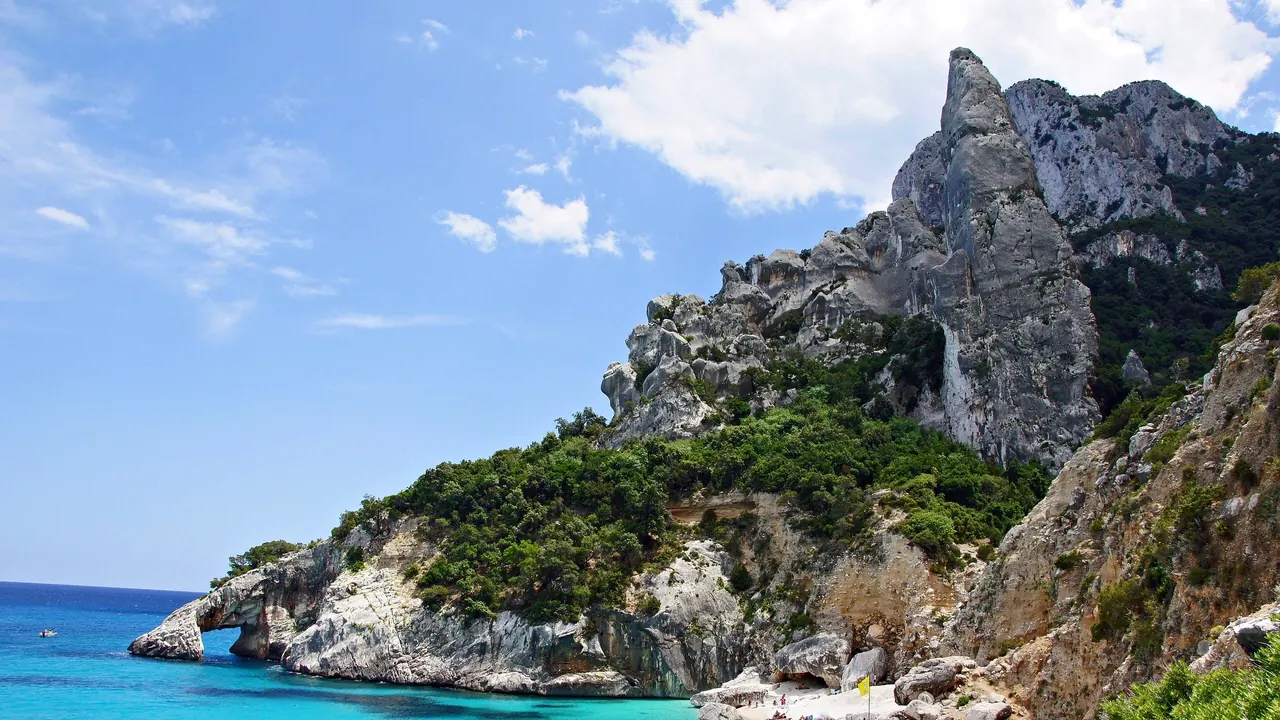
Photos: Sardinia by Yesuitus2001, CC BY-SA 2.5, cropped.
Provence or Sardinia?
Our verdict in twelve categories, each scored against the same fixed benchmark cities, and the climate month by month, so you can choose for your trip.
Choose Provence for
- day trips
- live music and the arts
- culture and sights
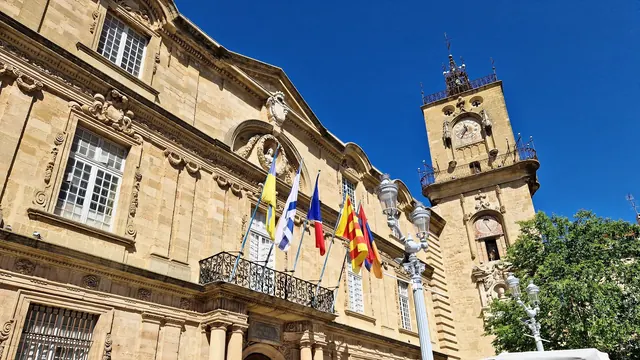
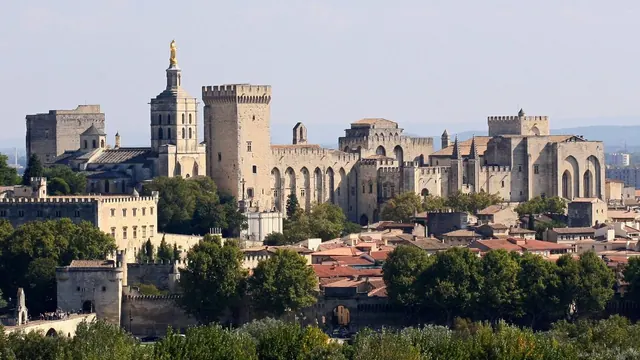
Provence suits a traveller who wants to move between old towns, markets and vineyards. In a single trip you can see the papal palace in Avignon, Roman Arles and Orange and Cézanne's Aix, with a different outing every day from a base in the Luberon or the Alpilles. The cooking and wine are richer and the summer festivals give the evenings a real draw. The beaches are good, but they are one part of the trip rather than the point of it.
Choose Sardinia for
- beaches
- families
- prices
Choose Sardinia when the sea is the reason for going. The granite coves of the Gallura and La Maddalena, the boat-only bays of the Gulf of Orosei and the shallow sands at Chia and La Pelosa are better than anything on the Provençal coast, and families with small children will find the days easier to fill. The trade-off is less culture and fewer outings within easy reach. The island rewards settling on one stretch of coast more than touring.
Scoreboard
Twelve categories on one fixed scale from 0 to 100. The shaded stretch is the gap between the two.
Your match
Pick a travel style or drag the sliders, and both match scores follow your weighting.
Wins on day trips and live music and the arts with your weighting.
Wins on beaches and families with your weighting.
What matters to you?
Category by category
What the scores mean for a trip.
Beaches & swimming
Provence has fine beaches at Pampelonne, around Hyères and Porquerolles and in the calanques near Cassis. They all lie along one stretch of coast, though, and the Luberon and Alpilles bases are a long drive from any of them.
Sardinia has more first-rate beaches and a wider range of them all the way round the island, from the granite coves of La Maddalena to the boat-only bays of Orosei and the wading shallows of La Pelosa. When the mistral blows, there is nearly always a sheltered coast to move to, which Provence's single shoreline cannot offer.
Food & drink
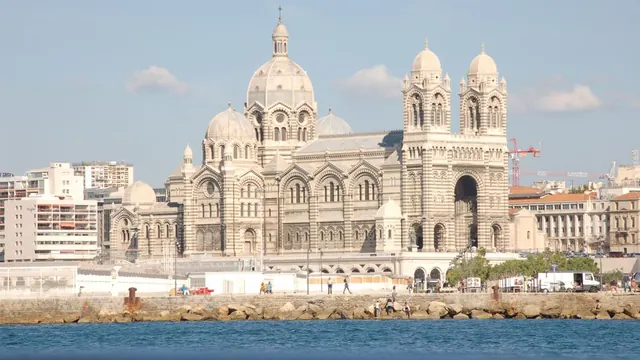
Provence is the better place to eat. It has bouillabaisse and North African cooking in Marseille, black truffles around Carpentras and weekly markets in Aix, Apt and Saint-Rémy. The wine runs from Bandol reds to Châteauneuf-du-Pape, and country restaurants range from village bistros to serious tasting menus.
Sardinia's cooking is more unusual: a shepherd's cuisine of suckling pig roasted over myrtle wood, pane carasau, pecorino and culurgiones, best eaten at an agriturismo in the hills. Outside Cagliari there are fewer places to eat really well, and the resort strips lean towards generic food.
Culture & sights
Provence fits far more into short drives: the Palais des Papes in Avignon, the Roman monuments of Arles, Orange and Vaison-la-Romaine, Aix's mansions and the MuCEM in Marseille. Three Cistercian abbeys stand in the countryside.
Sardinia's heritage is older and stranger. It centres on the Bronze Age nuraghi, with Su Nuraxi at Barumini as the great complex and the Mont'e Prama stone giants in Cagliari's museum. Phoenician Nora and Tharros and Catalan Alghero add other periods. It is absorbing, but it has fewer major monuments and they are spread further apart.
Nightlife
Neither is a place for nightlife, and in both most evenings end with a long dinner and a stroll. The difference is in kind. Marseille's Cours Julien and La Plaine give Provence a real city scene all year, with dive bars and late clubs. Cagliari's evenings are gentler, with wine bars in the Marina and summer kiosks on Poetto beach.
For summer glamour the two are evenly matched. Saint-Tropez's beach clubs and Porto Cervo's on the Costa Smeralda are both dressy and expensive, and both fade once August ends.
Nature & outdoors
Both are strong outdoors, and Provence has more variety within reach. It has the Gorges du Verdon, the white cliffs of the Calanques, Mont Ventoux for cyclists, flamingos and white horses in the Camargue, and lavender on the Valensole plateau in early summer.
Sardinia's wild country is rougher and lies mostly in the east. There you find the Gorropu gorge, the demanding Selvaggio Blu cliff trek and sea-cliff climbing at Cala Gonone. Sailing and diving around La Maddalena and kitesurfing at Porto Pollo give it more on the water.
Day trips
This is where the two differ most. From almost any base in Provence, a dozen outings lie within an hour: Gordes and Roussillon, L'Isle-sur-la-Sorgue, Les Baux and the Châteauneuf vineyards, with the Pont du Gard and Nîmes just across the Rhône.
Sardinia is large and its roads are slow, so your outings depend on where you stay. The ferry from Santa Teresa Gallura to Bonifacio in Corsica is a highlight, and the Barbagia villages and Carloforte make good days out, but each base reaches only its own corner of the island.
Good for families
Sardinia works better for families because the whole island is built around the beach. Resort villages have pools and children's clubs, the water at Chia, the Costa Rei and La Pelosa is shallow, and restaurants welcome children.
A family trip to Provence usually means a rented house with a pool. It has shallow beaches around Hyères and Porquerolles, and canoeing or Camargue horse riding for older children. Long car journeys, July heat and pushchair-unfriendly perched villages make it harder going with small children.
Getting around
In both you need a car for most of what makes the trip worthwhile. Provence at least has trains between Marseille, Aix, Avignon, Arles and Toulon, and short distances between them, so a car-free trip based in the towns is possible. Its worst bottleneck is the summer road into Saint-Tropez, where the gulf ferries are the better option.
Sardinia's drives are longer, on winding roads, and its trains are few. Choosing the nearest of its three airports saves hours, and boats are the only practical way into many of the Orosei coves.
Shopping & style
Provence gives shoppers more to do. L'Isle-sur-la-Sorgue has antiques halls and a Sunday market. The weekly markets sell printed fabrics and olive wood, and Moustiers faience, santons and Marseille soap are found across the region. Aix has proper town-centre shopping in its old streets.
Sardinia's crafts are just as distinctive: red coral in Alghero, filigree gold, Pattada knives and woven rugs. Beyond Cagliari's main streets and Porto Cervo's summer boutiques, though, there are few shops.
Affordability
Both are costly in July and August, and each has one notoriously expensive stretch: Saint-Tropez and the Var coast in Provence, the Costa Smeralda in Sardinia. In both, June and September bring prices down.
Away from those coasts, Sardinia's moderate rooms around Cagliari and Alghero and its generous agriturismo menus go slightly further than Provence's villas and boutique hotels in the Luberon. In Provence, Marseille, Arles and Avignon are the more reasonable bases.
Live music & performing arts
Provence is the place for performances, as long as you go in summer. In July the Avignon festival fills the courtyard of the Palais des Papes and almost every hall in town. Aix stages opera of international standard, and opera is also performed in the Roman theatre at Orange. Marseille has opera, theatre and rap all year.
Sardinia's best performances are traditional: canto a tenore singing and launeddas pipes at village events, the Sant'Efisio procession in Cagliari and Time in Jazz in Berchidda. Outside Cagliari's Teatro Lirico, there is little to attend for most of the year.
Wellness & relaxation
Neither is a spa destination, and in both the rest comes mostly from the slow pace. Provence has a slight edge for spa-goers. Gréoux-les-Bains and Digne-les-Bains in Haute-Provence are long-established spa towns, and Aix has a thermal spa where the Roman baths stood. Many restored farmhouses in the Luberon and the Alpilles also offer lavender and olive-oil treatments to fill the hours between the market and the pool.
Sardinia has thermal springs too. Warm water still runs beside the Roman baths at Fordongianus, and Sardara has thermal hotels, but few visitors plan a trip around them. A spa on the island more often means the thalassotherapy centre of a large resort in the south or on the Costa Smeralda. Its deepest calm is found in the villages of Ogliastra and at inland agriturismi, especially in late spring and September.
When should you go?
Pick your month. The climate figures are measured averages, not a forecast.
Provence in July
Sardinia in July
Daytime high, °C
Rainfall in the month, mm
Where the figures come from
Provence has no rain gauge within 25 km of the centre, so its rainfall comes from a gridded climate dataset read at the destination rather than from a gauge further away.
Provence's sunshine is measured 53 km from the centre, at Nimes / Courbessac.
Sardinia has no rain gauge within 25 km of the centre, so its rainfall comes from a gridded climate dataset read at the destination rather than from a gauge further away.
Temperature and rainfall are climate normals, averaged over the years shown. Provence: 2005-2020 (sunshine 1981-2010, rainfall 1991-2020) normals, Avignon / Morières-lès-Avignon (11.9 km from centre). Sardinia: 1991-2020 normals, Olbia / Costa Smeralda (3.1 km from centre).
Both have the same kind of year: hot, dry summers, a wet autumn and cool winters. Where most visitors stay in Provence, July reaches about 32°C and has the most sunshine of the year, which makes midday walks around Avignon or Arles hard going. May, June and September are the comfortable months for both towns and countryside. Rain returns in September and peaks in October at about 102mm, so late autumn is a gamble.
Around Sardinia's main resort areas, summer is even drier, with almost no rain in July. The sea is warm enough to swim from June to September and reaches about 25°C in August. The wet season comes later than in Provence, running from October into December. Winter days are milder, around 14°C in January against 11°C in Provence, though neither is a winter beach destination.
Which traveller are you?
On a beach and sun trip, Sardinia is the clear choice. Settle on one coast rather than touring: the south for soft sand, the northeast for granite coves. In Provence, a base inland puts the sea a long drive away.
For a culture and arts trip, choose Provence. From a base in Avignon or Arles, a different Roman or medieval town lies a short train ride away each day, and July adds the festivals. Sardinia's sights mean long drives.
On a family trip with young children, Sardinia keeps things simple: stay by a gentle sandy beach and let the sea fill the days. Provence works better once children are older and can cope with long drives and July heat.
Before you go
| Measure | Provence | Sardinia |
|---|---|---|
| Official language | French | Italian |
| Currency | Euro (EUR) | Euro (EUR) |
| Sockets | CE230 V, 50 Hz | CFL230 V, 50 Hz |
| Driving side | Right | Right |
| Time zone | UTC+1, UTC+2 in summer | UTC+1, UTC+2 in summer |
| Emergency number | 112 | 112 |
| Main airport | Marseille Provence Airport (MRS)126 non-stop destinations | Olbia Costa Smeralda Airport (OLB)79 non-stop destinations |
| Public holidays this year | 11 days | 13 days |
By the numbers
| Measure | Provence | Sardinia |
|---|---|---|
| Population | - | 1,628,384 |
| Swim season, months above 21 °C | - | 3 months |
Where else could you go?
Every comparison below shares a destination with this one, so you can follow Provence or Sardinia somewhere new.
- Corsicavs Sardinia
- French Rivieravs Provence
- French Alpsvs Provence
- Costa Bravavs Provence
- Dordognevs Provence
- Umbriavs Sardinia