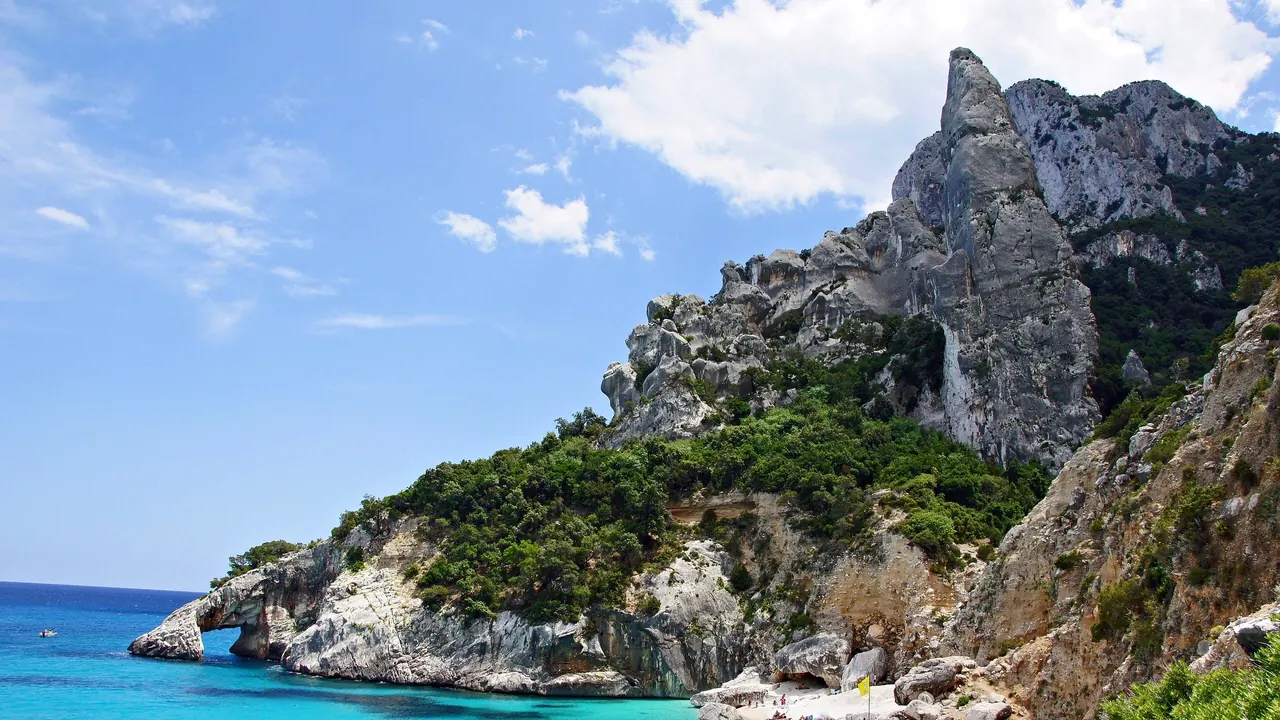
Photos: Sardinia by Yesuitus2001, CC BY-SA 2.5, cropped.
Lake Garda or Sardinia?
Our verdict in twelve categories, each scored against the same fixed benchmark cities, and the climate month by month, so you can choose for your trip.
Choose Lake Garda for
- day trips
- wellness
- families
Lake Garda suits a summer vacation with plenty to do and a base that's easy to stay in. Children have Gardaland and the lidos of the south-east shore. Active travellers have the mountains and wind around Riva, Arco and Torbole. The railway on the southern shore puts Verona and Venice within a day's reach, and the thermal waters at Sirmione make it easy to slow down. You give up the sea and a real nightlife.
Choose Sardinia for
- beaches
- nightlife
- shopping
Sardinia is the choice if the sea itself is the point. Its coves of pale sand and clear water are far better than anything a lake can offer, and its Bronze Age towers and shepherd cooking feel like a different country from mainland Italy. It suits travellers who will hire a car, settle on one coast and accept that the rest of the island stays out of reach. Summer nights on the Costa Smeralda and in Alghero are livelier than on the lake.
Scoreboard
Twelve categories on one fixed scale from 0 to 100. The shaded stretch is the gap between the two.
Your match
Pick a travel style or drag the sliders, and both match scores follow your weighting.
Too close to call, 1 point apart
Wins on day trips and wellness with your weighting.
Wins on beaches and nightlife with your weighting.
What matters to you?
Category by category
What the scores mean for a trip.
Beaches & swimming
Here Sardinia is in a different league. The Costa Smeralda and La Maddalena have pale sand in granite coves, the Gulf of Orosei has white pebble bays below cliffs, and Chia and La Pelosa have long shallow water. Whichever coast you choose, the beach can carry the whole trip, and when the mistral blows there is usually a sheltered side.
Garda's swimming is lake bathing from grassy lidos, jetties and pebble shores at Sirmione, Lazise and the Valtenesi. It is warm and pleasant in high summer, but you're there for the lido culture rather than the scenery.
Food & drink
Sardinia's cooking has more character of its own. Suckling pig roasted over myrtle wood, culurgiones, pane carasau and seadas come from a shepherd tradition found nowhere else in Italy, and Cagliari's San Benedetto market gives the island a real food city.
Garda's table is gentler northern Italian, with lake fish, risotto and polenta. Its strength is the glass: Bardolino, Lugana and Amarone are all close at hand. On both, the best meals are at agriturismi in the hills, away from the resort fronts.
Culture & sights
Sardinia has more heritage to explore, and it is unusual. The nuraghi at Barumini, the sacred well of Santa Cristina and the Mont'e Prama giants in Cagliari's archaeological museum tell the story of a Bronze Age culture with no counterpart on the lake. The island adds Nora, Tharros and Alghero's Catalan old town, though seeing them means a lot of driving.
Garda's sights are pleasant half-days rather than a reason to come. The best are Sirmione's moated castle and Roman villa and d'Annunzio's odd Vittoriale estate.
Nightlife
Sardinia has the better nights out, although neither is a place to choose for nightlife alone. On Lake Garda, an evening usually means a drink by the harbour, dinner and a slow walk along the water, and most towns are quiet before midnight. Desenzano is the one real going-out town. Its bars and the big clubs outside it draw young crowds from Brescia and Verona on summer weekends. Out of season, the lake has almost nothing.
Sardinia has two kinds of night that Garda lacks. In July and August, the Costa Smeralda around Porto Cervo turns into a dressy, expensive scene of beach clubs and late dancing for the yacht crowd. That scene is over once September comes. Cagliari is more down to earth and stays open all year, with wine bars in the Marina and Castello quarters, so a visitor in spring or autumn still has somewhere to go out.
Nature & outdoors
Garda's narrow north is one of Europe's great outdoor bases, and it gives the lake the edge. Arco's limestone draws climbers all year, the cable car from Malcesine climbs Monte Baldo for ridge walks and paragliding, and Torbole's reliable afternoon wind is ideal for windsurfing, all within a short distance of each other.
Sardinia's outdoors is wilder and more spread out. It has the Gorropu gorge, the demanding Selvaggio Blu trek, sea kayaking from Cala Gonone and diving in the Maddalena marine park, which the lake cannot match.
Day trips
Garda wins easily on outings. The Milan to Venice railway runs along its southern shore, so Verona is well under an hour away, and Venice, Padua, Vicenza and Bergamo are all easy days out. Mantua and the Valpolicella wine country are a short drive.
Sardinia's outings are smaller and slower. They include Bonifacio across the strait in Corsica, the Barbagia villages and Carloforte, but each base only reaches its own corner of the island.
Good for families
The lake is the more complete family destination. Gardaland and its aquarium, the water parks and the safari park are all near Peschiera, and there are resort campsites with children's entertainment, shallow pebble shores and ferry rides. Older children can try biking or windsurfing in the north.
Sardinia works well for families who mainly want the beach, with safe sandy paddling at Chia, the Costa Rei and La Pelosa. Beyond that there is little made for children, and the drives and midday heat take more planning.
Getting around
Getting around is awkward in both, in different ways. At Garda you can do without a car: the towns are compact, boats and hydrofoils link them, and the southern towns have trains. The catch is the slow, congested shore roads if you try to tour the whole lake.
In Sardinia a hire car is all but essential. Distances are long, the roads wind and buses rarely reach the beaches, so choosing the nearest of its three airports to your base matters more than anything.
Shopping & style
On Garda, shopping means weekly markets and local produce. The lakefront stalls of Desenzano, Lazise and Bardolino sell clothes and leather, and the things to bring home are Garda olive oil, Lugana wine, Limone's lemon products and outdoor gear from Riva and Arco. For fashion or a wider choice of shops, you go to Verona.
Sardinia's island crafts give it the edge. Alghero's red coral, filigree gold, hand-woven rugs, cork goods and the folding shepherd's knives of Pattada are all made on the island. In summer, Porto Cervo's piazzetta adds luxury boutiques.
Affordability
The two cost about the same overall, and both are moderately expensive in summer. At Garda the cost comes from lakefront hotels in the prettiest harbours, theme park tickets and ferries. Campsites and hill agriturismi help bring it down.
In Sardinia the price depends on the coast. The Costa Smeralda in August is among the Mediterranean's priciest places, while Cagliari, Ogliastra and the inland villages are moderate. On both, the shoulder months save the most.
Live music & performing arts
Neither has much on outside summer, but what each offers is different. Garda's big evening lies just beyond the region, at the opera in Verona's Roman arena, and the Vittoriale's open-air theatre stages concerts in season.
Sardinia's performances are more rooted in the island. It has canto a tenore and launeddas pipes at village festivals, the Sant'Efisio procession, Time in Jazz at Berchidda and an opera season at Cagliari's Teatro Lirico.
Wellness & relaxation
Garda is the better place to relax, because it has an established spa culture. Sulphurous springs rise from the lake bed off Sirmione, there are thermal pools above the water and an open-air thermal park near Lazise, and Gardone and Salò have hotel spas.
Sardinia's thermal baths at Fordongianus and Sardara are rarely part of a visit, and most spa stays happen at the big beach resorts. Its calm comes instead from the slow pace of Ogliastra and the inland agriturismi.
When should you go?
Pick your month. The climate figures are measured averages, not a forecast.
Lake Garda in July
Sardinia in July
Daytime high, °C
Rainfall in the month, mm
Where the figures come from
Lake Garda's sunshine is measured 28 km from the centre, at Verona / Villafranca.
Sardinia has no rain gauge within 25 km of the centre, so its rainfall comes from a gridded climate dataset read at the destination rather than from a gauge further away.
Temperature and rainfall are climate normals, averaged over the years shown. Lake Garda: 2005-2025 (sunshine 1991-2020, rainfall 1991-2020) normals, Verona / Rivoltella (1.6 km from centre). Sardinia: 1991-2020 normals, Olbia / Costa Smeralda (3.1 km from centre).
Around the lake, June to September is the bathing season. July is the warmest and sunniest month, at about 29°C. Spring and early autumn are mild and better for walking and climbing, though May and the autumn months bring regular rain, and November is the wettest month at 121mm. Winter is cool and grey, and the lake is a place for walks rather than swimming.
On Sardinia's coast the summer is hotter and much drier. July and August reach around 32°C, with almost no rain, as little as 4mm in July, so midday heat matters more than showers. The sea is warm enough to swim from June and reaches about 25°C in August. It stays pleasant into early October, well after the lake has cooled. Winters are milder than at Garda, but the rain returns from October. June and September are the most comfortable months on the island.
Which traveller are you?
For a beach and sun trip, Sardinia is the clear choice. Its granite coves in the Gallura, the shallow sand at Chia and La Pelosa and the turquoise sea outclass Garda's pebble lidos and lawns, and the island's summers are reliably dry.
On a family trip with young children, Lake Garda has more to fill the days. Gardaland, the safari park and the water parks are all near the south-east shore, the resort campsites have pools, and ferries make easy outings. Sardinia's family days are mostly beach days, with long drives between them.
On a relaxing and wellness trip, Garda has a real tradition of taking the waters. Sirmione's thermal pools look over the lake, and the western Riviera has hotel spas. Sardinia offers slowness more than treatments, with quiet agriturismi and resort spas.
Before you go
| Measure | Lake Garda | Sardinia |
|---|---|---|
| Official language | Italian | Italian |
| Currency | Euro (EUR) | Euro (EUR) |
| Sockets | CFL230 V, 50 Hz | CFL230 V, 50 Hz |
| Driving side | Right | Right |
| Time zone | UTC+1, UTC+2 in summer | UTC+1, UTC+2 in summer |
| Emergency number | 112 | 112 |
| Main airport | Verona Villafranca Valerio Catullo Airport (VRN)96 non-stop destinations | Olbia Costa Smeralda Airport (OLB)79 non-stop destinations |
| Public holidays this year | 13 days | 13 days |
By the numbers
| Measure | Lake Garda | Sardinia |
|---|---|---|
| Population | - | 1,628,384 |
| Swim season, months above 21 °C | - | 3 months |
Where else could you go?
Every comparison below shares a destination with this one, so you can follow Lake Garda or Sardinia somewhere new.
- Lake Comovs Lake Garda
- Corsicavs Sardinia
- Cinque Terrevs Lake Garda
- Cinque Terrevs Sardinia
- Caprivs Sardinia
- Corsicavs Lake Garda