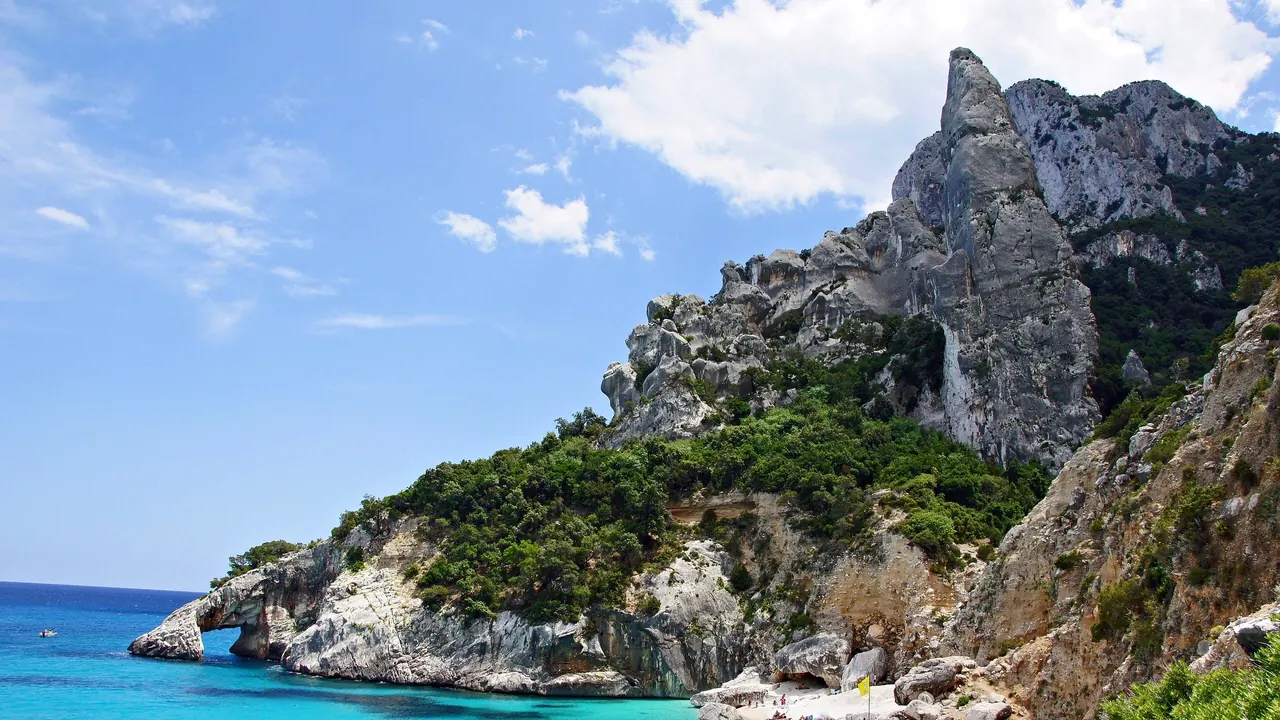
Photos: Sardinia by Yesuitus2001, CC BY-SA 2.5, cropped.
Puglia or Sardinia?
Our verdict in twelve categories, each scored against the same fixed benchmark cities, and the climate month by month, so you can choose for your trip.
Choose Puglia for
- day trips
- live music and the arts
- culture and sights
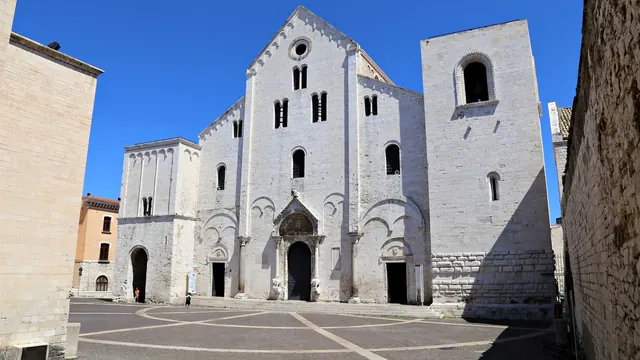
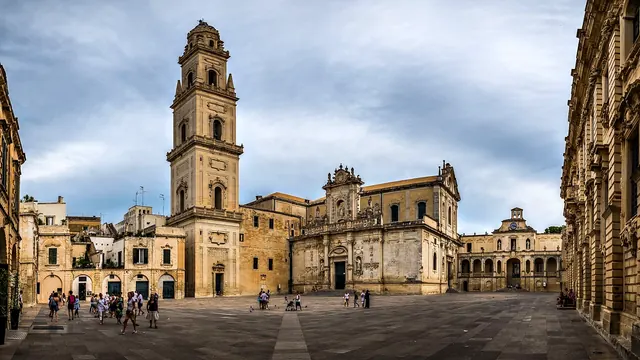
Puglia is the better pick for travellers who want towns as much as beaches: baroque Lecce, the trulli of Alberobello, whitewashed Ostuni and a cathedral on the sea at Trani, all close enough to string together. The food is the stronger of the two, meals and inland rooms cost less, and the main rail line lets you stay along the Adriatic without driving everywhere.
Choose Sardinia for
- nature and the outdoors
- beaches
- shopping
Choose Sardinia if the sea and wild country come first. Its beaches have the edge, from the granite coves of La Maddalena to the boat-only bays of the Gulf of Orosei, and the Supramonte, the Gorropu gorge and the Gennargentu give it an outdoors side that Puglia cannot match. In return, expect longer drives, fewer towns worth a day out and steeper bills, especially on the Costa Smeralda in August.
Scoreboard
Twelve categories on one fixed scale from 0 to 100. The shaded stretch is the gap between the two.
Your match
Pick a travel style or drag the sliders, and both match scores follow your weighting.
Wins on day trips and live music and the arts with your weighting.
Wins on nature and the outdoors and beaches with your weighting.
What matters to you?
Category by category
What the scores mean for a trip.
Beaches & swimming
Both are serious beach destinations, but Sardinia has more outstanding beaches. You get the granite coves around La Maddalena, the white pebble bays under the Orosei cliffs, Chia's fine sand and the shallows of La Pelosa, where you can wade far out. With coast on every side, there is usually a sheltered beach when the mistral blows.
Puglia's answer is the long pale sands of the Ionian Salento around Pescoluse and Gallipoli, and rockier swimming from the limestone platforms at Polignano a Mare. Its advantage is convenience: one base in the Salento reaches both seas, whereas Sardinia's best beaches are spread around a large island, and some can only be reached by boat.
Food & drink
Puglia has the better food, both in range and in everyday quality. Think burrata and stracciatella, orecchiette, focaccia barese, raw sea urchins on the Bari waterfront and the butcher-grill houses of the Valle d'Itria, with Primitivo or Negroamaro to drink. You can come across good food almost anywhere.
Sardinia's cooking is more unusual. It is a shepherds' cuisine of suckling pig, pane carasau, culurgiones and seadas, best found at agriturismi in the hills or in Cagliari's Marina quarter. Away from those, the resort strips lean towards generic food, so eating well takes more effort.
Culture & sights
Puglia has more to see, and it is easier to string together: Lecce's baroque streets, the trulli of Alberobello, Castel del Monte and a run of Romanesque cathedrals from Trani to Otranto, several of them towns worth visiting in their own right.
Sardinia's heritage is older and stranger. It centres on the Bronze Age nuraghi of Su Nuraxi and the Mont'e Prama giants in Cagliari's archaeological museum, with the ruins of Nora and Tharros and Catalan Alghero besides. A curious visitor will find it rewarding, but the sites are sparser and further apart.
Nightlife
Outside high summer, neither is a place for big nights out, but Puglia offers a little more, for a younger and less dressy crowd. Gallipoli turns into a beach-club party town in July and August, Lecce's squares stay busy late, and Bari keeps the bars of its old town going all year.
Sardinia's big nights are the glamorous, expensive clubs of the Costa Smeralda around Porto Cervo, which suit the yacht crowd more than most visitors. The more ordinary choices are Cagliari's Marina wine bars and Alghero's ramparts at aperitivo hour.
Nature & outdoors
Sardinia is by far the wilder of the two. The Supramonte falling to the Gulf of Orosei, the Gorropu gorge, the Selvaggio Blu trek, the Gennargentu forests and the La Maddalena marine park give hikers, climbers, kayakers and divers real terrain, and Porto Pollo adds kitesurfing and windsurfing.
Puglia is gentle by comparison: olive groves and dry-stone walls, best seen by bicycle. Its one dramatic corner is the Gargano, with the Foresta Umbra, sea caves and the Tremiti islands offshore. It suits easy cycling and coastal walks more than demanding days outdoors.
Day trips
This is where Puglia pulls clearly ahead. Its small towns sit close together, so from the Valle d'Itria you can see Ostuni, Locorotondo, Cisternino and the sea at Monopoli on short outings, and Matera's cave dwellings are about an hour from Bari.
Sardinia has some good outings, notably the ferry from Santa Teresa Gallura to Bonifacio in Corsica and the Barbagia villages of Orgosolo and Mamoiada. But the places are smaller and the drives slower, so what you can reach in a day depends heavily on which corner of the island you stay in.
Good for families
For families, both work the same way: a beach vacation at an easy pace, with shallow, sandy water and Italian restaurants that welcome children. Puglia has the one big attraction for children, the safari and amusement park at Fasano, plus the trulli at Alberobello. Sardinia has resort villages with pools and children's clubs, though reaching its Orosei coves can mean steep walks or boats.
Getting around
Both need a car, but Puglia is the easier of the two. Its roads are flatter and quicker, and the main railway line through Bari, Polignano a Mare, Monopoli and Lecce makes a car-free stay along the Adriatic possible.
Sardinia's winding mountain and coastal roads take longer than the map suggests, trains are of little use and buses rarely reach the beaches. To make up for it, there are three airports, so flying into the one nearest your base saves hours, and boats are the practical way to reach the Orosei coves and the Maddalena islands.
Shopping & style
Neither is a shopping destination, and in both the best buys are crafts and food. In Puglia that means ceramics from Grottaglie, Lecce's papier-mache figures and Valle d'Itria linen, with Bari's Via Sparano for the chains. Sardinia has Alghero's red coral, filigree gold and Pattada knives, plus the summer luxury boutiques of Porto Cervo, which Puglia has nothing to match.
Affordability
Puglia is the cheaper trip overall, mainly because its food and wine are such good value and its inland towns make inexpensive bases. Summer rooms near the Salento beaches and the paid lidos still push costs up.
Sardinia's prices span a wider range and go much higher at the top. The Costa Smeralda in August is one of the most expensive coasts in the Mediterranean, and ferries and car hire climb too. Around Cagliari, Alghero and the inland agriturismi, prices are moderate, and in both places June and September bring the cost down.
Live music & performing arts
Pizzica, the trance-like folk dance of the Salento, gives Puglia a living music tradition. You can hear it at village festivals all summer, and it builds to the huge open-air Notte della Taranta concert at Melpignano each August. Add Bari's Teatro Petruzzelli, one of Italy's largest opera houses, and the Martina Franca festival of rare operas in its ducal palace courtyard, and a music lover has more to choose from here.
Sardinia has Cagliari's Teatro Lirico and the Time in Jazz festival at Berchidda, but its most memorable music is traditional: canto a tenore, the launeddas pipes and the costumed procession of Sant'Efisio. Away from Cagliari, there is little on for most of the year.
Wellness & relaxation
Both are restful because of their slow countryside rather than any spa culture. In Puglia that means a converted masseria among the olive groves, many with pools and spas of their own, plus the sulphur springs in the sea caves at Santa Cesarea Terme. In Sardinia it means the quiet of Ogliastra and the inland agriturismi, with Roman-era springs at Fordongianus and thalassotherapy at the big beach resorts.
When should you go?
Pick your month. The climate figures are measured averages, not a forecast.
Puglia in July
Sardinia in July
Daytime high, °C
Rainfall in the month, mm
Where the figures come from
Puglia's temperatures are measured 64 km from the centre, at Brindisi.
Puglia has no rain gauge within 25 km of the centre, so its rainfall comes from a gridded climate dataset read at the destination rather than from a gauge further away.
Sardinia has no rain gauge within 25 km of the centre, so its rainfall comes from a gridded climate dataset read at the destination rather than from a gauge further away.
Temperature and rainfall are climate normals, averaged over the years shown. Puglia: 1991-2020 (sunshine 1981-2010) normals, Brindisi (64.4 km from centre). Sardinia: 1991-2020 normals, Olbia / Costa Smeralda (3.1 km from centre).
Both follow much the same Mediterranean year: mild, wet winters, a warm May and a hot, dry high summer. On both, the sea is comfortable for swimming from June through September. Off Puglia it is a shade warmer and reaches about 26°C in August. Sardinia runs hotter in July and August, with highs near 32°C against Puglia's 30°C, and its summer is drier still, with July almost rainless.
Autumn is where they part. In Puglia the rain comes back in September, at around 63mm, though the month stays warm and fairly sunny. Sardinia keeps September dry and warm, which makes it the better pick for late-season beaches and walks. October brings real rain to both, so it is a gamble on either. For walking towns or hills, May is the safest month in both places, with late September a good second in Sardinia. The hottest summer weeks are hard going inland on either.
Which traveller are you?
On an outdoors trip, Sardinia is the clear choice. You can hike the Supramonte and the Gorropu gorge, climb sea cliffs and kayak from Cala Gonone, or dive in the Maddalena marine park. That is far more than Puglia's gentle cycling country offers.
For a culture and arts trip, Puglia gives you more with less driving: Lecce's baroque, the trulli, the Romanesque cathedrals and Castel del Monte, plus opera at Bari's Petruzzelli and the Martina Franca festival. Sardinia's nuraghi are fascinating but thinly spread.
On a tight budget, Puglia makes the money go further. Trattoria meals, street food and local wine are cheap, inland towns make inexpensive bases and a train line serves part of the coast. In Sardinia, car, ferry and summer room costs climb steeply.
Before you go
| Measure | Puglia | Sardinia |
|---|---|---|
| Official language | Italian | Italian |
| Currency | Euro (EUR) | Euro (EUR) |
| Sockets | CFL230 V, 50 Hz | CFL230 V, 50 Hz |
| Driving side | Right | Right |
| Time zone | UTC+1, UTC+2 in summer | UTC+1, UTC+2 in summer |
| Emergency number | 112 | 112 |
| Main airport | Bari Karol Wojtyła International Airport (BRI)104 non-stop destinations | Olbia Costa Smeralda Airport (OLB)79 non-stop destinations |
| Public holidays this year | 13 days | 13 days |
By the numbers
| Measure | Puglia | Sardinia |
|---|---|---|
| Population | 3,866,174 | 1,628,384 |
| People per km² | 198 | - |
| Swim season, months above 21 °C | 4 months | 3 months |
Where else could you go?
Every comparison below shares a destination with this one, so you can follow Puglia or Sardinia somewhere new.
- Corsicavs Sardinia
- Amalfi Coastvs Puglia
- Hvarvs Puglia
- Caprivs Puglia
- Corfuvs Puglia
- Cinque Terrevs Sardinia