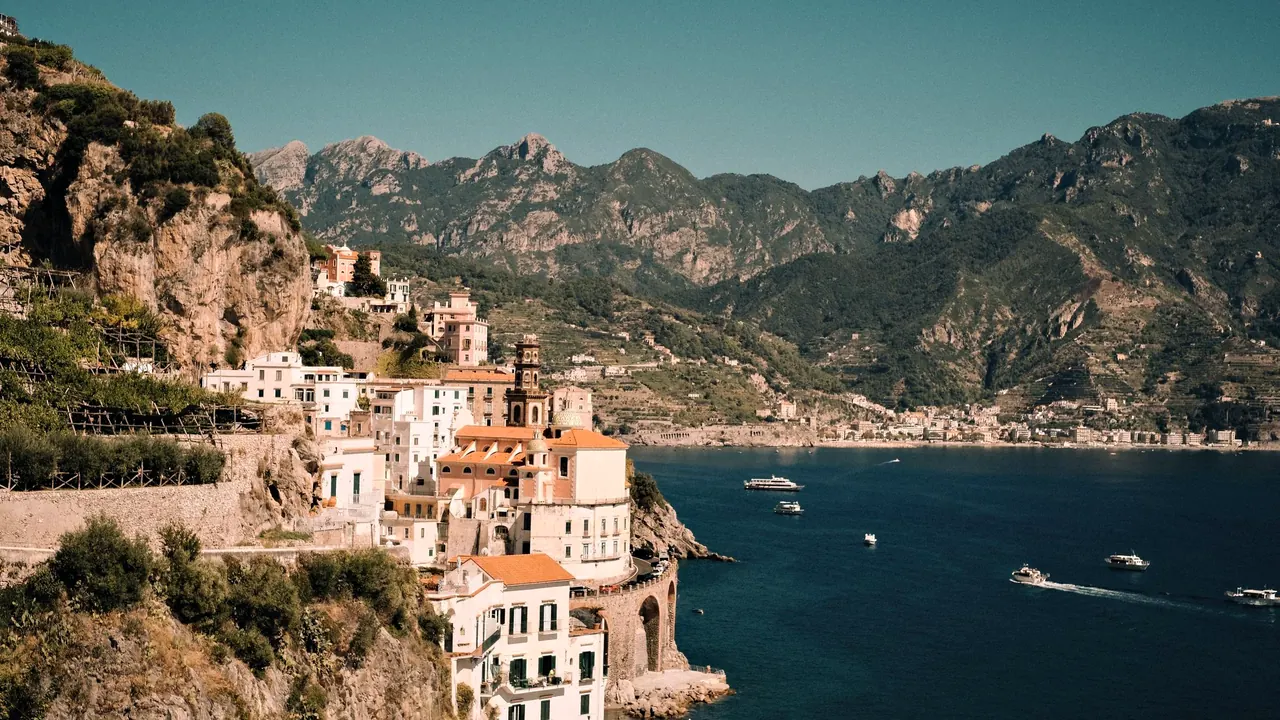
Photos: Amalfi Coast by Alina Chernii, Pexels License.
Amalfi Coast or Puglia?
Our verdict in twelve categories, each scored against the same fixed benchmark cities, and the climate month by month, so you can choose for your trip.
Choose Amalfi Coast for
- nature and the outdoors
- shopping
- day trips
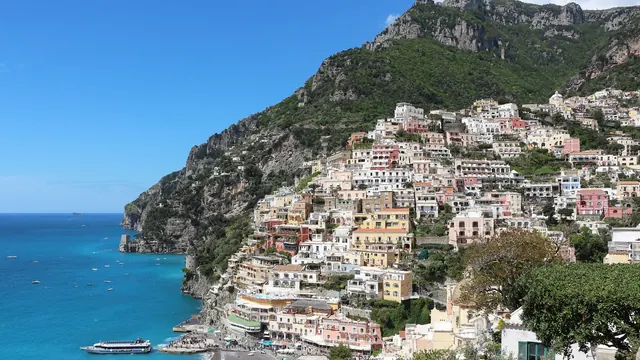
The Amalfi Coast is for travellers who come for the setting more than for any single sight. Its draw is the cliffs: pastel towns stacked above deep water, the Path of the Gods high over Positano, and swimming from a boat below the rocks. It also has Pompeii, Capri and Naples within a day's reach. It suits couples and walkers who are happy with stairs, crowded buses and very high prices, and who don't mind quiet evenings.
Choose Puglia for
- prices
- families
- nightlife
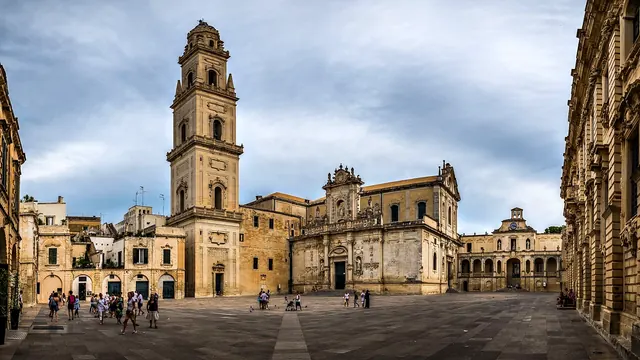
Puglia is the better choice for a longer, easier-going summer by the sea with a car. Its long, pale sands and shallow water on the Ionian side of the Salento are kinder to children, and the food is cheaper and more firmly regional. Lecce's baroque, the trulli of Alberobello and a chain of whitewashed hill towns give it more sights to see. It also has real summer nightlife around Gallipoli, and the region costs far less overall.
Scoreboard
Twelve categories on one fixed scale from 0 to 100. The shaded stretch is the gap between the two.
Your match
Pick a travel style or drag the sliders, and both match scores follow your weighting.
Wins on nature and the outdoors and shopping with your weighting.
Wins on prices and families with your weighting.
What matters to you?
Category by category
What the scores mean for a trip.
Beaches & swimming
The Amalfi Coast offers swimming rather than beaches. Its coves are small and pebbly, with hired sunbeds packed in tight, and the best of them are reached by boat or long stairs. The water is deep and clear, but anyone who wants sand and room is pushed towards Maiori and Minori.
Puglia is the better choice for a beach vacation. The Ionian side of the Salento has long stretches of pale sand and shallow turquoise water. The Adriatic side adds rocky platforms at Polignano and sandy bays at Torre dell'Orso, and both coasts can be reached from one base.
Food & drink
Both regions cook from their land and sea, but Puglia's food is richer and more varied. Burrata and stracciatella from the Murge, orecchiette with turnip tops, raw sea urchins sold from stalls on the Bari waterfront, and Primitivo and Negroamaro wines give it greater depth. Grill houses in the Valle d'Itria and farm cooking at the masserie add to it.
The Amalfi Coast's strengths are narrower and very local. They include scialatielli with clams, fish baked in lemon leaves, the colatura of Cetara and everything made from Sfusato lemons. It has grand terrace dining in Positano and Ravello, but its busiest waterfronts serve tired menus to day-trippers.
Culture & sights
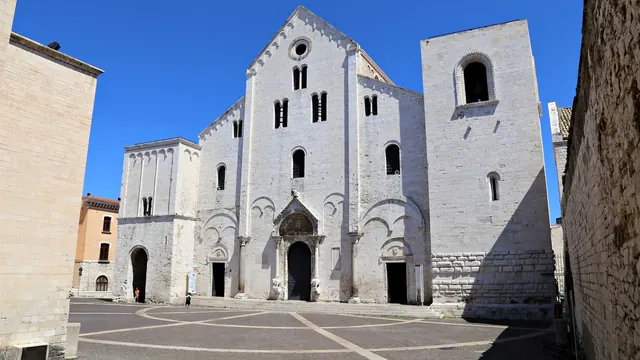
Puglia has more to see, and much of it is unlike anything else in Italy. There is the honey-coloured baroque of Lecce, the conical trulli of Alberobello, and Frederick II's octagonal castle alone on the Murge. A chain of Romanesque cathedrals runs from Trani to Otranto's huge floor mosaic. Seeing them means driving between towns.
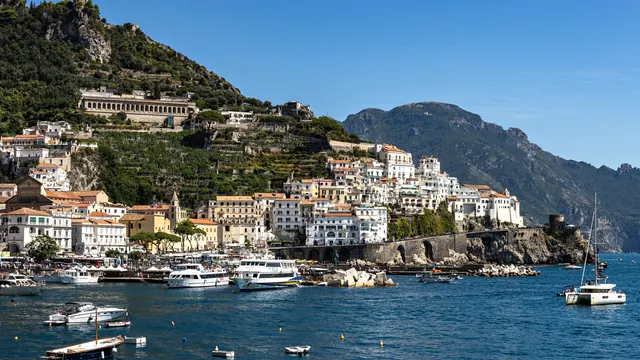
The Amalfi Coast's heritage is more compact. It centres on Amalfi's striped Arab-Norman cathedral and the gardens of Villa Rufolo and Villa Cimbrone in Ravello. Its real sight is the UNESCO-listed coastline itself, and for major collections both regions send you elsewhere.
Nightlife
Puglia has much more going on after dark. In July and August, Gallipoli's beach clubs run from sunset into the small hours, DJs play at beach bars along the Salento, and Lecce's squares fill with people drinking. Bari keeps its old-town bars busy all year.
On the Amalfi Coast, an evening means a long dinner on a terrace and an aperitivo with a sea view. Beyond a handful of cocktail bars in Positano, there's little to do late. Real nightlife means going to Naples or Salerno.
Nature & outdoors
The Amalfi Coast has far more dramatic scenery. The Lattari mountains fall straight into the sea, and the Path of the Gods above Positano is one of Europe's great coastal walks. Old mule tracks link the lemon terraces, and kayaks and small boats explore the Grotta dello Smeraldo and the snorkelling waters around Punta Campanella.
Puglia's countryside is gentler: olive groves, dry-stone walls and red soil, best seen by bicycle. Its scenery only becomes dramatic in the Gargano, with the beech woods of the Foresta Umbra, white cliffs and the Tremiti islands, at the far northern end of a long region.
Day trips
Both are excellent bases for day trips, but the Amalfi Coast has the bigger names within reach. Pompeii and Herculaneum are a little over an hour away, ferries cross to Capri, and Paestum's Greek temples and the Naples archaeological museum each make a full day. The roads are slow, so the sea is often the best way to get there.
Puglia's outings are mostly drives between small towns. Ostuni, Locorotondo and Cisternino are a short drive apart, and harbour towns line the coast north of Bari. Matera's cave dwellings, an hour from Bari, are the one destination most visitors put first.
Good for families
Puglia is much the easier choice with children. Its shallow, sandy beaches, pool villas, a welcome for children in every piazza and the safari park at Fasano make a relaxed family vacation, provided you have a car and can handle the August heat.
The Amalfi Coast's steep towns, steps everywhere and lack of pavements make it hard going with a pushchair, and nothing there is designed for children. Families do best in Maiori or Minori, with boat trips and the emerald grotto as the highlights.
Getting around
Neither is easy without planning, but Puglia is less stressful. Its roads are good and fairly empty, and a car links the Valle d'Itria, the coast and the Salento in short drives. A main rail line runs through Bari, Polignano and Lecce. The catch is distance: the Gargano and the southern tip are hours apart.
The Amalfi Coast relies on one narrow cliff road that jams in summer, with crowded buses and almost no parking. From spring to autumn, the ferries between Positano, Amalfi and Salerno are the sensible way to travel, and they double as sightseeing.
Shopping & style
The Amalfi Coast offers more for shoppers in a small space. Positano's lanes sell linen resort clothing and sandals made to fit while you wait. Amalfi has its handmade paper, and Vietri sul Mare is full of painted majolica. Much of what lines the waterfronts, though, is the same lemon souvenirs.
Puglia's shopping is more spread out and leans towards food. You can buy pottery at Grottaglie's workshop quarter and papier-mâché in Lecce, then take home olive oil, Primitivo and taralli. Bari's Via Sparano covers the ordinary high-street chains.
Affordability
This is where the two differ most. The Amalfi Coast in summer is among the most expensive places in Europe. Sea-view rooms, sunbeds, private boats and even a simple lunch by the water all cost more than elsewhere in the south.
Puglia is much cheaper, especially for food and wine, which cost less than in most of northern and central Italy. Rooms near the best Salento beaches and boutique masserie are expensive in high season, and a hire car adds to the bill. Staying inland and travelling in June or September keeps costs down.
Live music & performing arts
Puglia has more variety. Bari's Teatro Petruzzelli, one of Italy's largest opera houses, has a full season, and Martina Franca stages rare operas in its ducal courtyard in summer. Every August, the Notte della Taranta brings the Salento's pizzica folk dance to a huge open-air stage at Melpignano.
The Amalfi Coast's music is almost all in Ravello, where summer orchestras play on a stage built out over the cliff at Villa Rufolo. It's a memorable setting, but outside the season and away from Ravello there's little.
Wellness & relaxation
Both offer rest through their pace rather than through spa traditions, but in different settings. On the Amalfi Coast, that means luxury cliffside hotel spas with seawater pools and quiet bases such as Ravello or Atrani, ideally outside July and August.
Puglia offers country calm in converted masserie among the olive groves, many with their own pools and spas. It also has a few small thermal spots, such as the sulphur springs in the sea caves at Santa Cesarea Terme, though neither region is worth choosing for bathing alone.
When should you go?
Pick your month. The climate figures are measured averages, not a forecast.
Amalfi Coast in July
Puglia in July
Daytime high, °C
Rainfall in the month, mm
Where the figures come from
Amalfi Coast's temperatures are measured 65 km from the centre, at Grazzanise.
Amalfi Coast has no rain gauge within 25 km of the centre, so its rainfall comes from a gridded climate dataset read at the destination rather than from a gauge further away.
Puglia's temperatures are measured 64 km from the centre, at Brindisi.
Puglia has no rain gauge within 25 km of the centre, so its rainfall comes from a gridded climate dataset read at the destination rather than from a gauge further away.
Temperature and rainfall are climate normals, averaged over the years shown. Amalfi Coast: 1991-2020 normals, Grazzanise (64.7 km from centre). Puglia: 1991-2020 (sunshine 1981-2010) normals, Brindisi (64.4 km from centre).
Both regions have the same southern Italian summer. The sea is warm enough for swimming from June to September and reaches about 26°C in August. July and August bring daytime highs of around 30°C and long sunny days. That is ideal for the beach, but on the Amalfi Coast it makes the steep paths and stairways hard going by midday. In both places, May and early June are the comfortable months for walking and sightseeing.
Autumn is where they part. On the Amalfi Coast the sea stays warm into early October, but the rain returns in September and October is wet, at about 114mm. That makes late spring the better time for its trails. Puglia stays drier, with about 74mm in October and the sea still near 20°C, so early autumn there still works for sightseeing and a brisk swim. Through the winter Puglia is the more settled of the two, with roughly half the Amalfi Coast's rain.
Which traveller are you?
On an outdoors trip, the Amalfi Coast is the stronger choice. The Path of the Gods, the gorge of the Valle delle Ferriere and kayaking past sea caves are more dramatic than anything in Puglia's gentle plateau, which is mainly cycling country outside the Gargano.
On a family trip with young children, Puglia wins clearly. It has shallow, sandy beaches in the Salento, villas and masserie with pools, and a safari park at Fasano. The Amalfi Coast means pebble coves, endless steps, packed buses and nothing made for children.
On a tight budget, Puglia goes much further. Trattoria meals, street snacks like panzerotti and local wine are cheap there, and inland towns make inexpensive bases. Prices on the Amalfi Coast are among the highest in Europe, even if you stay in Maiori or Agerola.
Before you go
| Measure | Amalfi Coast | Puglia |
|---|---|---|
| Official language | Italian | Italian |
| Currency | Euro (EUR) | Euro (EUR) |
| Sockets | CFL230 V, 50 Hz | CFL230 V, 50 Hz |
| Driving side | Right | Right |
| Time zone | UTC+1, UTC+2 in summer | UTC+1, UTC+2 in summer |
| Emergency number | 112 | 112 |
| Main airport | Naples International Airport (NAP)131 non-stop destinations | Bari Karol Wojtyła International Airport (BRI)104 non-stop destinations |
| Public holidays this year | 13 days | 13 days |
By the numbers
| Measure | Amalfi Coast | Puglia |
|---|---|---|
| Population | - | 3,866,174 |
| People per km² | - | 198 |
| Swim season, months above 21 °C | 5 months | 4 months |
Where else could you go?
Every comparison below shares a destination with this one, so you can follow Amalfi Coast or Puglia somewhere new.
- Caprivs Amalfi Coast
- Naplesvs Amalfi Coast
- Hvarvs Puglia
- Caprivs Puglia
- Corfuvs Puglia
- Sicilyvs Amalfi Coast