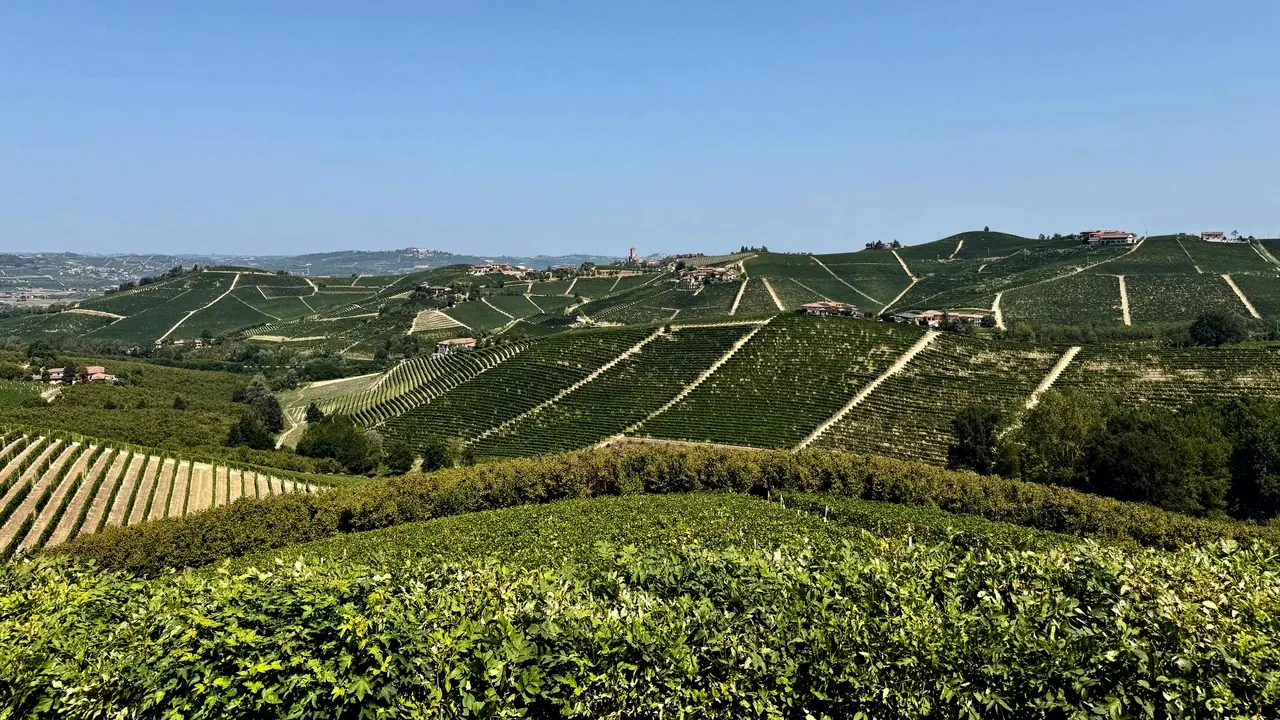
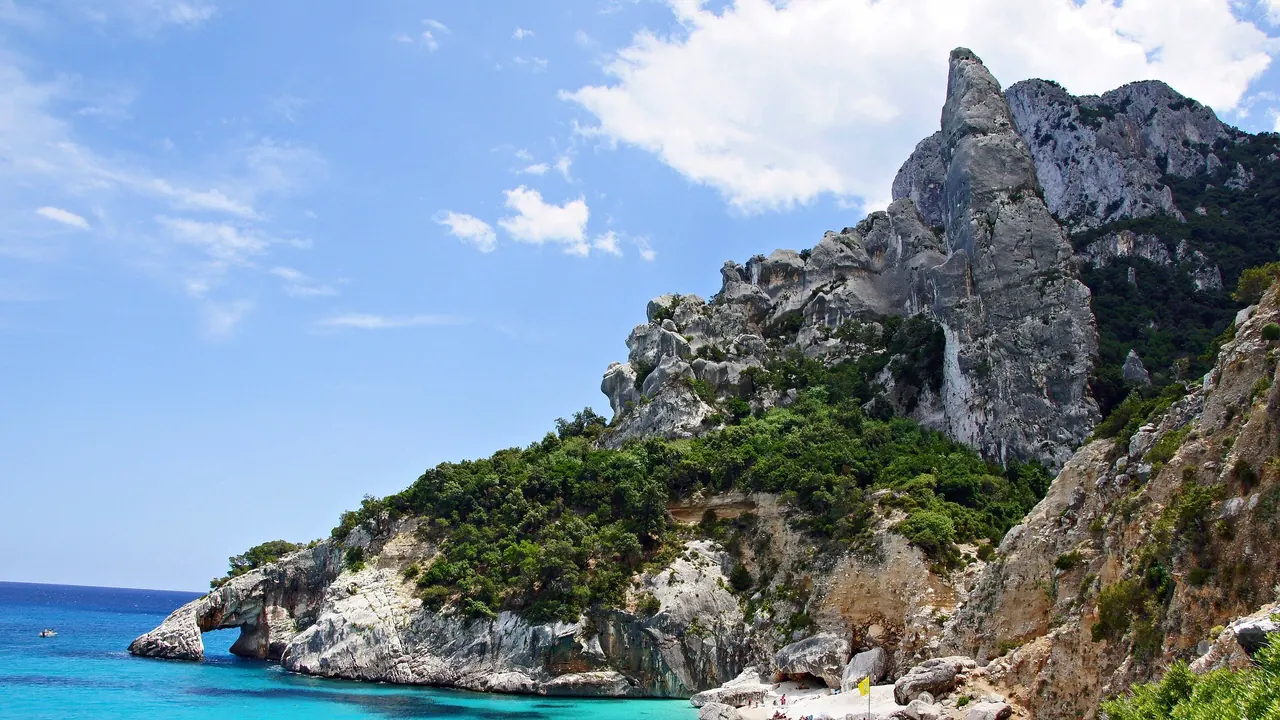
Photos: Piedmont by Martina Amaro, Pexels License; Sardinia by Yesuitus2001, CC BY-SA 2.5, cropped.
Piedmont or Sardinia?
Our verdict in twelve categories, each scored against the same fixed benchmark cities, and the climate month by month, so you can choose for your trip.
Choose Piedmont for
- day trips
- live music and the arts
- food and drink
Piedmont is the choice for travellers who plan a trip around the table and the glass. Barolo cellars, truffle-season trattorias in the Langhe and Turin's coffee houses come first, and the Egyptian Museum, the Savoy palaces and the high Alps are there too. It suits a mainland trip with Turin as an easy base, trains to Milan and the lakes, and a car for the wine hills.
Choose Sardinia for
- beaches
- families
- nightlife
Sardinia wins whenever the sea is the point. Its granite coves in the Gallura, the cliff bays of the Gulf of Orosei and the shallow sands of Chia are in another league from Piedmont's lake lidos, and families with small children are well served by them. Expect to drive a lot, to pay heavily on the Costa Smeralda in August, and to trade galleries and opera for nuraghi, shepherd cooking and long, slow days by the water.
Scoreboard
Twelve categories on one fixed scale from 0 to 100. The shaded stretch is the gap between the two.
Your match
Pick a travel style or drag the sliders, and both match scores follow your weighting.
Wins on day trips and live music and the arts with your weighting.
Wins on beaches and families with your weighting.
What matters to you?
Category by category
What the scores mean for a trip.
Beaches & swimming
These two are as far apart here as they get. Piedmont is landlocked, so swimming means the pebble lidos and bathing platforms of Lake Maggiore around Stresa and Baveno, or grassy spots on Lake Orta. It is a pleasant summer extra, not a reason to come.
Sardinia is one of the Mediterranean's great beach islands. The granite coves of La Maddalena, the boat-only bays below the Orosei cliffs, the fine sand at Chia and Tuerredda, and the wading shallows of La Pelosa give a choice of coast for every wind and taste.
Food & drink
Piedmont is the stronger food destination and one of Italy's most serious. The Langhe and Roero give Barolo, Barbaresco and the autumn white truffle, and the cooking runs from tajarin and agnolotti del plin to vitello tonnato. Turin adds bicerin, gianduiotti, vermouth and an aperitivo tradition with real depth.
Sardinia's cooking is distinctive rather than deep: suckling pig over myrtle wood, culurgiones, pane carasau and seadas, with bottarga and Alghero lobster on the coast. Its best meals come from inland agriturismi. Fine dining is thin, and resort strips serve plenty of generic food.
Culture & sights
Piedmont has the richer cultural offer, and most of it is in Turin. The Egyptian Museum, the Baroque squares and arcades, the Royal Palace and the UNESCO-listed Savoy residences at Venaria Reale and Stupinigi make it a true capital city. Outside it are the Sacra di San Michele and the Borromean palaces.
Sardinia's heritage is older and stranger. It has thousands of Bronze Age nuraghi, Su Nuraxi at Barumini, the Mont'e Prama giants in Cagliari's archaeological museum, Phoenician Tharros and Catalan Alghero. It is fascinating, but scattered across the countryside and best seen by car.
Nightlife
Neither is a nightlife destination, but the two scenes are different. Piedmont's going out is urban and runs all year: a serious Turin aperitivo, then student bars in San Salvario and Vanchiglia and summer evenings along the Po.
Sardinia's is seasonal and split. The Costa Smeralda has dressy, expensive beach clubs and late nightclubs in July and August, while Cagliari's Marina wine bars and the Poetto kiosks keep things more ordinary. Most small towns go quiet after dinner.
Nature & outdoors
Both are excellent outdoors, but in different ways. Piedmont has the edge with high mountains: Monte Rosa above Alagna and Macugnaga, ibex country on Gran Paradiso, the wild Val Grande, Olympic skiing on the Via Lattea, and vineyard cycling in the Langhe.
Sardinia's wilderness meets the sea. The Gorropu gorge, the demanding Selvaggio Blu trek and the climbing and sea caves around Cala Gonone sit on the Supramonte coast, and La Maddalena's marine park is made for sailing and diving. There is no snow to speak of, and the walking season is spring and autumn.
Day trips
Piedmont makes a much better base for outings. From Turin, Milan is about an hour by fast train and Genoa, the Ligurian coast and Aosta are easy days. Within the region, the Barolo villages, Alba, Asti and Saluzzo are close together.
Sardinia is big and its roads are slow, so the choice depends on the base. Bonifacio in Corsica is a short ferry from Santa Teresa Gallura, and Alghero, Bosa and Capo Caccia make a neat northwestern loop, but the Barbagia villages and Carloforte belong to different corners of the island.
Good for families
Sardinia is the easier family vacation, as long as the children are happy with a sea-based routine. The south coast and the Gallura have shallow, sandy water, and resort villages come with pools and children's clubs, though the Orosei coves mean steep paths or boats.
Piedmont needs more planning. Turin's mummies, the Cinema Museum, the Valentino park and boat hops to the Borromean Islands work well with children, and so do the gentle ski slopes in winter, but the wine hills hold little for children and there is no big theme park.
Getting around
Piedmont is simpler to travel around. Turin is flat and arcaded, with trams and a metro, and regional trains reach Alba, Asti and the lake shore at Stresa, where boats take over. A car is only really needed for the Langhe hilltops and the Alpine valleys.
In Sardinia a hire car is close to essential. Trains are few, buses rarely reach the beaches, and the winding coastal roads take longer than the map suggests. With airports at Cagliari, Olbia and Alghero, choosing the right arrival point saves hours.
Shopping & style
Piedmont offers more, mostly thanks to Turin. Via Roma and Via Garibaldi cover brands and strolling, Porta Palazzo and the Saturday Balon flea market are big markets, and the takeaways are edible: chocolates, vermouth, hazelnuts and Barolo, plus cashmere from the Biella mills.
Sardinia is about crafts: red coral from Alghero, filigree gold, rugs, cork and Pattada shepherd's knives. Porto Cervo's luxury boutiques only open for the summer yacht crowd.
Affordability
Piedmont is the easier region to keep to a budget. A stay in Turin or a farm stay in the Langhe or Monferrato hills is moderate, with fair hotels, generous aperitivo snacks, solid set lunches and good-value wine at the cellar door. Costs rise only in certain places and seasons: the Langhe at truffle time, the Lake Maggiore resorts in high summer and the ski resorts in winter.
Sardinia works out dearer, because its prices peak just when people come for the sea. The Costa Smeralda in July and August is among the costliest coasts in the Mediterranean, and car hire, ferries and rooms all climb steeply in August. Cagliari, Alghero and Ogliastra stay moderate, and June or September brings the bill down noticeably while the water is still warm.
Live music & performing arts
Piedmont has a proper year-round stage in Turin. There is opera and ballet at the Teatro Regio, the RAI National Symphony Orchestra, Italian drama at the historic Teatro Carignano, and summer concerts at Stresa on Lake Maggiore.
Sardinia's formal offer is mostly Cagliari's Teatro Lirico. What it has that Piedmont lacks is living tradition: canto a tenore singing, launeddas pipes, the Sant'Efisio procession and the Time in Jazz festival at Berchidda. Most of it is seasonal or tied to village events.
Wellness & relaxation
Piedmont is clearly the better choice for a restful trip built around the waters. It has a living thermal tradition, with a whole town at Acqui Terme centred on its hot spring and mountain baths in the Maritime Alps. Sardinia's Roman springs survive, but taking the waters is not part of a normal visit, and spa time there usually means the thalassotherapy centre of a large beach resort.
Both regions do slowness well, but in different ways. In Piedmont it means a wine resort among the vineyards or a few days on Lake Orta. In Sardinia it means sea air and the unhurried pace of the inland villages, best in late spring or September.
When should you go?
Pick your month. The climate figures are measured averages, not a forecast.
Piedmont in July
Sardinia in July
Daytime high, °C
Rainfall in the month, mm
Where the figures come from
Piedmont has no weather station within reach, so its figures come from a gridded climate model rather than a measured record, and read a broad area rather than one spot.
Sardinia has no rain gauge within 25 km of the centre, so its rainfall comes from a gridded climate dataset read at the destination rather than from a gauge further away.
Temperature and rainfall are climate normals, averaged over the years shown. Piedmont: 1991-2020 normals, TerraClimate 4 km grid at the town, no weather station within 90 km. Sardinia: 1991-2020 normals, Olbia / Costa Smeralda (3.1 km from centre).
Piedmont has four real seasons. Around Turin, summer highs reach about 29°C, warm enough for lake swimming on Maggiore and Orta from June to early September and for hiking in the Alpine valleys. May and September are the best months for walking the city and the vineyards. October brings the truffle and harvest season, but rain builds through autumn to a wet November of about 89mm. Winters are cold in the lowlands and snowy in the mountains, which suits skiing rather than sightseeing.
Sardinia is milder in winter and much hotter and drier in summer. July and August are close to rainless and reach about 32°C, which is beach weather but too hot for inland walks in the middle of the day. The sea warms to around 25°C in August and stays swimmable from June into early October. Spring and late September are the times for trekking the Supramonte, and from October the rain returns, peaking at about 83mm in December.
Which traveller are you?
For a beach and sun trip, Sardinia is the only real option. Piedmont has no coast at all, while Sardinia offers turquoise coves in the Gallura, white pebble bays on the Gulf of Orosei and long dry summers with a warm sea.
On a food and nightlife trip, choose Piedmont. Barolo and Barbaresco at the cellar door, white truffles in Alba and Turin's aperitivo culture beat Sardinia's excellent but narrower farm cooking. Evenings out are modest in both, but Turin's bar streets keep going all year.
On a family trip with young children, Sardinia suits better. The shallow sandy water at Chia, Costa Rei and La Pelosa is safe for paddling, and resort villages have pools and kids' clubs. Piedmont works best for families who split their time between Turin's museums and Lake Maggiore.
Before you go
| Measure | Piedmont | Sardinia |
|---|---|---|
| Official language | Italian | Italian |
| Currency | Euro (EUR) | Euro (EUR) |
| Sockets | CFL230 V, 50 Hz | CFL230 V, 50 Hz |
| Driving side | Right | Right |
| Time zone | UTC+1, UTC+2 in summer | UTC+1, UTC+2 in summer |
| Emergency number | 112 | 112 |
| Main airport | Turin Airport (TRN)65 non-stop destinations | Olbia Costa Smeralda Airport (OLB)79 non-stop destinations |
| Public holidays this year | 13 days | 13 days |
By the numbers
| Measure | Piedmont | Sardinia |
|---|---|---|
| Population | 4,341,375 | 1,628,384 |
| Swim season, months above 21 °C | 4 months | 3 months |
Where else could you go?
Every comparison below shares a destination with this one, so you can follow Piedmont or Sardinia somewhere new.
- Corsicavs Sardinia
- Lake Maggiorevs Piedmont
- Cinque Terrevs Piedmont
- French Rivieravs Piedmont
- French Alpsvs Piedmont
- Lake Comovs Piedmont