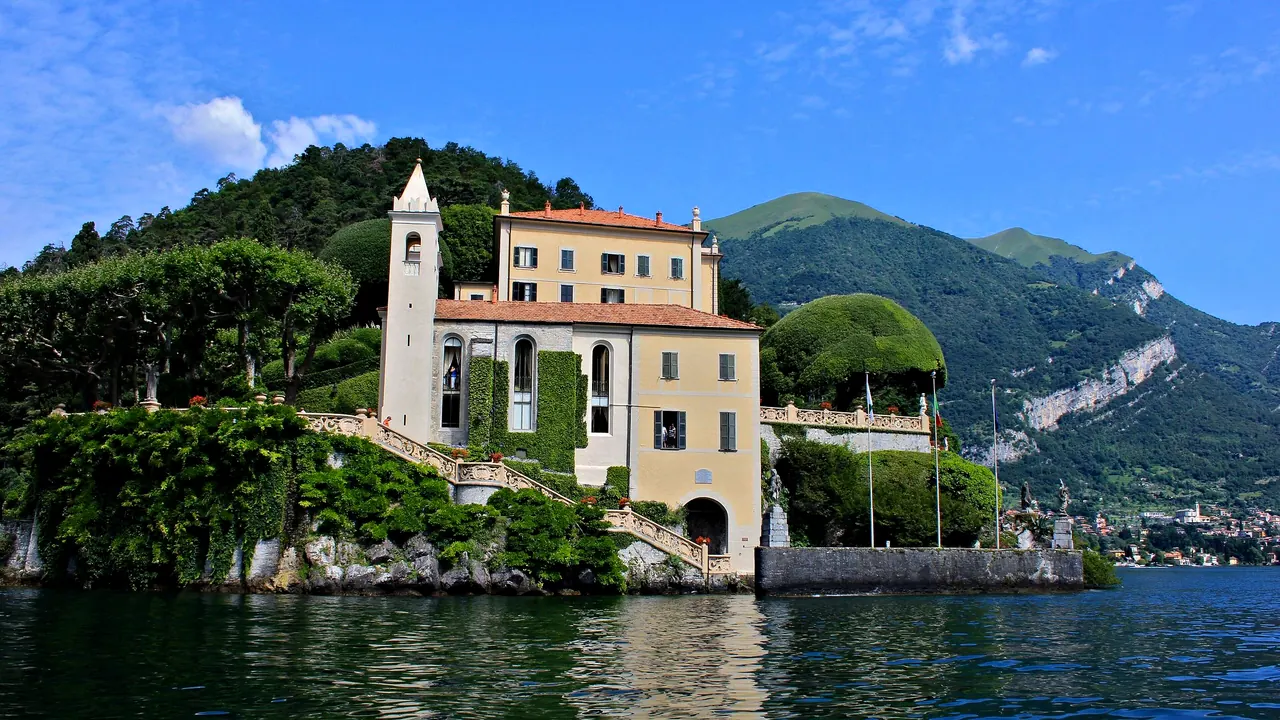
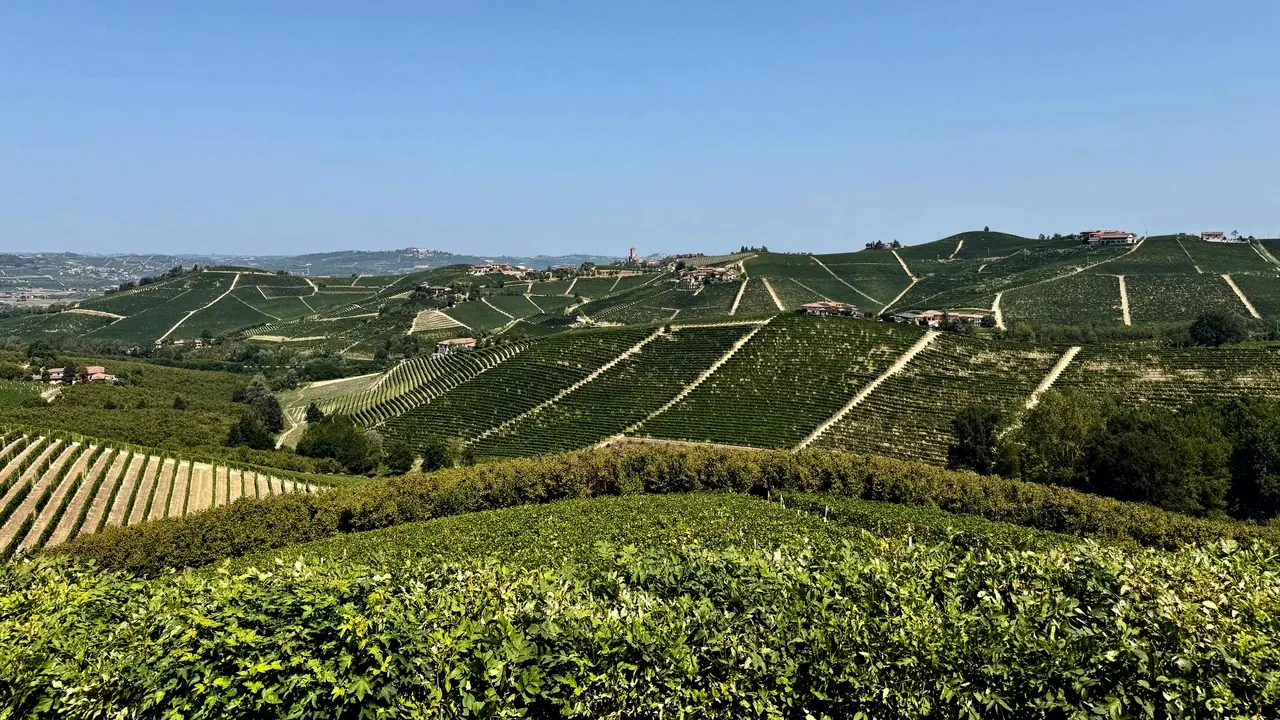
Photos: Lake Como by Navin75, CC BY-SA 2.0, cropped; Piedmont by Martina Amaro, Pexels License.
Lake Como or Piedmont?
Our verdict in twelve categories, each scored against the same fixed benchmark cities, and the climate month by month, so you can choose for your trip.
Choose Lake Como for
- beaches
Lake Como is the choice for a scenic, slow-moving stay built around one lake. Its villas and gardens sit at the water's edge, its villages are linked by ferry, and the mountains rise straight out of the water. It suits couples and anyone who wants the view to be the whole point, with a swim off a jetty in summer and Milan close enough for a day of museums. In return it costs more, it eats less well, and it goes very quiet after dark.
Choose Piedmont for
- food and drink
- prices
- live music and the arts
Piedmont rewards travellers who want more variety and a better table. Turin brings great museums, royal palaces, theatre and a real evening scene. The Langhe hills offer Barolo cellars, truffles and long lunches, and the high Alps, Lake Maggiore and thermal towns are all within the region. It is cheaper and easier with children, but it works as a trip of several bases, often with a car, rather than as one picture-postcard setting.
Scoreboard
Twelve categories on one fixed scale from 0 to 100. The shaded stretch is the gap between the two.
Your match
Pick a travel style or drag the sliders, and both match scores follow your weighting.
Wins on beaches with your weighting.
Wins on food and drink and prices with your weighting.
What matters to you?
Category by category
What the scores mean for a trip.
Beaches & swimming
Both offer lake swimming rather than beaches, from lidos, pebble strips and jetties, in water that reaches the low twenties in high summer. Lake Como makes swimming more a part of daily life. Lidos at Bellagio, Lenno and Menaggio sit right on the ferry routes, and the upper lake around Gravedona and Domaso has longer, more open shores. Avoid the southern basin near Como town.
In Piedmont the swimming is mostly on Lake Maggiore's western shore around Stresa and Baveno, plus a few grassy spots on quieter Lake Orta. Unless you are staying on those lakes, swimming is a side trip rather than part of the day.
Food & drink
This is the widest gap between the two. Lake Como's cooking is honest but narrow: perch fried in butter and sage on risotto, salted missoltini, and polenta and cheese from the Valtellina. The best meals are found in hill-village trattorias and rock-cellar crotti, while the lakefront terraces often charge for the view rather than the food.
Piedmont is one of Italy's great food regions. The Langhe and Roero hills produce Barolo and Barbaresco, autumn brings white truffles, and the dishes are distinctive, from vitello tonnato to tajarin. Turin adds historic coffee houses, bicerin and gianduiotti. You will need a car or a base in Alba to reach the best tables.
Culture & sights
Lake Como's culture is mostly its setting. Villa Carlotta, Villa del Balbianello and Villa Melzi, usually reached by boat, are the highlights, along with Como's marble cathedral and Terragni's rationalist Casa del Fascio. There are no major museums.
Piedmont has far more depth, and most of it is in Turin. The Egyptian Museum is world class, and the city adds Baroque squares, the Royal Palace, the Cinema Museum in the Mole Antonelliana and the Savoy residences at Venaria Reale and Stupinigi. Beyond the city are the Sacra di San Michele on its crag, the Sacri Monti chapels and the palaces on the Borromean Islands.
Nightlife
Evenings on Lake Como are early and gentle. Dinner turns into one more glass by the water, and once the ferries stop, the lanes of Bellagio, Varenna and Menaggio are nearly empty. Como town keeps a few bars open later, and summer brings the odd lakeside party. For clubs or anything after midnight, you need Milan, an hour away by train.
Piedmont offers a real city night, but only if you stay in Turin. Aperitivo there is a ritual in its own right. Afterwards the student quarters of San Salvario and Vanchiglia, and the banks of the Po in summer, keep going long after Lake Como has gone to bed. The crowd is mostly local, not one that people travel to join. Outside the city, the Langhe and Lake Maggiore are as quiet after dinner as Como's villages.
Nature & outdoors
Both are outstanding for the outdoors, but in different ways. Lake Como gives you one spectacular landscape you can take in from anywhere: mountains rising straight from a deep glacial lake. Walkers have the Sentiero del Viandante and the Grigna summits, and the afternoon breva wind makes Domaso and Colico a serious windsurfing and kitesurfing spot.
Piedmont's nature is bigger and more spread out. It has high Alpine country beneath Monte Rosa and Gran Paradiso, skiing on the Via Lattea and the empty wilderness of the Val Grande, plus vineyard cycling in the Langhe. The mountains need a base of their own, away from Turin and the wine hills.
Day trips
Both make excellent bases for day trips, and both have Milan about an hour away by train. From Lake Como the extras are Bergamo's upper town, Lugano across the Swiss border and an easy day of ferry hops between Bellagio, Varenna and Tremezzo.
Piedmont's outings depend on where you stay. From Turin you can reach Genoa and the Ligurian coast, or Aosta up the valley. From the Langhe the day trips are the Barolo villages, Monferrato and Acqui Terme, and from Lake Maggiore, Orta San Giulio.
Good for families
Piedmont is the easier choice with children. Turin's mummies, the interactive halls of the Cinema Museum and the open space of Valentino park make good city days. Lake Maggiore adds island boat trips and gardens with white peacocks, and the Via Lattea has gentle slopes and ski schools.
Lake Como is calm and welcoming but has little designed for children. The steep stepped lanes of Bellagio and Varenna and the narrow shore roads with few pavements are hard work with a pushchair, and many hotels are aimed at couples. The flatter upper lake near Domaso, with its campsites, is the best base for families.
Getting around
Both work without a car only in part, and Piedmont is slightly easier. In Turin you get a flat grid, arcades, trams and a metro, and regional trains reach Alba, Asti and Stresa. The Langhe and the Alpine valleys need a car, but the roads there are good and pleasant to drive.
On Lake Como the ferries do most of the work. A stay in the central triangle of Bellagio, Varenna and Menaggio needs no car at all. Driving the lake, by contrast, means narrow, crowded shore roads and very little parking.
Shopping & style
Lake Como really has one thing to buy: silk, in scarves, ties and fabric from Como's mills and their outlets. Bellagio's boutiques are pretty but expensive.
Piedmont offers more. Turin has Via Roma and Via Garibaldi, the huge Porta Palazzo market and the Balon flea market. Most of what visitors take home is food and drink: chocolates, vermouth, hazelnuts and Barolo from the cellar door, plus cashmere from the Biella mills. Both send serious fashion shoppers to Milan.
Affordability
Lake Como is the more expensive. In summer the central lake around Bellagio, Tremezzo and Cernobbio is a place of grand villa hotels and lakefront restaurants that charge for the view. Como town, Lecco and the campsites of the upper lake are cheaper, and the ferries are reasonably priced.
Piedmont is generally moderate. Turin's hotels and aperitivo are good value, and the countryside trattorias are fair. Prices rise in the Langhe during truffle season, at the Lake Maggiore resorts in midsummer and in the ski resorts in winter.
Live music & performing arts
Lake Como has Como's Teatro Sociale, a handsome nineteenth-century opera house, and summer concerts in villa gardens and churches. Beyond that there is little, and opera lovers head to Milan.
Turin gives Piedmont a full cultural calendar. The Teatro Regio stages opera and ballet, the RAI National Symphony Orchestra has its own hall, and the historic Teatro Carignano puts on drama. In summer, the Stresa festival brings classical music to Lake Maggiore.
Wellness & relaxation
The difference is the thermal water. Piedmont has real hot springs, from the Bollente in the centre of Acqui Terme to the mountain baths at Valdieri and Vinadio. Langhe farm stays and wine resorts, many with their own spas, are slow by design.
Lake Como relies on its pace and its luxury hotels. The villa hotels near Cernobbio and Tremezzo have spas with pools on or above the water, and the smaller villages are very quiet in May, June and September. There are no thermal baths on the lake.
When should you go?
Pick your month. The climate figures are measured averages, not a forecast.
Lake Como in July
Piedmont in July
Daytime high, °C
Rainfall in the month, mm
Where the figures come from
Piedmont has no weather station within reach, so its figures come from a gridded climate model rather than a measured record, and read a broad area rather than one spot.
Temperature and rainfall are climate normals, averaged over the years shown. Lake Como: 1991-2020 normals, Lugano (22.8 km from centre). Piedmont: 1991-2020 normals, TerraClimate 4 km grid at the town, no weather station within 90 km.
On Lake Como the warm months are June to August, with highs around 27°C and the most sunshine of the year in July. That is the window for lidos and jetty swims. It is a wet lake, though. Rain builds from April and stays heavy right through to November, peaking at about 178mm in May, so even a summer stay will see wet days. Spring and early autumn are mild enough for the hiking trails. Winter is cool and grey, but it is the driest stretch.
Piedmont, measured in the lowlands where most visitors stay, runs a couple of degrees warmer. July and August reach about 29°C, which can feel heavy for long walks through Turin's streets. It is far drier than Lake Como all year. Its wettest month is November at around 89mm, so May, June and September are comfortable for sightseeing and the vineyards, and October suits the harvest and truffle months before the autumn rain arrives. The Alpine valleys are cooler in summer and snowy in winter.
Which traveller are you?
On a food and nightlife trip, Piedmont wins easily. Barolo and Barbaresco cellars, white truffles, agnolotti del plin and Turin's aperitivo come before a night in San Salvario. On Lake Como, dinner on a terrace is usually where the evening ends.
On a trip on a tight budget, Piedmont goes further. Turin's hotels and set lunches and farm stays in the hills keep costs moderate. Lake Como's central villages are expensive in summer, and only Como town, Lecco and the upper lake campsites soften that.
For a beach and sun trip, neither has a coast, but Lake Como makes more of the water. Lidos at Bellagio, Lenno and Menaggio and open shores near Domaso work well between ferry rides. Piedmont's swimming is mostly limited to Lake Maggiore and Lake Orta.
Before you go
| Measure | Lake Como | Piedmont |
|---|---|---|
| Official language | Italian | Italian |
| Currency | Euro (EUR) | Euro (EUR) |
| Sockets | CFL230 V, 50 Hz | CFL230 V, 50 Hz |
| Driving side | Right | Right |
| Time zone | UTC+1, UTC+2 in summer | UTC+1, UTC+2 in summer |
| Emergency number | 112 | 112 |
| Main airport | Milan Malpensa International Airport (MXP)207 non-stop destinations | Turin Airport (TRN)65 non-stop destinations |
| Public holidays this year | 13 days | 13 days |
By the numbers
| Measure | Lake Como | Piedmont |
|---|---|---|
| Population | - | 4,341,375 |
| Swim season, months above 21 °C | - | 4 months |
Where else could you go?
Every comparison below shares a destination with this one, so you can follow Lake Como or Piedmont somewhere new.
- Lake Maggiorevs Lake Como
- Lake Gardavs Lake Como
- Swiss Alpsvs Lake Como
- Lake Maggiorevs Piedmont
- Cinque Terrevs Piedmont
- French Rivieravs Piedmont