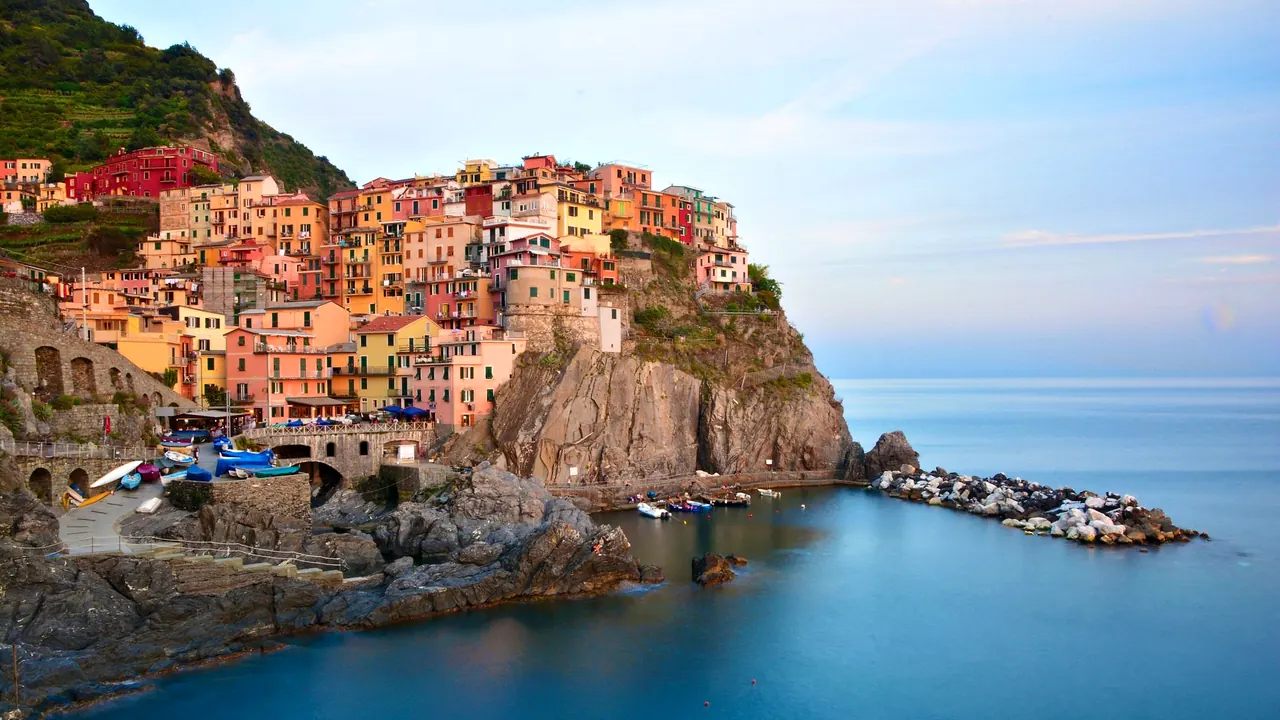
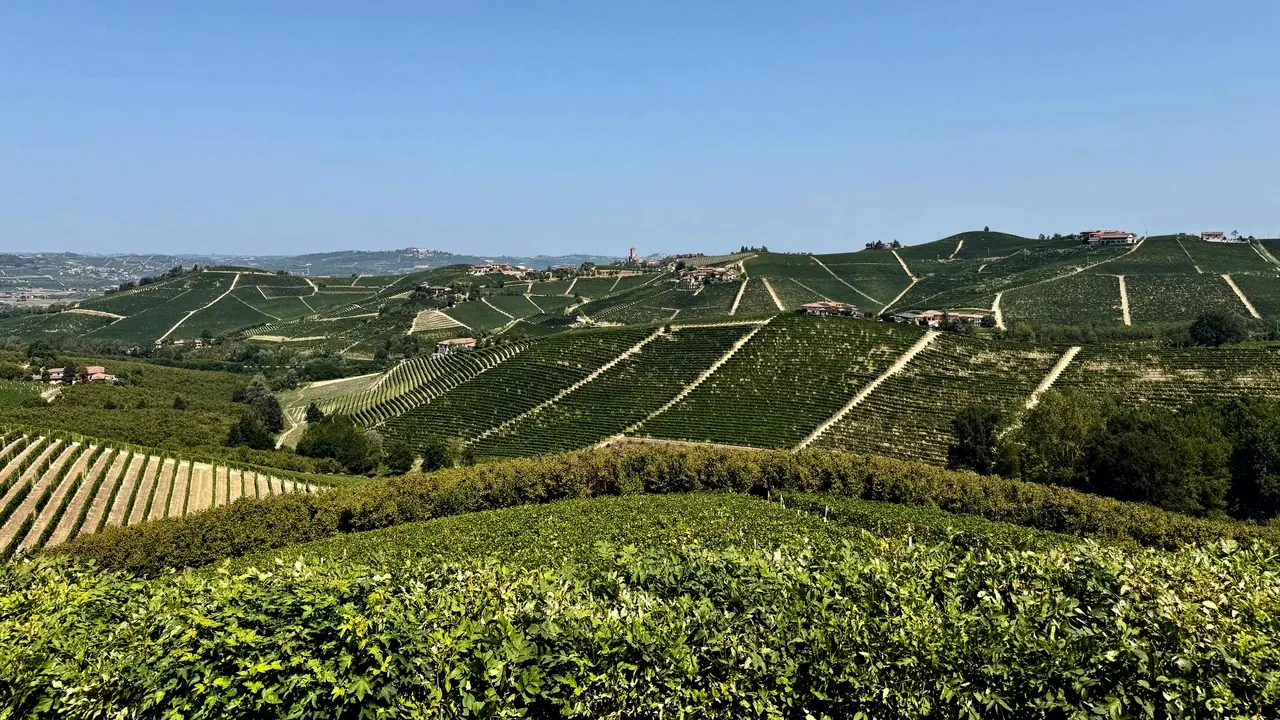
Photos: Cinque Terre by Narcisa Aciko, Pexels License; Piedmont by Martina Amaro, Pexels License.
Cinque Terre or Piedmont?
Our verdict in twelve categories, each scored against the same fixed benchmark cities, and the climate month by month, so you can choose for your trip.
Choose Cinque Terre for
- beaches
- getting around
Cinque Terre is for a short, focused stay on the sea: walking cliff paths between five villages, swimming off rocks or the sand at Monterosso, and watching the sunset from a harbour wall. It is small enough to cover by train and on foot without a car, and that simplicity is the appeal. In return you get little to do after dark, almost no museums or theatre, cramped and expensive rooms, and steep steps that make it hard going with small children.
Choose Piedmont for
- live music and the arts
- shopping
- culture and sights
Piedmont suits travellers who want more range and are happy to move between bases. Turin brings royal palaces, the Egyptian Museum, opera and aperitivo, and the Langhe hills around Alba give some of Italy's best eating and wine. Further out there are the Alps for hiking or skiing, the lakes for gentle family days, and real thermal baths. It is cheaper and kinder to families than the Ligurian coast, but it has no sea, and the countryside is far easier with a car.
Scoreboard
Twelve categories on one fixed scale from 0 to 100. The shaded stretch is the gap between the two.
Your match
Pick a travel style or drag the sliders, and both match scores follow your weighting.
Wins on beaches and getting around with your weighting.
Wins on live music and the arts and shopping with your weighting.
What matters to you?
Category by category
What the scores mean for a trip.
Beaches & swimming
Swimming is where Cinque Terre's sea gives it the edge. At Fegina, Monterosso has a long strip of sand and fine pebble, and that makes it the base for real beach days. In the other villages you swim off rock shelves and harbour slipways, which suits a quick dip between walks, and Levanto's wider beach is just up the line.
Piedmont has no coast, so all its swimming is in lakes. Lake Maggiore's western shore has pebble beaches and bathing platforms, and Lake Orta has grassy spots below the hill villages. They make a pleasant summer extra, but they won't satisfy anyone who has come for the sea.
Food & drink
Both regions cook well, but Piedmont is one of Italy's great food destinations, and Cinque Terre's offer is narrow. On the Ligurian coast the pleasures are simple: trofie with pesto, focaccia, Monterosso anchovies and fried seafood in a paper cone. Too many menus in the busiest villages are written with day-trippers in mind.
Piedmont gives you Barolo and Barbaresco at the source, the autumn white truffle season around Alba, and dishes such as agnolotti del plin and vitello tonnato. Turin adds historic coffee houses, bicerin and aperitivo. The best tables are scattered through the hills, so eating seriously here takes some driving.
Culture & sights
In Cinque Terre the sight is the place itself: the UNESCO-listed terraced coast, Vernazza's harbour square and Manarola's coloured houses. Add striped Ligurian Gothic churches and a watchtower or two, and with no real museums most people have seen it in a couple of days.
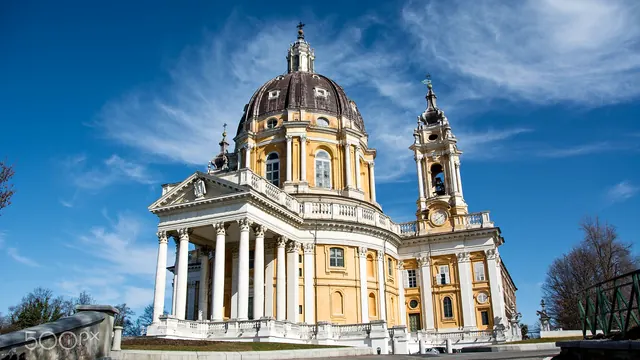
Piedmont goes much deeper. Turin's Egyptian Museum, the Royal Palace, the Cinema Museum in the Mole Antonelliana and the vast Savoy palace at Venaria Reale could fill a week on their own. Beyond the city are the Sacra di San Michele on its crag and the island palaces of Lake Maggiore.
Nightlife
Evenings in Cinque Terre mean a glass of local white at sunset and an early night. There are a few later bars in Monterosso and Riomaggiore and no clubs, and anyone who wants more heads to La Spezia.
Piedmont has a genuine night out, though it is all in Turin: a long aperitivo, then the crowded pavements of San Salvario and Vanchiglia and the riverside along the Po in summer. Outside the city it is as quiet as the Ligurian villages.
Nature & outdoors
Both are strong outdoor destinations, and Piedmont has more range. Cinque Terre's draw is one tightly drawn coast: the Sentiero Azzurro and the higher Sentiero Rosso above the sea, plus kayaking and diving in the marine reserve. It is superb walking, but all of it shares one landscape.
Piedmont has true Alpine country under Monte Rosa and Gran Paradiso, the wild Val Grande, and skiing on the Via Lattea. Lower down there is sailing on the lakes and cycling through the vineyards of the Langhe. The catch is that the mountains need a base of their own, away from Turin and the wine hills.
Day trips
Cinque Terre is well placed on the coastal railway. Portovenere and Lerici are a boat ride away, Pisa and Lucca are reachable by train, and Genoa and Portofino lie to the north. For a stay of a few days that is a good spread.
Piedmont offers more, partly because it is so large. Milan is about an hour from Turin by fast train, and Aosta and the Ligurian coast are within easy reach. Inside the region you can tour Barolo cellars, take Lake Maggiore boats to the Swiss shore and visit Orta San Giulio's island.
Good for families
Piedmont is far easier with children. Turin's mummies and the Cinema Museum keep them interested, and the arcades are flat. Lake Maggiore has island boats and gardens with white peacocks, and the ski resorts run ski schools.
Cinque Terre is built of steps. A pushchair is no use there, the trains are packed in summer, and Corniglia sits hundreds of steps above its station. It works for older children who like walking, and families with small ones are best off in flat Monterosso by its gently shelving beach.
Getting around
Cinque Terre is the simpler place to get around. A local train connects all five villages within minutes, ferries link most of the harbours in season, and you can walk the trails between villages. A car is simply a burden. The hard parts are the summer crowds on the platforms and all the climbing.
In Piedmont it depends on where you are. Turin is flat, with trams and a metro, and trains reach Alba and Stresa. To see the Langhe hilltops or the Alpine valleys, though, you will want a car.
Shopping & style
Shopping in Cinque Terre means jars of pesto, anchovies, lemon liqueur and Sciacchetrà, plus some ceramics and linen, and there is nothing in the way of fashion. Piedmont has more to offer. Turin has Via Roma and Via Garibaldi, the huge Porta Palazzo market and the Balon flea market. You can buy wine at Barolo cellar doors, cashmere from the Biella mills and truffles at the Alba fair.
Affordability
Piedmont is the cheaper trip. Turin's hotels and generous aperitivo keep costs moderate, and so do farm stays in the hills. Prices rise only for the truffle season in the Langhe, the lake resorts in high summer and the ski resorts in winter.
Cinque Terre's food and trains are fairly cheap, but its few small village rooms cost well above the norm for the Italian coast, and you pay to use the paths. Many budget travellers sleep in La Spezia or Levanto instead.
Live music & performing arts
The gap here is wide. In Cinque Terre live performance is limited to the odd summer concert in a church and the bands at saints' feast-day processions. Turin has opera and ballet at the Teatro Regio, the RAI National Symphony Orchestra and drama at the historic Teatro Carignano. In summer, the Stresa festival brings classical concerts to Lake Maggiore.
Wellness & relaxation
Piedmont has real thermal waters. The hot Bollente spring rises in the middle of Acqui Terme, and there are mountain baths at Valdieri and Vinadio. Wine resorts in the Langhe, many with their own spas, are slow by design.
Cinque Terre has no spa culture beyond a massage at a guesthouse. Its calm comes from the absence of cars and from a terrace above the sea, early in the morning or out of season, and it is gone on a crowded summer afternoon.
When should you go?
Pick your month. The climate figures are measured averages, not a forecast.
Cinque Terre in July
Piedmont in July
Daytime high, °C
Rainfall in the month, mm
Where the figures come from
Cinque Terre's temperatures are measured 78 km from the centre, at Pisa / S. Giusto.
Cinque Terre has no rain gauge within 25 km of the centre, so its rainfall comes from a gridded climate dataset read at the destination rather than from a gauge further away.
Piedmont has no weather station within reach, so its figures come from a gridded climate model rather than a measured record, and read a broad area rather than one spot.
Temperature and rainfall are climate normals, averaged over the years shown. Cinque Terre: 1991-2020 normals, Pisa / S. Giusto (77.8 km from centre). Piedmont: 1991-2020 normals, TerraClimate 4 km grid at the town, no weather station within 90 km.
Cinque Terre is at its best in May, June and September. The paths are walkable then, and from June to September the sea is warm enough to swim in, reaching about 25°C in August. July and August are the sunniest months, but highs near 30°C make the steep coastal path tiring by midday. Autumn turns wet quickly: October and November each bring around 170mm of rain, which can close trail sections, and winter is mild but grey and quiet.
Piedmont follows a similar curve in summer but is drier through the year. Even its wettest month, November, sees roughly 89mm, about half the Ligurian figure. Late spring and September to October are ideal for Turin and the wine hills, and autumn is when Alba's truffles and the harvest come in. Summer suits the lakes and high mountain trails, and the colder months, with highs around 9°C in Turin's lowlands, are the time to go skiing in the Alps rather than walking the streets.
Which traveller are you?
On a beach and sun trip, Cinque Terre is the clear pick. It has clear summer sea, a real sandy beach at Monterosso and rock swims below the villages, while landlocked Piedmont can only offer lake lidos for a short season.
For a culture and arts trip, Piedmont is much richer. Turin has the Egyptian Museum, Savoy palaces, the Teatro Regio's opera season and a full concert calendar. Cinque Terre's heritage is the terraced landscape, and you can take it in within a day or two.
On a food and nightlife trip, Piedmont wins comfortably. You get Barolo and truffles in the Langhe, vermouth and aperitivo under Turin's arcades, then the bar streets of San Salvario. Cinque Terre has pesto and anchovies, but its villages go quiet before midnight.
Before you go
| Measure | Cinque Terre | Piedmont |
|---|---|---|
| Official language | Italian | Italian |
| Currency | Euro (EUR) | Euro (EUR) |
| Sockets | CFL230 V, 50 Hz | CFL230 V, 50 Hz |
| Driving side | Right | Right |
| Time zone | UTC+1, UTC+2 in summer | UTC+1, UTC+2 in summer |
| Emergency number | 112 | 112 |
| Main airport | Pisa International Airport (PSA)82 non-stop destinations | Turin Airport (TRN)65 non-stop destinations |
| Public holidays this year | 13 days | 13 days |
By the numbers
| Measure | Cinque Terre | Piedmont |
|---|---|---|
| Population | - | 4,341,375 |
| Swim season, months above 21 °C | 4 months | 4 months |
Where else could you go?
Every comparison below shares a destination with this one, so you can follow Cinque Terre or Piedmont somewhere new.
- Portofinovs Cinque Terre
- Tuscanyvs Cinque Terre
- Lake Maggiorevs Piedmont
- French Rivieravs Piedmont
- Elbavs Cinque Terre
- Lake Gardavs Cinque Terre