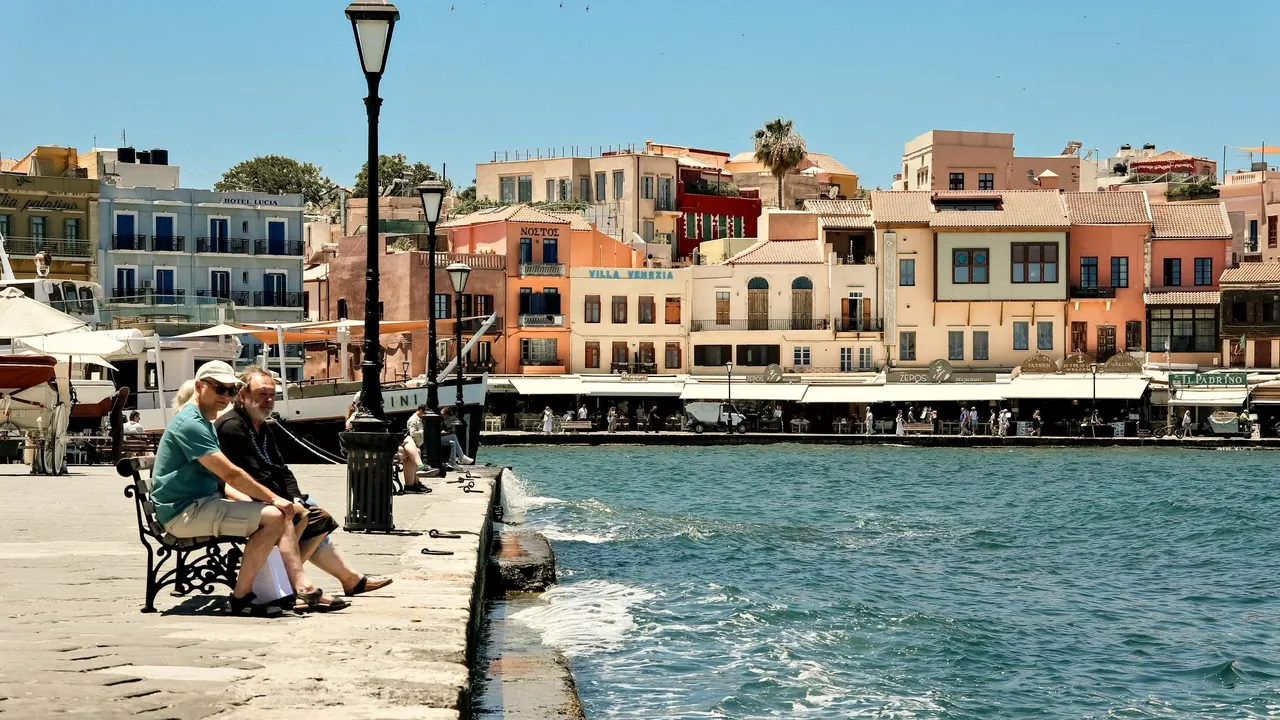
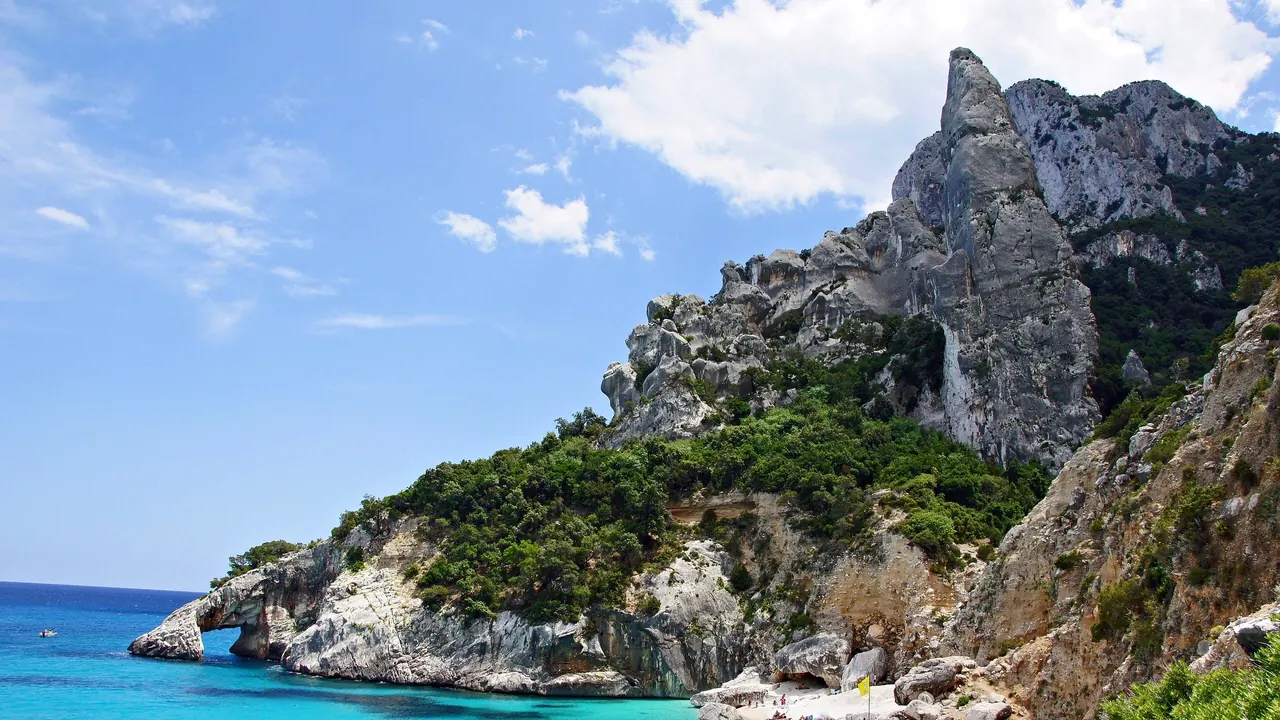
Photos: Crete by Piotr Baranowski, Pexels License; Sardinia by Yesuitus2001, CC BY-SA 2.5, cropped.
Crete or Sardinia?
Our verdict in twelve categories, each scored against the same fixed benchmark cities, and the climate month by month, so you can choose for your trip.
Choose Crete for
- culture and sights
- prices
- nightlife
Crete is the better pick for travellers who want history alongside the beach. The Minoan palaces and the Heraklion museum, and the Venetian and Ottoman old towns of Chania and Rethymno, give a trip a depth that Sardinia's sights don't quite match. It is also the gentler island on the wallet, with village tavernas and family-run rooms, and its north-coast bus line means you can manage a few days without a car.
Choose Sardinia for
- shopping
- live music and the arts
- wellness
Sardinia suits people whose trip is built around the sea and the landscape, with culture coming second. Its granite coves in the northeast and its boat-only bays on the Gulf of Orosei are among the finest swimming in the Mediterranean. It also has the better crafts to bring home and a taste of Italian shepherd cooking at hill agriturismi. The price depends heavily on where you stay. The Costa Smeralda in August is a splurge, while Cagliari, Alghero and the inland villages stay moderate.
Scoreboard
Twelve categories on one fixed scale from 0 to 100. The shaded stretch is the gap between the two.
Your match
Pick a travel style or drag the sliders, and both match scores follow your weighting.
Too close to call, 1 point apart
Wins on culture and sights and prices with your weighting.
Wins on shopping and live music and the arts with your weighting.
What matters to you?
Category by category
What the scores mean for a trip.
Beaches & swimming
Both islands are top beach destinations, so the choice comes down to the kind of coast you want. Crete's best beaches are in the far west, with the pink sand and lagoons of Elafonissi and the bay at Balos. On the Libyan Sea side the south coast turns to quiet pebble coves reached by boat or path, like Preveli.
Sardinia has granite coves and pale sand around La Maddalena, white pebble bays below cliffs on the Gulf of Orosei, and wading-depth water at La Pelosa. Its main advantage is that when the mistral blows, a sheltered coast is usually a short drive away.
Food & drink
You eat about equally well on both, but the flavours come from different places. Crete's cooking is built on olive oil, wild greens, graviera cheese and dakos. The best meals are in village tavernas and the backstreets of Chania and Rethymno, usually followed by a free glass of raki.
Sardinia cooks like a shepherd. Expect suckling pig roasted over myrtle, pane carasau, culurgiones and seadas, with Cannonau red and Vermentino white wine. The best meals are long farm menus at hill agriturismi. On both islands, the food along the resort strips is generic.
Culture & sights
Crete has the stronger and more concentrated heritage. Knossos and the Heraklion Archaeological Museum, with the frescoes and the Phaistos Disc, are world-class. Chania's Venetian harbour, Rethymno's fortress and mosques, Spinalonga and Arkadi add centuries of later history.
Sardinia's past is just as unusual but more scattered and less famous. Its Bronze Age nuraghi peak at Su Nuraxi, and Cagliari's museum holds the Mont'e Prama giants. Nora, Tharros and Alghero's Catalan streets round things out. You need a car to see the main sights on either island.
Nightlife
The two are close for going out, but the late-night scenes attract very different crowds. Crete's party strips at Malia and Hersonissos are loud, cheap-feeling package resorts for young groups. The evening bars in Chania, Rethymno and Heraklion are full of Greek students, so there is life outside high summer.
Sardinia's clubbing is the dressy, expensive beach-club scene around Porto Cervo, and it fades after August. Otherwise there are Cagliari's wine bars and Alghero's aperitivo crowd on the ramparts.
Nature & outdoors
Crete's walking is the more varied and the easier to dip into. Samaria and shorter, quieter gorges such as Imbros and Aradena cut down from the White Mountains, which hold snow into spring. The coast path from Loutro to Agia Roumeli links villages along the Libyan Sea, the E4 crosses the whole island, and kri-kri goats survive in the western peaks.
Sardinia is at least as serious at the top end. The Gorropu gorge in the Supramonte is one of Europe's deepest canyons, the Selvaggio Blu is a demanding multi-day cliff trek, and the Gennargentu has cork and holm oak forests with mouflon. It also has more to do on the water, with sea-cliff climbing and kayaking at Cala Gonone, sailing and diving around La Maddalena, and kitesurfing at Porto Pollo.
Day trips
The sea crossings show the difference best. From Heraklion the fast ferry reaches Santorini in about two hours, which makes a long day in the Cyclades. From Santa Teresa Gallura, the cliff town of Bonifacio in Corsica is only an hour away. On land, Crete's best days out are its other towns, the wine villages of Peza and Archanes, the potters of Margarites and the mountain villages of Anogia and the Amari valley.
In Sardinia, what you can reach depends more on your base. The north has the Alghero, Bosa and Capo Caccia circuit. Cagliari has Carloforte and the old Sulcis mines. The east coast leads inland to the Mamoiada mask makers and the Cannonau wineries around Jerzu.
Good for families
Families do equally well on either island, as long as the trip is built around the beach. Crete has a bit more to fill a day away from the sand, with waterparks along the north coast and the large aquarium at Gournes. Elafonissi's warm lagoon is ideal for toddlers.
In Sardinia the days revolve almost entirely around the sea. Chia, the Costa Rei and La Pelosa have safe shallow water, but there are few attractions made for children. On both islands, plan around the midday summer heat and long drives on winding roads.
Getting around
Both are large, mountainous islands where hiring a car is effectively required and every journey takes longer than it looks. Crete's one real help is its reliable bus line along the north coast, linking Chania, Rethymno, Heraklion and Agios Nikolaos. That makes a town-based stay possible without a car.
In Sardinia, the trains are slow and the buses rarely reach the beaches. Its advantage is three airports, so flying into Cagliari, Olbia or Alghero, whichever is nearest your base, saves hours of driving.
Shopping & style
Neither island is a shopping destination, but Sardinia has more worth buying. Alghero's coral, filigree gold, cork goods and Pattada knives are distinctive, and Porto Cervo adds luxury boutiques in summer.
Crete's offer is narrower. It centres on Chania's leather lane and covered market, plus thyme honey, olive oil and pottery from Margarites. Beyond those, it is mostly identical souvenir shops.
Affordability
Crete is the easier island on the budget. Village tavernas and family-run apartments are good value, and its prices stay well below the famous Cycladic islands. Costs only climb noticeably around Elounda and Chania's old town in summer.
Sardinia varies far more. The Costa Smeralda in July and August is among the costliest coasts in the Mediterranean. Cagliari, Alghero and Ogliastra are moderate, and agriturismo menus are generous. On both islands, June and September are the best balance of warm sea and lower prices.
Live music & performing arts
Crete's music is a living tradition rather than a programme. You hear the lyra and lute, improvised mantinades verses and fast circle dances in the music tavernas of Rethymno and Chania, at village saints'-day festivals and above all in Anogia. Heraklion and Chania add summer festivals in fortresses and open-air theatres, but the hotel Greek nights are staged for visitors.
Sardinia has the opera house. Cagliari's Teatro Lirico runs an opera and concert season, though little happens outside the capital for most of the year. Its traditional sound is quite different: the deep four-voice canto a tenore of Barbagia and the launeddas reed pipes. Summer adds Time in Jazz in Berchidda and the costumed Sant'Efisio procession.
Wellness & relaxation
On both islands, unwinding comes from the slow pace rather than from spas. Crete has no working bathing tradition, and its serious spas cluster around Elounda and the Gulf of Mirabello. Its quietest corners are car-free Loutro and the hill villages.
Sardinia has slightly more to offer. Warm water still flows beside the Roman baths at Fordongianus, and Sardara has thermal hotels. Ogliastra and the inland agriturismi suit a very unhurried stay.
When should you go?
Pick your month. The climate figures are measured averages, not a forecast.
Crete in July
Sardinia in July
Daytime high, °C
Rainfall in the month, mm
Where the figures come from
Sardinia has no rain gauge within 25 km of the centre, so its rainfall comes from a gridded climate dataset read at the destination rather than from a gauge further away.
Temperature and rainfall are climate normals, averaged over the years shown. Crete: 1991-2020 normals, Heraklion Airport (3.6 km from centre). Sardinia: 1991-2020 normals, Olbia / Costa Smeralda (3.1 km from centre).
Crete has the longer swimming season. Its sea is already warm in June and holds at about 25°C from July right through September, so October swims are still comfortable. Sardinia's sea is slower to warm and quicker to cool, dropping to about 20°C by October, so its best swimming falls between July and early September. Sardinia also has the hotter summer, with highs around 32°C in July and August against about 29°C on Crete, which makes midday sightseeing there hard work. Crete is almost rainless from May to September and has very long sunny days all summer.
For walking, ruins and gorges, spring and autumn suit both islands, but Crete's spring is the drier. April and May there are mostly sunny, while Sardinia still gets regular showers. The rain returns to both in October. Crete has the wetter winter, with close to 96mm in December, while Sardinia's rain is spread more evenly from October to December. Winter days on both are mild enough for towns and museums but too cool for the beach.
Which traveller are you?
On a culture and arts trip, Crete gets more out of each day of driving. Knossos, Phaistos, Malia and Gortyn are all within reach of a Heraklion base. Sardinia's nuraghi, sacred wells and Romanesque churches lie much farther apart.
On a food and nightlife trip, Crete puts both in the same streets. In Chania or Rethymno you can eat in the old town and then walk straight to a harbour terrace. Sardinia's best food is at hill farms, a long way from the Porto Cervo clubs.
For a trip on a tight budget, Crete makes the money go further. Village tavernas and family-run rooms are good value across most of the island, and the north-coast bus lets you stay in town without hiring a car. Sardinia stays moderate around Cagliari and inland, but the Costa Smeralda is costly in summer.
Before you go
| Measure | Crete | Sardinia |
|---|---|---|
| Official language | Greek | Italian |
| Currency | Euro (EUR) | Euro (EUR) |
| Sockets | CF230 V, 50 Hz | CFL230 V, 50 Hz |
| Driving side | Right | Right |
| Time zone | UTC+2, UTC+3 in summer | UTC+1, UTC+2 in summer |
| Emergency number | 112 | 112 |
| Main airport | Heraklion International Nikos Kazantzakis Airport (HER)129 non-stop destinations | Olbia Costa Smeralda Airport (OLB)79 non-stop destinations |
| Public holidays this year | 15 days | 13 days |
By the numbers
| Measure | Crete | Sardinia |
|---|---|---|
| Population | 623,065 | 1,628,384 |
| People per km² | 75 | - |
| Swim season, months above 21 °C | 5 months | 3 months |
Where else could you go?
Every comparison below shares a destination with this one, so you can follow Crete or Sardinia somewhere new.