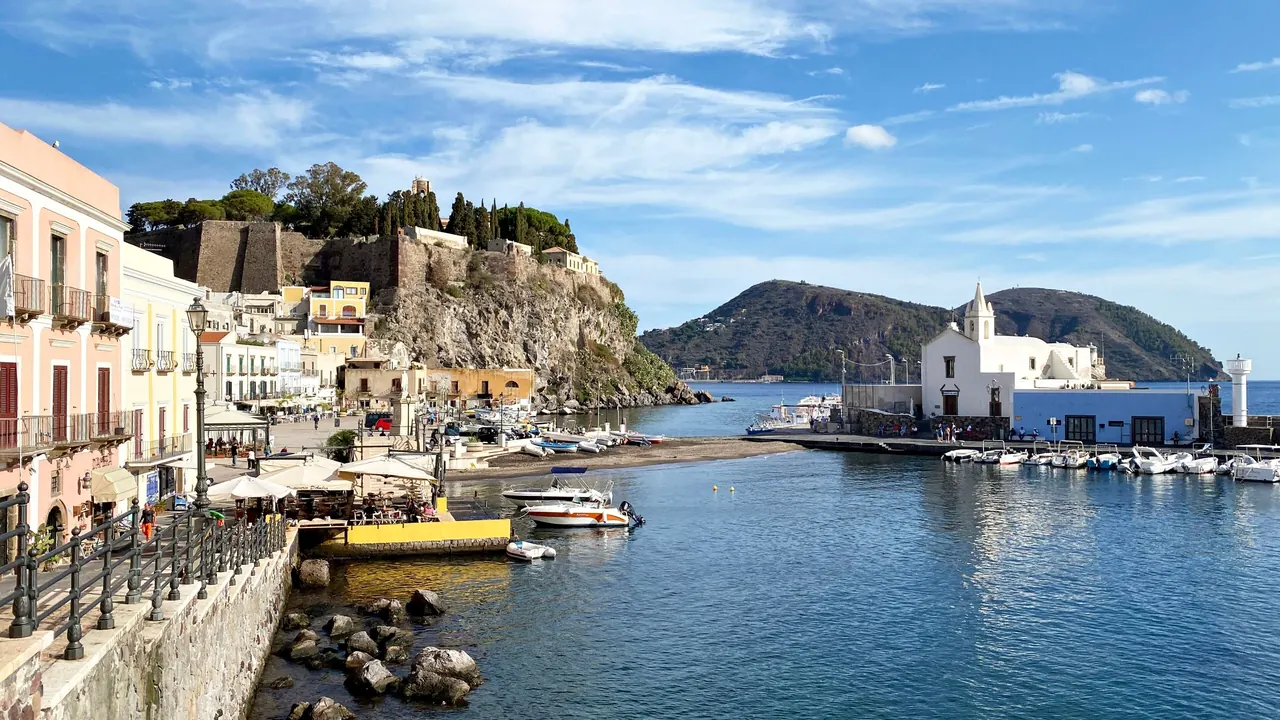
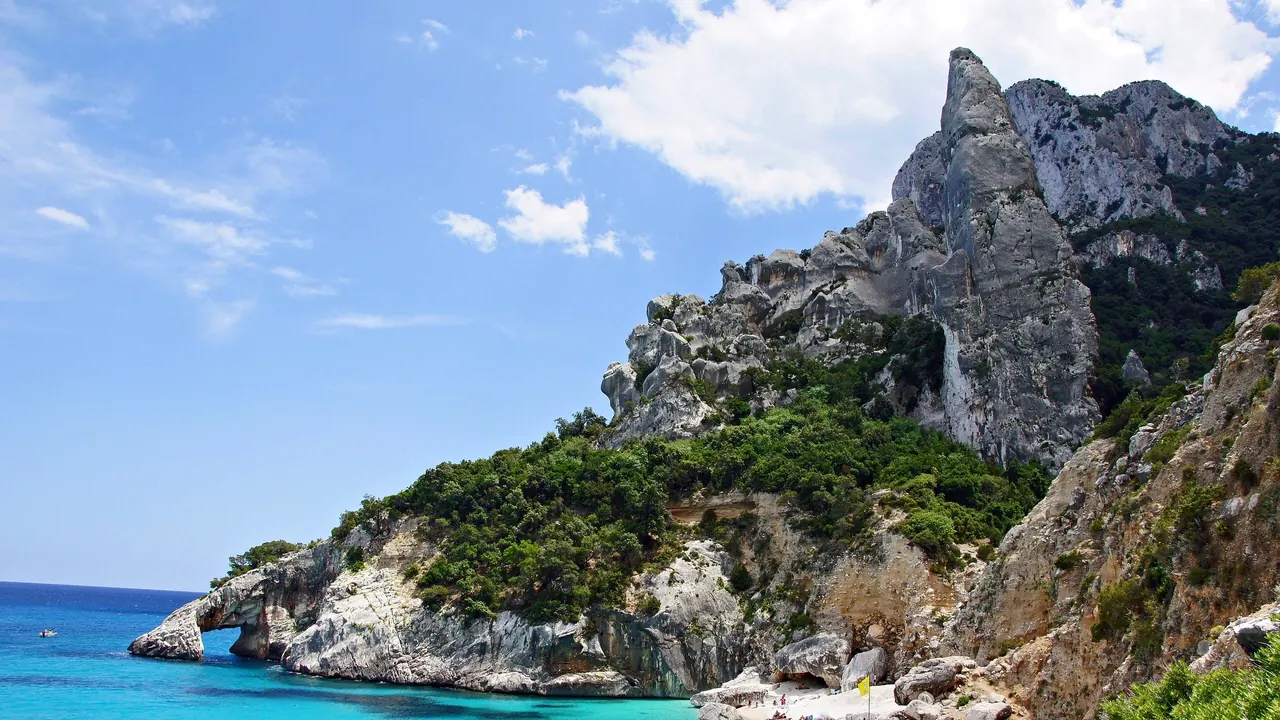
Photos: Aeolian Islands by Bernard Gagnon, CC BY 4.0, cropped; Sardinia by Yesuitus2001, CC BY-SA 2.5, cropped.
Aeolian Islands or Sardinia?
Our verdict in twelve categories, each scored against the same fixed benchmark cities, and the climate month by month, so you can choose for your trip.
Choose Aeolian Islands for
- nature and the outdoors
- wellness
The Aeolian Islands suit a traveller who wants the landscape itself to be the event: an active volcano throwing up lava after dark, a steaming crater rim on Vulcano, and days spent hopping by hydrofoil between seven small islands that each feel different. It is a compact, sea-bound trip of boats, rocky coves and quiet villages, best for couples and adults who don't mind steep lanes, limited sights and summer prices.
Choose Sardinia for
- live music and the arts
- families
- culture and sights
Sardinia is the stronger choice for a fuller island vacation with a car. It has the better sandy beaches, shallow water for small children, a Bronze Age heritage of nuraghi and museums, and shepherd cooking you won't find elsewhere in Italy. The price is distance: it is a large island with slow roads, so you pick a coast and build the trip around it.
Scoreboard
Twelve categories on one fixed scale from 0 to 100. The shaded stretch is the gap between the two.
Your match
Pick a travel style or drag the sliders, and both match scores follow your weighting.
Wins on nature and the outdoors and wellness with your weighting.
Wins on live music and the arts and families with your weighting.
What matters to you?
Category by category
What the scores mean for a trip.
Beaches & swimming
Sardinia has the better beaches by a clear margin. Its pale sand and turquoise water around the Costa Smeralda and La Maddalena, the shallow bays at Chia and La Pelosa and the white pebble coves of Orosei give a choice the volcanic islands can't match, and there is usually a sheltered coast when the mistral blows.
The Aeolian shore is dark pebble, black sand and rock ledges, with Vulcano's western bay the closest thing to a classic beach. Its strength is clear, deep water under cliffs, best reached by hiring a boat for the day, and shade and sunbeds are scarce.
Food & drink
Sardinia has the edge, mainly because of range: suckling pig, culurgiones, pecorino and pane carasau inland, bottarga and lobster on the coast, and agriturismo set menus that come straight from the farm. Cagliari's San Benedetto market and Marina quarter add a proper city table.
The Aeolian kitchen is narrower and more seasonal, built on morning fish, Salina capers, pane cunzato and Malvasia wine. Salina is where it shines, but many kitchens close outside summer.
Culture & sights
Sardinia offers far more heritage, spread across the whole island: thousands of nuraghi with Su Nuraxi at Barumini at their head, sacred wells, Phoenician and Roman Nora and Tharros, Pisan churches and Alghero's Catalan old town. The catch is that seeing them means a lot of driving.
In the Aeolians nearly everything sits on Lipari's citadel rock, where the archaeological museum's obsidian, Greek pottery and theatrical masks are worth a long morning. Beyond that, a few Bronze Age hut villages on Panarea and Filicudi make up the list.
Nightlife
Both have one glamorous summer hotspot, Panarea in the Aeolians and Porto Cervo on the Costa Smeralda, and both go quiet after August. Sardinia comes out ahead because it also has Cagliari, with wine bars in the Marina and Castello quarters that keep going all year, plus aperitivo crowds on Alghero's ramparts.
Outside Panarea, the Aeolian evening means Lipari's marina bars or dinner and a walk, which is exactly why many people choose Salina or Filicudi.
Nature & outdoors
The Aeolian Islands are the more striking landscape, a UNESCO-listed volcanic chain where Stromboli erupts every few minutes and the lava runs down the Sciara del Fuoco into the sea. Add the crater walk on Vulcano, Salina's fern-covered peaks and sailing among arches, and you get unusual drama in a very small area.
Sardinia's wild side is bigger and more varied: the Gorropu gorge, the demanding Selvaggio Blu trek, climbing at Cala Gonone, the Maddalena marine park, kitesurfing at Porto Pollo and flamingos in the lagoons. Neither is good for summer hiking, so walkers should come in spring or autumn.
Day trips
Sardinia gives more variety on day trips, as long as you accept that each base covers only its own corner. From the north a ferry reaches Bonifacio in Corsica, the northwest offers Alghero, Bosa and Capo Caccia, and Barbagia's mountain villages and Jerzu's wineries fill days inland.
In the Aeolians every outing is a boat ride to another island, from Salina's caper terraces to car-free Alicudi. On the Sicilian side, Milazzo's castle and the Greek theatre at Tindari are the only real heritage trips.
Good for families
Sardinia is much the better bet with children. Shallow sandy water at Chia, the Costa Rei and La Pelosa lets small ones paddle safely, and resort villages often have pools and kids' clubs, though you still need to plan around the car and the midday heat.
The Aeolians reward older children who love boats and snorkelling, and a night trip to watch Stromboli is unforgettable. With toddlers, though, the rocky entries, hot black sand, steep lanes and choppy hydrofoils make every day hard work.
Getting around
Neither is easy, but the problems are opposite. In the Aeolians you leave the car behind and rely on hydrofoils and ferries, with scooters on Lipari and Salina and only carts and footpaths on Stromboli and Panarea. Rough seas can cancel crossings, so build in spare days.
Sardinia is the reverse: a hire car is essential, the winding coastal and mountain roads are slower than they look, and beach car parks fill in August. Flying into whichever of its three airports is nearest your base saves hours.
Shopping & style
Shopping in the Aeolians is brief and mostly edible: Salina capers and Malvasia to take home, pumice and obsidian souvenirs on Lipari's main street, and a few resort-wear boutiques on Panarea for the summer crowd.
There is more to browse in Sardinia, though it is still crafts rather than fashion streets: red coral from Alghero, filigree gold, woven rugs, cork and folding Pattada knives. Porto Cervo's piazzetta adds luxury boutiques in summer, and Cagliari covers everyday needs.
Affordability
Sardinia is easier on the budget because it is big enough to avoid its expensive corner. Away from the Costa Smeralda, the coast around Cagliari, Alghero and Ogliastra and the inland villages are moderate for Italy, and agriturismo meals give a lot for the money.
The Aeolian Islands are expensive almost everywhere in summer: rooms are limited, everything comes in by boat, and hydrofoils and boat hire add up. Lipari is the sensible base, and Panarea the one to avoid on a budget. In both places June and September are cheaper than high summer.
Live music & performing arts
Little happens on stage in the Aeolians. You might find a summer concert in a church or village square, or band music at a religious feast, but there is no theatre at all. On these islands the evening show is Stromboli.
For anything to attend, Sardinia is the better bet, if still a modest one: opera and concerts at Cagliari's Teatro Lirico, canto a tenore singing and launeddas pipes at village festivals, Time in Jazz in Berchidda in summer and the costumed Sant'Efisio procession. Away from Cagliari, most of the year is quiet.
Wellness & relaxation
Both are restful in their pace rather than as spa destinations, but their bathing differs. The Aeolians have volcanic bathing: Vulcano's sulphur mud pool and the warm gas vents just offshore, though gas levels can close the pool. Salina, Filicudi and Alicudi offer the quietest days.
Sardinia has Roman thermal water at Fordongianus and Sardara's thermal hotels, but its spa stays mostly happen in big resort thalassotherapy centres. For slow days, head for Ogliastra or an inland agriturismo.
When should you go?
Pick your month. The climate figures are measured averages, not a forecast.
Aeolian Islands in July
Sardinia in July
Daytime high, °C
Rainfall in the month, mm
Where the figures come from
Aeolian Islands's temperatures are measured 60 km from the centre, at Messina.
Aeolian Islands has no rain gauge within 25 km of the centre, so its rainfall comes from a gridded climate dataset read at the destination rather than from a gauge further away.
Sardinia has no rain gauge within 25 km of the centre, so its rainfall comes from a gridded climate dataset read at the destination rather than from a gauge further away.
Temperature and rainfall are climate normals, averaged over the years shown. Aeolian Islands: 1991-2020 normals, Messina (59.7 km from centre). Sardinia: 1991-2020 normals, Olbia / Costa Smeralda (3.1 km from centre).
Both are summer sea destinations with dry, hot Julys and Augusts and daytime highs near 32°C, too hot for midday walking in either. The sea is swimmable from June to early October in both, though the Aeolian water runs slightly warmer, reaching about 27°C in August against 25°C off Sardinia. The Aeolian Islands also get long summer days, with more than 300 hours of sunshine a month from June to August.
The real difference is autumn. Around the Aeolian Islands the rain returns in September, at about 77mm, while Sardinia stays fairly dry that month at 30mm and only turns wet in October. That makes September the more reliable late-season month for Sardinia. For hiking, spring is best in both: April and May are mild and the sea is still cool, while winter brings the most rain to the islands off Sicily.
Which traveller are you?
For an outdoors trip, the Aeolian Islands win. Watching Stromboli erupt at night, climbing to Vulcano's crater and kayaking round sea stacks beat even Sardinia's fine Supramonte gorges and coastal treks for sheer drama in a small area.
On a family trip with young children, Sardinia is far easier. Chia, the Costa Rei and La Pelosa offer shallow sandy water and resorts with pools and clubs, while the Aeolians mean hot black sand, rocky entries and pushchair-hostile steps.
On a culture and arts trip, Sardinia has much more to see. Its nuraghi, the Mont'e Prama giants in Cagliari, Roman Nora and Catalan Alghero outweigh the Aeolians, where one excellent museum on Lipari carries almost everything.
Before you go
| Measure | Aeolian Islands | Sardinia |
|---|---|---|
| Official language | Italian | Italian |
| Currency | Euro (EUR) | Euro (EUR) |
| Sockets | CFL230 V, 50 Hz | CFL230 V, 50 Hz |
| Driving side | Right | Right |
| Time zone | UTC+1, UTC+2 in summer | UTC+1, UTC+2 in summer |
| Emergency number | 112 | 112 |
| Main airport | Catania-Fontanarossa Airport (CTA)96 non-stop destinations | Olbia Costa Smeralda Airport (OLB)79 non-stop destinations |
| Public holidays this year | 13 days | 13 days |
By the numbers
| Measure | Aeolian Islands | Sardinia |
|---|---|---|
| Population | 15,419 | 1,628,384 |
| People per km² | 134 | - |
| Swim season, months above 21 °C | 5 months | 3 months |
Where else could you go?
Every comparison below shares a destination with this one, so you can follow Aeolian Islands or Sardinia somewhere new.
- Corsicavs Sardinia
- Sicilyvs Aeolian Islands
- Elbavs Sardinia
- Caprivs Aeolian Islands
- Amalfi Coastvs Aeolian Islands
- Ischiavs Aeolian Islands