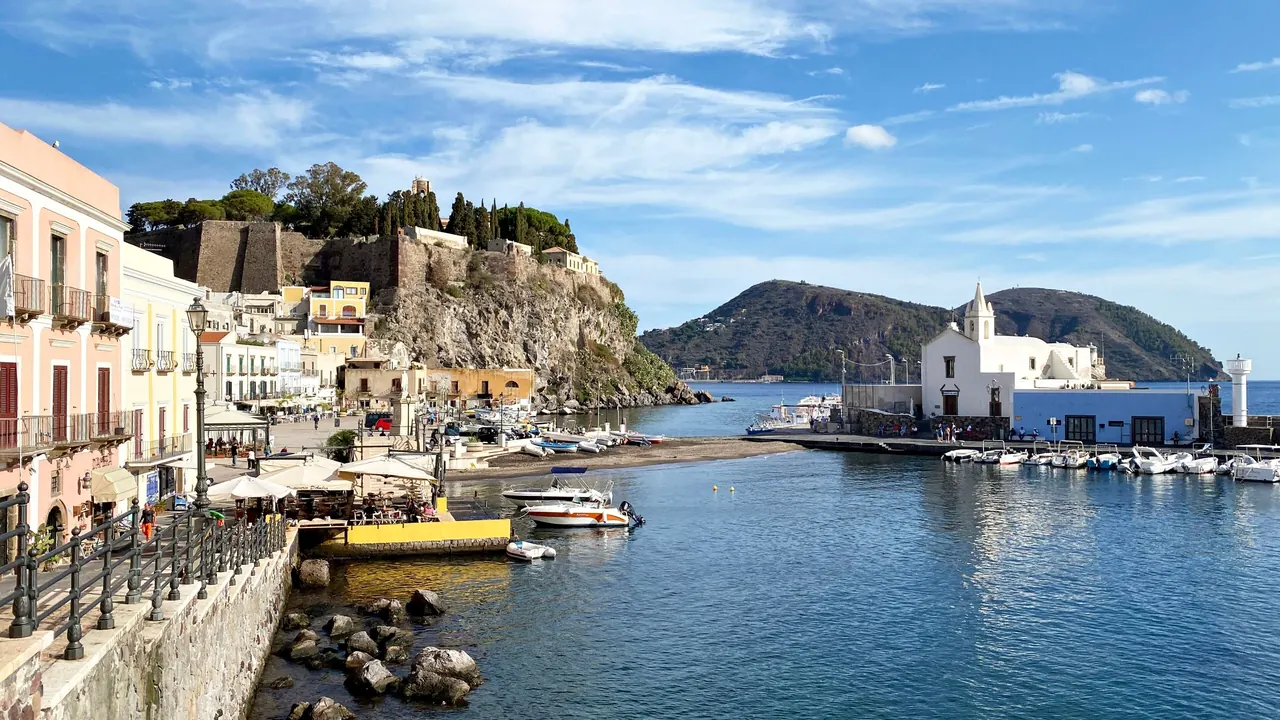
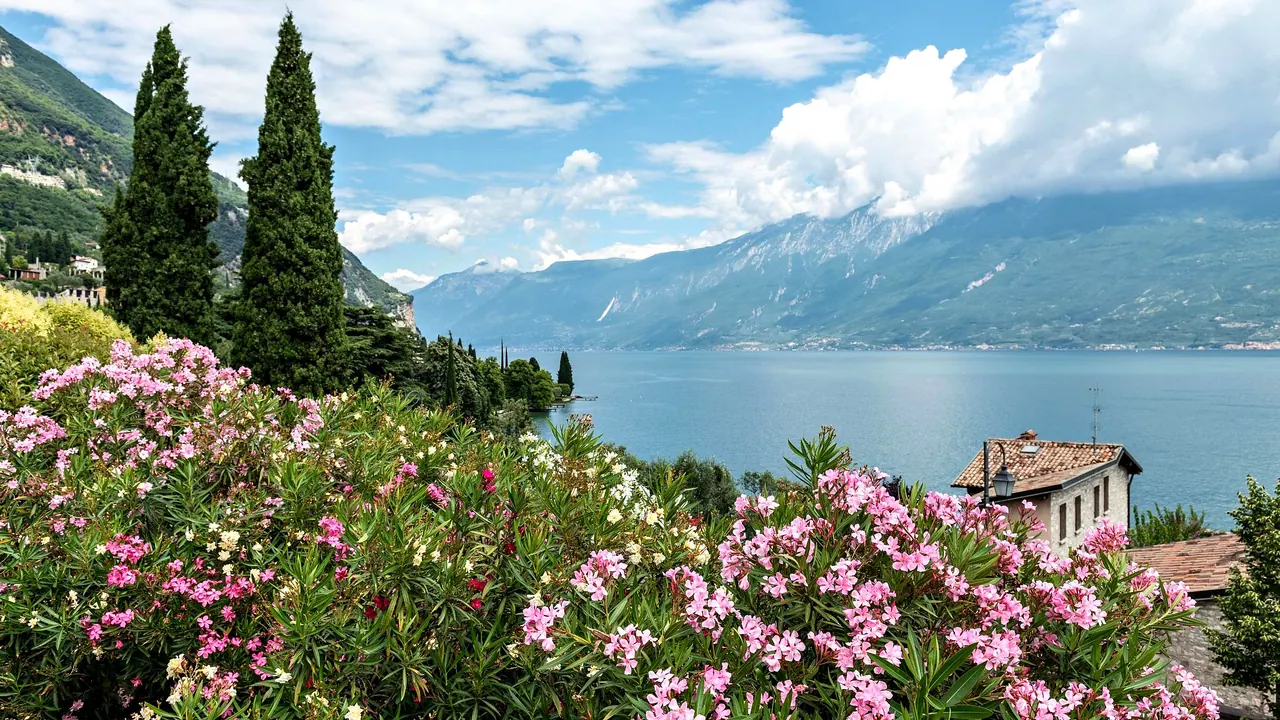
Photos: Aeolian Islands by Bernard Gagnon, CC BY 4.0, cropped; Lake Garda by Wolfgang Weiser, Pexels License.
Aeolian Islands or Lake Garda?
Our verdict in twelve categories, each scored against the same fixed benchmark cities, and the climate month by month, so you can choose for your trip.
Choose Aeolian Islands for
- beaches
- nightlife
The Aeolian Islands suit travellers who want the sea and the volcanoes at the heart of the trip. You swim from boats in deep clear coves, watch Stromboli throw up lava after dark and move between seven small islands that each feel different. It is a trip for adults and older children who are happy with rocky shores, few attractions and plans that depend on the weather at sea. Expect to pay for it in summer.
Choose Lake Garda for
- families
- day trips
- live music and the arts
Lake Garda is the easier and more varied choice, especially with young children or for anyone who wants more than one kind of day. The south-east shore has Gardaland and family resorts, Sirmione has thermal pools, and the railway puts Verona and Venice within easy reach. The north end is one of Europe's great bases for climbing, biking and windsurfing. The swimming is calmer lake bathing from lidos rather than the open sea, but you get much more variety for less money.
Scoreboard
Twelve categories on one fixed scale from 0 to 100. The shaded stretch is the gap between the two.
Your match
Pick a travel style or drag the sliders, and both match scores follow your weighting.
Wins on beaches and nightlife with your weighting.
Wins on families and day trips with your weighting.
What matters to you?
Category by category
What the scores mean for a trip.
Beaches & swimming
The Aeolian Islands give the better swimming. This is the open Mediterranean around volcanic rock, with deep blue water in coves under cliffs, black sand on Vulcano's western bay and pebble at Canneto on Lipari. Many of the best spots can only be reached by boat. Shade and sunbeds are scarce, and the black sand gets very hot by midday.
Garda offers lake bathing that is warm in high summer but calmer and more organised. You swim from grassy lidos, jetties and the rock shelves below Sirmione, with the best stretches on the south and east shores at Lazise, Bardolino and the Valtenesi. It is easier with loungers and lawns, but less striking than the island coves.
Food & drink
The two are about equally good, but the food is very different. The islands cook a short Sicilian menu of the morning's fish, Salina capers, pane cunzato and granita with brioche, with sweet Malvasia to drink. Many kitchens close outside summer.
Garda's food is northern Italian: lake fish with risotto, bigoli and polenta, its own olive oil, and a much deeper wine list running from Lugana to Bardolino and Amarone. On both, the best meals are away from the busiest harbours: Salina on the islands, and the agriturismi in the hills above Garda.
Culture & sights
Garda has more to see, spread through its towns. Sirmione has its moated castle and the Roman Grotte di Catullo, Gardone has the Vittoriale with a warship set into the hillside, and there are castles at Malcesine, Torri and Riva.
The Aeolian sights are concentrated on Lipari's citadel. Its archaeological museum, with obsidian tools and theatrical masks, is outstanding for anyone who loves prehistory. Elsewhere on the islands there are only Bronze Age hut villages and small churches.
Nightlife
The islands have a bit more going on after dark, mostly thanks to Panarea in July and August, when yachts fill the bay and people dance on terraces until late. Lipari's marina bars are the ordinary option. On the other islands the evening ends after dinner.
At Garda, Desenzano is the one real place to go out, with lakefront bars and a few large clubs that fill on summer weekends. Riva and Bardolino have a handful of bars. Both destinations go very quiet outside summer.
Nature & outdoors
Both are outstanding outdoors, but in completely different ways. The islands are a living volcanic landscape. You can watch Stromboli erupt from a boat below the Sciara del Fuoco, walk to the steaming rim of Vulcano's Gran Cratere, explore the chestnut woods on Salina, or kayak and dive around sea stacks.
Garda's strength is mountain sport at the narrow northern end. The cable car runs up Monte Baldo from Malcesine, Arco's limestone walls draw climbers, via ferrate and bike trails climb the valleys, and the reliable afternoon wind at Torbole is ideal for windsurfing. Choose the islands for volcanoes and sea, and Garda for climbing, cycling and wind.
Day trips
Garda is the far better base for outings. Trains from Peschiera and Desenzano reach Verona in well under an hour and Venice in about an hour and a half, with Vicenza, Padua, Brescia and Bergamo on the same routes. Mantua and the Valpolicella vineyards are close by road.
On the islands, a day trip means taking a hydrofoil to another island, such as Salina's caper villages or Alicudi, where stone steps take the place of roads. On the mainland, Milazzo's castle and Tindari's Greek theatre are within reach, but Sicily's major cities are too far for a day.
Good for families
Lake Garda is one of Italy's main family destinations. Its south-east shore has Gardaland, an aquarium, water parks and Parco Natura Viva, along with resort campsites full of pools and children's activities. Shallow shores and short ferry rides make ordinary days easy.
The islands work for older children who love boats and snorkelling, and a night-time boat trip to watch Stromboli erupt is hard to beat. With toddlers, though, the rocky entries, hot black sand, steep lanes and rough crossings are a real strain.
Getting around
Both rely on boats, but differently. On the islands, the hydrofoils and ferries are the only links, and rough seas can cancel crossings, so you need some slack in your plans. On land you get around by scooter, on foot or by electric cart, since Stromboli and Panarea have no cars.
Garda's boats are a pleasant but slow way to cross the lake. The railway serves only the southern shore, and the shore roads are narrow and congested in summer, with hard parking. Staying in one town and using the ferries works best.
Shopping & style
Neither is a shopping destination, and on both the best souvenirs are things to eat and drink. On the islands that means Salina capers and Malvasia, plus pumice and obsidian trinkets on Lipari's main street and resort boutiques on Panarea.
Garda has slightly more choice. There are big weekly markets on the lakefronts at Desenzano, Lazise and Bardolino, olive oil and Lugana wine to take home, and good outdoor gear shops in Riva and Arco. For serious shopping, Verona and Milan are within reach.
Affordability
Garda is the cheaper of the two, mainly because it offers so many ways to stay off the waterfront. Campsites, camping villages and hill agriturismi in the Valtenesi cost noticeably less than the lakefront hotels.
On the islands everything is shipped in and rooms are limited. Boat hire and guided volcano walks add to the bill, and Panarea and Salina are expensive. Lipari or Vulcano in June or September is the way to keep costs moderate.
Live music & performing arts
Garda has much more to offer. The highlight is the summer opera in Verona's Roman arena, under an hour from the south shore, and the open-air amphitheatre at the Vittoriale also hosts concerts in season.
The islands have almost nothing beyond village feasts with processions and band music, and the occasional concert in a church. Here the evening show is Stromboli itself.
Wellness & relaxation
Garda is better set up for a spa stay. Warm springs rise from the lake bed off Sirmione to feed its thermal baths, the villa park near Lazise has open-air thermal pools, and there are hotel spas along the western shore at Gardone and Salò.
The islands' bathing tradition is wilder: Vulcano's sulphurous mud pool, which gas levels sometimes force shut, and vents that warm the sea in patches. Their real gift is the slow pace of Salina, Filicudi and Alicudi, where days are just swimming, long lunches and early nights.
When should you go?
Pick your month. The climate figures are measured averages, not a forecast.
Aeolian Islands in July
Lake Garda in July
Daytime high, °C
Rainfall in the month, mm
Where the figures come from
Aeolian Islands's temperatures are measured 60 km from the centre, at Messina.
Aeolian Islands has no rain gauge within 25 km of the centre, so its rainfall comes from a gridded climate dataset read at the destination rather than from a gauge further away.
Lake Garda's sunshine is measured 28 km from the centre, at Verona / Villafranca.
Temperature and rainfall are climate normals, averaged over the years shown. Aeolian Islands: 1991-2020 normals, Messina (59.7 km from centre). Lake Garda: 2005-2025 (sunshine 1991-2020, rainfall 1991-2020) normals, Verona / Rivoltella (1.6 km from centre).
The Aeolian Islands have a classic dry Mediterranean summer. From June to August the days are hot, sunny and almost rainless, and the sea warms to around 27°C in August, so June to September is the time for swimming. Midday highs near 31°C in July and August make crater walks and street wandering hard work in the middle of the day. April and May are the islands' best walking months: they are warm, dry and sunny, though the sea is still cool for long swims before June. The rain returns in September at about 77mm, and from October to December the islands are wet and grey.
Lake Garda is a couple of degrees cooler in summer, which makes July and August a little easier for walking the towns, and these are also the months for lake bathing. Winter is much colder, with highs around 9°C in December and January. The rain is spread across the year, with no dry season. Spring is noticeably wetter and less sunny than on the islands, and November is the wettest month at about 121mm. September is the lake's most even month, mild and still bright. For a dry spring trip, choose the islands. Garda is the gentler choice in high summer.
Which traveller are you?
On a beach and sun trip, choose the Aeolian Islands. You get dry, sunny summers, warm open sea, and clear coves under volcanic cliffs best reached by hired boat. Garda's pebble lidos are pleasant, but they don't compare.
On a family trip with young children, Lake Garda is far easier. It has Gardaland, water parks and a safari park near Peschiera, campsites with pools, shallow shores and gentle ferry rides. The islands have no attractions, the shores are rocky, and the lanes are steep and hard with a pushchair.
For a culture and arts trip, Lake Garda wins. Sirmione's castle and Roman villa and d'Annunzio's Vittoriale are on the lake itself, and Verona's arena opera, Venice and Padua are easy train rides away. On the islands it is mostly Lipari's museum.
Before you go
| Measure | Aeolian Islands | Lake Garda |
|---|---|---|
| Official language | Italian | Italian |
| Currency | Euro (EUR) | Euro (EUR) |
| Sockets | CFL230 V, 50 Hz | CFL230 V, 50 Hz |
| Driving side | Right | Right |
| Time zone | UTC+1, UTC+2 in summer | UTC+1, UTC+2 in summer |
| Emergency number | 112 | 112 |
| Main airport | Catania-Fontanarossa Airport (CTA)96 non-stop destinations | Verona Villafranca Valerio Catullo Airport (VRN)96 non-stop destinations |
| Public holidays this year | 13 days | 13 days |
By the numbers
| Measure | Aeolian Islands | Lake Garda |
|---|---|---|
| Population | 15,419 | - |
| People per km² | 134 | - |
| Swim season, months above 21 °C | 5 months | - |
Where else could you go?
Every comparison below shares a destination with this one, so you can follow Aeolian Islands or Lake Garda somewhere new.
- Lake Comovs Lake Garda
- Sicilyvs Aeolian Islands
- Lake Maggiorevs Lake Garda
- Cinque Terrevs Lake Garda
- Dolomitesvs Lake Garda
- Tuscanyvs Lake Garda