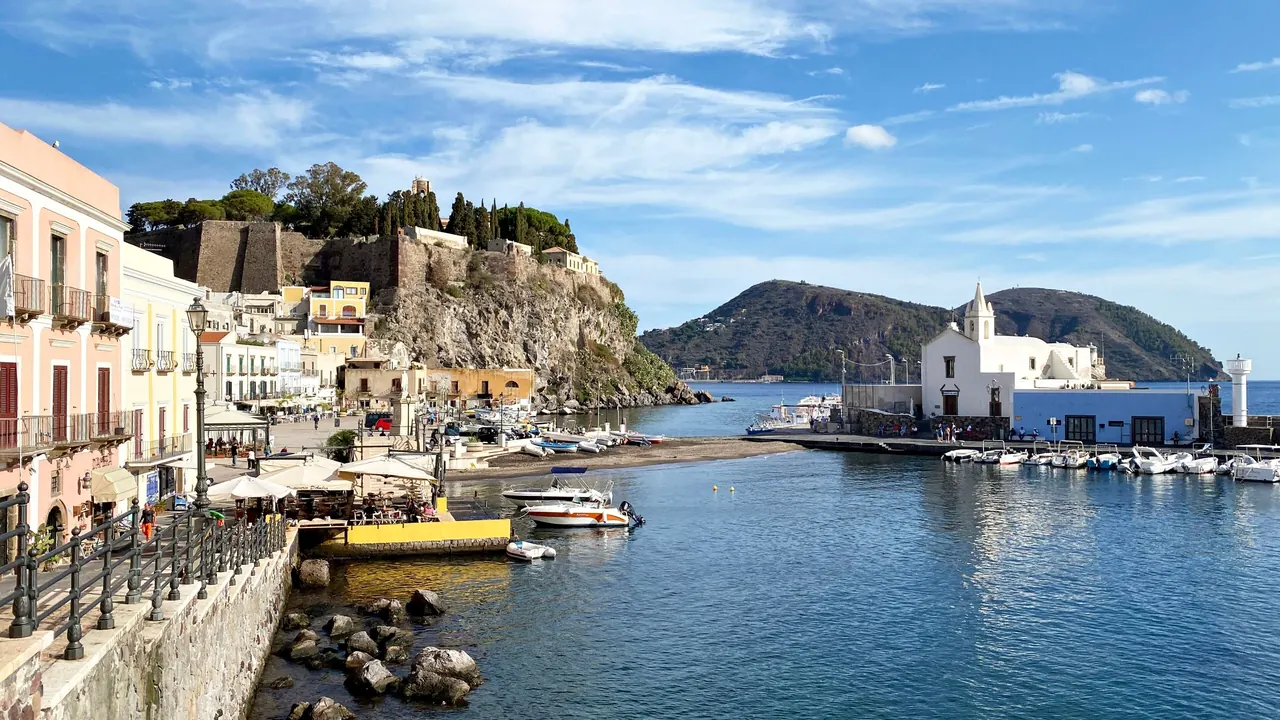
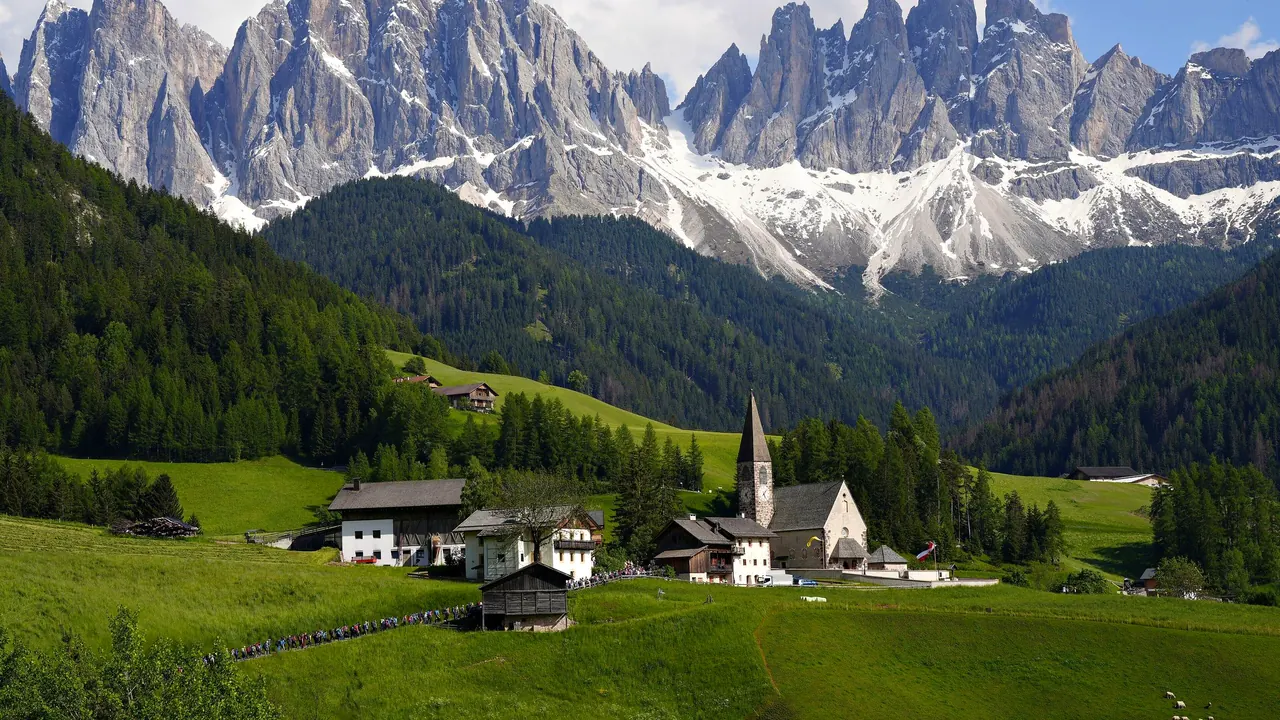
Photos: Aeolian Islands by Bernard Gagnon, CC BY 4.0, cropped; Dolomites by Chensiyuan, CC BY-SA 4.0, cropped.
Aeolian Islands or Dolomites?
Our verdict in twelve categories, each scored against the same fixed benchmark cities, and the climate month by month, so you can choose for your trip.
Choose Aeolian Islands for
- beaches
- nightlife
- prices
The Aeolian Islands are a summer trip built around the sea. You swim from boats in deep, clear coves, hop between seven islands of different character by hydrofoil, and end the day watching Stromboli throw lava into the dark. They suit travellers who care most about the water and are happy with pebbles and black sand rather than soft beaches. Evenings are quiet over dinner, unless you are on Panarea in high summer.
Choose Dolomites for
- families
- live music and the arts
- day trips
For mountains, and for more than one season, the Dolomites win clearly. The limestone towers, the lifts up from almost every village and the hut-to-hut routes give walkers, climbers and skiers more than even the volcanoes can. The region is also the easier choice for families and for good food at the mountain huts, and Bolzano, Trento and Merano are close by for days off the trail. What you give up is the sea, almost entirely.
Scoreboard
Twelve categories on one fixed scale from 0 to 100. The shaded stretch is the gap between the two.
Your match
Pick a travel style or drag the sliders, and both match scores follow your weighting.
Wins on beaches and nightlife with your weighting.
Wins on families and live music and the arts with your weighting.
What matters to you?
Category by category
What the scores mean for a trip.
Beaches & swimming
The Aeolian Islands are made for swimming. The water under their volcanic cliffs is deep and very clear, and a day spent going from cove to cove in a hired boat is the best way to use it. The shore is dark pebble, black sand and rock ledges rather than soft sand. Vulcano's western bay and Lipari's beaches at Canneto come closest to a classic beach day.
In the Dolomites, swimming is something you fit in around the mountains. The postcard lakes such as Braies and Carezza are too cold for most people, so swimmers head down to Lake Caldaro's lidos and lawns, to outdoor pools in the valley towns or to the north end of Lake Garda.
Food & drink
The islands have a short kitchen built on the sea and on Salina's terraces. You eat very fresh fish, capers in almost everything, wild fennel and cherry tomatoes, and drink sweet Malvasia with dessert. Salina is where the cooking is most serious and Lipari town has the most choice. It is a summer kitchen, though. Once the season ends many places shut, and on the smaller islands you may have only two or three places to choose from.
The Dolomites are the better place to eat, especially over a longer stay or outside summer. The cooking draws on both sides of the Alps, so speck and dumplings sit alongside Italian pasta and coffee, and the Ladin valleys and Trentino each add dishes of their own. Eating at the mountain huts is part of the walking or skiing day. The vineyards south of Bolzano make the valley worth a trip for wine alone, and autumn Törggelen suppers in the farmhouses are the best time to go. Alta Badia and the Puster Valley also have real fine dining. The limit is range: away from Bolzano and Trento, almost every menu is regional.
Culture & sights
Neither is chosen for its monuments, but the Dolomites have more to see. Their valley towns hold Ötzi the Iceman in Bolzano's archaeology museum, the frescoed rooms of Trento's Castello del Buonconsiglio, Bressanone's cathedral and cloister and the working abbey at Novacella. Castles such as Runkelstein and the First World War tunnels on the high passes add more.
The islands' heritage is almost all on Lipari. Its walled citadel and archaeological museum hold an outstanding collection of Mediterranean prehistory, with obsidian tools and theatrical masks. Beyond that there are only Bronze Age hut villages on the headlands of Panarea and Filicudi.
Nightlife
The islands have more of a night out, though only in a narrow window. Panarea in July and August means yachts, sunset aperitivo and dancing on terraces until late. Lipari's marina bars stay busy through the summer, while the other islands go quiet after dinner.
In the Dolomites the evening is mostly winter après-ski in Selva, Canazei or Cortina, and it winds down early. In summer the villages are asleep by eleven, and the student and wine bars of Bolzano and Trento are the only real alternative.
Nature & outdoors
Both are outstanding, but the Dolomites have more range. Pale towers such as the Tre Cime and Sassolungo rise out of green meadows, and lifts lift walkers high from almost every village. Long routes such as the Alta Via 1 cross the range, and the via ferrata cables take non-climbers onto the rock. The same mountains turn into one of Europe's great ski areas in winter.
The islands offer something the mountains cannot: a volcano that is actually erupting. Stromboli throws up lava every few minutes, and the walk to Vulcano's steaming crater is short. Around them are Salina's chestnut woods, sea kayaking among the sea stacks and diving over volcanic rock. Hiking is best in spring and autumn, which is the opposite of the Dolomites' summer walking season.
Day trips
The Dolomites give you far more choice of outings. From Bolzano, Merano, Bressanone and Trento are each under an hour away, Verona is a short train ride, and Innsbruck is an easy run over the Brenner. From the eastern side, Venice is a long but possible day. The catch is that every trip from a high valley starts with a slow pass road.
On the islands, day trips mean the other islands. Salina's caper terraces, Panarea's whitewashed lanes and Alicudi's stairways of stone are all within a hydrofoil ride. On the mainland, Milazzo's castle and the Greek theatre at Tindari are the realistic outings, and the great Sicilian sites are too far for a day.
Good for families
The Dolomites are much the easier family trip. The wide, almost flat paths on the Alpe di Siusi and the Armentara meadows, the huts with playgrounds and animals, the summer toboggan runs and the hotels with children's clubs make long days easy. Winter adds well-run ski schools and gentle nursery slopes.
The islands reward older children who love boats and snorkelling, and few forget Stromboli erupting at night. Toddlers are harder work: there are no sandy beaches or attractions, the entries into the sea are rocky, the black sand gets too hot at midday, and the lanes are steep. Vulcano and Lipari are the most manageable bases.
Getting around
On the islands every journey starts at the harbour. Hydrofoils and ferries make island-hopping simple in summer, but rough seas cancel crossings, so plans need some slack. A car is no help: Stromboli and Panarea have no cars at all, and the usual way around Lipari and Salina is a hired scooter.
Getting around is easier in the Dolomites, as long as you stay in one valley. Trains run along the Adige and Puster valleys, buses on one regional pass climb to the resorts, and lifts link whole ski areas. The trouble starts when you cross between valleys, because the hairpin pass roads are slow and crowded in summer, so most people who want to see several areas hire a car.
Shopping & style
On the islands, shopping is mostly edible. Salina's capers and Malvasia are the things to take home, and Lipari's main street adds linen and souvenirs made from pumice and obsidian. Panarea's resort boutiques serve the summer crowd, and there is little else to browse.
There is more to browse in the mountains, mostly craft and produce. Val Gardena's woodcarvers sell figures and nativity scenes in Ortisei, and Bolzano's medieval arcades hold long-established loden and food shops. In December, the Advent markets in Bolzano, Merano and Bressanone are worth a visit in their own right.
Affordability
Both are expensive, and in much the same way. On the islands the cost comes in summer: rooms are scarce, food has to be shipped in, and boat hire adds up. Panarea is the most expensive island and Lipari is the sensible base.
The Dolomites have two peak seasons, winter and high summer, and lift passes and guided climbs add to the bill. Cortina and Alta Badia cost the most, while Val di Fassa, Fiemme and the valley towns cost less. In both places, June and September are the way to spend less.
Live music & performing arts
The Dolomites have a modest but real calendar. Bolzano has a regional orchestra, a municipal theatre and a long-running international piano competition, and Trento has its own orchestral and theatre seasons. Summer brings musicians onto alpine meadows and jazz into castles and wineries, and Merano holds an autumn festival in its old spa halls.
The islands have almost nothing comparable. There are feast-day processions with band music and the odd concert in a village square, and otherwise the evening show is Stromboli.
Wellness & relaxation
The Dolomites do spa rest with more care. South Tyrol's mountain hotels are built around saunas facing rock walls and outdoor pools in the snow, the old hay bath is still offered around Völs am Schlern, and Merano has public thermal baths beside its river promenade.
On the islands the bathing is volcanic. Vulcano's sulphurous mud pool is sometimes closed by gas levels, and offshore vents warm the sea in patches. Rest there comes mainly from the slow pace of Salina, Filicudi and Alicudi, with long swims and early nights away from Lipari's harbour.
When should you go?
Pick your month. The climate figures are measured averages, not a forecast.
Aeolian Islands in July
Dolomites in July
Daytime high, °C
Rainfall in the month, mm
Where the figures come from
Aeolian Islands's temperatures are measured 60 km from the centre, at Messina.
Aeolian Islands has no rain gauge within 25 km of the centre, so its rainfall comes from a gridded climate dataset read at the destination rather than from a gauge further away.
Temperature and rainfall are climate normals, averaged over the years shown. Aeolian Islands: 1991-2020 normals, Messina (59.7 km from centre). Dolomites: 1991-2020 normals, Dobbiaco (22.3 km from centre).
The islands are at their driest from June to August, with hardly any rain, the most sunshine of the year and a sea that warms to about 27°C in August. It stays warm enough to swim into October. July and August reach 31°C by day, which is too hot for midday walks or the climb up Stromboli, so April, May and October are better for hiking. Rain comes back in September, at about 77mm, and grows through the autumn into a mild, wet winter with short, dull days.
The Dolomites follow almost the opposite pattern. In the main resort valleys, summer highs reach only about 22°C, which is ideal for walking, but summer is also the wettest season, with about 130mm in July, often as afternoon storms. June and September are a little drier. Winter is cold and dry, with highs close to freezing from December to February, and that is the ski season. In spring or autumn the islands are the better choice, in winter the mountains are, and in high summer both work for quite different reasons.
Which traveller are you?
On a beach and sun trip, the Aeolian Islands are the only real choice. They have warm, clear sea from June to October, black sand on Vulcano, pebble coves on Lipari and days spent cove-hopping by boat. In the Dolomites swimming means a valley lake or a pool.
On a family trip with children, the Dolomites are easier. There are flat high-pasture paths on the Alpe di Siusi, lifts that do the climbing for you, and huts with playgrounds and farm animals. The islands have rocky entries, steep lanes and hydrofoil hops, which are hard work with small children.
For skiers, the Dolomites are the obvious pick. The Dolomiti Superski area links a dozen valleys, the Sella Ronda circles a single massif, and the ski schools are well run. The islands have nothing comparable in winter, when many of their kitchens and hotels close.
Before you go
| Measure | Aeolian Islands | Dolomites |
|---|---|---|
| Official language | Italian | Italian |
| Currency | Euro (EUR) | Euro (EUR) |
| Sockets | CFL230 V, 50 Hz | CFL230 V, 50 Hz |
| Driving side | Right | Right |
| Time zone | UTC+1, UTC+2 in summer | UTC+1, UTC+2 in summer |
| Emergency number | 112 | 112 |
| Main airport | Catania-Fontanarossa Airport (CTA)96 non-stop destinations | Venice Marco Polo Airport (VCE)103 non-stop destinations |
| Public holidays this year | 13 days | 13 days |
By the numbers
| Measure | Aeolian Islands | Dolomites |
|---|---|---|
| Population | 15,419 | - |
| People per km² | 134 | - |
| Swim season, months above 21 °C | 5 months | - |
Where else could you go?
Every comparison below shares a destination with this one, so you can follow Aeolian Islands or Dolomites somewhere new.
- Austrian Alpsvs Dolomites
- Sicilyvs Aeolian Islands
- Lake Gardavs Dolomites
- Bavariavs Dolomites
- Lake Comovs Dolomites
- Caprivs Aeolian Islands