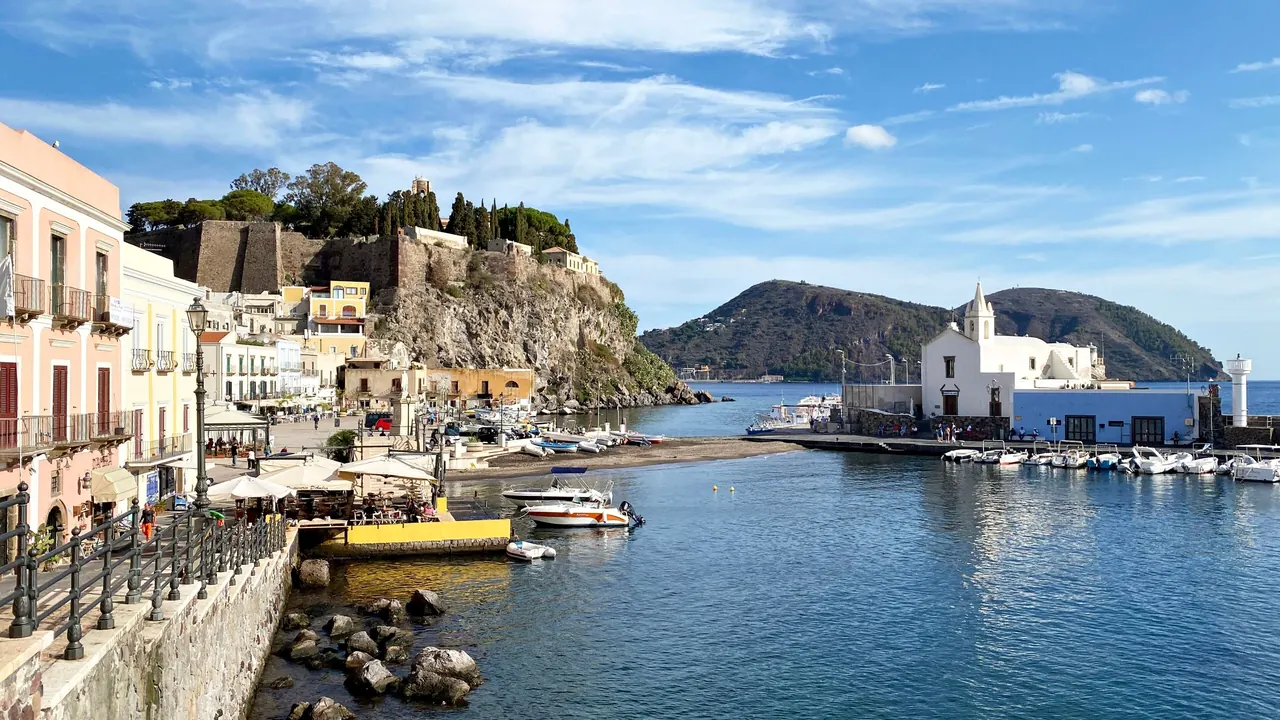
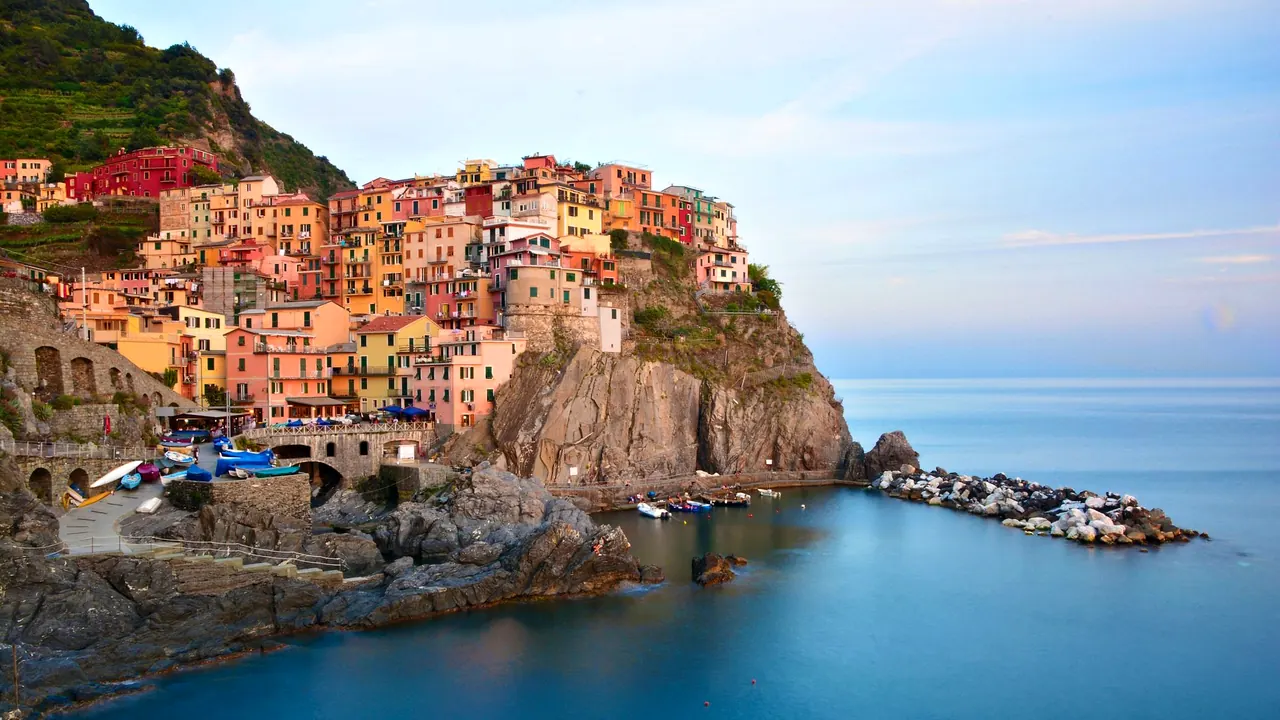
Photos: Aeolian Islands by Bernard Gagnon, CC BY 4.0, cropped; Cinque Terre by Narcisa Aciko, Pexels License.
Aeolian Islands or Cinque Terre?
Our verdict in twelve categories, each scored against the same fixed benchmark cities, and the climate month by month, so you can choose for your trip.
Choose Aeolian Islands for
- nightlife
- wellness
- families
The Aeolian Islands suit a slower summer trip built around the sea and the volcanoes. Swimming from a boat in deep coves, watching Stromboli throw up lava after dark and settling on quiet Salina or Filicudi feel far more remote than anything on the Ligurian coast. Panarea adds a glamorous night out for those who want one. What it costs is time: everything moves by hydrofoil, crossings can be cancelled, and Sicily's great sights are out of reach.
Choose Cinque Terre for
- getting around
- day trips
Walkers who want to cover ground, and to see more of northern Italy on the same trip, should pick Cinque Terre. Cliff paths join the five villages, a train links them in minutes, and Pisa, Lucca, Genoa and Portofino are all an easy day out. You give up proper beaches, nightlife and any real calm in high summer, so it rewards a shorter, busier stay, ideally in spring or autumn.
Scoreboard
Twelve categories on one fixed scale from 0 to 100. The shaded stretch is the gap between the two.
Your match
Pick a travel style or drag the sliders, and both match scores follow your weighting.
Wins on nightlife and wellness with your weighting.
Wins on getting around and day trips with your weighting.
What matters to you?
Category by category
What the scores mean for a trip.
Beaches & swimming
Neither coast has soft sand, but the Aeolian Islands give swimmers more. Vulcano's black-sand western bay, the pebble beaches at Canneto and the pale pumice coves on Lipari make the sea the centre of a stay. So does a day of cove-hopping in a hired boat, and the water is a couple of degrees warmer in late summer.
Cinque Terre has one beach town, Monterosso, with sand and fine pebble at Fegina under tight rows of umbrellas. Everywhere else you swim from rock shelves and slipways at Vernazza, Manarola and Riomaggiore, which are lovely for a dip between walks but poor for a lazy day.
Food & drink
Both cuisines are built on a few local ingredients, and the Aeolian Islands go deeper. Salina's capers and Malvasia, its family trattorias and wine estates with tastings, and island staples like pane cunzato and granita with brioche make meals worth planning around, though many kitchens close outside summer.
Cinque Terre's strengths are trofie with pesto, focaccia and farinata, Monterosso's anchovies and the sweet Sciacchetrà. It is good for cheap eating on the go, but in the busiest villages many menus are aimed at day-trippers, and for real variety you go to La Spezia.
Culture & sights
Neither is a sightseeing destination, and their heritage is of different kinds. The Aeolian Islands have one serious stop: Lipari's walled citadel and its archaeological museum, with obsidian tools, Greek painted pottery and theatrical masks. Bronze Age village sites on Panarea and Filicudi add to it.
Cinque Terre has no museum of note. Its heritage is the terraced, UNESCO-listed landscape and the villages themselves, from Vernazza's harbour square to Corniglia's ridge-top lanes, with striped Gothic churches and hill sanctuaries along the way.
Nightlife
The Aeolian Islands have a real night out, though only on one island and only in high summer: Panarea in July and August, with yachts in the bay, sunset aperitivo and dancing on terraces. Lipari town adds a more ordinary row of marina bars. Cinque Terre has nothing like it, just a glass of white on a harbour wall at sunset and a few later bars in Monterosso and Riomaggiore, and anything more means a trip to La Spezia.
Nature & outdoors
Both coasts are made for the outdoors, but the Aeolian Islands are the more dramatic. You can watch Stromboli erupt after dark, climb to the steaming Gran Cratere on Vulcano and walk Salina's chestnut woods, with kayaking and diving around sea stacks and arches. It is a living volcanic landscape.
Cinque Terre is the gentler and better-connected walk. The Sentiero Azzurro runs between the villages and the Sentiero Rosso follows the ridge above, with a train back at the end of the day. Its marine reserve also has kayaking and diving, but summer crowds and sections closed by heavy rain limit the main path.
Day trips
From the Aeolian Islands a day out mostly means another island: Salina's wine villages among the caper terraces, Panarea's whitewashed lanes or Alicudi's stepped paths, often two of them on one boat trip. On the mainland, Milazzo's castle and the Greek theatre at Tindari are the options, and Sicily's main cities are too far.
Cinque Terre is far better placed. Boats run in season to Portovenere, Lerici is close by, and Sarzana and the Carrara marble quarries are a short train ride away. The coastal railway reaches Pisa in about an hour and a quarter, Lucca a little further and Genoa in about an hour and a half. Portofino is a short way beyond the station at Santa Margherita.
Good for families
Neither has anything built for children, but the Aeolian Islands are the easier of the two. Older children get boats, snorkelling and Stromboli erupting at night, and Vulcano and Lipari have shallower water and simple shops, though hot black sand and rough hydrofoil crossings need care.
Cinque Terre is steeper work, with villages made of steps, Corniglia high above its station and packed summer trains. Flat Monterosso, with its gently shelving beach, is the one comfortable base with young children.
Getting around
Cinque Terre is much simpler. A local train links all five villages with only minutes between stops, and ferries and footpaths fill the gaps, so the only strain is the summer crowds on platforms and stairways.
In the Aeolian Islands everything depends on hydrofoils and ferries that rough seas can cancel, so plans need slack. Ashore you use buses and scooters on Lipari and Salina, and carts and your own feet on Stromboli and Panarea. Neither place needs a car.
Shopping & style
Neither is a place to shop, and on both the best souvenirs are edible. The Aeolian Islands offer a little more to browse, with delis, linen and obsidian and pumice pieces along Lipari's main street and resort-wear boutiques on Panarea. Cinque Terre stops at pesto, anchovies, lemon liqueur, Sciacchetrà and some ceramics.
Affordability
Both are expensive by Italian standards in summer, for different reasons. On the Aeolian Islands the cost comes from shipping everything in, from boat hire and from hydrofoil fares. Panarea is the costliest island, Lipari and Vulcano are the moderate bases, and June and September are easier on price.
In Cinque Terre almost all the cost is in the scarce village rooms and the paid path access. Focaccia, fried fish and the cheap train keep daily spending down, and staying in La Spezia or Levanto is the usual way round high room prices.
Live music & performing arts
Neither has a performing arts scene, only summer concerts in churches and squares and saints' day processions with bands. The difference is reach: from Cinque Terre a play or an orchestra in La Spezia or Genoa is possible, while on the islands the evening show is Stromboli itself.
Wellness & relaxation
The Aeolian Islands have a real bathing tradition: Vulcano's sulphurous mud pool when gas levels allow, warm vents bubbling up offshore and thermal pools in a few hotels on Vulcano and Lipari. Salina, Filicudi and Alicudi add an unhurried, traffic-free pace.
Cinque Terre has no spa culture beyond the odd guesthouse massage. Its calm comes in spring, in autumn and early in the morning, and it disappears on summer afternoons when the lanes fill.
When should you go?
Pick your month. The climate figures are measured averages, not a forecast.
Aeolian Islands in July
Cinque Terre in July
Daytime high, °C
Rainfall in the month, mm
Where the figures come from
Aeolian Islands's temperatures are measured 60 km from the centre, at Messina.
Aeolian Islands has no rain gauge within 25 km of the centre, so its rainfall comes from a gridded climate dataset read at the destination rather than from a gauge further away.
Cinque Terre's temperatures are measured 78 km from the centre, at Pisa / S. Giusto.
Cinque Terre has no rain gauge within 25 km of the centre, so its rainfall comes from a gridded climate dataset read at the destination rather than from a gauge further away.
Temperature and rainfall are climate normals, averaged over the years shown. Aeolian Islands: 1991-2020 normals, Messina (59.7 km from centre). Cinque Terre: 1991-2020 normals, Pisa / S. Giusto (77.8 km from centre).
Both are at their best from late spring to early autumn, but the Aeolian Islands stay warm, dry and sunny for longer. Around the main islands the sea is warm enough to swim from June to October and reaches about 27°C in August, and the summer months are almost rainless. Cinque Terre's water is a little cooler, and its swimming season ends with September. July and August reach about 30°C on both coasts, which makes midday hiking hard work, so May and late September are the months for walking.
Autumn is where they part. October on the Ligurian coast is very wet, with around 170mm of rain, and November is wetter still. The Aeolian Islands get roughly half that rain and stay milder, though rough seas can disrupt the ferries. Winter is cool in both and a little gentler in the south, with highs of about 15°C against 11°C.
Which traveller are you?
On a beach and sun trip, the Aeolian Islands give more. Every day can centre on the water from June into October, with a different shore on each island. In Cinque Terre a swim fits in between walks, and only Monterosso suits a whole day in the sun.
For a relaxing and wellness trip, choose the Aeolian Islands. The volcanic bathing makes a slow week feel like a cure, and on traffic-free Filicudi or Alicudi the days are swimming, long lunches and early nights. Cinque Terre's quiet gives way to crowded lanes on summer afternoons.
For a short city break, Cinque Terre is much easier. A long weekend is enough to see all five villages by local train and still add Genoa or Pisa. The Aeolian Islands take a hydrofoil crossing from Milazzo just to get there, and they reward a longer stay.
Before you go
| Measure | Aeolian Islands | Cinque Terre |
|---|---|---|
| Official language | Italian | Italian |
| Currency | Euro (EUR) | Euro (EUR) |
| Sockets | CFL230 V, 50 Hz | CFL230 V, 50 Hz |
| Driving side | Right | Right |
| Time zone | UTC+1, UTC+2 in summer | UTC+1, UTC+2 in summer |
| Emergency number | 112 | 112 |
| Main airport | Catania-Fontanarossa Airport (CTA)96 non-stop destinations | Pisa International Airport (PSA)82 non-stop destinations |
| Public holidays this year | 13 days | 13 days |
By the numbers
| Measure | Aeolian Islands | Cinque Terre |
|---|---|---|
| Population | 15,419 | - |
| People per km² | 134 | - |
| Swim season, months above 21 °C | 5 months | 4 months |
Where else could you go?
Every comparison below shares a destination with this one, so you can follow Aeolian Islands or Cinque Terre somewhere new.
- Portofinovs Cinque Terre
- Tuscanyvs Cinque Terre
- Sicilyvs Aeolian Islands
- Elbavs Cinque Terre
- Lake Gardavs Cinque Terre
- Lake Comovs Cinque Terre