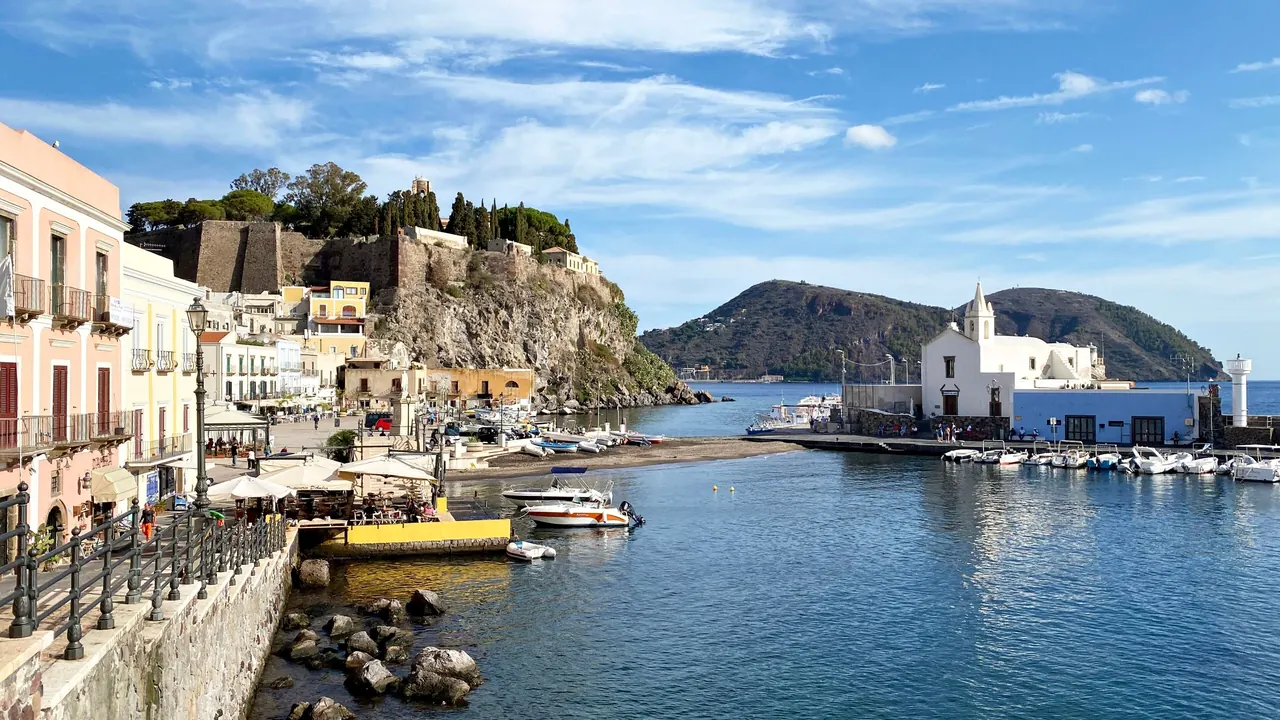
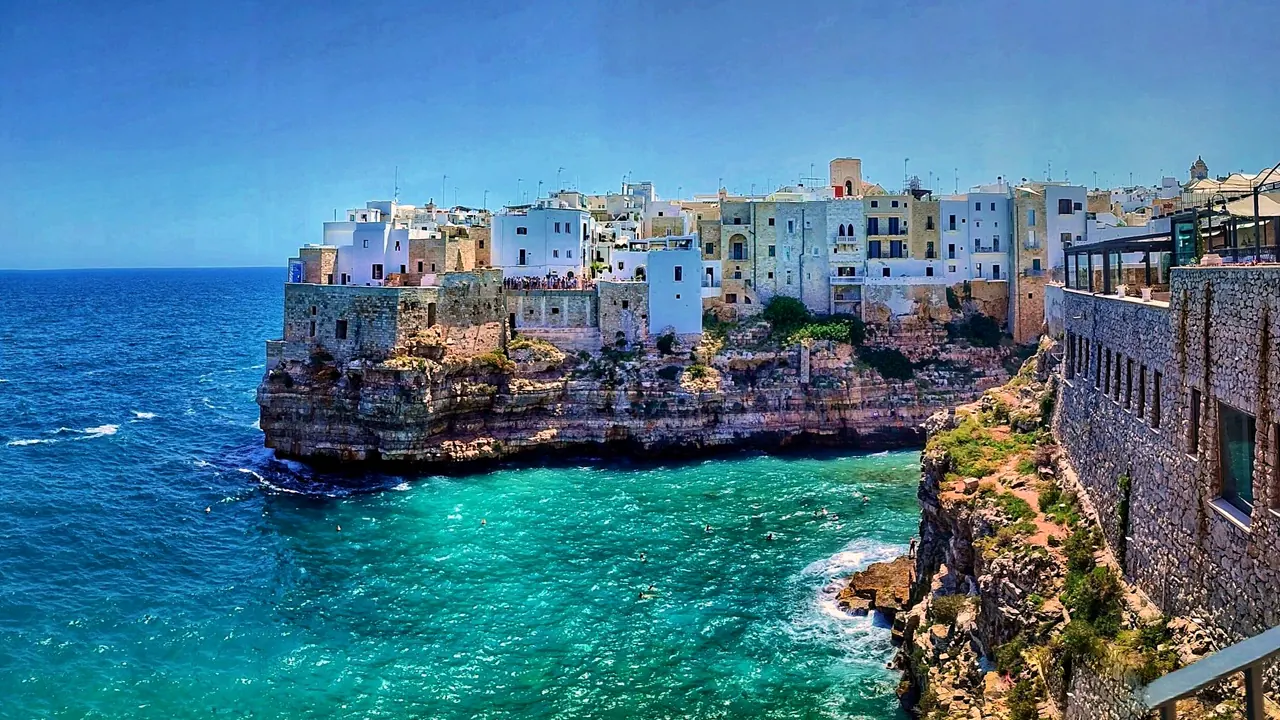
Photos: Aeolian Islands by Bernard Gagnon, CC BY 4.0, cropped; Puglia by Acquario51, CC BY-SA 4.0, cropped.
Aeolian Islands or Puglia?
Our verdict in twelve categories, each scored against the same fixed benchmark cities, and the climate month by month, so you can choose for your trip.
Choose Aeolian Islands for
- nature and the outdoors
- wellness
The Aeolian Islands suit a traveller who wants the sea and the volcanoes and very little else. Days go on boat trips to clear coves, the walk up to Vulcano's steaming crater and Stromboli throwing up lava after dark, and evenings end over dinner in a village with no traffic. You give up sights, variety and easy logistics, because everything runs on hydrofoils, and you pay island prices in summer. For couples and active adults who like an island to themselves, the trade is worth it.
Choose Puglia for
- live music and the arts
- culture and sights
- day trips
Puglia is the better pick for a longer, more varied trip with a hire car. You get sandy Ionian beaches as well as rocky Adriatic coves, Lecce's baroque, the trulli of Alberobello, a different small town each day, and generous regional food that costs less than the islands. Families, food lovers and anyone who wants culture mixed in with the beach will find more to fill the days, and their money goes further.
Scoreboard
Twelve categories on one fixed scale from 0 to 100. The shaded stretch is the gap between the two.
Your match
Pick a travel style or drag the sliders, and both match scores follow your weighting.
Wins on nature and the outdoors and wellness with your weighting.
Wins on live music and the arts and culture and sights with your weighting.
What matters to you?
Category by category
What the scores mean for a trip.
Beaches & swimming
Puglia has the better and wider range of beaches. The Ionian side of the Salento has long pale sands with shallow turquoise water, which the islands simply lack. The Adriatic side adds limestone coves at Polignano, and the Gargano has white cliffs and sea caves. You can reach both Salento coasts from one base.
On the Aeolian Islands the shore is dark pebble, black sand and rock ledges, with sunbeds and shade in short supply. The rewards are coves of very clear, deep water under cliffs, best reached by hiring a boat for the day, and warm sea patches where gas bubbles up off Vulcano.
Food & drink
Puglia is the stronger place to eat. The table is larger and fuller: orecchiette, burrata from the Murge, raw sea urchins on the Bari waterfront, meat grilled to order in the Valle d'Itria and Primitivo wines. Good food is easy to find in almost any town, in any season.
The islands cook a short, fine repertoire: that morning's fish, Salina's capers, pane cunzato and granita with brioche, washed down with sweet Malvasia. Salina is where the serious eating is. But the choice is thin on the small islands, and many kitchens close outside summer.
Culture & sights
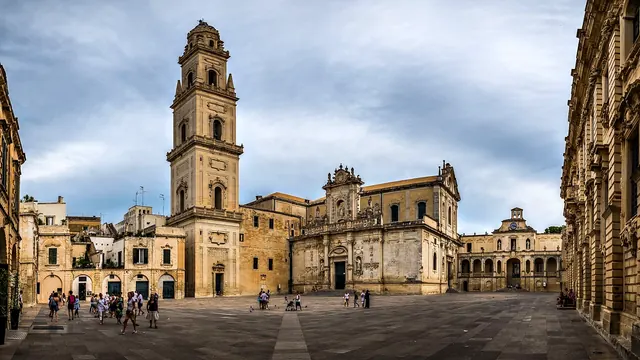
Puglia has far more to see. Lecce's carved baroque, the trulli of Alberobello, Frederick II's octagonal Castel del Monte and the sea-edge cathedral at Trani are spread across the region, so you need a car, and together they fill a week.
On the islands the heritage sits almost entirely on Lipari's citadel. Its archaeological museum, with obsidian tools and theatrical masks, is a real draw for anyone who loves prehistory. The rest is Bronze Age hut villages and village churches, pleasant extras on a sea trip rather than a reason to come.
Nightlife
Puglia has more going out and spreads it further. Gallipoli's beach clubs run into the small hours in summer, Lecce's squares fill with drinkers, and Bari keeps bars open in its old town all year.
On the islands, nightlife means Panarea in July and August: yachts, sunset aperitivo and expensive terrace dancing on a tiny island. Lipari's marina bars are the ordinary alternative, and on the other islands the evening ends after dinner, which is exactly why many visitors go.
Nature & outdoors
The Aeolian Islands are in a different league for landscape. Stromboli erupts every few minutes, and you watch from paths on its flanks or from a boat below the Sciara del Fuoco. Vulcano's crater steams, Salina has wooded peaks, and you can sail and dive among volcanic arches and stacks. Few places in Europe offer anything like it.
Puglia's countryside is quieter: red soil, dry-stone walls and ancient olive trees, best seen by bicycle. Its wilder corner is the Gargano, with the Foresta Umbra beech woods and the Tremiti islands for snorkelling, but it is a long way north of the Salento.
Day trips
Puglia is made for day trips. Ostuni, Locorotondo and Martina Franca are short drives from one another, Trani and Molfetta line the coast north of Bari, and Matera's cave dwellings are about an hour away. You could spend a fortnight there without repeating an outing.
On the islands, a day trip means a hydrofoil to the next island. Salina's caper villages, Panarea's whitewashed lanes and Alicudi's stepped paths each feel different. On the mainland, Milazzo and Tindari are as far as you can comfortably go.
Good for families
Puglia is far easier with children. The shallow sandy beaches of the Salento and the gentle Gargano bays suit toddlers, villas with pools are easy to find, and the trulli and the Fasano safari park break up the beach days. The main difficulties are August heat and needing a car.
The islands work for older children who love boats, snorkelling and the sight of Stromboli at night. With younger ones you face rocky water entries, midday black sand, steep lanes, pushchair struggles and choppy crossings. Vulcano and Lipari are the gentlest bases.
Getting around
Neither is effortless, and the difference is in kind. On the islands you get around by sea. The hydrofoils make island-hopping easy in summer, but rough water cancels crossings, Stromboli and Panarea have no cars, and on Lipari or Salina a scooter is the way to get about.
Puglia is slightly easier, as long as you drive. The roads are good and the main areas are close together, though the Gargano to Leuca is four to five hours. The main line through Bari, Polignano and Lecce lets you manage without a car if you stay along it.
Shopping & style
Puglia gives you more to browse. There are ceramic workshops at Grottaglie, papier-mâché studios in Lecce, and embroidered linen across the Valle d'Itria, while Bari's Via Sparano has the usual Italian chains.
On the islands, shopping comes down to Salina capers and Malvasia, pumice and obsidian souvenirs on Lipari's main street, and a few costly resort-wear boutiques on Panarea.
Affordability
Puglia is clearly the cheaper trip. Trattoria meals, street food and local wine cost less than in most of Italy, and you can bring costs down further by staying inland. In high summer the outlay goes on beachfront rooms, masserie, lido loungers and the hire car.
On the islands, almost everything is shipped in, rooms are scarce, and boats and guided volcano walks add up. Panarea and much of Salina are expensive. Lipari or Vulcano are the sensible bases if money matters, and in both regions June and September cost less than July and August.
Live music & performing arts
Here Puglia is far ahead. Bari's Teatro Petruzzelli has a full opera and ballet season, Martina Franca's summer festival stages rare operas in a palace courtyard, and the Notte della Taranta at Melpignano brings Salento pizzica to a huge open-air crowd.
On the islands, an evening's entertainment is a village procession with a band, an occasional church concert, or watching Stromboli.
Wellness & relaxation
Both are restful in much the same measure, but in different ways. On the islands the rest comes from the volcano and the pace: Vulcano's sulphur mud pool and warm offshore vents, and the car-free calm of Salina, Filicudi and Alicudi, where days run on swimming and early nights.
Puglia's calm is rural. You stay in a masseria among olive groves, often with its own pool and spa, and the Valle d'Itria afternoons are long and quiet. Santa Cesarea Terme's sea-cave springs and Torre Canne's spa give a mild taste of thermal bathing.
When should you go?
Pick your month. The climate figures are measured averages, not a forecast.
Aeolian Islands in July
Puglia in July
Daytime high, °C
Rainfall in the month, mm
Where the figures come from
Aeolian Islands's temperatures are measured 60 km from the centre, at Messina.
Aeolian Islands has no rain gauge within 25 km of the centre, so its rainfall comes from a gridded climate dataset read at the destination rather than from a gauge further away.
Puglia's temperatures are measured 64 km from the centre, at Brindisi.
Puglia has no rain gauge within 25 km of the centre, so its rainfall comes from a gridded climate dataset read at the destination rather than from a gauge further away.
Temperature and rainfall are climate normals, averaged over the years shown. Aeolian Islands: 1991-2020 normals, Messina (59.7 km from centre). Puglia: 1991-2020 (sunshine 1981-2010) normals, Brindisi (64.4 km from centre).
The two share a Mediterranean year, and the islands run a little warmer and sunnier at the peak. From June to September both are made for swimming, and in August the sea reaches about 27°C around Lipari, a degree warmer than off Puglia. July and August are very dry in both places, but with highs near 31°C on the islands and 30°C in Puglia, the middle of the day is too hot for climbing a volcano or walking round Lecce. May, early June and late September to October are the best months for hiking and sightseeing, with warm days and a sea that is still pleasant.
In autumn and winter they part ways. Rain comes back to both in September, but the islands get the wetter winter, about 104mm in December, and that is also when rough seas cancel crossings. Puglia's winters are a little cooler and drier, and its towns and cathedrals still make a calm off-season trip. The islands are really a destination for May to October.
Which traveller are you?
On an outdoors trip, decide whether the landscape should be the whole point. On the Aeolian Islands it is, and every day can be a volcano, a boat or a cliff path. In Puglia, nature is the gentle setting between towns.
On a family trip with children, the islands only make sense if yours are old enough to love boats and snorkelling and shrug off rough edges. For younger children, or a family of mixed ages, Puglia is the easier choice by a long way.
For a culture and arts trip, the islands give you one long visit, to Lipari's citadel and its museum. Puglia fills a week, with a different historic town each day and, in summer, opera or pizzica in the evening.
Before you go
| Measure | Aeolian Islands | Puglia |
|---|---|---|
| Official language | Italian | Italian |
| Currency | Euro (EUR) | Euro (EUR) |
| Sockets | CFL230 V, 50 Hz | CFL230 V, 50 Hz |
| Driving side | Right | Right |
| Time zone | UTC+1, UTC+2 in summer | UTC+1, UTC+2 in summer |
| Emergency number | 112 | 112 |
| Main airport | Catania-Fontanarossa Airport (CTA)96 non-stop destinations | Bari Karol Wojtyła International Airport (BRI)104 non-stop destinations |
| Public holidays this year | 13 days | 13 days |
By the numbers
| Measure | Aeolian Islands | Puglia |
|---|---|---|
| Population | 15,419 | 3,866,174 |
| People per km² | 134 | 198 |
| Swim season, months above 21 °C | 5 months | 4 months |
Where else could you go?
Every comparison below shares a destination with this one, so you can follow Aeolian Islands or Puglia somewhere new.
- Sicilyvs Aeolian Islands
- Korčulavs Puglia
- Amalfi Coastvs Puglia
- Caprivs Aeolian Islands
- Amalfi Coastvs Aeolian Islands
- Hvarvs Puglia