Hvar or Puglia?
Our verdict in twelve categories, each scored against the same fixed benchmark cities, and the climate month by month, so you can choose for your trip.
Choose Hvar for
- nightlife
Hvar suits travellers who want one island, very clear water and long summer evenings. Hvar Town's harbour bars and the beach clubs of the Pakleni Islands are the draw for a party-minded summer among yacht crews. If you stay in Jelsa or Stari Grad instead, it suits slow days of swimming off rock ledges and drinking the island's own Plavac Mali. You can see its sights in a couple of days, which leaves the rest of the week for the sea.
Choose Puglia for
- live music and the arts
- culture and sights
- day trips
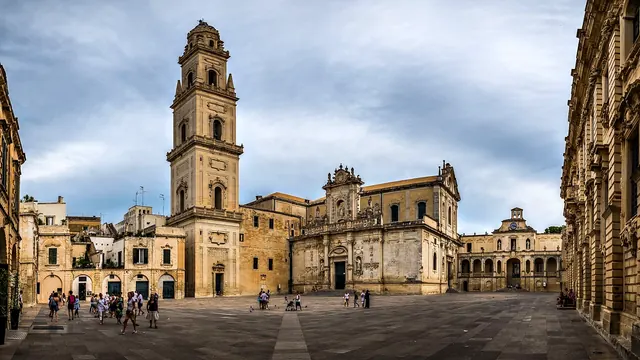
Choose Puglia for a longer and more varied trip with a hire car. It has baroque Lecce, the trulli of Alberobello, Matera just over the border and a string of white towns in the Valle d'Itria, with days on sandy Ionian beaches in between. The food alone is a reason to go. Families get shallow sand and a welcome in every piazza, and your money goes further, especially at the table.
Scoreboard
Twelve categories on one fixed scale from 0 to 100. The shaded stretch is the gap between the two.
Your match
Pick a travel style or drag the sliders, and both match scores follow your weighting.
Wins on nightlife with your weighting.
Wins on live music and the arts and culture and sights with your weighting.
What matters to you?
Category by category
What the scores mean for a trip.
Beaches & swimming
Both are true sea destinations, with clear water warm enough to swim in from June to late September, so the real choice is the shoreline. Hvar is pebble and rock almost everywhere: stone ledges, quiet coves below the mountain on the south coast, and the pine-backed bays of the Pakleni Islands, reached by taxi boat.
Puglia has what Hvar lacks: long stretches of pale sand and shallow turquoise water on the Ionian side of the Salento. It also has limestone platforms at Polignano a Mare and sea caves in the Gargano. In August, paid lidos crowd its popular sands, while on Hvar it is the best-known bays that fill up, with anchored yachts.
Food & drink
Hvar has good Dalmatian cooking: grilled fish, gregada and lamb under the peka, at its best in the konobas of hill villages such as Pitve and Velo Grablje. Its wine from the steep slopes around Ivan Dolac is its strongest card. Still, the range is narrow, and much of it closes outside summer.
Puglia eats on another scale. There is burrata from around Andria, orecchiette with turnip tops, focaccia barese, raw sea urchins on the Bari waterfront, pasticciotto in Lecce and the butcher-grill houses of the Valle d'Itria. Meals are more varied and cost less, and Primitivo and Negroamaro hold their own against Plavac Mali.
Culture & sights
Hvar's sights are real but few. Hvar Town has its white-stone square and cathedral, the 1612 theatre above the Arsenal and the Fortica. Stari Grad, founded by the Greeks, has the Tvrdalj and its UNESCO-listed plain. Two or three unhurried days cover the lot.
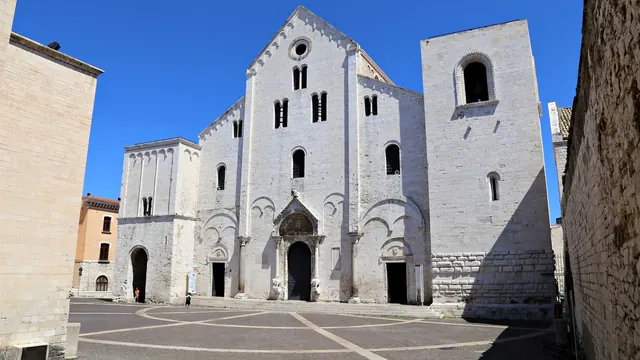
Puglia has enough for a week or more, spread across many towns. There is baroque Lecce, the trulli of Alberobello, Frederick II's octagonal Castel del Monte and a chain of Romanesque cathedrals from Trani to Otranto's mosaic floor. The price is driving between them rather than strolling one old town.
Nightlife
Here Hvar comes out ahead. On Hvar Town, the night out is the point of the trip: sundowners on the waterfront, cocktail bars up the stepped lanes and day parties at the Pakleni beach clubs. It is all packed into one small, crowded and expensive town from June to early September.
Puglia's nights are more spread out and more Italian. Gallipoli's beach clubs take over in high summer, there are DJ nights along the Salento and crowds drinking in Lecce's squares. Bari stays lively all year, which Hvar does not, but across most of the region an evening means the passeggiata and a long dinner.
Nature & outdoors
Hvar is a single limestone ridge, with the climb up Sveti Nikola, abandoned stone villages and lavender in flower in early summer. Its best outdoor days are on the water, kayaking and snorkelling around the Pakleni Islands.
Puglia has more range. Its olive-grove plateau makes for gentle cycling, the Gargano adds the beech woods of the Foresta Umbra, white cliffs and sea caves, and the Tremiti islands are good for diving. The Salento has cliff paths and the Alimini wetlands. In both, summer heat pushes serious walking into spring and autumn.
Day trips
Hvar's outings are by sea. Catamarans run to Diocletian's Palace in Split, walled Korčula and quiet Vis, each about an hour away. Every trip depends on the boat timetables, and there are fewer sailings out of season.
Day trips are Puglia's great strength, and you simply drive. Ostuni, Locorotondo and Martina Franca are short hops apart in the Valle d'Itria, and Polignano and Trani line the coast. Matera's cave dwellings are about an hour from Bari, and from Lecce, Otranto and the Grecia Salentina are close.
Good for families
Puglia is the easier choice for families. It has shallow Ionian sand, villas and masserie with pools, the safari and amusement park at Fasano, and the trulli that children tend to love. Late evenings in the piazza mean children are welcome everywhere.
Hvar suits families who are happy with simple days in Jelsa, Stari Grad or Vrboska. The bays there are calm, but the shore is pebble, water shoes help and nothing is made for children. Hvar Town's steps and party nights are best avoided.
Getting around
Both are hard work without your own wheels, but for different reasons. Hvar is small and starts with a boat: car ferries to Stari Grad, catamarans to Hvar Town and Jelsa, then infrequent buses and taxi boats to the coves. To reach the south coast you need a car or scooter, on narrow roads and a single-lane tunnel.
Puglia's problem is length rather than awkwardness. Its roads are good and quiet, but the Gargano is four to five hours from the southern tip, so a full tour needs two bases. Unlike Hvar, it has a main rail line through Bari, Polignano, Monopoli and Lecce, so a car-free stay along that line is possible.
Shopping & style
Neither is a shopping destination, but Puglia gives you more to browse. Hvar offers lavender, olive oil, honey, cellar wine and lace made by Benedictine nuns, plus a few resort boutiques in Hvar Town. Puglia adds Grottaglie's quarter of ceramic workshops, Lecce's papier-mache studios, linen and pottery across the Valle d'Itria, and Italian chains on the streets around Via Sparano in Bari.
Affordability
Puglia is the better-value trip, mostly at the table. Trattoria meals, street snacks and local wine cost less than in much of Italy, though summer rooms near the Salento beaches, lido loungers and the hire car all add up.
In July and August, Hvar Town is priced for a well-off yacht crowd, from harbour-front rooms to beach-club loungers and taxi boats. Family apartments in Jelsa or Stari Grad and meals in village konobas help, but high summer stays dear. In both regions, June and September cost noticeably less.
Live music & performing arts
Puglia has a real musical life. There is opera, ballet and concerts at Bari's Teatro Petruzzelli, and a summer opera festival of rare works in the ducal palace courtyard at Martina Franca. There is also pizzica, the Salento folk dance that draws huge crowds to Melpignano each August for the Notte della Taranta.
Hvar offers summer chamber concerts in its churches and the Franciscan cloister, and klapa singing at village feasts. Its 1612 theatre is worth seeing as a building, but it has no regular season, and little happens outside summer.
Wellness & relaxation
Neither has a spa culture to plan a trip around, but Puglia has more on offer. You can stay in a masseria with a pool and its own spa among the olive groves. There are also small thermal sites at Santa Cesarea Terme, Torre Canne and the salt pans of Margherita di Savoia.
Hvar's calm comes from its pace away from Hvar Town, with long lunches and evening walks along the waterfront in Vrboska and Stari Grad, and pine and lavender in the air. Hotel spas and seasonal yoga are extras, and June or September is the quietest time to come.
When should you go?
Pick your month. The climate figures are measured averages, not a forecast.
Hvar in July
Puglia in July
Daytime high, °C
Rainfall in the month, mm
Where the figures come from
Hvar's temperatures are measured 38 km from the centre, at Split / Marjan.
Hvar has no rain gauge within 25 km of the centre, so its rainfall comes from a gridded climate dataset read at the destination rather than from a gauge further away.
Hvar's sunshine is measured 38 km from the centre, at Split / Marjan.
Puglia's temperatures are measured 64 km from the centre, at Brindisi.
Puglia has no rain gauge within 25 km of the centre, so its rainfall comes from a gridded climate dataset read at the destination rather than from a gauge further away.
Temperature and rainfall are climate normals, averaged over the years shown. Hvar: 1991-2020 (sunshine 1971-2000) normals, Split / Marjan (38.2 km from centre). Puglia: 1991-2020 (sunshine 1981-2010) normals, Brindisi (64.4 km from centre).
The two share much the same Mediterranean year. In both, the sea is warm enough for swimming from June to late September and peaks in August, at about 25°C off Hvar and 26°C in Puglia. Both are hottest in July and August, when highs reach around 31°C where most visitors stay on Hvar and a degree lower in Puglia. That makes midday sightseeing hard work, and Puglia's town-hopping suffers more from the heat than Hvar's swimming does. Hvar gets a little more sunshine in high summer.
Rain returns to both in September, and autumn is wetter on Hvar, which reaches 116mm in November while Puglia stays somewhat drier. May and early October are the best months for walking Puglia's old towns and cycling its countryside. On Hvar, June and September give you the warm sea with less heat.
Which traveller are you?
For a culture and arts trip, Puglia is the clear pick. Lecce's baroque, the trulli, Castel del Monte and the Romanesque cathedrals fill a week. Bari's Teatro Petruzzelli and the Martina Franca opera festival also offer far more than Hvar's summer church concerts.
On a family trip with young children, Puglia works better too. The Ionian sands shelve gently, the safari park at Fasano makes a day out, and children up late in the piazza are normal. Hvar has calm north-side bays but nothing made for children.
For a food and nightlife trip, it depends which half matters more. Hvar Town and its offshore beach clubs make the bigger party in July and August. Puglia wins on the plate, from burrata and orecchiette to Bari's street seafood, and has Gallipoli for dancing.
Before you go
| Measure | Hvar | Puglia |
|---|---|---|
| Official language | Croatian | Italian |
| Currency | Euro (EUR) | Euro (EUR) |
| Sockets | CF230 V, 50 Hz | CFL230 V, 50 Hz |
| Driving side | Right | Right |
| Time zone | UTC+1, UTC+2 in summer | UTC+1, UTC+2 in summer |
| Emergency number | 112 | 112 |
| Main airport | Split Saint Jerome Airport (SPU)69 non-stop destinations | Bari Karol Wojtyła International Airport (BRI)104 non-stop destinations |
| Public holidays this year | 14 days | 13 days |
By the numbers
| Measure | Hvar | Puglia |
|---|---|---|
| Population | - | 3,866,174 |
| People per km² | - | 198 |
| Swim season, months above 21 °C | 4 months | 4 months |
Where else could you go?
Every comparison below shares a destination with this one, so you can follow Hvar or Puglia somewhere new.